Orthopaedic clinics · WhatsApp marketing
Answer the X-ray sent on WhatsApp the way a good front desk answers a visitor.
WhatsApp marketing for an orthopaedic clinic is how the practice receives reports, answers questions and books consultations on the app that patients and families already use. GullySales sets up the business number, the replies and the rules that keep it respectful and compliant.
Scope, fee, reporting and term are agreed in writing after we have read your brief and spoken to you.

What WhatsApp marketing means
WhatsApp marketing is sending updates, offers and reminders to customers on the app most Indian buyers already check daily. GullySales sets up business WhatsApp, writes the message templates and keeps the list consented and current.
Also for orthopaedic clinics
- SEO for orthopaedic clinics
- Local SEO for orthopaedic clinics
- PPC advertising for orthopaedic clinics
- Reputation management for orthopaedic clinics
- Review generation for orthopaedic clinics
- Content marketing for orthopaedic clinics
- Referral marketing for orthopaedic clinics
- Follow-up systems for orthopaedic clinics
Sales and marketing for orthopaedic clinics, the overview.
Last updated 14 Nov 2026. Rules for this trade differ by state and professional body, and they change. We describe restrictions in general terms, so check the current position with your own council or adviser before you publish anything.
For orthopaedic clinics
Where it usually goes wrong, and what we would do.
“The X-ray arrives before the patient does”
A family sends a scan photograph at night and expects a reply. If it sits unread, they send it to the next clinic. The reply need not be a diagnosis. It needs to say who read it, and offer a slot.
“A personal number is a hidden risk”
Some clinics run on the receptionist's own phone. The chat history goes with that person, patient scans sit on a personal device, and nobody else can answer. A business number with named users fixes this.
“Messaging patients without permission backfires”
A patient who gave a number for a booking has not asked for promotions. Messages sent to old patients should be limited to what they agreed to, and the platform's current rules on business messaging need to be checked.
“Reminders reduce wasted theatre time, not only OPD gaps”
A pre-surgery instruction, a fasting reminder or a note on what to bring matters more than a greeting. Useful messages earn replies, and the patient's family reads them too.
What we do
What we deliver for orthopaedic clinics.
The work available for this need. We agree the deliverables and responsibilities for your engagement in writing.
A WhatsApp Business number for the clinic
A business profile with the consulting addresses, days, a short description and named staff who reply.
Result: Reports reach the clinic, not one person's personal phone.
Saved replies that offer a slot without diagnosing
Set messages for report received, consultation timing, what to bring and where to come, written for your clinic.
Result: Every patient gets a clear first reply.
A register of reports received
A note of each X-ray or MRI sent, who read it, who replied and the outcome.
Result: No report sits unread.
Consent and opt-out rules
A written rule on who may be messaged, for what, and how a patient stops the messages.
Result: Messages go only to people who agreed to them.
Reminder messages for visits and procedures
Appointment and pre-procedure reminders, reviewed by the surgeon's team for wording.
Result: Patients arrive prepared, and fewer slots are missed.
How the result is measured
- Messages delivered
- Reply rate
- Enquiries from WhatsApp
Recorded as a baseline before work starts, so every later report has an honest comparison.
What to capture or send
The messages and moments on WhatsApp that the orthopaedic desk handles.
- X-ray or report photograph received
- Reply that the report has been received and will be seen by the surgeon, and offer a slot for assessment. Do not read the image or advise, since a photograph does not replace an examination.
- First question from a relative
- A saved reply naming the surgeon, the clinic days and the address, and asking who the patient is. The sender may be in another city, so keep the reply complete.
- Appointment and review reminder
- A neutral message with the day, time and place, and no clinical detail. After a fracture, a reminder protects the review that catches problems early.
- Pre-operation instructions
- The nursing team sends the hospital's written instructions on admission day and what to bring. It reduces the wasted theatre slot when a patient arrives unprepared.
- Opt-out request
- Confirm the stop and remove the number from reminders when the record is changed. An honoured stop keeps the patient willing to write again.
Who it is for
This is written for these orthopaedic clinics.
- Single-surgeon OPD clinics that operate at partner hospitals
- Joint replacement centres
- Sports injury and arthroscopy clinics
- Spine clinics
- Fracture and trauma clinics on highways and ring roads
- Paediatric orthopaedic practices
- Orthopaedic nursing homes and day-care surgery units
- Multi-surgeon bone and joint groups with branches
Before you decide
When this may not be the right fit.
- The surgeon would read X-rays and advise on chat, which is no substitute for an examination.
- Staff reply from their own phones with no shared record, and a patient's report would leave with the person.
- You want to send offers to old patients, who never agreed to receive them.
Before you decide
Agree the work. Know how to judge it.
WhatsApp marketing for orthopaedic clinics: use these checks to prepare, choose the scope, and review what changes.
Bring the right evidence
Describe how the contact list was collected, what people asked to receive, and which messages are currently sent. Include opt-outs and replies when reviewing campaign performance.
Make the scope clear
Agree the audience, message purpose, sending system, and response owner. Separate promotional communication from order or service updates, and check current platform requirements before launch.
Check the work in use
Test the message with a small appropriate audience before wider use. Check links, reply handling, opt-outs, and whether the response leads to a relevant conversation or order.
Know when to change course
Do not use an unexplained contact list as a shortcut to demand. If recipients do not expect the message, resolve the permission and relevance questions before sending.
These are discussion points, not a fixed package. GullySales confirms the deliverables, responsibilities, fee, and term in writing after reading your brief and speaking with you.
Before we start
What to have ready before the work starts.
The records, access and decisions this work needs from orthopaedic clinics. Anything missing is noted in the written scope, with who will supply it.
- A phone and SIM held by the clinic
- A number registered to the clinic, kept on a device the clinic owns. If the number is on an employee's phone, we move it before anything else. A business number lost with a resigning employee takes years of contacts with it.
- A rota for who answers the phone
- Names and hours, including lunch breaks, theatre days and holidays. Patients message at night and on Sundays. Without a rota, replies are late and the unread count grows, and the plan adds an out-of-hours message in place of a person.
- The questions the desk hears first
- These become the saved replies. A page of the twelve commonest questions with the answers the desk gives now is enough. If the desk gives different answers, the owner settles one.
- A policy on sharing X-rays and scans
- Decide whether the surgeon will view images received and what the clinic says in reply. Our setup assumes no diagnosis is given by message. Where the surgeon wants to look, the reply offers a slot, not an opinion.
- A consent line on the registration form
- A sentence on the registration form saying the patient agrees to receive appointment messages. Without it, reminders to old patients cannot go out. If the form needs changing, that is the first step.
How it works
How the whatsapp marketing work runs
The work itself, in order. How an engagement starts, from your brief to a written scope, is set out on our method page.
- 1
Read a week of real conversations with the desk
We go through the messages the desk has received lately, with names covered: the X-ray photographs, the 'is the doctor available' questions, the relatives asking from abroad. You tell us which ones were handled well and which were lost. This is the material the whole setup is built from.
- 2
Decide whether the app or the API is needed
For a single-surgeon clinic the WhatsApp Business app is enough. A multi-branch hospital group may need the larger interface. We explain the difference and you choose. The decision depends on how many staff answer and whether messages are to be sent in bulk.
- 3
Move the clinic to one business number
The surgeon's personal number is taken out of the patient route. We set up the business profile with name, address, hours and catalogue of services. You decide who has the phone and who is the backup. Old chats are kept; they are not deleted.
- 4
Write the saved replies and the opt-in line
We draft replies for the common questions that offer a slot and never interpret a scan: report received, timings, directions, what to bring. We also write how a patient agrees to receive reminders. The surgeon reads the replies and your adviser checks the consent wording, including the line that tells a patient how to stop receiving reminders.
- 5
Set where reports are logged and who reads them
Every report received goes into a register with the date and the patient's initials, and a named person passes it to the surgeon. You decide the hours and who covers when the desk is closed, such as on theatre days when the front desk is short of hands. A message sent at night gets an automatic note about opening times.
- 6
Compare booked visits with the earlier conversations
We count consultations that started from WhatsApp against the earlier figure, and read a sample of chats for missed messages. The desk says what still slips. You decide whether reminders for procedure days are added, and we adjust the replies accordingly.
Where this fits
Three pieces of sales work, in this order.
This work sits inside sales process design, at stage 0, foundation. The audit comes before it, and sales management keeps it running.
Step 1
Sales audit
Find where deals are being lost and what to fix first.
Start here if you cannot say where orders are lost.
Step 2 · you are here
Sales process design
One written way to sell, from first enquiry to repeat order.
Start here if every salesperson sells differently.
Step 3
Sales management
A target, a review routine and someone who owns the number.
Start here if the team has targets and no routine.
FAQ
Questions owners ask before they call.
Not here? More answers, or ask on WhatsApp.
Should the surgeon read the X-ray on WhatsApp?
Can we send offers to old patients?
Who should answer when the desk is closed?
May the surgeon give an opinion on an X-ray sent on WhatsApp?
Should the surgeon read the X-ray sent on WhatsApp?
What should the automatic reply say when the desk is closed?
How much does it cost?
How long is the contract?
How soon will we see results?
Who will actually do the work?
From the blog
Further reading for orthopaedic clinics.
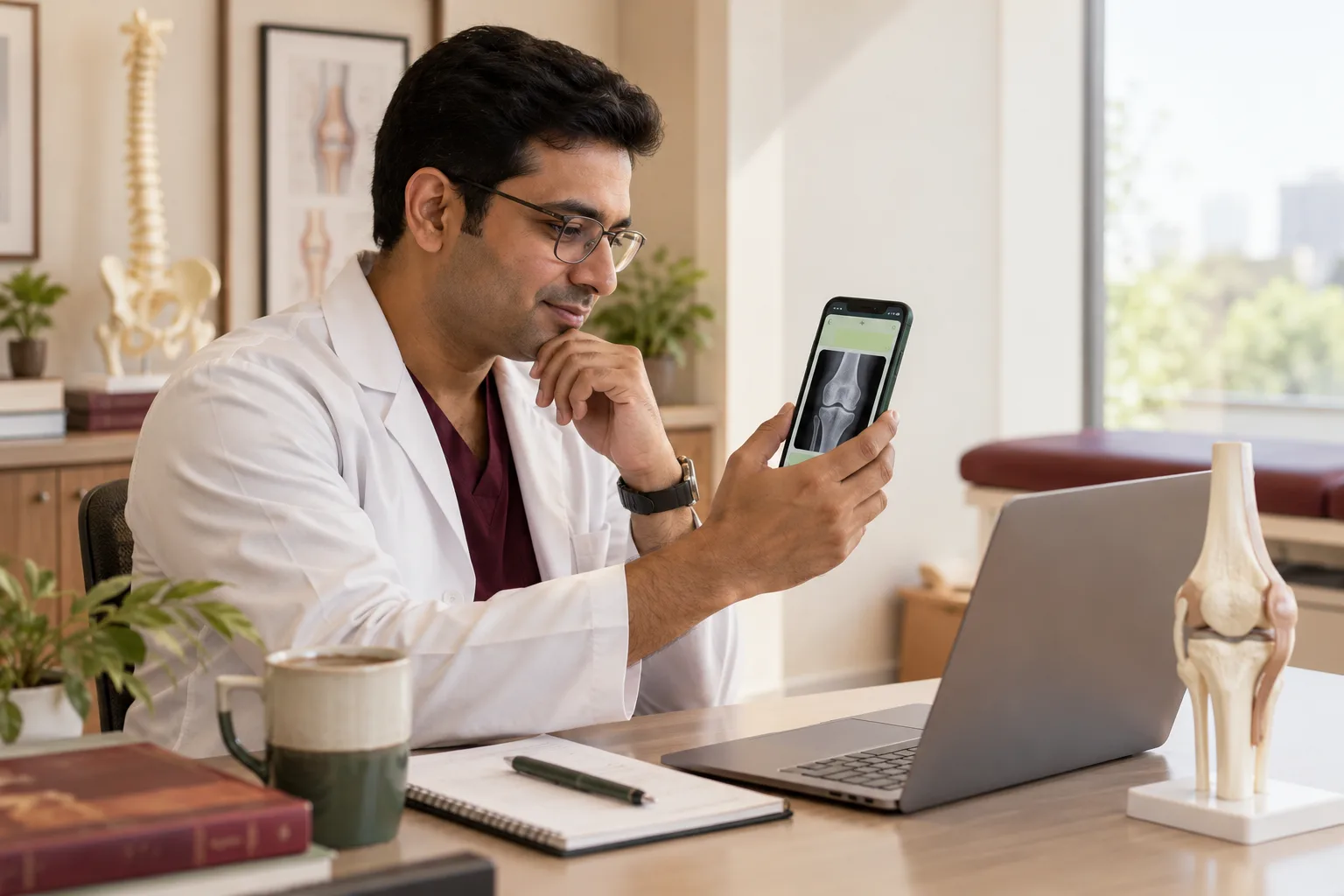 6 min read · 6 Oct 2026What orthopaedic clinics should do with an X-ray sent on WhatsAppPatients send the X-ray before they call. A reply routine for the orthopaedic clinic that books a consultation without diagnosing over chat.
 6 min read · 6 Oct 2026What healthcare buyers check before they choose youA patient, a referring doctor and a hospital purchase team each check different things before choosing a provider. See what each looks at.
More for orthopaedic clinics
Related work to consider.
Or start from the overview: sales and marketing for orthopaedic clinics.
Your next practical step
Tell us what you are trying to grow, and we will read it before we call.
Eight short steps, mostly taps. Skip anything you would rather answer on the call.