Orthotics and prosthetics makers · Content marketing
Answer the questions a family asks before they come in.
Content marketing for an orthotics and prosthetics workshop means writing what a family and a clinician need to know before the first visit: how a limb or brace is made, what the visits involve and how it is adjusted. GullySales writes it plainly, in your families' languages, and clears every page against your professional rules.
Scope, fee, reporting and term are agreed in writing after we have read your brief and spoken to you.
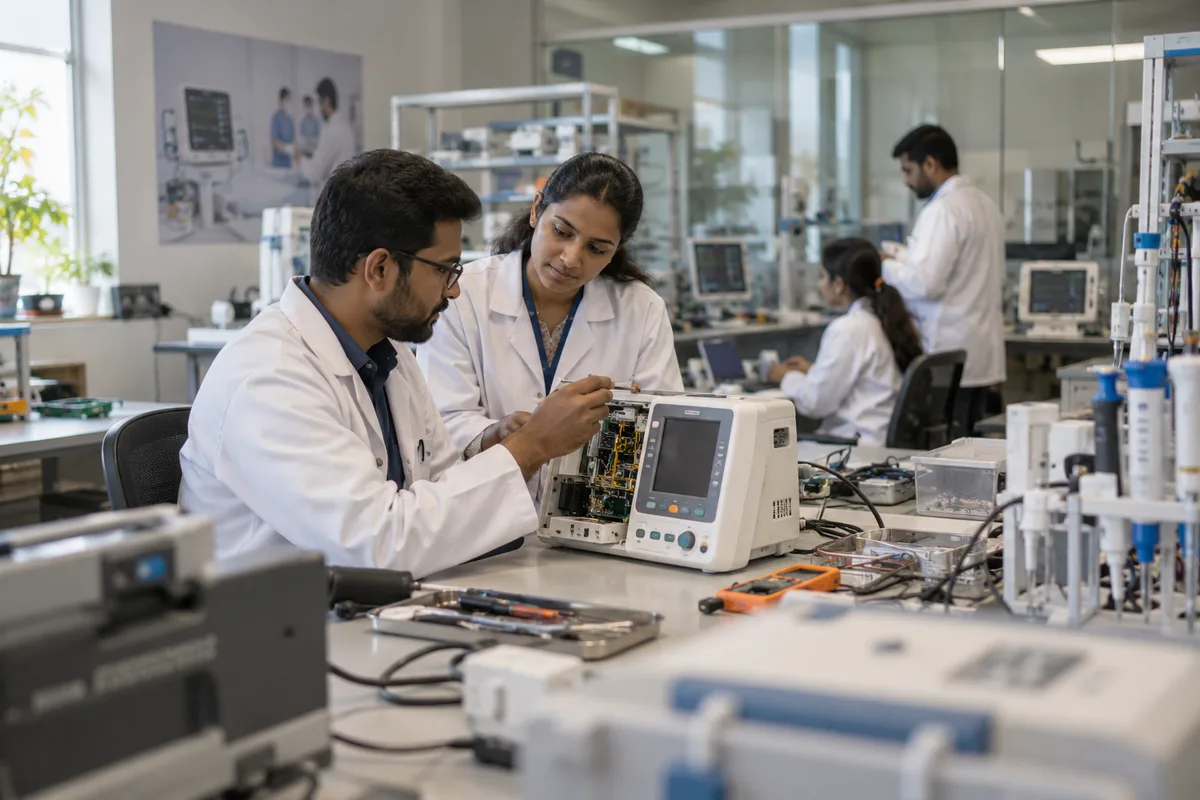
What content marketing means
Content marketing is writing articles, guides and pages that answer the questions buyers search before they are ready to enquire. This makes your business visible and trusted before the first call. GullySales plans this content from the first conversation onward, choosing topics that match real search demand rather than guesses.
Also for orthotics and prosthetics makers
- Social media marketing for orthotics and prosthetics makers
- SEO for orthotics and prosthetics makers
- PPC ads for orthotics and prosthetics makers
- Lead generation for orthotics and prosthetics makers
- CRM for orthotics and prosthetics makers
- Email marketing for orthotics and prosthetics makers
- Sales process for orthotics and prosthetics makers
- Buyer personas for orthotics and prosthetics makers
Sales and marketing for orthotics and prosthetics makers, the overview.
Last updated 14 Nov 2026. Rules for this trade differ by state and professional body, and they change. We describe restrictions in general terms, so check the current position with your own council or adviser before you publish anything.
For orthotics and prosthetics makers
Where it usually goes wrong, and what we would do.
“Families read before they ring”
A person facing a prosthesis wants to know what living with it involves, and a calm explanation tells them they are in safe hands.
“Stories are the strongest content and the hardest to use”
A patient's account helps others, and needs written consent and care so it does not become an outcome claim.
“Clinicians want process, not promotion”
A surgeon deciding where to refer reads how you measure, fit and follow up.
What we do
What we deliver for orthotics and prosthetics makers.
The work available for this need. We agree the deliverables and responsibilities for your engagement in writing.
A guide to how a limb or brace is made
A plain walk through assessment, measurement or cast, trial fitting, delivery and adjustment, with photographs of the workshop and no patients.
Result: A family can picture the process before the first visit.
A first-weeks care guide
How to wear, clean and check the device in the first weeks, when to call the workshop and what a normal adjustment looks like, as advised by your clinician.
Result: Fewer devices are left unworn because of an early problem.
A parent's guide for growing children
How a child's device is reviewed and replaced as they grow, and how a parent books a review.
Result: A parent knows what to expect for years ahead.
A referrer's note
A page for clinicians on how referral, measurement and update work, with clinician credentials as registered.
Result: A surgeon sees how you run before sending a patient.
Consent-based patient stories
Where a patient agrees in writing, a story in their words about the visit and the process, kept to what happened and not to a promise.
Result: A family hears from someone who has been through it.
Reporting on what is read and what leads to a call
Which pieces brought visits and which led to a call or a booking.
Result: You write more of what leads a family to ring.
How the result is measured
- Pages published
- Organic traffic
- Enquiries from content pages
Recorded as a baseline before work starts, so every later report has an honest comparison.
Questions buyers ask first
What a family or a clinician asks before choosing a limb and brace workshop, and the piece that answers it.
- What happens at the first visit?
- A step-by-step page: who sees the patient, what is measured, what to bring and what is agreed before work begins. A family that knows the visit is calmer and more likely to come.
- Who will make my device, and are they qualified?
- A people page naming each clinician, their qualification and their professional registration as held. Never claim a registration you cannot show to a council or a family.
- How many visits will it take?
- Explain the usual stages in general terms and say that the clinician confirms the number after assessment. Do not promise a fixed number or a date. Families plan travel and leave from work around it.
- Will it hurt, and what if it does?
- Describe adjustments and who to call if a device causes pain. Say plainly that adjustment is part of the process, and give a phone number that is answered in working hours.
- How does a child's device change as they grow?
- A page for parents on review visits, resizing and replacement, written with your paediatric clinician. It answers the question that most worries parents of a growing child.
- Can I use a scheme or my employer's help?
- Describe which schemes and sponsors you work with and what a family should bring. Scheme rules change, so say check the current rules with the implementing body.
Who it is for
This is written for these orthotics and prosthetics makers.
- Lower-limb prosthetics workshops (below-knee and above-knee)
- Upper-limb and hand prosthetics
- Spinal and scoliosis brace makers
- Ankle-foot and knee-ankle-foot orthosis makers
- Diabetic and therapeutic footwear and insole makers
- Paediatric orthotics and prosthetics workshops
- Orthopaedic appliance and brace manufacturers selling through dealers
- Hospital-based orthotics and prosthetics units
- Sports and post-surgical brace suppliers
- Suppliers of components and materials to workshops
Before you decide
When this may not be the right fit.
- No clinician has time to read a page before it is published, so a family would receive unchecked advice about a device.
- You have no consent from patients for any story, so the strongest material would be unusable and the rest generic.
Before you decide
Agree the work. Know how to judge it.
Content marketing for orthotics and prosthetics makers: use these checks to prepare, choose the scope, and review what changes.
Bring the right evidence
Bring questions from sales calls and examples of objections that delay a decision. Choose a subject expert who can check the substance, and identify evidence that can be published.
Make the scope clear
Agree the reader, buying question, format, and distribution route for each piece. Set the approval process and distinguish new research from rewriting material you already have.
Check the work in use
Ask a colleague to use the draft in a real buyer conversation. It should answer the question, support its claims, and make the next step clear without requiring a sales pitch to explain it.
Know when to change course
If the same unanswered question appears in several articles, improve the strongest page before commissioning another. More words are not a substitute for missing evidence.
These are discussion points, not a fixed package. GullySales confirms the deliverables, responsibilities, fee, and term in writing after reading your brief and speaking with you.
Before we start
What to have ready before the work starts.
The records, access and decisions this work needs from orthotics and prosthetics makers. Anything missing is noted in the written scope, with who will supply it.
- The practitioner's time at the bench
- One session in the workshop, with the practitioner explaining the stages of making a device, is the raw material for the making guide. It need not be polished. If the practitioner cannot be spared, we write the guide from existing leaflets only, and it will be less specific.
- Your existing leaflets and care sheets
- Any printed sheet you hand to a family about wearing, cleaning or caring for a device is our starting text. Bring them as they are, including old ones. Without them we have to write care instructions from scratch, and your practitioner must then review every line.
- A log of questions from the desk
- For a short stretch, have the desk jot each question a family asks. A notebook works. This list decides what we write and in what order. If it is missing, the topics come from searches alone, and they miss what your families actually say on the phone.
- Signed consent forms for stories
- If you wish to publish any patient story, the signed consent must exist before we begin writing it. A verbal agreement is not enough. Without a form, we write no story and use the workshop's own process as the subject instead.
- A decision on languages
- Tell us which languages your families read, and which of them someone at the workshop can check. A translation nobody can read is a risk. Without a named checker, we write in the languages you can verify and add others later.
How it works
How the content marketing work runs
The work itself, in order. How an engagement starts, from your brief to a written scope, is set out on our method page.
- 1
List the questions the desk gets asked
We ask the front desk and the fitters for the questions families put, in the words they use: how long will I be without it, will it hurt, can my child wear it to school. These questions, not our guesses, become the topics. You strike out any question your practitioners prefer to answer only in person.
- 2
Decide which pieces your clinician will author
Some pages, such as the care of a fitted device, need your practitioner's own voice. Others, such as how a visit runs, we can draft from an interview. You decide the split, and we record who reads and approves each piece before it goes anywhere.
- 3
Interview the practitioner at the bench
We record a conversation beside the workbench, with the practitioner showing the stages of making a device, in your own working language. The recording is the source for the making guide. We do not add any claim that the practitioner did not say.
- 4
Draft the guides in your families' languages
We write the making guide, the first-weeks guide, the parent's guide and the referrer's note in plain sentences. Each piece is checked for medical claims, and your own council's current advertising guidance decides what is cut. Anything about what a device will achieve for a patient is removed.
- 5
Take consent for any patient story
A story goes forward only with a written consent from the patient or the parent, saying where it will appear and that it can be withdrawn. You hold the signed form. Stories without consent are not used, even when the patient is happy to be told they are welcome.
- 6
Read pages against calls they brought
Once published, we check which guides were read and which led to a call or a WhatsApp message, using the source record kept from the start. You then choose which guide to improve, which to merge and which new question is worth writing next.
Where this fits
Three pieces of sales work, in this order.
This work sits inside sales process design, at stage 0, foundation. The audit comes before it, and sales management keeps it running.
Step 1
Sales audit
Find where deals are being lost and what to fix first.
Start here if you cannot say where orders are lost.
Step 2 · you are here
Sales process design
One written way to sell, from first enquiry to repeat order.
Start here if every salesperson sells differently.
Step 3
Sales management
A target, a review routine and someone who owns the number.
Start here if the team has targets and no routine.
FAQ
Questions owners ask before they call.
Not here? More answers, or ask on WhatsApp.
Who writes it, our clinician or an agency?
Can we publish patient stories?
Is video worth it?
Should content be in regional languages?
Can the content name the conditions we treat?
How do we avoid sounding like a catalogue?
How much does it cost?
How long is the contract?
How soon will we see results?
Who will actually do the work?
More for orthotics and prosthetics makers
Related work to consider.
Closest to this: content and social
Also for orthotics and prosthetics makers
Or start from the overview: sales and marketing for orthotics and prosthetics makers.
Your next practical step
Tell us what you are trying to grow, and we will read it before we call.
Eight short steps, mostly taps. Skip anything you would rather answer on the call.