Orthotics and prosthetics makers · Pay per click advertising
Pay for the family searching for a device in your city, not for every orthopaedic query.
PPC for an orthotics and prosthetics workshop means paying for the searches of families and clinicians who need a specific device near them, and keeping out students, job seekers and people who want a free scheme. GullySales sets the area, writes plain ads without outcome claims and counts assessments booked, not clicks.
Scope, fee, reporting and term are agreed in writing after we have read your brief and spoken to you.
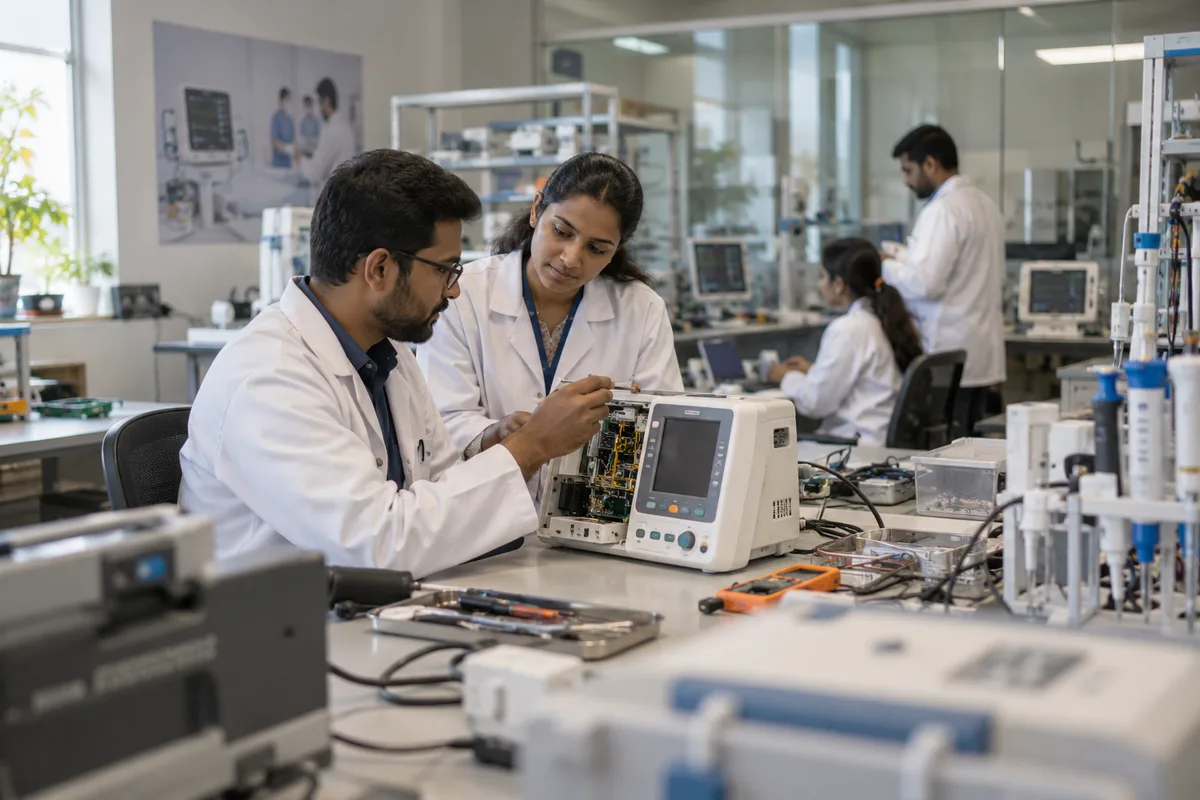
What pay per click advertising means
Pay per click advertising (PPC) is paying a fee each time someone clicks your advert on Google or another platform. It puts you at the top of a search page immediately, instead of waiting for ranking to build. GullySales sets the targeting, writes the ad text and checks spend against enquiries received.
Also for orthotics and prosthetics makers
- SEO for orthotics and prosthetics makers
- Lead generation for orthotics and prosthetics makers
- CRM for orthotics and prosthetics makers
- Content marketing for orthotics and prosthetics makers
- Email marketing for orthotics and prosthetics makers
- Sales process for orthotics and prosthetics makers
- Buyer personas for orthotics and prosthetics makers
- Digital marketing for orthotics and prosthetics makers
Sales and marketing for orthotics and prosthetics makers, the overview.
Last updated 14 Nov 2026. Rules for this trade differ by state and professional body, and they change. We describe restrictions in general terms, so check the current position with your own council or adviser before you publish anything.
For orthotics and prosthetics makers
Where it usually goes wrong, and what we would do.
“Condition searches draw a worried reader and a policy review”
A search for a named condition brings people who need a doctor, not a workshop, and health ads on some platforms face extra checks.
“A device search is rarer and worth far more”
The family searching for an artificial leg in your city has a need and a decision close at hand, and few advertisers answer them.
“A click from another state may not be a patient”
A fitting needs visits, so a search from a distant city is only worth paying for if you can follow up there.
What we do
What we deliver for orthotics and prosthetics makers.
The work available for this need. We agree the deliverables and responsibilities for your engagement in writing.
Campaigns by device and area
Separate ads and pages for artificial limbs, spinal braces and diabetic footwear, shown in the districts you serve.
Result: A searcher sees the device they need, from a workshop they can reach.
Plain ads without claims
Ads describing the device, the clinician, the location and the call to book an assessment, checked against your professional rules and the platform's current health policy.
Result: Ads run without a claim that would see them refused.
Negative keywords against the wrong searches
Blocks on course, job, free, subsidy where not offered, DIY, and condition-only searches, reviewed against what people typed.
Result: The budget stops paying for students, job seekers and people who need a doctor.
A call and WhatsApp tracking setup
Every call and message from the ads tagged with its source, so a family's first contact is recorded.
Result: You see how many calls became assessments.
Landing pages for each device
The device page with the visit explained, a call button and a short booking form, not the home page.
Result: A click lands on what the ad promised.
Spend measured against assessments
Cost per assessment booked and per fitting, shown beside the figures from before the ads began.
Result: You judge the ads by patients seen.
How the result is measured
- Cost per click
- Cost per enquiry
- Enquiries from paid search
Recorded as a baseline before work starts, so every later report has an honest comparison.
Searches to bid on and block
The searches worth paying for as a limb and brace workshop, and the ones to keep out.
- Device plus your city, such as artificial leg in your city
- Bid. This is a family with a need. Send the click to the device page with the visit explained, the clinician's name and a phone number that is answered in working hours.
- Brace or footwear plus condition-neutral wording
- Bid with care, such as spinal brace for child or diabetic footwear. Keep the ad factual and send the click to a page with the assessment explained, never an outcome.
- Repair and replacement of an existing limb or brace
- Bid. A person with a device that has broken or no longer fits has a need now and a workshop to find. Land on the repair page with what you can service and what to bring.
- Your workshop name and your clinician's name
- Bid, in a small separate campaign. A referred family searches for the name they were given. Keep the address, the phone and the hours visible in the ad.
- Course, job, internship and training searches
- Block. Prosthetics course, orthotics job and internship come from students and graduates. Add them as negatives and read the search terms for more.
- Free, subsidy and scheme searches, if you do not run schemes
- Block or answer. If you support a scheme, say so on the page. If not, add the terms as negatives so you do not pay for clicks that cannot become patients.
Who it is for
This is written for these orthotics and prosthetics makers.
- Lower-limb prosthetics workshops (below-knee and above-knee)
- Upper-limb and hand prosthetics
- Spinal and scoliosis brace makers
- Ankle-foot and knee-ankle-foot orthosis makers
- Diabetic and therapeutic footwear and insole makers
- Paediatric orthotics and prosthetics workshops
- Orthopaedic appliance and brace manufacturers selling through dealers
- Hospital-based orthotics and prosthetics units
- Sports and post-surgical brace suppliers
- Suppliers of components and materials to workshops
Before you decide
When this may not be the right fit.
- You cannot yet record which call came from which ad, so the spend could not be judged against real patients.
- Nobody can take a call in the hours the ad runs, so a worried family who clicked would reach voicemail.
- Your assessment slots are full for the coming weeks, so paid enquiries would wait with no date to offer.
Before you decide
Agree the work. Know how to judge it.
PPC ads for orthotics and prosthetics makers: use these checks to prepare, choose the scope, and review what changes.
Bring the right evidence
Bring search-term reports, conversion definitions, and the sales outcome of past enquiries where available. Identify products, locations, and enquiries you cannot serve.
Make the scope clear
Choose the offer and landing page before setting a media budget. Agree who pays the platform, which actions count as conversions, and how unsuitable searches will be reviewed.
Check the work in use
Trace a test enquiry from the advert to the sales record. Review qualified enquiries and orders alongside spend, and separate duplicates or spam from genuine buyer demand.
Know when to change course
If the advert generates enquiries that do not fit, revise targeting and qualification before increasing spend. If suitable enquiries are lost after contact, work on the sales process.
These are discussion points, not a fixed package. GullySales confirms the deliverables, responsibilities, fee, and term in writing after reading your brief and speaking with you.
Before we start
What to have ready before the work starts.
The records, access and decisions this work needs from orthotics and prosthetics makers. Anything missing is noted in the written scope, with who will supply it.
- A named person for paid calls
- Every paid click ends at a person, so we need the name of whoever answers the campaign line and the hours they are reachable. A phone that rings out during a fitting can be covered by a second person. Without a named answerer we run the campaign at a much lower budget, or not at all.
- Your last year of assessment bookings
- A register or diary showing assessments by device and by town lets us set sensible service areas and see which devices are worth paying for. Handwritten pages photographed are acceptable. If it does not exist, the first campaign runs narrower, and we start the register before spend rises.
- Access to the ad account and the payment card
- The advertising account should be in the business's own name, with you as owner and us as a manager. A card belonging to the workshop pays the platform directly. If an old vendor controls the account, we ask you to request transfer first, so that campaign history stays with the workshop.
- The spend limit you have decided
- Tell us the largest sum you will spend on advertising before an assessment has come from it. That figure is a decision only you can make, and it fixes how many devices we advertise and how wide the map is. If it is unclear, we start with the single device you want to fit more of.
How it works
How the pay per click advertising work runs
The work itself, in order. How an engagement starts, from your brief to a written scope, is set out on our method page.
- 1
Agree who answers the paid calls
Paid clicks end in a phone ring or a WhatsApp message, so we begin by asking who picks up at the workshop and when the phone is not answered. You name the person and the hours of the lines. We will not switch on a campaign whose calls go to a counter that is empty during fittings.
- 2
List the devices worth paying for
We sit with the prosthetist and the owner and rank the devices by how much work each brings and how rarely it is searched. A custom limb or a spinal brace is a different spend decision from an insole. You decide the devices that get a campaign and which stay with organic pages, and we write that choice down.
- 3
Draw the service area on a map
We mark the districts a family can realistically travel from for repeated fittings, using the addresses in your visit register. Searches from outside that map are blocked. You decide whether a neighbouring town that sends occasional families is in or out, since each fitting means more than one journey.
- 4
Write ads and the pages they land on
We draft plain ads that name the device and the city without claims, and a landing page for each device carrying the phone number, the WhatsApp link and the first-visit steps. Your clinician reads the wording, and your own council's current guidance decides what stays. Call and WhatsApp tracking is tested with a real call before spend begins.
- 5
Sort the clicks against booked assessments
Once ads have run we take each call and message and mark which became an assessment booking, which was a student or job seeker, and which wanted a free scheme. We set that against spend and the figures recorded before launch. You then decide which devices keep budget and which return to organic pages.
Where this fits
Three pieces of sales work, in this order.
This work sits inside sales process design, at stage 1, prospecting and lead generation. The audit comes before it, and sales management keeps it running.
Step 1
Sales audit
Find where deals are being lost and what to fix first.
Start here if you cannot say where orders are lost.
Step 2 · you are here
Sales process design
One written way to sell, from first enquiry to repeat order.
Start here if every salesperson sells differently.
Step 3
Sales management
A target, a review routine and someone who owns the number.
Start here if the team has targets and no routine.
FAQ
Questions owners ask before they call.
Not here? More answers, or ask on WhatsApp.
Can ads show before-and-after photographs?
Should we advertise to other cities?
Are call-only ads a good idea?
How do we stop clicks from people hoping for a free device?
Who pays the advertising platform, you or the workshop?
Can we run ads while the clinician is away?
How much does it cost?
How long is the contract?
How soon will we see results?
Who will actually do the work?
More for orthotics and prosthetics makers
Related work to consider.
Or start from the overview: sales and marketing for orthotics and prosthetics makers.
Your next practical step
Tell us what you are trying to grow, and we will read it before we call.
Eight short steps, mostly taps. Skip anything you would rather answer on the call.