Urology clinics · Digital marketing
Choose the few channels that suit a stone attack, a prostate worry and a physician's referral.
Digital marketing for a urology clinic is the mix of search, listings, content, messaging and, where it suits, ads that bring patients to the doctor. GullySales decides the mix by condition, because an emergency, an elective procedure and a sensitive complaint need different channels.
Scope, fee, reporting and term are agreed in writing after we have read your brief and spoken to you.
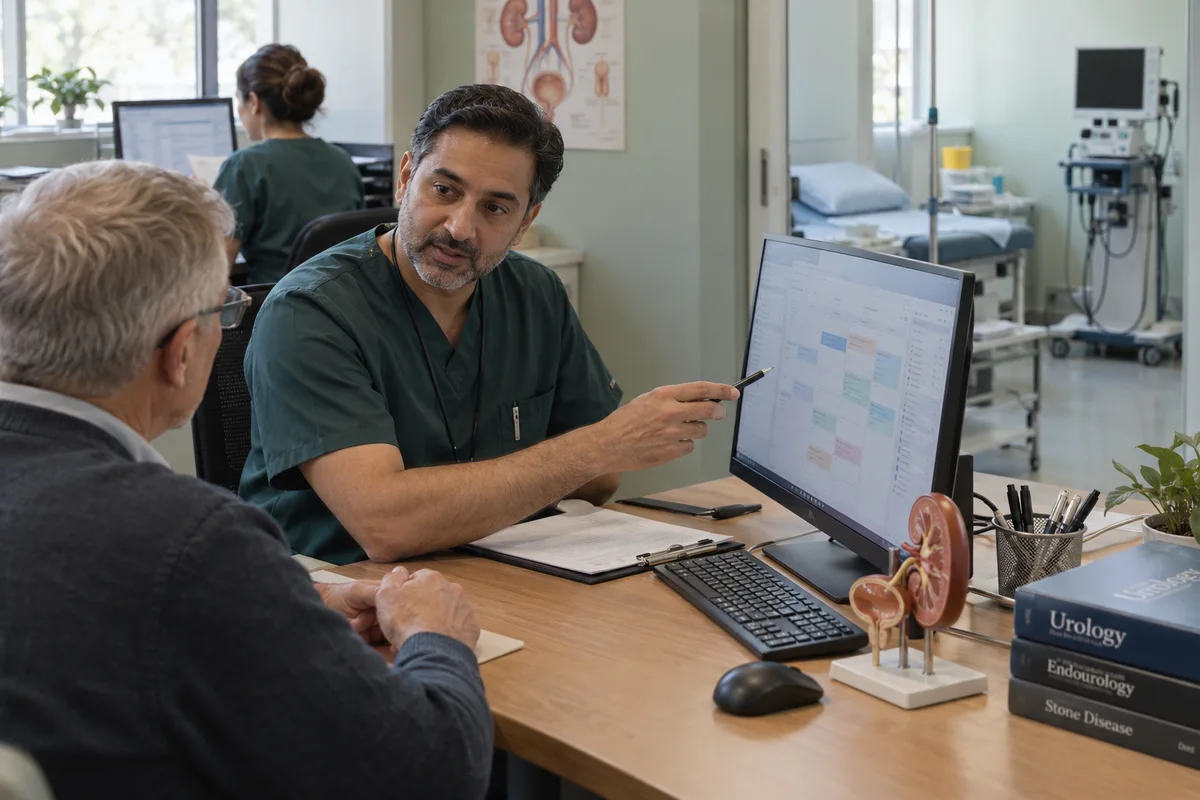
What digital marketing means
Digital marketing is the combined work of search, social media, advertising and website channels running together rather than as separate projects with separate people. GullySales runs these as one connected system so a change in one channel, such as a new offer, is reflected everywhere at once.
Last updated 14 Nov 2026. Rules for this trade differ by state and professional body, and they change. We describe restrictions in general terms, so check the current position with your own council or adviser before you publish anything.
For urology clinics
Where it usually goes wrong, and what we would do.
“An emergency and an elective procedure need different channels”
A stone attack is won by Maps and a number that is answered. A planned surgery is won by content and trust. Spending the same effort on both wastes it on one of them.
“Ads suit some conditions and not others”
Paid search suits procedures patients plan, such as vasectomy. Rules on health advertising differ by platform and profession, so test small, check the wording and keep claims out.
“Numbers need the right question”
Clicks and views say little. The clinic needs to know how many calls were answered, how many became consultations and which source they came from. Without that log, the spend is a guess.
“Digital work cannot replace the desk”
A well-ranked page that leads to a missed call is wasted. Phone handling, reply speed and follow-up are part of the marketing, and they are where a clinic can lose the patient.
What we do
What we deliver for urology clinics.
The work available for this need. We agree the deliverables and responsibilities for your engagement in writing.
Channel plan by condition
A short plan that names the channels for stones, prostate, men's health and procedures, with reasons.
Result: You can see why each channel is on the plan.
Tracking set-up
Call and form tracking so each enquiry carries its source.
Result: Every new enquiry has a source recorded.
Search and listing foundations
Condition pages, doctor profile and Maps listings built before any paid work.
Result: The basics are in place and checked.
Test-and-read ad plan
If you choose ads, a small test with wording checked by your adviser and results read against calls answered.
Result: You can compare ad enquiries with enquiries from other sources.
Plain reading of results
A written summary of what brought consultations, what brought only calls and what to change next.
Result: You can decide what to continue with the numbers in front of you.
How the result is measured
- Enquiries across channels
- Cost per enquiry overall
- Channel mix by contribution
Recorded as a baseline before work starts, so every later report has an honest comparison.
Searches your buyers type
Choose the channel by what the buyer types.
- urologist near me
- The map listing and the clinic page, the first channel for a stone attack because the buyer is in pain and searching now.
- kidney stone laser surgery
- A procedure page and the doctor's profile. Paid search can be tested here once the desk can answer every call.
- prostate check-up
- A condition page reviewed by the doctor. The reader decides quietly, so measure calls and not clicks.
- vasectomy consultation
- A private enquiry route with a form that asks for little, since a long form makes a hesitant patient stop.
- urology clinic for female incontinence
- A page written for a woman who may be reluctant to ask, with privacy and the attendant's presence stated up front.
Who it is for
This is written for these urology clinics.
- Single-doctor urology clinics operating at a nearby private hospital
- Urology and andrology practices with their own day-care theatre
- Urology departments inside multi-speciality hospitals that want direct patient enquiries
- Endourology and laser stone surgery practices
- Uro-oncology and robotic surgery specialists in the metros
- Men's health and andrology clinics
- Female urology and incontinence clinics
- Paediatric urology practices run by a visiting specialist
Before you decide
When this may not be the right fit.
- The desk cannot answer calls on the day they arrive, so paid clicks would turn into missed calls
- Tracking has not been set up, so you could not tell which channel brought a patient
Before you decide
Agree the work. Know how to judge it.
Digital marketing for urology clinics: use these checks to prepare, choose the scope, and review what changes.
Bring the right evidence
Bring a recent won order and an enquiry that went nowhere. Trace how each buyer found you, what they asked, and who handled the next step. A channel list alone will not explain the difference.
Make the scope clear
Choose one offer and one buyer group first. Agree which part needs attention: being found, getting a useful enquiry, or turning an enquiry into an order. Separate recommendations from the work required to carry them out.
Check the work in use
A useful plan names the first change, its owner, the evidence behind it, and the number that will show whether it worked. Ask what has deliberately been left out and why.
Know when to change course
If your team cannot answer the enquiries it already receives, improve that handover before buying more traffic. If the offer itself is unclear, test it with buyers before adding channels.
These are discussion points, not a fixed package. GullySales confirms the deliverables, responsibilities, fee, and term in writing after reading your brief and speaking with you.
Before we start
What to have ready before the work starts.
The records, access and decisions this work needs from urology clinics. Anything missing is noted in the written scope, with who will supply it.
- The appointment book for the last season
- We need it to see how patients arrived and what they came for. Names may be masked. Without it, the plan rests on the desk's memory. A few seasons would be better than one, since stone cases rise and fall, but one is enough to begin.
- Ownership of listing, site and analytics accounts
- The accounts must be in the clinic's name, with us added. If an agency created them, ownership moves first. Accounts held by us leave you stranded if we part. This includes the map listing, the website, the analytics account and any advertising account, each with an owner login.
- A cap on any advertising spend
- You set the highest sum for a test and who approves a change. If no cap is set, we run no paid work.
- A desk that logs source on every call
- The desk must ask and note how the patient heard of the doctor. A column in a register is enough. Without it, we cannot tell which channel worked. The desk should ask in a friendly way, and a patient who does not remember is simply recorded as unknown, never guessed at.
- The doctor's approval of ad wording
- Every advertisement is read by the doctor and the adviser before it runs. We need them reachable. Without the doctor's approval of the exact wording, no advertisement runs, and a paid test waits until both are reachable on the same day.
How it works
How the digital marketing work runs
The work itself, in order. How an engagement starts, from your brief to a written scope, is set out on our method page.
- 1
List how last season's patients found the doctor
We go through the appointment book and ask the desk how each patient first heard of the doctor: a physician, a hospital, search, a Maps tap or a relative. You tell us which conditions you want to grow. The step ends with a first reading of what truly brings patients. We also note which patients arrived having read a hospital's page, since that tells us whether the doctor's name or the hospital's name carries the enquiry.
- 2
Split the plan into emergency and elective
A stone attack is chosen in minutes on a phone, while a prostate visit is put off for months. We draw one plan for each, naming the channels that suit it. The doctor confirms which conditions are treated. The result is a two-column plan, one for each kind of decision. For the emergency plan the weight falls on the map listing and a number that is answered, and for the elective plan on pages and content that a person can read in private.
- 3
Test every phone number and form
Before anything is switched on we call each number, submit each form and send a test chat from a phone, and a desk person confirms they are received and logged. You fix what is broken. The step ends with a clean test of every route. We also test the number from a phone with a different network, since some call-tracking numbers fail on certain networks.
- 4
Set up tracking that the desk can read
We place call and form tracking on the site and the listing, using accounts the clinic owns, and show the desk a one-page sheet of what each number means. Patient details are never put in the tracking. The step ends with a sheet the desk can fill. The sheet also lists what we never track, such as symptoms typed into forms, and the desk keeps to that.
- 5
Decide where a small ad test belongs
Ads suit some conditions and not others. With the doctor we pick one condition for a small, capped test, and your adviser reviews the wording against the advertising rules and the platform's current rules. You set the ceiling. The step ends with a test that is easy to stop. The test also has a stop rule written in advance: the sum, the date for review and who may end it.
- 6
Read the numbers in plain words
We write a plain reading of calls, bookings and consultations against the figures noted at the start, condition by condition. You see which channels brought patients and which only brought clicks. We make no promise of results, and we say where the sample is small. The reading is given to the doctor and the desk together, so that the desk's account of calls is set beside the figures.
Where this fits
Three pieces of sales work, in this order.
This work sits inside sales process design, at stage 0, foundation. The audit comes before it, and sales management keeps it running.
Step 1
Sales audit
Find where deals are being lost and what to fix first.
Start here if you cannot say where orders are lost.
Step 2 · you are here
Sales process design
One written way to sell, from first enquiry to repeat order.
Start here if every salesperson sells differently.
Step 3
Sales management
A target, a review routine and someone who owns the number.
Start here if the team has targets and no routine.
FAQ
Questions owners ask before they call.
Not here? More answers, or ask on WhatsApp.
Where should a new urology clinic start?
Which numbers tell the clinic that its online work is paying off?
Which channels suit stone and which suit prostate?
Can we target ads at men with prostate symptoms?
Can ads reach men with prostate symptoms?
Which numbers show that the online work is paying off?
How much does it cost?
How long is the contract?
How soon will we see results?
Who will actually do the work?
More for urology clinics
Related work to consider.
Closest to this: strategy and research
Also for urology clinics
Or start from the overview: sales and marketing for urology clinics.
Your next practical step
Tell us what you are trying to grow, and we will read it before we call.
Eight short steps, mostly taps. Skip anything you would rather answer on the call.