Furniture repair and upholstery workshops · Social media
Show a worn sofa becoming a good one and let the picture sell the job.
Social media for a furniture repair workshop is a stream of finished work, process shots and fabric choices on Instagram, plus the WhatsApp link that turns a viewer into a quote request. GullySales plans the posts, and your team supplies the pictures.
Scope, fee, reporting and term are agreed in writing after we have read your brief and spoken to you.
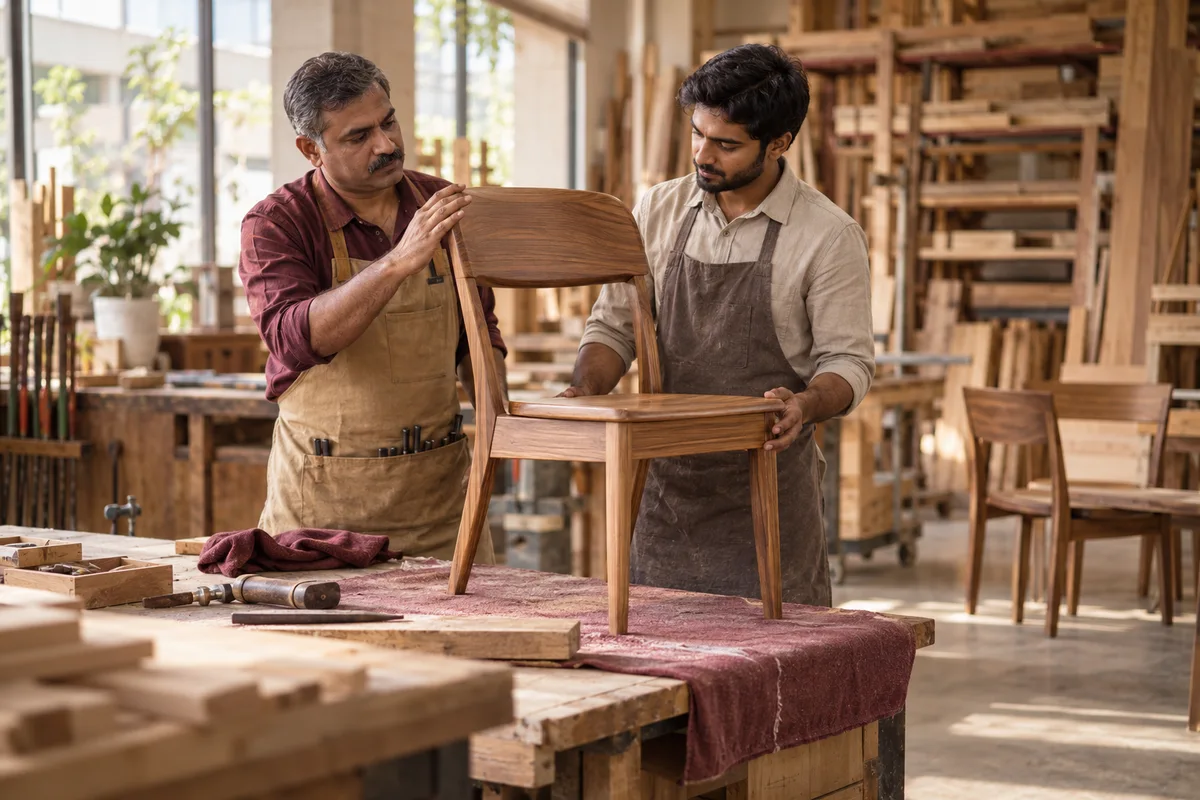
What social media means
Social media is the ongoing posting your business does on platforms such as Instagram, Facebook and LinkedIn to stay visible to customers and prospects between purchases. GullySales plans a posting calendar, writes captions and designs the images so the page looks active and answers what a visitor would ask.
Also for furniture repair and upholstery workshops
- Content marketing for furniture repair workshops
- Lead generation for furniture repair workshops
- SEO for furniture repair workshops
- Local SEO for furniture repair workshops
- Buyer personas for furniture repair workshops
- CRM for furniture repair workshops
- Follow-up systems for furniture repair workshops
- WhatsApp marketing for furniture repair workshops
Sales and marketing for furniture repair and upholstery workshops, the overview.
Last updated 14 Nov 2026.
For furniture repair and upholstery workshops
Where it usually goes wrong, and what we would do.
“Transformation is the format”
A sagging sofa and the same sofa re-covered tell the story in two frames. The viewer sees the repair, and the price conversation starts from there. Shoot both frames from the same angle and in the same light, so the change is plain to see.
“Process holds attention”
Stripped frames, new webbing and foam being cut show the craft that justifies a quote. Short clips of work in progress prove the job is done by hand. Film the hands and the tools, with the customer's piece alone in frame and no home visible behind it.
“Fabric choice needs a close look”
Customers hesitate over fabric. Pictures of swatches against a sofa in daylight help them decide and cut the back and forth. Post the swatch beside the finished arm or cushion, and name the fabric in the caption.
“Customer homes are private”
A before picture can show a family room. Photograph the furniture only, and ask the customer before posting anything recognisable. Keep names, addresses and street views out of every frame, and trim the background when in doubt.
What we do
What we deliver for furniture repair and upholstery workshops.
The work available for this need. We agree the deliverables and responsibilities for your engagement in writing.
A posting plan around finished jobs
Ideas for each repair type, drawn from what the workshop actually does.
Result: The team knows what to photograph.
A shot list for the floor
Before, during and after angles in daylight, with the piece alone in frame.
Result: Pictures come out consistent.
An outline for short Reels
Simple sequences for re-covering, polish and cane work.
Result: The team can film a job without extra planning.
A WhatsApp link in every profile
A pre-written message that asks for three photographs.
Result: A viewer can start a quote in one tap.
A consent note
Wording to ask a customer before a picture is shared.
Result: Posts include only work the customer agreed to.
A portfolio view for designers
A tidy set of finished pieces grouped by fabric and type of work.
Result: A designer who looks the workshop up sees a portfolio.
How the result is measured
- Posts published
- Engagement rate
- Enquiries from social profiles
Recorded as a baseline before work starts, so every later report has an honest comparison.
Posts and pieces to plan
Plan posts around jobs the team has finished.
- A sagging sofa made firm again
- A before and after reel in good light, with the frame shown stripped so the viewer sees the work behind the new fabric.
- A fabric choice explained
- A close photograph of two or three swatches against the same sofa and a plain line on why one wears better on the arms.
- An old chair restored
- A single carousel from cracked to finished, with the owner's permission, for the viewer who has a family piece at home.
- A recliner mechanism fixed
- A short clip of the working lever, aimed at the buyer who thinks a broken recliner means a new one.
- A hotel or cafe refit
- Finished seating in the venue with the manager's consent, shown to the designer or hospitality buyer who follows the page.
- A day on the workshop floor
- A reel of cutting, stitching and stapling, which shows the craftsmanship that a price list cannot.
Who it is for
This is written for these furniture repair and upholstery workshops.
- Sofa reupholstery and cushion refilling workshops
- Wooden furniture repair and repolishing workshops
- Cane, rattan and wicker repair specialists
- Recliner, sofa-cum-bed and mechanism repair technicians
- Office chair and workstation repair services
- Dining chair and restaurant booth re-covering contractors
- Hotel, resort and homestay furniture refurbishment workshops
- Antique and heritage furniture restoration studios
Before you decide
When this may not be the right fit.
- The workshop has no photographs from the start of any job, so a transformation post could not be made.
- Customers have not been asked whether their homes and furniture may appear, and the team has no routine for asking.
- Nobody can answer the messages that a post brings, so the effort would end in unread comments.
Before you decide
Agree the work. Know how to judge it.
Social media for furniture repair workshops: use these checks to prepare, choose the scope, and review what changes.
Bring the right evidence
Review the posts that produced useful conversations, not only the ones with the most views. Gather buyer questions and decide which team member can contribute credible material.
Make the scope clear
Choose the audience and channel before setting a posting volume. Agree who supplies material, approves posts, and handles messages, including complaints or questions the agency cannot answer.
Check the work in use
Follow a post through to the profile, website, and response. A useful report explains the quality of conversations and enquiries, alongside reach and engagement.
Know when to change course
If publishing takes time away from unanswered buyer messages, fix the response routine first. Do not expand to another channel without a clear reason for being there.
These are discussion points, not a fixed package. GullySales confirms the deliverables, responsibilities, fee, and term in writing after reading your brief and speaking with you.
Before we start
What to have ready before the work starts.
The records, access and decisions this work needs from furniture repair and upholstery workshops. Anything missing is noted in the written scope, with who will supply it.
- Finished-job photographs with permission
- Pictures of completed work whose owners agreed to be shown, with names, street numbers and family photographs out of frame. Even a few help. Without permission, we use your own showroom pieces and workshop shots, because a customer who sees a private room online will complain.
- Admin access to the accounts
- Access to the Instagram and Facebook pages and a business manager account, or the details to create them in the workshop's name. Accounts held on a worker's personal phone are a risk. Without access, we cannot schedule posts or answer questions.
- Fabric and foam samples to photograph
- A swatch book, a few foam densities and the webbing and thread you use, laid out in good light. They make the close-ups that settle fabric doubts. If your supplier's swatches are all you have, we say so in the caption rather than imply the workshop made them.
- A rule on who may quote in public
- Name the person who discusses price in comments and messages. Others send the customer to a private chat. If nobody is named, staff give figures in public, and the customer expects that figure when the sofa arrives and the work is larger.
- A time slot for the floor photographs
- A moment in each job when the helper takes the shots, perhaps when the piece arrives and when it leaves. Photographs taken afterwards, from memory, are weak. If the floor cannot spare the time, the plan shrinks to finished work only.
How it works
How the social media work runs
The work itself, in order. How an engagement starts, from your brief to a written scope, is set out on our method page.
- 1
Pick the finished jobs worth a picture
We sit with your supervisor and go through jobs that left the floor recently, choosing those that photograph well: a faded sofa made new, a recliner that works again, a set of banquet chairs in one fabric. You decide which customers may be shown. Jobs with no consent are left out.
- 2
Give the floor a shot list
We hand your team a short list of pictures to take on every job: the piece as it arrived, the stripped frame, the new foam, the fabric choice, the finished piece in light. Your karigars or helper take them on a phone. We explain where to stand so that the picture shows the work.
- 3
Agree the formats that will repeat
We propose a few post shapes: the before-and-after, a fabric close-up, a short process reel and a customer's question answered. You choose those you can keep up with. We also agree the tone of replies in comments and messages, and who is allowed to name a price.
- 4
Draft the posts and put the quote link in
We write captions that name the repair and the neighbourhood, and fit the WhatsApp quote link into the profile and the highlights. You read every caption before it goes live, and strike claims about durability that you cannot stand behind.
- 5
Build a portfolio view for designers
We arrange a set of highlights or a pinned collection that a designer can open and forward to a client: finished pieces by type, fabrics used, the pickup and return process. You decide what the designer sees. Customer homes and names stay out of every picture.
- 6
Compare messages and quote requests with the start
At the beginning we noted the messages and quote requests that came from social channels. Now we set the posts beside the messages they brought and the jobs that followed. You see which formats drew photographs of sofas and which drew only likes, and decide what to keep, with no follower count set as the aim.
Where this fits
Three pieces of sales work, in this order.
This work sits inside sales process design, at stage 0, foundation. The audit comes before it, and sales management keeps it running.
Step 1
Sales audit
Find where deals are being lost and what to fix first.
Start here if you cannot say where orders are lost.
Step 2 · you are here
Sales process design
One written way to sell, from first enquiry to repeat order.
Start here if every salesperson sells differently.
Step 3
Sales management
A target, a review routine and someone who owns the number.
Start here if the team has targets and no routine.
FAQ
Questions owners ask before they call.
Not here? More answers, or ask on WhatsApp.
Do we need to post every day?
Which platform matters?
Can designers see our work there?
Should we show the customer's name or street with a finished sofa?
Do we show the customer's street or surname with a finished sofa?
Can a designer see our work there without following us?
How much does it cost?
How long is the contract?
How soon will we see results?
Who will actually do the work?
More for furniture repair and upholstery workshops
Related work to consider.
Closest to this: content and social
Also for furniture repair and upholstery workshops
Or start from the overview: sales and marketing for furniture repair and upholstery workshops.
Your next practical step
Tell us what you are trying to grow, and we will read it before we call.
Eight short steps, mostly taps. Skip anything you would rather answer on the call.