How people choose in this industry
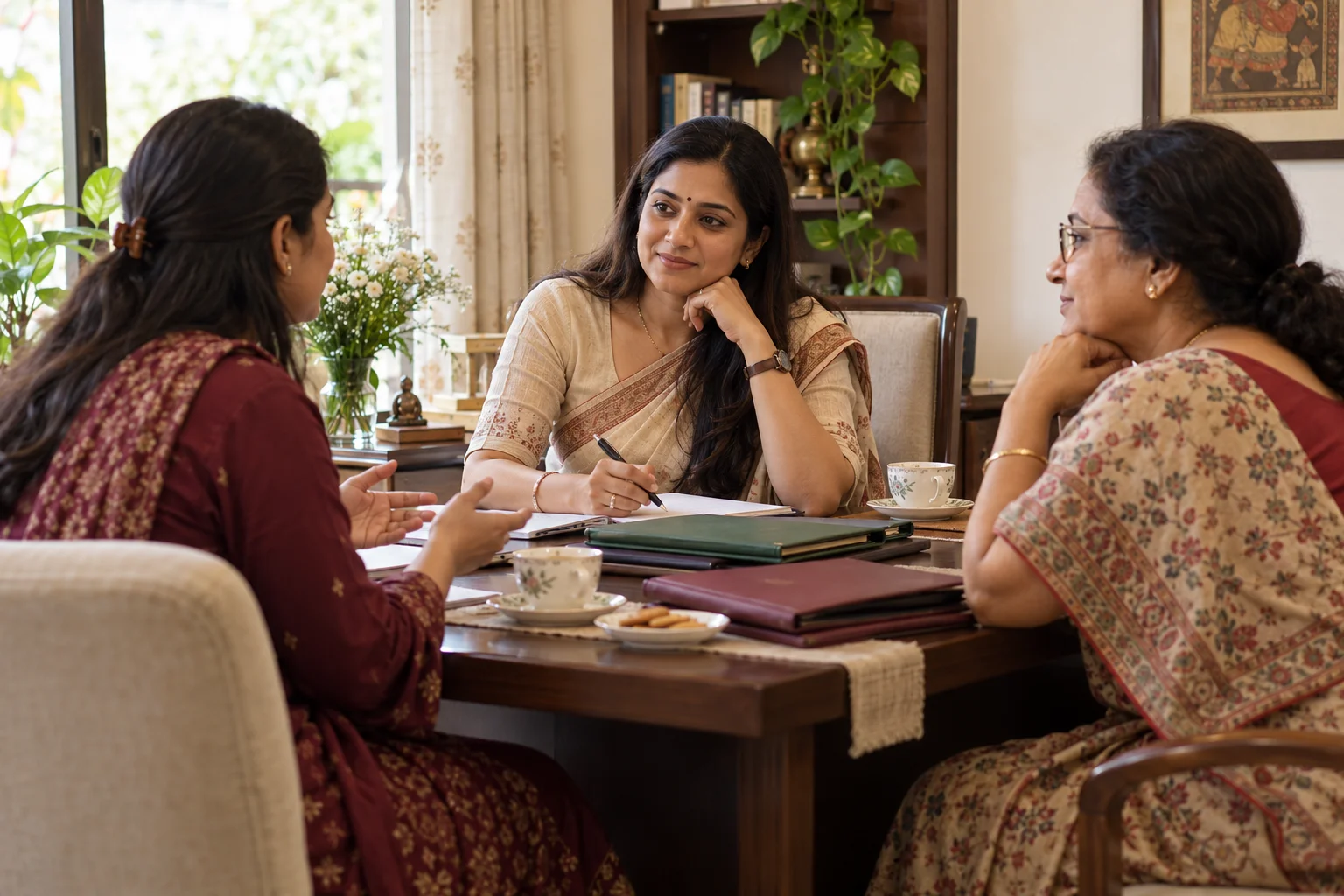
The enquiry comes from a parent, after a recommendation from a relative or a community association. The family looks for a bureau that knows its community, whether Lingayat, Brahmin, Jain, Marwari, Nair, Syrian Christian or Muslim, and its language. They then compare a few: how profiles are verified, whether there is a physical office to visit, how many matches are shown in a week, and what the registration fee covers.
Google Business Profile and a name that others have already mentioned do the first filtering. A visit to the office, or a call with the person who will actually handle the profile, does the closing. Big portals such as Shaadi.com and Jeevansathi are the benchmark in the family's mind, so a bureau has to explain plainly what it offers that a portal does not: a person who knows the families, phone verification and a conversation before each introduction.
For NRI and metro professionals the decision is different. The parents in Mysuru or Coimbatore search, while the son or daughter in Dubai or Bengaluru makes the final call. Both of them need to see the same reassurance.
The decision before implementation
Resolve an outstanding delivery issue before asking for advocacy or another purchase. Respect contact preferences.
Existing industry priorities to review
- Registration for brides and grooms within one community
- Premium personal matchmaking with family meetings
- NRI and overseas matrimony
- Second-marriage and divorcee profiles
- Horoscope matching alongside introductions
These describe the industry's wider priorities. The written scope identifies which this service will address.