Pet boarding services · Lead generation
Fill the kennel with owners who have a trip booked and nowhere to leave the dog.
Lead generation for a pet boarding business is the work of getting owners with real travel dates to message you before they message three other places. GullySales works on where those owners look, what they see first and how the first message is answered.
Scope, fee, reporting and term are agreed in writing after we have read your brief and spoken to you.
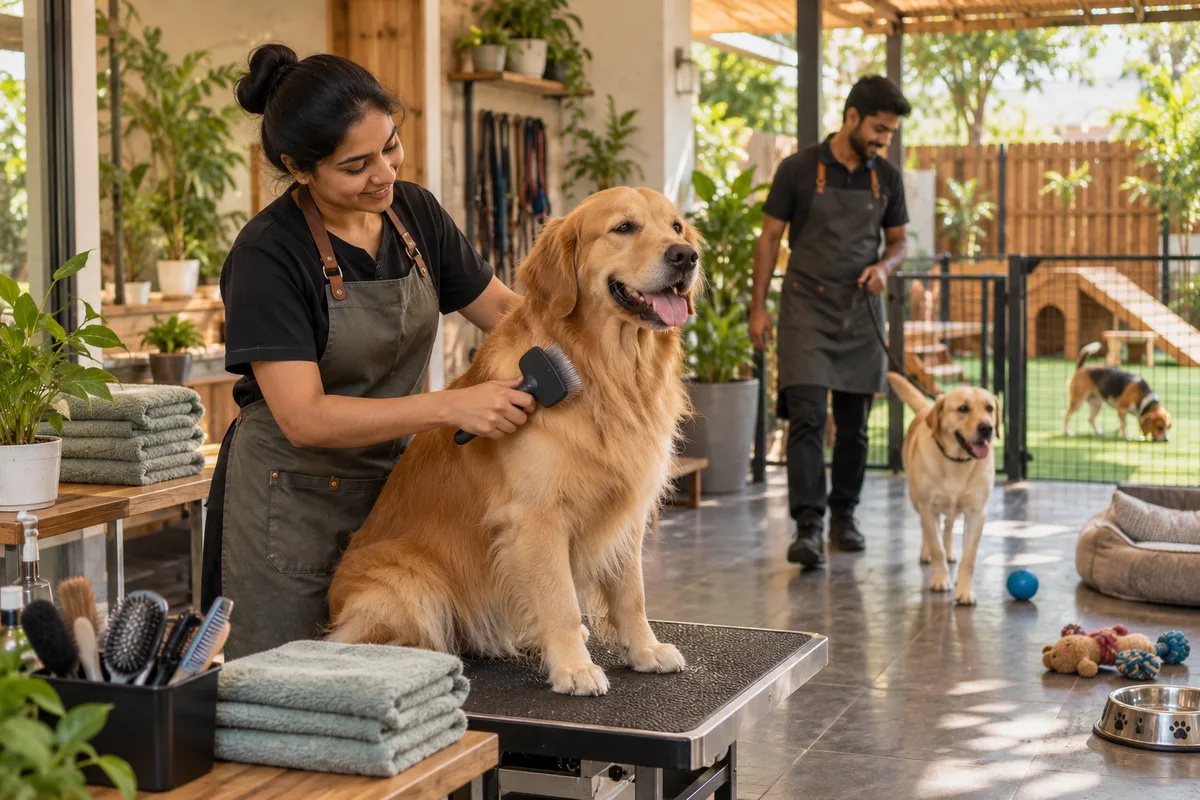
What lead generation means
Lead generation is the combined work of every channel that brings in a new enquiry, whether from search, adverts, referrals or a stall at an exhibition. GullySales runs these channels together and reports the number of enquiries each one produced, not the activity behind it.
Plan the next part of the work
Last updated 21 Nov 2026.
For pet boarding services
Where it usually goes wrong, and what we would do.
“The lead arrives with a date attached”
A boarding enquiry is rarely idle curiosity. The owner has a flight, a wedding or a posting, and a dog or cat that needs a bed on those nights. Leads from people with no dates are the noise to filter out early.
“Three kennels get the same message at once”
The owner pastes the same question into WhatsApp for every shortlisted place and reads the replies side by side. The boarder who answers with the sleeping area, the animals accepted and the vaccination rule gets the visit.
“Source decides quality”
An enquiry from a vet's recommendation or a neighbour's dog books differently from one that came off a broad advert. Without a note of where each owner heard of you, the budget goes to whichever source is loudest.
“Holiday weeks distort the picture”
In the fortnight before Diwali the phone rings without any effort, and in the weeks between it goes quiet. Lead work belongs in the quiet weeks, so the peak is already half booked by the time the rush begins.
What we do
What we deliver for pet boarding services.
The work available for this need. We agree the deliverables and responsibilities for your engagement in writing.
A map of where past owners found you
Each stay is tagged with how the owner heard of you: Maps, a vet, a groomer, an apartment group, Instagram or a friend.
Result: You can see which source brought owners who actually stayed.
An enquiry form that asks for the dates first
A short form and a matching WhatsApp message asking species, breed, age, travel dates and vaccination status.
Result: Every lead arrives with the facts you need to say yes or no.
A peak-date capture sheet
A list of owners who asked for dates you had already filled, with their number and the nights wanted.
Result: A cancellation is offered to a named owner before it is advertised.
A referral note for vets and groomers
A one-page sheet saying what you board, what you check at admission and how to send an owner your way.
Result: Professionals who are asked for a name have yours to hand.
A split of enquiries by locality
Enquiries sorted by the area the owner lives in, set against the pickup and drop areas you cover.
Result: You know which localities are worth a pickup route.
How the result is measured
- Relevant enquiries by source
- Duplicate and unsuitable enquiries
- Time to the first response
- Accepted enquiries reaching an agreed next step
Recorded as a baseline before work starts, so every later report has an honest comparison.
What to capture or send
What a boarding place asks for at enquiry so a holiday booking is not lost at the gate.
- Dates in and out
- Ask for both before quoting. Peak weeks fill, and a stay that overlaps a full week needs a different answer.
- Species, breed and age
- Tells you whether the place can take the animal and which run or room it would use.
- Vaccination card photo
- Ask for a photo at enquiry. Missing papers found at the gate cost you a booking and the owner a trip.
- Temperament and medicines
- Ask about nervousness, fights with other dogs and any medicine or diet the vet prescribed, so staff can say yes or no honestly.
- How the owner found you
- A vet, a groomer, the map or a neighbour. Shows which source brings owners with dates.
Who it is for
This is written for these pet boarding services.
- Kennel-style boarding centres in towns and city outskirts
- Home boarders who keep a few dogs in their own house
- Boarding attached to a grooming salon or pet shop
- Veterinary clinics with a boarding ward
- Cat boarding rooms and catteries
- Farmhouse boarding with open runs
- Long-stay boarding for owners relocating or on postings
- Boarding that includes pickup and drop in the city
Before you decide
When this may not be the right fit.
- Your kennels are full for the holiday weeks, so more enquiries would only mean turning owners away.
- You do not yet ask for vaccination papers before accepting a booking, so leads would reach the gate unprepared.
Before you decide
Agree the work. Know how to judge it.
Lead generation for pet boarding: use these checks to prepare, choose the scope, and review what changes.
Bring the right evidence
Define the organisations or buyers you can serve and the reasons they would consider a conversation. Bring examples of accepted and rejected prospects so the selection rule is visible.
Make the scope clear
Agree the research sources, contact approach, qualification rules, and handover. Clarify which meetings count as accepted and what happens to replies that are not ready to buy.
Check the work in use
Review why a prospect was selected and what was learned from the response. Count held, relevant conversations separately from contacts found, messages sent, or meetings booked.
Know when to change course
If the same objection appears repeatedly, adjust the offer or buyer group before increasing outreach. Respect a request to stop contact and keep the exclusion in the record.
These are discussion points, not a fixed package. GullySales confirms the deliverables, responsibilities, fee, and term in writing after reading your brief and speaking with you.
Before we start
What to have ready before the work starts.
The records, access and decisions this work needs from pet boarding services. Anything missing is noted in the written scope, with who will supply it.
- The booking diary for two holiday seasons
- We need the pages or sheets that show who stayed, for which dates and how they found you, since the starting figures come from them. Photographs of a handwritten diary are acceptable. When they are missing, the count starts from the new enquiry sheet, and last year's comparison rests on memory.
- Your capacity for each peak week
- Leads are useless if the kennel is already full, so we need the number of dogs, cats and separate rooms you can take in a peak week. A written number is acceptable. Without it, the form invites enquiries you must decline, and the owner has already told the neighbours you are unreachable.
- A rule on which animals you accept
- Decide which breeds, ages and species you board, and whether you accept dogs that are not neutered or are in season. A short list from the owner is acceptable. Without it, the form attracts enquiries you must refuse, and each refusal is a lost reply that reflects on you.
- Names of the vets and groomers nearby
- Recommendation is the strongest source in this trade, so we need the clinics, salons and pet shops within reach that you already know. A list with the contact person is acceptable. Without it, the referral note has nowhere to go and the plan leans on search alone.
- A phone that is answered in the evening
- Owners write after work, and the evening reply decides the booking. Name who watches the phone then. Without a name, the form fills with enquiries that are answered the next afternoon, when two other kennels have already replied.
How it works
How the lead generation work runs
The work itself, in order. How an engagement starts, from your brief to a written scope, is set out on our method page.
- 1
Read last Diwali's enquiries beside the diary
We start with the booking diary and the phone's message history for the last Diwali and summer weeks, and set each enquiry against what finally filled the kennel. You tell us which owners came from a vet, a groomer, a neighbour or a search. That reading gives the starting figures, and it shows how many enquiries arrived without any dates attached.
- 2
Ask three past owners how they found you
With your permission, we phone three owners who stayed with you, and ask what they typed or whom they asked before they messaged. You choose the owners and let them know. Their answers tell us which of your sources is real, and which is only the place the owner remembers last.
- 3
Write the form that asks for dates first
We draft a short enquiry form and a matching WhatsApp opening that asks the travel dates before anything else, then the animal, the age, the vaccination status and the locality. You approve the questions. A boarder who knows the dates in the first message can say yes or no to a peak week at once.
- 4
Arrange the referral note for vets and groomers
We write a one-page note for the vets and groomers near you, saying what you board, what papers you ask for and how to reach you. You decide which clinics and salons to visit and who delivers it. The note gives them something to hand an owner, instead of a phone number scribbled on a card.
- 5
Send test enquiries from three different phones
We message the form and the WhatsApp number as a first-time owner, a repeat owner and a cat owner, and watch where each enquiry lands in your diary and sheet. You see the replies as an owner would. Gaps, such as an enquiry that never reaches the sheet, are fixed before the next peak.
- 6
Compare bookings with last season's diary
After the holiday weeks, we read confirmed bookings by source and locality against the figures from the old diary. You tell us which enquiries were declined for dates or animals. Together we decide which source to repeat, which to stop and which locality to approach next season.
Where this fits
Three pieces of sales work, in this order.
This work sits inside sales process design, at stage 1, prospecting and lead generation. The audit comes before it, and sales management keeps it running.
Step 1
Sales audit
Find where deals are being lost and what to fix first.
Start here if you cannot say where orders are lost.
Step 2 · you are here
Sales process design
One written way to sell, from first enquiry to repeat order.
Start here if every salesperson sells differently.
Step 3
Sales management
A target, a review routine and someone who owns the number.
Start here if the team has targets and no routine.
FAQ
Questions owners ask before they call.
Not here? More answers, or ask on WhatsApp.
What kind of lead is worth paying for in pet boarding?
Why do enquiries stop after I send the rate?
Can you guarantee a number of bookings?
Should I accept every kind of animal that enquires?
Should we collect enquiries from a vet's waiting room?
How do we treat an enquiry that arrives with no dates?
How much does it cost?
How long is the contract?
How soon will we see results?
Who will actually do the work?
More for pet boarding services
Related work to consider.
Closest to this: leads and follow-up
Also for pet boarding services
Or start from the overview: sales and marketing for pet boarding services.
Your next practical step
Tell us what you are trying to grow, and we will read it before we call.
Eight short steps, mostly taps. Skip anything you would rather answer on the call.