Pet boarding services · Social media
Let owners watch a day at your place before they ever pick up the phone.
Social media marketing for a pet boarding business is showing the routine, the staff and the animals so an owner can picture their own pet there. GullySales works on what you post, how the feed is organised and how a comment turns into a booking message.
Scope, fee, reporting and term are agreed in writing after we have read your brief and spoken to you.
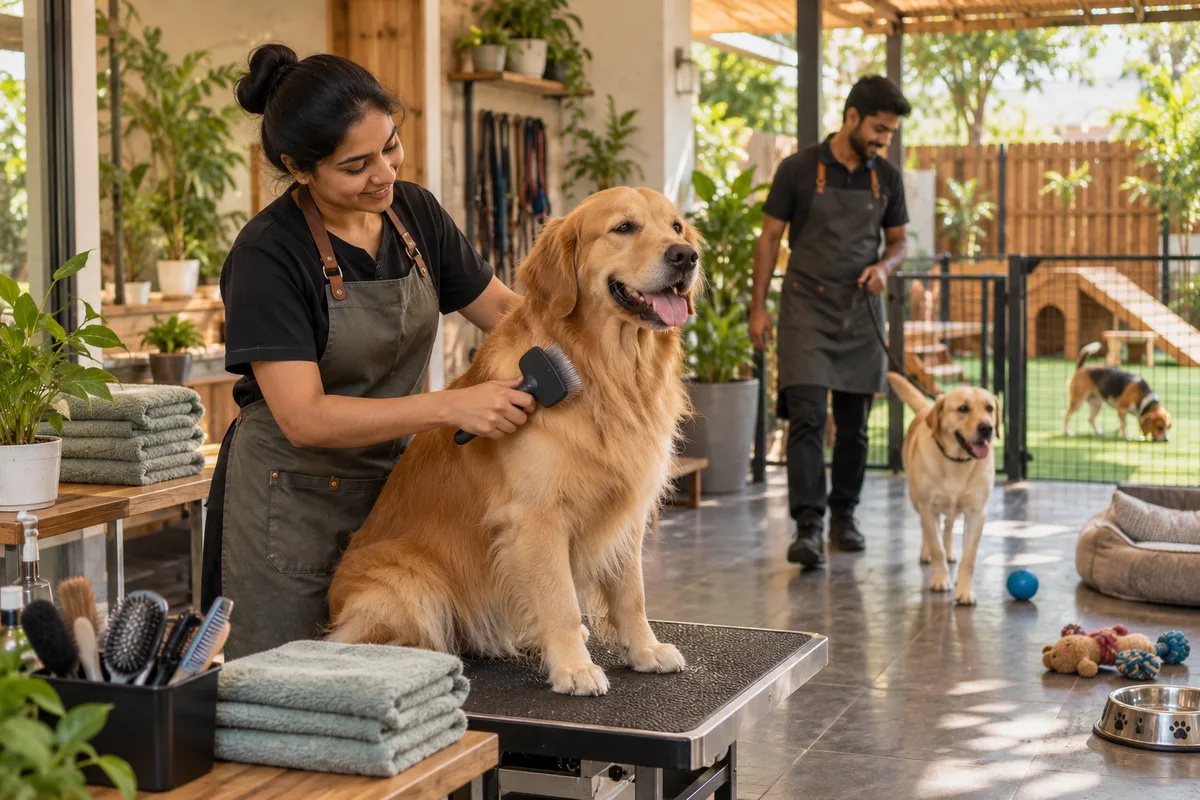
What social media means
Social media is the ongoing posting your business does on platforms such as Instagram, Facebook and LinkedIn to stay visible to customers and prospects between purchases. GullySales plans a posting calendar, writes captions and designs the images so the page looks active and answers what a visitor would ask.
Last updated 14 Nov 2026.
For pet boarding services
Where it usually goes wrong, and what we would do.
“The routine is the content”
Owners want to see feeding, walks, play and bedtime. Ordinary footage of the staff doing ordinary things answers more doubts than a polished advert, and it costs nothing beyond a phone and a habit.
“Consent for other people's pets”
Photographs of a guest dog belong to the owner. Ask before you post, keep a note of the permission, and keep the feed from becoming a gallery of animals whose owners never agreed.
“Dog-owner pages are where the neighbours are”
City dog groups and breed pages sit beside the apartment WhatsApp groups. A reel that tags the locality reaches owners who are about to ask where to leave their dog.
“Posting only at festival time looks like a stranger”
A feed that wakes up before Diwali and sleeps again does not feel like care. Regular posts through the quiet weeks make the holiday appeal look like the same people you have already been watching.
What we do
What we deliver for pet boarding services.
The work available for this need. We agree the deliverables and responsibilities for your engagement in writing.
A shot list for a normal day
Arrival, feeding, walks, play, naps and handover, listed so staff know what to film.
Result: You always have fresh material without planning a shoot.
A consent note for guest animals
A short WhatsApp message and a record of which owners agreed to photographs.
Result: You can show guests without arguments later.
A reel format you can repeat
A simple structure for a short video: the animal, the activity, the staff member and the locality.
Result: Posting becomes a routine and not a creative struggle.
A highlight set on Instagram
Saved stories for the sleeping area, the exercise space, cats, puppies and how a booking works.
Result: A new visitor finds the answers without scrolling.
A comment-to-booking reply
Prepared replies that move a question in the comments to a WhatsApp conversation.
Result: Interest on the feed reaches the number you actually answer.
How the result is measured
- Posts published
- Engagement rate
- Enquiries from social profiles
Recorded as a baseline before work starts, so every later report has an honest comparison.
Posts and pieces to plan
The posts that let an owner watch a day at your place before phoning.
- A morning in the play yard
- A short reel from one spot. Needs each owner's agreement and leaves out any dog who is unsettled.
- Feeding time
- A photo with separate bowls and the staff member named by first name. Shows that diets are kept apart.
- The first night routine
- A carousel of how a new guest settles, from arrival to bed. Reassures first-time owners.
- A senior dog's stay
- With the owner's consent, a calm post on rest, soft food and medicine given on the vet's written note.
- The Diwali plan
- A post showing the quiet room and how noisy nights are handled. Posted before owners book their trips.
Who it is for
This is written for these pet boarding services.
- Kennel-style boarding centres in towns and city outskirts
- Home boarders who keep a few dogs in their own house
- Boarding attached to a grooming salon or pet shop
- Veterinary clinics with a boarding ward
- Cat boarding rooms and catteries
- Farmhouse boarding with open runs
- Long-stay boarding for owners relocating or on postings
- Boarding that includes pickup and drop in the city
Before you decide
When this may not be the right fit.
- Owners have not agreed to photographs of their animals, so you would have nothing you can post.
- Staff cannot answer comments and messages on the same day, so a reel would draw questions that go unanswered.
Before you decide
Agree the work. Know how to judge it.
Social media marketing for pet boarding: use these checks to prepare, choose the scope, and review what changes.
Bring the right evidence
Review the posts that produced useful conversations, not only the ones with the most views. Gather buyer questions and decide which team member can contribute credible material.
Make the scope clear
Choose the audience and channel before setting a posting volume. Agree who supplies material, approves posts, and handles messages, including complaints or questions the agency cannot answer.
Check the work in use
Follow a post through to the profile, website, and response. A useful report explains the quality of conversations and enquiries, alongside reach and engagement.
Know when to change course
If publishing takes time away from unanswered buyer messages, fix the response routine first. Do not expand to another channel without a clear reason for being there.
These are discussion points, not a fixed package. GullySales confirms the deliverables, responsibilities, fee, and term in writing after reading your brief and speaking with you.
Before we start
What to have ready before the work starts.
The records, access and decisions this work needs from pet boarding services. Anything missing is noted in the written scope, with who will supply it.
- Signed consent for every guest animal shown
- No animal belonging to another family appears without written permission, so we need the signed note for each guest, filed where we can read it. A scanned form or a photographed admission page is acceptable. Without these, posts show your own animals, the space and the staff. Keep the forms for guest animals in a folder that a second person can open, so a consent can be checked at once when an owner later asks whether a photograph was approved.
- A phone with room for video
- Reels are filmed on an ordinary phone, so one with working storage and a clean lens is needed at the kennel. Any recent handset is acceptable. Without it, filming waits for someone to bring a personal phone, and the routine never gets filmed. The phone should also have a tripod or a steady surface, because a shaky clip of a run makes the place look hurried and an owner reads that as carelessness.
- Access to the existing social accounts
- We need the login or admin rights for each account the place already has. Accounts opened on a former employee's personal profile must be transferred first. Without access, posting waits for the recovery. If an account was opened by a former employee, send us a screenshot of the account settings so we can see who the recovery email belongs to and plan the transfer around it.
- A staff member who is comfortable on camera
- Owners trust the person who will look after the animal. One handler willing to appear and speak briefly is acceptable. Without one, the account shows the space but not the people, and the owner's main question goes unanswered. The handler need not be polished. Owners respond to a calm voice that names the animal and says what happens next, and a nervous first take can be repeated until it sounds natural.
- A list of pages dog owners follow nearby
- The neighbours are on local dog-owner pages and groups, so we need the ones you already follow. Names are acceptable. Without them, posts reach only your own followers, who already know you. Include the groups run by apartment societies, breed clubs and rescue volunteers, because a recommendation from a trusted neighbour in those groups is worth more than any advertisement.
How it works
How the social media work runs
The work itself, in order. How an engagement starts, from your brief to a written scope, is set out on our method page.
- 1
Spend a normal morning with the animals
We spend a morning at your place on an ordinary day, not a festival, and watch the feeding, the walks, the rest hours and the handover to an owner. You tell us which moments you would be proud to show and which you would not. What we leave with is a shot list built from the real routine, not from what looks cheerful.
- 2
Draft the consent note for guest animals
Pets belong to the owners, so we write a short note asking permission to photograph or film a guest animal, with a line that the owner may withdraw it. You approve it and decide how it is signed at admission. Only animals with a signed note appear in any post.
- 3
Choose the one reel format you can repeat
From the shot list we choose a single simple format, such as a walk from the gate to the run, or a feeding round, that your staff can film on a phone. You try it once with us. A format you can repeat is better than one you can only manage at festival time.
- 4
Build the highlight set owners watch before booking
We assemble the pinned posts and highlights that answer the first questions: where the dogs sleep, how the day runs, what happens at night, how owners hear about the stay. You approve each clip. An owner can watch the whole routine in a few minutes before writing to you.
- 5
Write a reply that turns comments into bookings
For the comments and messages that follow a post, we write a short reply that asks the travel dates and moves the conversation to WhatsApp. You approve the wording. The person who answers practises on old comments before the first post goes up.
- 6
Count messages that began on a post
After a stretch of posting, we count the messages, saves and booking enquiries that began on a post, against the starting figures. You tell us which posts owners mentioned at the gate. We keep the formats that produced enquiries and change the rest.
Where this fits
Three pieces of sales work, in this order.
This work sits inside sales process design, at stage 0, foundation. The audit comes before it, and sales management keeps it running.
Step 1
Sales audit
Find where deals are being lost and what to fix first.
Start here if you cannot say where orders are lost.
Step 2 · you are here
Sales process design
One written way to sell, from first enquiry to repeat order.
Start here if every salesperson sells differently.
Step 3
Sales management
A target, a review routine and someone who owns the number.
Start here if the team has targets and no routine.
FAQ
Questions owners ask before they call.
Not here? More answers, or ask on WhatsApp.
Do I need to post every day?
Is it fine to post owners' dogs?
Will social media bring bookings?
Should I show animals that look anxious or unwell?
Can staff post from their own phones?
Should we pay to boost posts?
How much does it cost?
How long is the contract?
How soon will we see results?
Who will actually do the work?
More for pet boarding services
Related work to consider.
Closest to this: content and social
Also for pet boarding services
Or start from the overview: sales and marketing for pet boarding services.
Your next practical step
Tell us what you are trying to grow, and we will read it before we call.
Eight short steps, mostly taps. Skip anything you would rather answer on the call.