Pet daycare services · Social media
Show the dogs' day so owners can picture leaving theirs.
Social media marketing for a pet daycare is showing what happens between drop-off and pick-up, in photos and short videos, to owners who follow dogs in the city. GullySales works on what you post, how it is permitted and how a viewer turns into an enquiry.
Scope, fee, reporting and term are agreed in writing after we have read your brief and spoken to you.
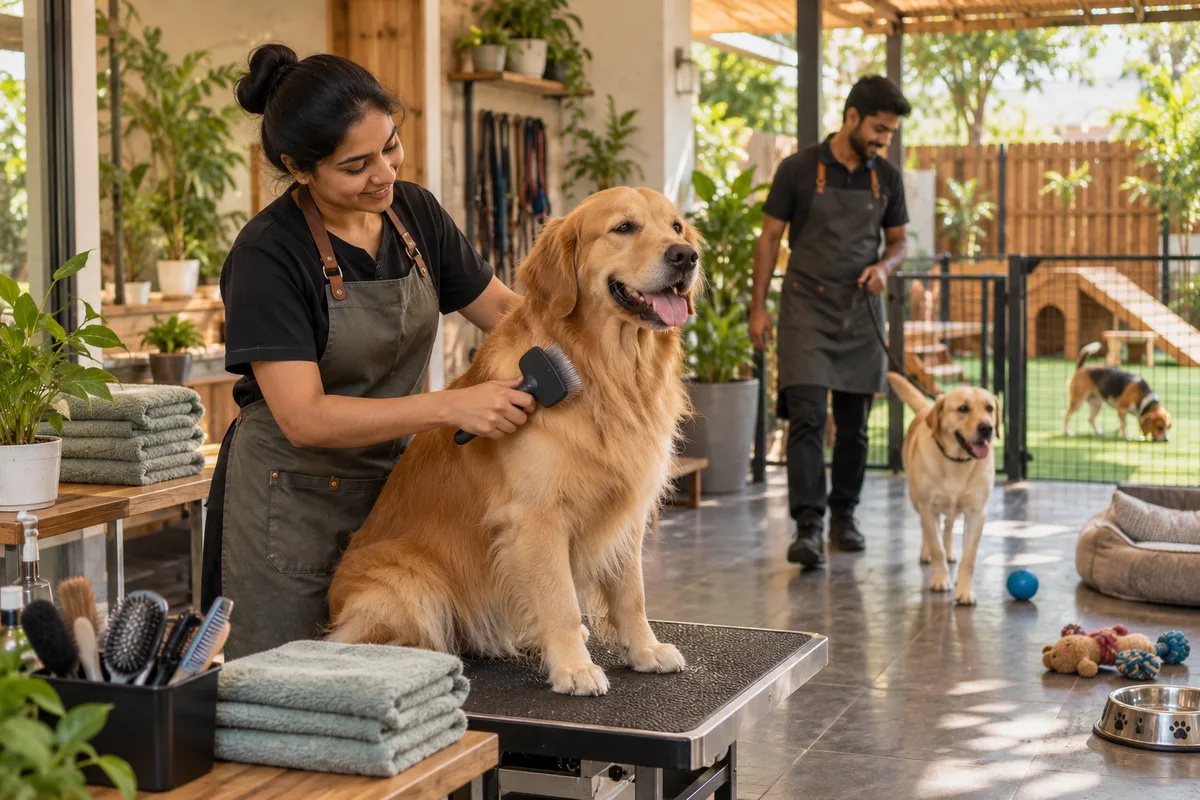
What social media means
Social media is the ongoing posting your business does on platforms such as Instagram, Facebook and LinkedIn to stay visible to customers and prospects between purchases. GullySales plans a posting calendar, writes captions and designs the images so the page looks active and answers what a visitor would ask.
Last updated 14 Nov 2026.
For pet daycare services
Where it usually goes wrong, and what we would do.
“Owners follow dogs, and then the places dogs go”
The household that follows breed pages and city dog groups is already inside the habit. A reel of your group at play meets them where they are, and a post about fees and hours does not.
“A dog that is seen is another owner's permission”
An owner who sees their own dog on your page tells the family. That works only if consent is asked first, so the form at admission should say plainly that photos may be posted, and ask the owner to accept or decline.
“Posting everything is not the same as showing the day”
A feed of cute close-ups does not tell a worried owner how the dogs are grouped or when they rest. A few clear clips of arrival, play, the nap hour and pick-up say a feed full of happy faces.
“A message from a stranger needs a reply that fits the phone”
Someone who comments 'rates?' or sends a direct message expects an answer in the same app. A saved reply that asks about the dog and offers a trial day keeps the exchange from dying in the inbox.
What we do
What we deliver for pet daycare services.
The work available for this need. We agree the deliverables and responsibilities for your engagement in writing.
A plan for the ordinary day
A short list of scenes to film: arrival, play by size, rest hour, pick-up. Each is reusable across posts.
Result: A shelf of footage you can cut into posts.
A consent line for photographs
One sentence for the admission form and a record of which owners agreed to being shown.
Result: You know which dogs can appear on the page.
Reels that answer one question each
Grouping, the rest hour, the first-day introduction and the pick-up, each as its own short video.
Result: An owner can find the answer they are worried about.
Saved replies for comments and messages
Short answers for rates, hours, pickup areas and trial days that end with a question about the dog.
Result: Each message moves toward a trial-day booking.
A profile that points to one action
Bio, pinned post and link all lead to the trial-day booking.
Result: A viewer knows the next step without scrolling.
How the result is measured
- Posts published
- Engagement rate
- Enquiries from social profiles
Recorded as a baseline before work starts, so every later report has an honest comparison.
Posts and pieces to plan
These posts show the dogs' day so an owner can picture leaving theirs.
- Arrival and settling in
- A short clip of dogs arriving and finding a spot, with a caption on how the staff greet each one, so an anxious owner sees the first ten minutes.
- Group play by size
- Dogs grouped by size and play style, filmed from a distance, with a line on why the groups are kept apart.
- Rest time in the afternoon
- Dogs resting on mats, which answers the worry that daycare means constant noise and stress.
- A day for puppies
- A puppy group clip with staff handling, shared only with the owners' consent and no names of other households.
- The van and the stops
- A video of pickup and drop, showing the vehicle and the way each dog is secured, since transport is where owners worry.
- Staff introductions
- A short post on each attendant and how they handle a nervous dog, because owners trust the people before the place.
Who it is for
This is written for these pet daycare services.
- Neighbourhood daycares in apartment-heavy localities
- Daycares near IT parks and business districts
- Daycare run from a grooming salon or pet shop
- Small-dog and puppy-only daycares
- Daycare with an outdoor play space on city outskirts
- Daycare offering pickup and drop vans
- Part-time daycare for dogs of remote workers
- Daycares for cats and small animals
Before you decide
When this may not be the right fit.
- Owners have not agreed to their dogs appearing online, and posting without consent would cost the daycare their trust
- Nobody can film during the day without taking an attendant away from the dogs, so content would cut into care
- You cannot reply to messages and comments the same day, and an active feed with silent replies would look careless
Before you decide
Agree the work. Know how to judge it.
Social media marketing for pet daycares: use these checks to prepare, choose the scope, and review what changes.
Bring the right evidence
Review the posts that produced useful conversations, not only the ones with the most views. Gather buyer questions and decide which team member can contribute credible material.
Make the scope clear
Choose the audience and channel before setting a posting volume. Agree who supplies material, approves posts, and handles messages, including complaints or questions the agency cannot answer.
Check the work in use
Follow a post through to the profile, website, and response. A useful report explains the quality of conversations and enquiries, alongside reach and engagement.
Know when to change course
If publishing takes time away from unanswered buyer messages, fix the response routine first. Do not expand to another channel without a clear reason for being there.
These are discussion points, not a fixed package. GullySales confirms the deliverables, responsibilities, fee, and term in writing after reading your brief and speaking with you.
Before we start
What to have ready before the work starts.
The records, access and decisions this work needs from pet daycare services. Anything missing is noted in the written scope, with who will supply it.
- Logins to the social accounts you have
- Hand over the usernames and the recovery phone for each account. We cannot plan a profile we cannot open. If a former helper holds one, getting it back is the first job.
- A signed consent line from each owner
- Collect the enrolment form with the photograph sentence, and tell us which owners declined. Without it, dogs may appear in a post whose owner objects. Where no form exists, the plan starts with the form.
- A folder of recent clips from the day
- Gather the videos and pictures the staff have taken in the last few weeks, in one folder with the dates intact. The content is built from them. If the folder is empty, filming comes before planning.
- A rule on what must never be filmed
- Decide what stays off camera: the gate code, a nervous dog in a crate, an incident, the neighbours. Safety content is your call. We build the filming list around the rule you give us.
- A person who reads messages in the afternoon
- Name who will read the direct messages once the dogs are settled, with a phone that has the app. If nobody is named, messages sit unread through the very hours when owners write.
How it works
How the social media work runs
The work itself, in order. How an engagement starts, from your brief to a written scope, is set out on our method page.
- 1
Spend a morning watching the ordinary day
We start by seeing a normal weekday from drop-off to pick-up, or by going through your own phone clips of one. We note what happens at arrival, at play, at rest and at pick-up. You tell us what a visitor would be allowed to see. The plan is drawn from the real day, not a staged one.
- 2
Agree the consent line for owners
Before any dog appears online, we write one sentence that owners accept when they enrol, saying their dog may be photographed and how. You decide what happens for an owner who says no. Dogs without consent are left out of every frame, and the line is stored with the dog's record.
- 3
Choose the questions each reel will answer
We list the questions an owner has before a first trial day and give each a short video: how a new dog is introduced, where a small dog rests, who is watching. You pick the ones you are happy to show. Each reel answers one question and ends with one step.
- 4
Write saved replies for comments and messages
Comments from strangers need answers that fit on a phone, so we write short replies for fees, hours, trial days, and the area you reach. You edit them into your own voice. A message that asks about something you do not offer receives a polite redirect and not silence.
- 5
Set the profile to point to one action
We rewrite the bio, the pinned post and the link so that a visitor sees one step: book a trial day. You decide whether that step is a call, a message or a form. A profile that offers three actions is read as indecision.
- 6
Read posts against trial days booked
After a stretch of posting, we set the messages and trial days that began on social media beside the figures noted at the start. You tell us which reel owners mentioned. Likes and followers are noted but not used to judge the work, and no enrolment is promised.
Where this fits
Three pieces of sales work, in this order.
This work sits inside sales process design, at stage 0, foundation. The audit comes before it, and sales management keeps it running.
Step 1
Sales audit
Find where deals are being lost and what to fix first.
Start here if you cannot say where orders are lost.
Step 2 · you are here
Sales process design
One written way to sell, from first enquiry to repeat order.
Start here if every salesperson sells differently.
Step 3
Sales management
A target, a review routine and someone who owns the number.
Start here if the team has targets and no routine.
FAQ
Questions owners ask before they call.
Not here? More answers, or ask on WhatsApp.
Which platform matters most for a daycare?
Is it safe to post owners' dogs?
Should we run paid posts?
What should we avoid showing in a video?
Is it all right to show a dog that has had a bad moment?
Who answers a comment that asks for the fee?
How long is the contract?
How soon will we see results?
Who will actually do the work?
What do you need from us?
More for pet daycare services
Related work to consider.
Closest to this: content and social
Also for pet daycare services
Or start from the overview: sales and marketing for pet daycare services.
Your next practical step
Tell us what you are trying to grow, and we will read it before we call.
Eight short steps, mostly taps. Skip anything you would rather answer on the call.