Pet grooming services · Buyer persona
Know which dog owner is booking before you write the first message.
A buyer persona for a groomer is a plain description of the kinds of owner who book, what each worries about and how each decides. GullySales builds these from your own booking records and conversations, not from guesswork.
Scope, fee, reporting and term are agreed in writing after we have read your brief and spoken to you.
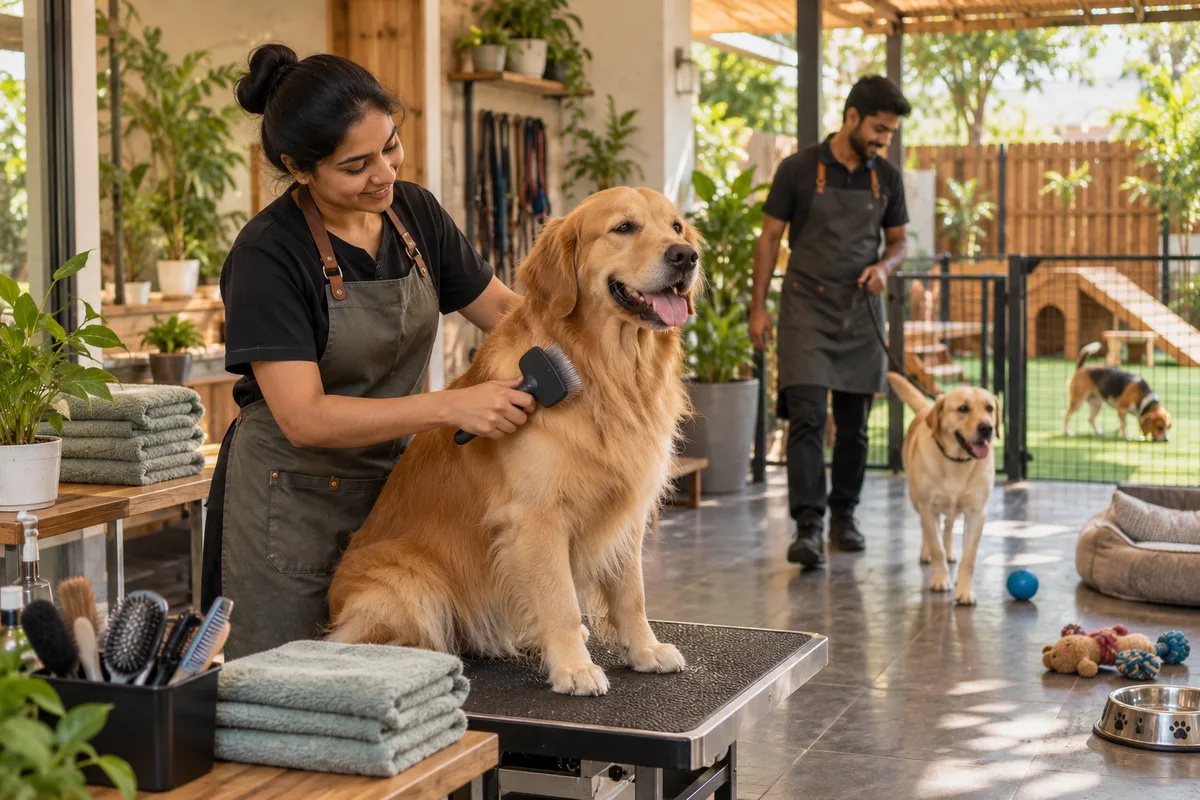
What buyer persona means
A buyer persona is a plain description of the kind of customer who actually buys from you. It includes what they search, what worries them and who else they ask before deciding. GullySales builds this from real enquiries and past sales rather than a generic template, then uses it to write every page and advert.
Also for pet grooming services
- Digital marketing for pet grooming services
- Lead generation for pet grooming services
- SEO for pet grooming services
- Local SEO for pet grooming services
- Social media marketing for pet grooming services
- Content marketing for pet grooming services
- CRM for pet grooming services
- Follow-up systems for pet grooming services
Sales and marketing for pet grooming services, the overview.
Last updated 14 Nov 2026.
For pet grooming services
Where it usually goes wrong, and what we would do.
“The first-time puppy owner wants reassurance”
This owner has never used a groomer and fears the puppy will be scared. They ask about patience, hygiene and whether they can stay. The reply that explains the first visit step by step wins them.
“The owner of a long-coated breed wants maintenance”
A poodle or Shih Tzu owner needs regular visits and knows the cost. They compare salons on skill with the breed and on reminders. Consistency and a trusted groomer matter more than the lowest price.
“The busy professional wants convenience”
This owner works long hours and wants pickup and drop or a van at the apartment. Time slots and a reliable arrival window decide it, and the price is secondary.
“The rescue or senior dog owner wants gentleness”
Owners of anxious, elderly or rescued dogs need to hear that the groomer will go slowly and stop when the dog is stressed. Pushy offers and rushed slots send them away.
What we do
What we deliver for pet grooming services.
The work available for this need. We agree the deliverables and responsibilities for your engagement in writing.
Persona write-ups from your own bookings
Short descriptions of the owner types in your records, with their breeds, worries and booking habits.
Result: A persona sheet your whole team can read in minutes.
A question list for each persona
The top questions each owner type asks, with your groomers' answers.
Result: Replies are ready before the question arrives.
Message variants
Different opening replies for puppy owners, regular owners and anxious-dog owners.
Result: Each owner type gets a reply that speaks to them.
Service-fit mapping
A table showing which package, salon or van suits which persona.
Result: Staff know what to offer first.
Interview prompts for regulars
A few questions to ask loyal owners about why they chose you.
Result: Real reasons are written down in their words.
How the result is measured
- Enquiry match to persona
- Conversion rate by persona
- Content aligned to persona
Recorded as a baseline before work starts, so every later report has an honest comparison.
Who is asking
Five kinds of dog owner book a groomer, and each asks a different first question.
- A first-time puppy owner
- Wants to know the first visit will be short and gentle, which vaccinations are needed and whether the groomer is patient with a nervous puppy.
- An owner of a long-coated breed
- Wants maintenance, a haircut that suits the breed and a rebooking plan before the coat mats.
- A busy professional
- Wants a van that comes to the flat or a slot on a weekday evening, and a booking that takes one message.
- An owner of a rescue or senior dog
- Wants gentleness, patience with joints and fear, and a groomer who will say if the dog is struggling.
- A pet parent preparing for a family event
- Wants a neat dog for a date, a clear time and a groomer who will say what is possible if the coat is badly knotted.
- An owner of a cat
- Wants a groomer who handles cats at all, a calm space and a clear idea of what the visit includes.
Who it is for
This is written for these pet grooming services.
- Dog grooming salons
- Cat grooming
- Mobile grooming vans
- Spa and bath packages
- Breed-specific haircuts for poodles, shih tzus and others
- De-matting and shedding control
- Puppy first-groom packages
- Grooming inside pet stores and clinics
Before you decide
When this may not be the right fit.
- You have not recorded who books your slots, so a persona sheet would be a guess about owners you have never counted
- Only one kind of owner has ever enquired, so extra personas would be invented to fill a sheet
- Nobody replies to enquiries in a consistent way, so the sheet would not change any message
Before you decide
Agree the work. Know how to judge it.
Buyer persona for pet grooming services: use these checks to prepare, choose the scope, and review what changes.
Bring the right evidence
Write the decision the research must support, such as entering a market or choosing a buyer group. Separate what you know from sales records from what the team currently assumes.
Make the scope clear
Agree which buyers to speak to, which sources to review, and what access you can provide. Include lost enquiries and people who chose another supplier, where they are willing to take part.
Check the work in use
Look for source dates, sample limitations, and evidence that disagrees with the preferred answer. A recommendation should show how it follows from the findings.
Know when to change course
Do not treat a few positive conversations as proof of demand. Test the proposed offer with an actual buying decision before committing to a wider launch.
These are discussion points, not a fixed package. GullySales confirms the deliverables, responsibilities, fee, and term in writing after reading your brief and speaking with you.
Before we start
What to have ready before the work starts.
The records, access and decisions this work needs from pet grooming services. Anything missing is noted in the written scope, with who will supply it.
- The booking records for a full year of visits
- Personas drawn from a few weeks reflect only one season of coats. Bring the diary or software export for a whole year, with breed and service. If records are partial, we say so, and the personas carry less weight. Note any change in prices or services during the year, because a shift in the mix of owners may come from that and not from the market.
- Names of a few owners who will talk
- Pick regulars who are comfortable and honest, including at least one who has complained. Ask them yourself first. If no one agrees, the personas rest on records and chats alone and the interviews are replaced by staff memories.
- Notes on difficult and favourite owners
- Your groomers know which owners are easy and which bring trouble. Ask each to jot a few lines with names removed. These notes show what the records cannot, and without them the personas look cleaner than the real mix.
- A room or phone time for the interviews
- Short conversations happen at pickup, over a phone call or in the waiting area. Decide where. If there is no suitable time, we use a written set of questions, which gives thinner answers.
- Your own view of the best customer
- Write down who you would like more of: the long-coat regular or the puppy parent. This guides which personas get the largest share attention. Without it, we weigh by volume alone, and the owner who books the largest share may be underserved.
How it works
How the buyer persona work runs
The work itself, in order. How an engagement starts, from your brief to a written scope, is set out on our method page.
- 1
Sort your regulars by dog, not by name
We take the booking records and group the dogs by breed, age, coat and visit pattern, so the owners behind them fall into types. You tell us which owners you think of as a puppy parent, a busy professional or a senior dog's carer. What exists is a first sort of customers by what they book, built from your diary.
- 2
Choose regulars to speak with
You pick a handful of owners we may interview, covering the first-time, the long-coat, the busy and the rescue cases. We write the questions to ask and you decide who makes the first contact. Owners who decline are left alone, and the shortlist is kept to people who say yes without being pressed.
- 3
Hold short conversations with the owners
We ask what worried them before the first visit, how they found you, what nearly stopped them and what made them return. The receptionist may listen in if the owner agrees. The answers are written down in the owner's own words. This is where the guesswork about your customers is replaced. We keep a separate note for owners who cancelled or never returned, since their reasons teach more about what puts people off than the answers of regulars.
- 4
Check findings against the diary
We set what owners told us beside what the records show: are the long-coat owners really the steadiest, do the busy professionals book by message. Where the two disagree, the records win. You read the findings and correct anything that does not match your experience of the shop.
- 5
Write each persona and a message for it
Each persona is a short description with the worry, the question asked first and the message that answers it. We write a reply variant for each, and a service-fit note saying which package suits which owner. You approve the personas and the wording before staff use them. The service-fit note also says which owners need a longer slot or a quieter hour, so the receptionist offers the right time on the first call.
- 6
Test the personas on the next enquiries
Your team sorts the following enquiries by persona and uses the matching reply. We compare booking rates and rebookings per persona with the records from before. You see which messages fit and which need revising. Personas that explain nothing are merged or dropped.
Where this fits
Three pieces of sales work, in this order.
This work sits inside sales process design, at stage 0, foundation. The audit comes before it, and sales management keeps it running.
Step 1
Sales audit
Find where deals are being lost and what to fix first.
Start here if you cannot say where orders are lost.
Step 2 · you are here
Sales process design
One written way to sell, from first enquiry to repeat order.
Start here if every salesperson sells differently.
Step 3
Sales management
A target, a review routine and someone who owns the number.
Start here if the team has targets and no routine.
FAQ
Questions owners ask before they call.
Not here? More answers, or ask on WhatsApp.
How many personas do we need?
Where does the information come from?
Is this a one-time exercise?
Should we write personas for each breed?
Can staff other than the owner help build the personas?
What if the personas contradict what we believe about our customers?
How much does it cost?
How long is the contract?
How soon will we see results?
Who will actually do the work?
More for pet grooming services
Related work to consider.
Closest to this: strategy and research
Also for pet grooming services
Or start from the overview: sales and marketing for pet grooming services.
Your next practical step
Tell us what you are trying to grow, and we will read it before we call.
Eight short steps, mostly taps. Skip anything you would rather answer on the call.