Roofing contractors · Local SEO
The map listing decides who gets the call when a shed roof starts to leak.
Local SEO for a roofing contractor makes sure that an owner searching near me sees your listing, your finished work and your reviews before anyone else's. GullySales fixes the profile, the service areas and the city pages that decide who is rung first.
Scope, fee, reporting and term are agreed in writing after we have read your brief and spoken to you.
What local SEO means
Local SEO is the work of making your business show up for searches that name your town or locality, such as a service plus an area name. GullySales sets up locality pages, local citations and map listings so nearby customers find you before a competitor across town.
Last updated 14 Nov 2026.
For roofing contractors
Where it usually goes wrong, and what we would do.
“Owners search near me with water already coming in”
The listing with a phone number, recent photographs and a fresh review gets the call. A bare listing gets scrolled past.
“Service areas matter more than a single address”
A roofer based in one industrial estate works across the district. The listing and the pages should name each place your crews go.
“Photographs on the listing are the proof”
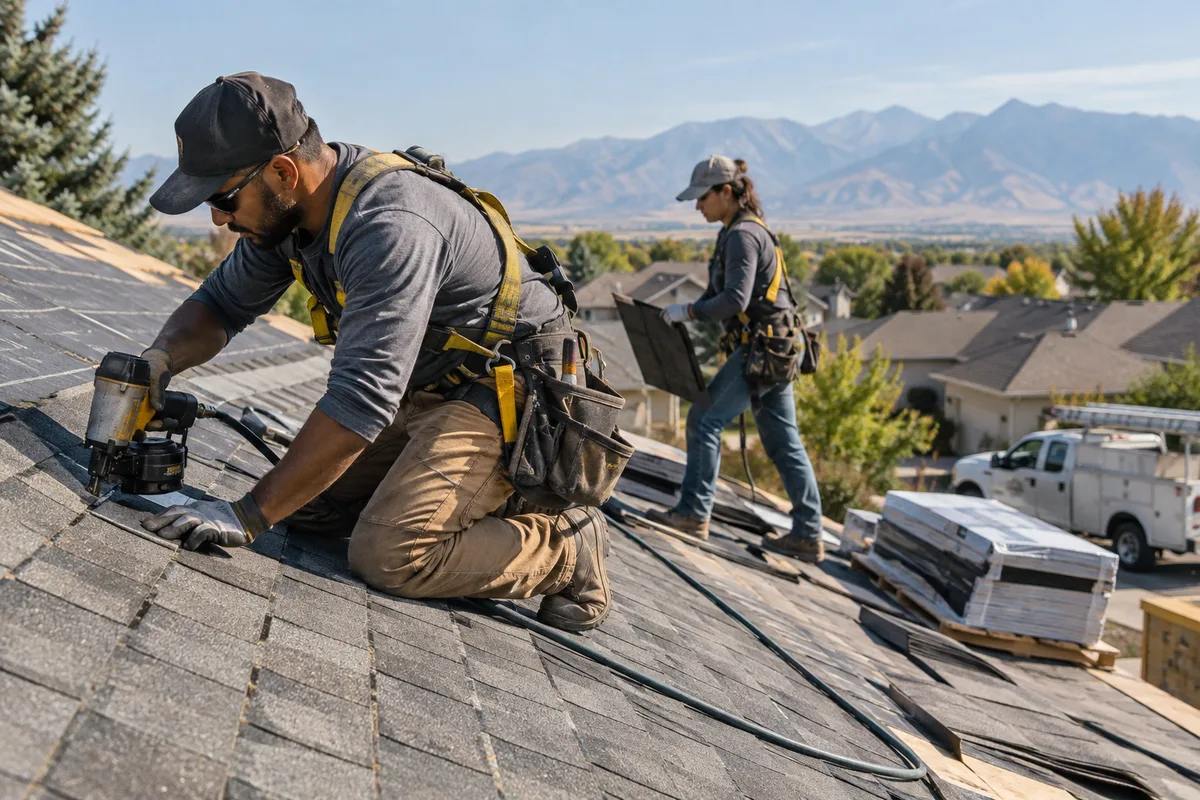
Finished sheds, polycarbonate roofs and insulated roofs shown on the profile do the work of a showroom for a trade without one.
What we do
What we deliver for roofing contractors.
The work available for this need. We agree the deliverables and responsibilities for your engagement in writing.
A Google profile rebuilt around your trade
Categories, services, service areas, products and hours set correctly, with a description written for the buyer.
Result: The listing reads as a roofer, not a general contractor.
Photographs added from real jobs
A routine for the crew to photograph each stage and upload finished roofs with the area and sheet type.
Result: The profile shows work from this season.
City and area pages
A page for each city and industrial area you cover, with local sites, building types and past jobs.
Result: You appear in the places your crews travel to.
Name, address and number made consistent
The same details across the profile, JustDial and the directories that list roofing contractors.
Result: The map listing is trusted and not demoted.
Questions and answers on the profile
The questions buyers ask, such as whether you work on weekends or take small repairs, answered in advance.
Result: The call comes in with the basics settled.
A report on calls and directions
Calls, direction requests and website visits from the profile, set against the baseline.
Result: You can see what the listing brings.
How the result is measured
- Map pack ranking
- Local search visibility
- Enquiries by locality
Recorded as a baseline before work starts, so every later report has an honest comparison.
What Google weighs here
How an owner with a leaking roof finds a contractor nearby, and what to fix first.
- Categories and services
- Choose the main business type and add the services you do. A listing that claims everything is not shown for anything.
- Distance and service area
- Name the places your crews go. Distance from the owner matters, so cities beyond your base need pages of their own.
- Reviews and their dates
- Recent reviews with the roof type named are weighed higher than old, general ones. Ask for a review at each handover.
- Photographs and posts
- Regular real photographs show an active firm. Post a finished job in the same week.
- Phone number and hours
- A number that is answered during the hours listed. A listing with a number nobody picks up loses its position in time.
- Website and the pages it links to
- The link should go to the right roof page for the city, not the home page. A mismatch costs both calls and ranking.
Who it is for
This is written for these roofing contractors.
- Metal and colour coated sheet roofing contractors
- PEB and factory shed roofing contractors
- Polycarbonate and skylight roofing installers
- Terrace shed and car park roof installers
- Tile roofing and truss contractors
- Roof insulation and cool roof specialists
- Roof leak repair and maintenance crews
- Structural steel and roofing combined fabricators
- Warehouse and cold storage roofing contractors
Before you decide
When this may not be the right fit.
- The listing address is a home or godown you do not receive visitors at, and the platform's rules on hiding it are unread
- The crew has no photographs of finished roofs to add, so the listing would show a logo and nothing else
- Calls to the listed number go unanswered while the team is on site, and the listing would send them to a missed call
Before you decide
Agree the work. Know how to judge it.
Local SEO for roofing contractors: use these checks to prepare, choose the scope, and review what changes.
Bring the right evidence
Confirm the real business address, service area, contact details, and who controls the business listings. Keep examples of calls that came from the wrong location or asked for a service you do not provide.
Make the scope clear
Choose the locations you actually serve and the information each needs. Agree who approves listing changes, responds to enquiries, and keeps opening hours accurate.
Check the work in use
Check the journey from a local search to a call or enquiry on a phone. The address, service area, and description should agree across your website and listings.
Know when to change course
Do not create an office claim for a place where you only serve customers remotely. Clear service coverage is more useful than a misleading local presence.
These are discussion points, not a fixed package. GullySales confirms the deliverables, responsibilities, fee, and term in writing after reading your brief and speaking with you.
Before we start
What to have ready before the work starts.
The records, access and decisions this work needs from roofing contractors. Anything missing is noted in the written scope, with who will supply it.
- Owner access to the Google profile
- The profile must be claimed by the company, and we need to be added as a manager. If a past vendor created it, we will help you recover it through the platform's own process. Without access no change can be made and the plan stops, so we ask for it on the first call and confirm it before any other work begins.
- A recent photograph from each roof type
- A few clear photographs of finished roofs from the last year, with the place and roof type written beside each. Anything blurred or without context cannot be used. Photographs taken on a phone at the end of a shift are enough, as long as the sheet colour and the lines of the roof can be seen. Without photographs the profile stays thin.
- The address you want shown
- Decide whether the yard, the office or a service-area-only listing suits you. Customers do not visit, so this is a business choice. Until it is made, the listing stays inconsistent.
- A list of areas you serve
- Towns and industrial estates your crew can reach, written plainly with the ones you would refuse marked. Without it we cannot build the area pages or the profile's service areas, and the listing may promise travel you will refuse, which brings calls that waste the office's time and a reply that disappoints the caller.
- Old directory logins, if any
- JustDial, IndiaMART and other entries may carry different numbers. Locate who set them up. Even a photograph of an old listing screen helps us find which entries are live. Where logins are lost, we list the wrong entries and plan their correction.
How it works
How the local SEO work runs
The work itself, in order. How an engagement starts, from your brief to a written scope, is set out on our method page.
- 1
Claim and read the Maps listing
We start with the owner's access to the Google profile and read it as a stranger would: the name, the areas, the phone number, the opening hours and the reviews. You tell us which details are out of date. After this step we hold a list of faults on the listing, each with a note of who fixes it.
- 2
Search near-me phrases from the shed
We search the phrases a worried owner types, from locations close to the industrial areas you serve, and record which roofers show up with photographs, reviews and a working phone number. You tell us which of those you consider real competitors. The record becomes the list of gaps we work on first, and it shows us which searches already favour a contractor with finished work on display.
- 3
Choose the areas you will really serve
We agree the service areas with you, town by town, and remove any you would never travel to. A wide area with no jobs behind it weakens the listing. The agreed list is then used for the profile and for the city pages.
- 4
Add photographs from recent jobs
We select photographs from your site folders for the profile, with captions that name the roof type and place, and you remove any that show a customer's name board or a worker without a helmet. When this is done, the listing shows work finished and safe, not stock images, and each photograph has a note saying which job it came from for later reference.
- 5
Make name and number match everywhere
We check the company name, address and phone number on the site, the directories and the profile, and correct the differences with your agreement. Old numbers that still ring a former employee are found and discussed with you, and a single number is chosen for calls and another for WhatsApp so that the staff know which phone will carry a new enquiry.
- 6
Read calls and direction taps afterwards
Against the call, message and direction counts noted before the changes, we read what the profile now produces, area by area, and which questions on the profile were asked by real people. You decide where to add more photographs next.
Where this fits
Three pieces of sales work, in this order.
This work sits inside sales process design, at stage 1, prospecting and lead generation. The audit comes before it, and sales management keeps it running.
Step 1
Sales audit
Find where deals are being lost and what to fix first.
Start here if you cannot say where orders are lost.
Step 2 · you are here
Sales process design
One written way to sell, from first enquiry to repeat order.
Start here if every salesperson sells differently.
Step 3
Sales management
A target, a review routine and someone who owns the number.
Start here if the team has targets and no routine.
FAQ
Questions owners ask before they call.
Not here? More answers, or ask on WhatsApp.
Which categories should the profile use?
Can we list more than one office?
How many photographs should we add?
Do citations on JustDial and directories still matter?
Do we need a shop front to appear on Maps?
Why did the listing lose its place after the monsoon?
How much does it cost?
How long is the contract?
How soon will we see results?
Who will actually do the work?
More for roofing contractors
Related work to consider.
Closest to this: search and visibility
Also for roofing contractors
Or start from the overview: sales and marketing for roofing contractors.
Your next practical step
Tell us what you are trying to grow, and we will read it before we call.
Eight short steps, mostly taps. Skip anything you would rather answer on the call.