Roofing contractors · Social media
Show the shed from the first column to the last screw.
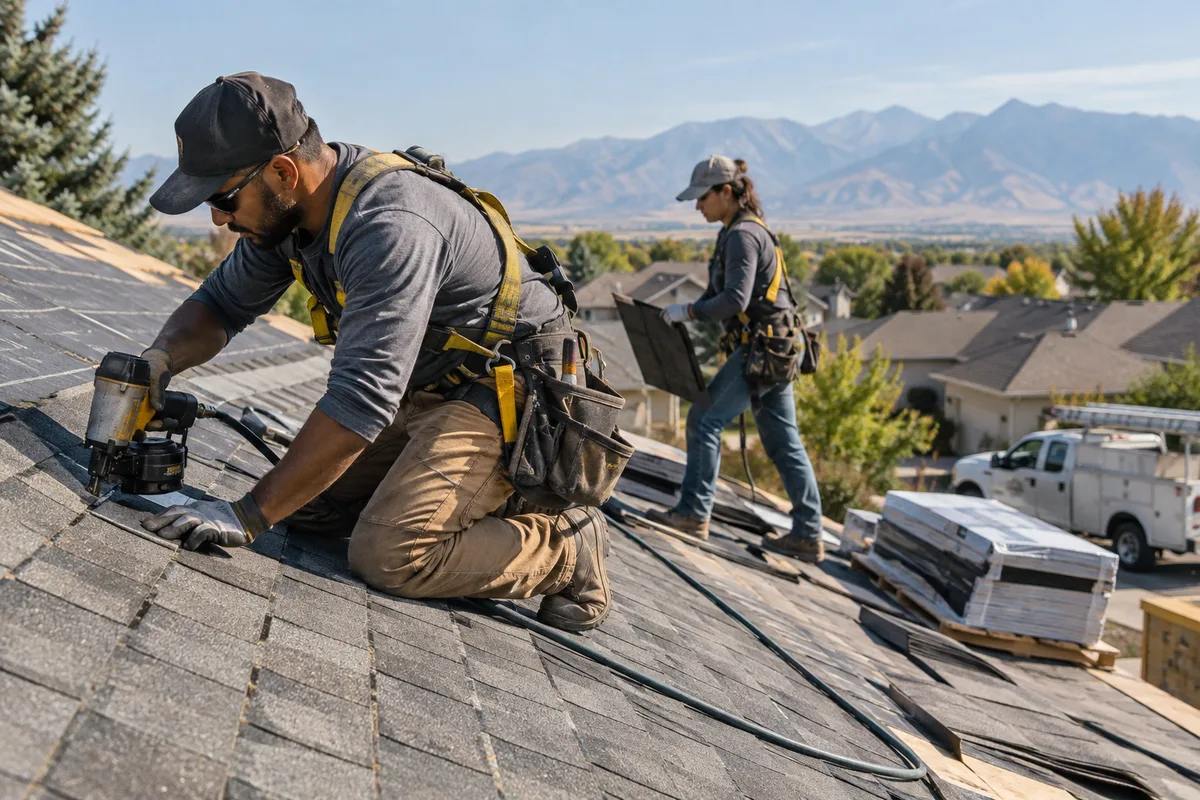
Social media for a roofing contractor is shown in the work itself: the frame going up, the sheets being fitted, the finished roof under rain. GullySales plans what the crew photographs, what goes on Instagram, YouTube and LinkedIn, and how enquiries are caught.
Scope, fee, reporting and term are agreed in writing after we have read your brief and spoken to you.
What social media means
Social media is the ongoing posting your business does on platforms such as Instagram, Facebook and LinkedIn to stay visible to customers and prospects between purchases. GullySales plans a posting calendar, writes captions and designs the images so the page looks active and answers what a visitor would ask.
Last updated 14 Nov 2026.
For roofing contractors
Where it usually goes wrong, and what we would do.
“A roof going up is a good video”
The crane lifting a truss, the sheets laid, the last fastener. People who will never buy a shed watch it, and the ones who will remember the name.
“LinkedIn reaches architects and plant heads”
A finished PEB roof with the area and the schedule gets read by the people who specify and buy. Instagram suits homeowners and terrace work.
“Short videos answer repeated questions”
How thick is the sheet, what does the insulation do, why does the roof leak at the lap. A one-minute answer from a site engineer builds trust.
What we do
What we deliver for roofing contractors.
The work available for this need. We agree the deliverables and responsibilities for your engagement in writing.
A routine for the crew to capture the work
A short list of shots per stage, taken on a phone, with area and sheet type noted in the caption.
Result: Real material arrives from every site.
A set of short videos on repeated questions
Sheet thickness, lap leaks, insulation, polycarbonate care and the difference between sheet types, filmed on site.
Result: The questions you hear daily are answered once and shared.
A LinkedIn plan for architects and plant heads
Finished industrial roofs with size, schedule and specification, posted to the people who specify.
Result: Your name is in front of the buyer before the tender.
A WhatsApp status and broadcast routine
Finished jobs and the pre-monsoon reminder posted to a list of past customers who have agreed to receive them.
Result: Past owners remember you when a repair is due.
Comment and message handling
A set of replies for common questions, a rule for moving price questions to a call, and a log.
Result: Social enquiries get answered with the same care as calls.
A report on enquiries from social
Messages, calls and site visits from each platform, set against the baseline.
Result: You can see whether the posting brings jobs.
How the result is measured
- Posts published
- Engagement rate
- Enquiries from social profiles
Recorded as a baseline before work starts, so every later report has an honest comparison.
Platform for this buyer
Where an owner looks at roofing work, and what a roofer should post.
- Instagram for homeowners and terraces
- Reels of a polycarbonate shed or a terrace roof being built, with the size and the finish in the caption.
- YouTube for the long explanation
- A five-minute video on how a PEB roof is put together, or why a sheet leaks at the lap, gets watched for years.
- LinkedIn for architects and plant heads
- Finished industrial roofs with the area, the span and the schedule met, written in a few plain lines.
- Facebook and local groups
- Housing society groups and trade groups are where terrace and repair questions get asked. Answer with advice first and a number second.
- WhatsApp for past customers
- A status with a finished job each fortnight keeps you in view for owners who may call for a repair.
- What not to post
- Unsafe working at height, a customer's layout or a competitor's job. Anything you would not want a safety officer to see.
Who it is for
This is written for these roofing contractors.
- Metal and colour coated sheet roofing contractors
- PEB and factory shed roofing contractors
- Polycarbonate and skylight roofing installers
- Terrace shed and car park roof installers
- Tile roofing and truss contractors
- Roof insulation and cool roof specialists
- Roof leak repair and maintenance crews
- Structural steel and roofing combined fabricators
- Warehouse and cold storage roofing contractors
Before you decide
When this may not be the right fit.
- Crews cannot take photographs safely on a roof, and the owner has not agreed to site images being posted
- No one reads the messages and comments on posts, so the interest they bring would sit cold
- You expect a factory owner to choose a roofer from a feed, when the buyer asks colleagues and architects first
Before you decide
Agree the work. Know how to judge it.
Social media marketing for roofing contractors: use these checks to prepare, choose the scope, and review what changes.
Bring the right evidence
Review the posts that produced useful conversations, not only the ones with the most views. Gather buyer questions and decide which team member can contribute credible material.
Make the scope clear
Choose the audience and channel before setting a posting volume. Agree who supplies material, approves posts, and handles messages, including complaints or questions the agency cannot answer.
Check the work in use
Follow a post through to the profile, website, and response. A useful report explains the quality of conversations and enquiries, alongside reach and engagement.
Know when to change course
If publishing takes time away from unanswered buyer messages, fix the response routine first. Do not expand to another channel without a clear reason for being there.
These are discussion points, not a fixed package. GullySales confirms the deliverables, responsibilities, fee, and term in writing after reading your brief and speaking with you.
Before we start
What to have ready before the work starts.
The records, access and decisions this work needs from roofing contractors. Anything missing is noted in the written scope, with who will supply it.
- Access to your social accounts
- We need to post or to be added as an editor on your company page. If the pages do not exist, we create them with you. If the pages sit under a former employee's login, recovering them comes first, because a page you cannot control cannot carry your name. Without access nothing can be published.
- A supervisor who will speak to camera
- One person on your crew who knows the work and is comfortable explaining it. Only you can ask them. Without this the short videos are impossible.
- A photograph folder for every live job
- Someone who drops images into a shared folder from each site, with the place and roof type. A shared WhatsApp group works as well as any tool, provided the supervisor adds the place and roof type to each image. If no one does, the calendar has no material and goes quiet.
- Permission to show customer sites
- A simple yes from a customer to show their roof. Remove name boards otherwise. A customer who declines is recorded, so nobody posts that roof later by mistake. Without permission, the post is not published.
- The names of people who handle messages
- Who replies to a comment or a direct message and in what words. Comments about leaks are moved to a phone call instead of being argued in public. Without a named person, enquiries on social media wait.
How it works
How the social media work runs
The work itself, in order. How an engagement starts, from your brief to a written scope, is set out on our method page.
- 1
Pick the platform where your buyers are
We look at who has recently enquired and where they could have seen you: plant heads on LinkedIn, homeowners on Instagram, owners watching YouTube. You tell us which buyers matter more to the business. We then choose one or two platforms and leave the rest alone, so the crew's effort goes into a place where a buyer is likely to look.
- 2
Set up the crew's photo routine
We agree with your supervisor what is photographed at the start, midway and at handover of each roof, and where the images are sent. You decide whether crew faces appear. The routine names who holds the phone at each point, since a roofer on a ridge cannot also take the photograph, and it says which angles show the fixing and the finish clearly. After this step, every job leaves material behind it.
- 3
Script the short answers to repeated questions
From your phone log we list the questions buyers ask again and again, such as sheet gauge, leak after fixing, or insulation under the sheet. We write a script for each and your supervisor speaks it on site. Each script is short enough to speak in one breath and ends with the question the buyer should ask their own roofer, so the video helps the viewer even if they do not call you. You approve each one for accuracy.
- 4
Write the LinkedIn notes for architects
We draft posts about method, safety at height and finished projects aimed at architects and plant heads. You read them for anything you would not stand behind. We avoid copying brochure language, and every post names a roof type, a place and one fact about the work. They are published under your company page or your own name, as you choose.
- 5
Set the WhatsApp status and broadcast
We plan what goes on the status and the broadcast list, using finished roofs and pre-monsoon reminders, and add consent from the people on it. You choose who sends. Past customers are asked once and their answer is recorded against the number. Nothing is broadcast to numbers that did not agree.
- 6
Read enquiries from each post type
Against the enquiry counts noted before posting began, we read which posts, videos and messages led to calls or site visits and which brought only likes. A post that drew praise from other contractors but no enquiry is noted as such, and the crew keeps photographing the jobs that did bring a call. You decide what the crew keeps photographing.
Where this fits
Three pieces of sales work, in this order.
This work sits inside sales process design, at stage 0, foundation. The audit comes before it, and sales management keeps it running.
Step 1
Sales audit
Find where deals are being lost and what to fix first.
Start here if you cannot say where orders are lost.
Step 2 · you are here
Sales process design
One written way to sell, from first enquiry to repeat order.
Start here if every salesperson sells differently.
Step 3
Sales management
A target, a review routine and someone who owns the number.
Start here if the team has targets and no routine.
FAQ
Questions owners ask before they call.
Not here? More answers, or ask on WhatsApp.
Which platform should a roofing contractor use first?
Is it safe to post photographs of customers' sites?
Should the crew appear in the content?
How do we handle messages and comments on posts?
Do posts help when buyers choose by quotation?
What if the crew forgets to take photographs?
How much does it cost?
How soon will we see results?
Who will actually do the work?
What do you need from us?
More for roofing contractors
Related work to consider.
Closest to this: content and social
Also for roofing contractors
Or start from the overview: sales and marketing for roofing contractors.
Your next practical step
Tell us what you are trying to grow, and we will read it before we call.
Eight short steps, mostly taps. Skip anything you would rather answer on the call.