Washing machine repair services · Website
A site that answers the brand, the code and the locality in one visit.
A website for a washing machine repair service is a small set of pages that tell a visitor you repair their brand, serve their locality and can book a visit today. GullySales works on the structure, the wording and the booking route on each page.
Scope, fee, reporting and term are agreed in writing after we have read your brief and spoken to you.
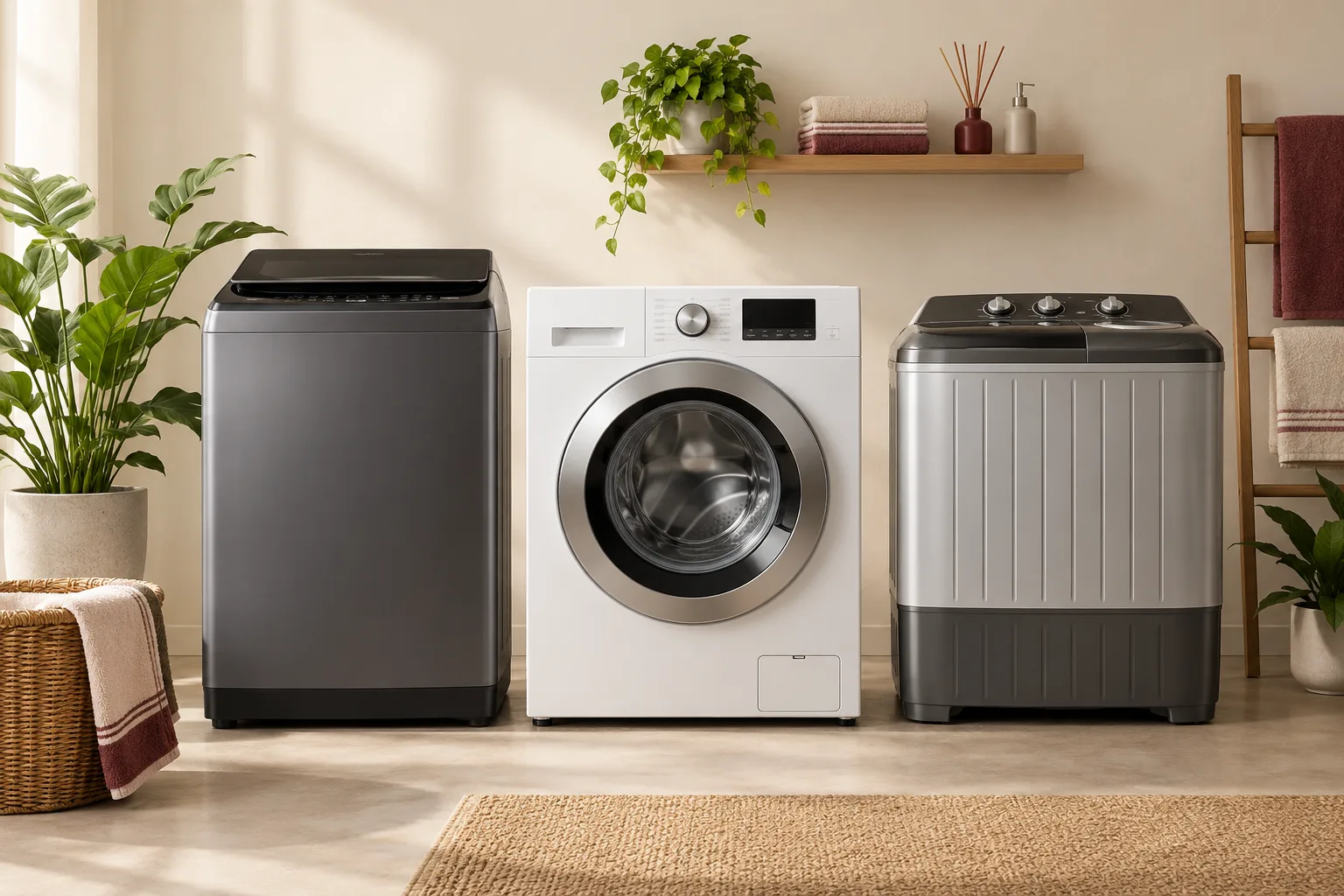
What website means
A website is the page a customer lands on after searching, clicking an advert or scanning a code, and it decides whether they call or leave. GullySales builds and maintains sites that load quickly, explain the offer plainly and make the enquiry form or phone number easy to find.
Also for washing machine repair services
- SEO for washing machine repair
- Local SEO for washing machine repair
- Lead generation for washing machine repair
- Social media marketing for washing machine repair
- Content marketing for washing machine repair
- Buyer personas for washing machine repair
- CRM for washing machine repair
- Follow-up systems for washing machine repair
Sales and marketing for washing machine repair services, the overview.
Last updated 14 Nov 2026.
For washing machine repair services
Where it usually goes wrong, and what we would do.
“The visitor arrives holding a manual or a photo”
They want to confirm the code, the brand and whether you come to their area. A homepage full of company history makes them look elsewhere, while a clear list of brands and areas keeps them.
“A phone button matters more than a form”
On a phone, in a hurry, a visitor wants to call or send a WhatsApp message. A long enquiry form asks too much from someone standing next to a machine full of wet clothes.
“Pages must match what the team repairs”
A site that lists every brand and every fault promises work the team cannot do. The pages should reflect the machines your technicians repair every week, and be changed when that changes.
What we do
What we deliver for washing machine repair services.
The work available for this need. We agree the deliverables and responsibilities for your engagement in writing.
A page structure for faults, brands and areas
A plan of the pages needed: home, faults, error codes, brands, areas, hostel and PG service and contact.
Result: Every page has a purpose you can state.
Call and WhatsApp buttons on every page
A fixed button for calling and for sending a WhatsApp message with the page's fault pre-filled in the text.
Result: A visitor can reach you from any page with one tap.
Plain pricing guidance
A page explaining how repair prices work: diagnosis first, then a quote, with ranges only for parts your team already quotes.
Result: A visitor knows what comes before a price is given.
Proof from real jobs
Photographs of real repairs and reviews from your Maps profile, shown only with the customer's permission.
Result: Each page holds proof that comes from your own work.
Speed and mobile checks
A check that the site loads on a phone on an ordinary mobile connection and that buttons are easy to press.
Result: The site works on the phones your customers use.
How the result is measured
- Page load time
- Bounce rate
- Enquiries from the website
Recorded as a baseline before work starts, so every later report has an honest comparison.
Questions the site must answer
What a visitor wants settled on a repair site, and the page that settles it.
- Do you repair my brand and machine?
- Pages by brand and machine type, saying plainly what you repair and what you do not, so the call is the right one.
- What does this error code mean?
- Code pages by brand, written from technician notes, ending in a booking button and a safe-checks note.
- Do you come to my area?
- A locality page naming the apartments and areas covered, with a form that checks the address.
- Can I call or message now?
- A call button and a WhatsApp button on every page, since the visitor is standing beside a stopped machine.
- What will it cost?
- Plain guidance on the visit charge and part cost, saying the technician confirms the price after looking.
- Can I trust you in my home?
- Proof from real jobs, technician names and photographs with consent, and how a customer recognises the visit.
Who it is for
This is written for these washing machine repair services.
- Technicians who specialise in front-load machines of imported and premium brands
- Top-load and semi-automatic repairers serving middle-income households
- Multi-appliance repair firms with a washing machine desk
- Authorised service partners who take out-of-warranty calls
- Small teams working inside a single group of apartment complexes
- Repair businesses that also sell reconditioned machines
- Shops serving hostels, PGs and rental flats with several machines
- Laundrettes and dry-cleaners who need their commercial machines kept running
Before you decide
When this may not be the right fit.
- Nobody can update the pages when brands or areas change, so the site would list services you no longer offer.
- You have no photographs of real jobs, so the proof would be stock images.
- A Maps profile and a WhatsApp reply already bring the calls you can serve, and a site would be one more thing to maintain.
Before you decide
Agree the work. Know how to judge it.
Website for washing machine repair: use these checks to prepare, choose the scope, and review what changes.
Bring the right evidence
List the pages that support a buying decision and the actions visitors must complete. Keep examples of failed forms, unclear product information, and questions your team answers repeatedly.
Make the scope clear
Agree the page list, content ownership, integrations, and who controls the domain and hosting. Include redirects and existing search traffic in a redesign brief, before changing addresses.
Check the work in use
Complete a real enquiry journey on a phone and a laptop. Check that the confirmation appears, the enquiry reaches the right person, and tracking records the action once.
Know when to change course
If visitors can enquire but the team does not follow up, start with the sales handover. A larger website will not resolve that delay.
These are discussion points, not a fixed package. GullySales confirms the deliverables, responsibilities, fee, and term in writing after reading your brief and speaking with you.
Before we start
What to have ready before the work starts.
The records, access and decisions this work needs from washing machine repair services. Anything missing is noted in the written scope, with who will supply it.
- The domain and hosting logins
- A site cannot go live without them. Find the registrar and the host. If an ex-vendor holds them, recovering them comes first. We also need the email that receives the form messages.
- Real photographs of van and team
- Proof from real jobs builds trust. A few clear phone photographs will do. Without them, we use plain text and no stock images. Photographs of the technician working on a machine count for more than a portrait.
- A pricing guidance note you can stand by
- Decide what the site says about cost: visit charge, how a quote is made, what drives the price. Without a decision, the site says a quote follows the diagnosis. Say whether a visit charge is adjusted against the repair. Without that decision, visitors compare the visit charge with a rival's and move on.
- A list of brands you decline
- A site that lists every brand brings wrong calls. Write the brands you will not touch. Without it, the list is built from what you say yes to. Include any model types, such as semi-automatic, that you decline.
- A person who edits the site afterwards
- Someone must be able to change a number or a page. Name them. Without a person, we set up a short written handover. The person should know how to change the phone number on every page at once.
How it works
How the website work runs
The work itself, in order. How an engagement starts, from your brief to a written scope, is set out on our method page.
- 1
List the brands and areas the site will name
We begin with the brands your technicians repair and the localities they visit, and you strike any you cannot serve. That list decides the pages. The site never names a brand or an area outside it. We also note whether you want pages for hostels and PGs, since their questions differ from a household's. Each brand gets its own page only if a technician can name the faults seen on it.
- 2
Gather logins and the real photographs
We collect domain and hosting logins, the Maps listing, phone and WhatsApp numbers and the photographs of your van and technicians. You confirm who holds each. Missing items are listed so the build does not wait on a surprise. We ask for the Maps listing link too, so the site and the profile carry the same details.
- 3
Approve the sitemap and the phone-first layout
We draw the pages for faults, brands and localities, with the call and WhatsApp buttons in view on each. Nothing is written until you have signed off the map. Pages that repeat each other are merged here, on paper. We choose the order of the menu by what a visitor with a broken machine looks for first.
- 4
Read the test pages against the job cards
On a test site, you read each page against what your technicians really do. The brands, the first checks and the pricing guidance must match. Anything that does not match is corrected before any visitor sees it. The technician who reads a page marks any first check that would be unsafe for a customer to try.
- 5
Approve the launch and the redirects
Before the site goes live, we test the buttons, the forms and the page speed on a mobile, and you give the final yes. If an old site exists, its addresses are redirected so no ranked page is lost. The site stays unpublished until you have seen the test results and agreed in writing. The final yes comes from the owner, with the phone staff having tried the buttons.
- 6
Check live pages and hand over the keys
After launch we check every call button, form and WhatsApp link on the live site and compare enquiries with the figures taken earlier. You receive the logins and a note on who edits what. The site belongs to you from that point. A short list of what to update when a number, area or brand changes is left with the person who edits.
Where this fits
Three pieces of sales work, in this order.
This work sits inside sales process design, at stage 1, prospecting and lead generation. The audit comes before it, and sales management keeps it running.
Step 1
Sales audit
Find where deals are being lost and what to fix first.
Start here if you cannot say where orders are lost.
Step 2 · you are here
Sales process design
One written way to sell, from first enquiry to repeat order.
Start here if every salesperson sells differently.
Step 3
Sales management
A target, a review routine and someone who owns the number.
Start here if the team has targets and no routine.
FAQ
Questions owners ask before they call.
Not here? More answers, or ask on WhatsApp.
Do we need a website if we have a Maps profile?
Who looks after the site afterwards?
Should the site show technician names and photos?
Can we list every brand we have heard of?
Can the Maps profile link to the site?
What if our current site was built by a relative or friend?
How much does it cost?
How long is the contract?
How soon will we see results?
Who will actually do the work?
More for washing machine repair services
Related work to consider.
Closest to this: search and visibility
Also for washing machine repair services
Or start from the overview: sales and marketing for washing machine repair services.
Your next practical step
Tell us what you are trying to grow, and we will read it before we call.
Eight short steps, mostly taps. Skip anything you would rather answer on the call.