Business hotels · Lead generation
Fill the weekday rooms by finding the desks that book them, not only the guests.
Lead generation for a business hotel is the work of finding the companies, travel desks and project teams that will send people to your town again and again. GullySales builds the account list, the offer and the enquiry routes that bring those desks to your sales manager.
Scope, fee, reporting and term are agreed in writing after we have read your brief and spoken to you.
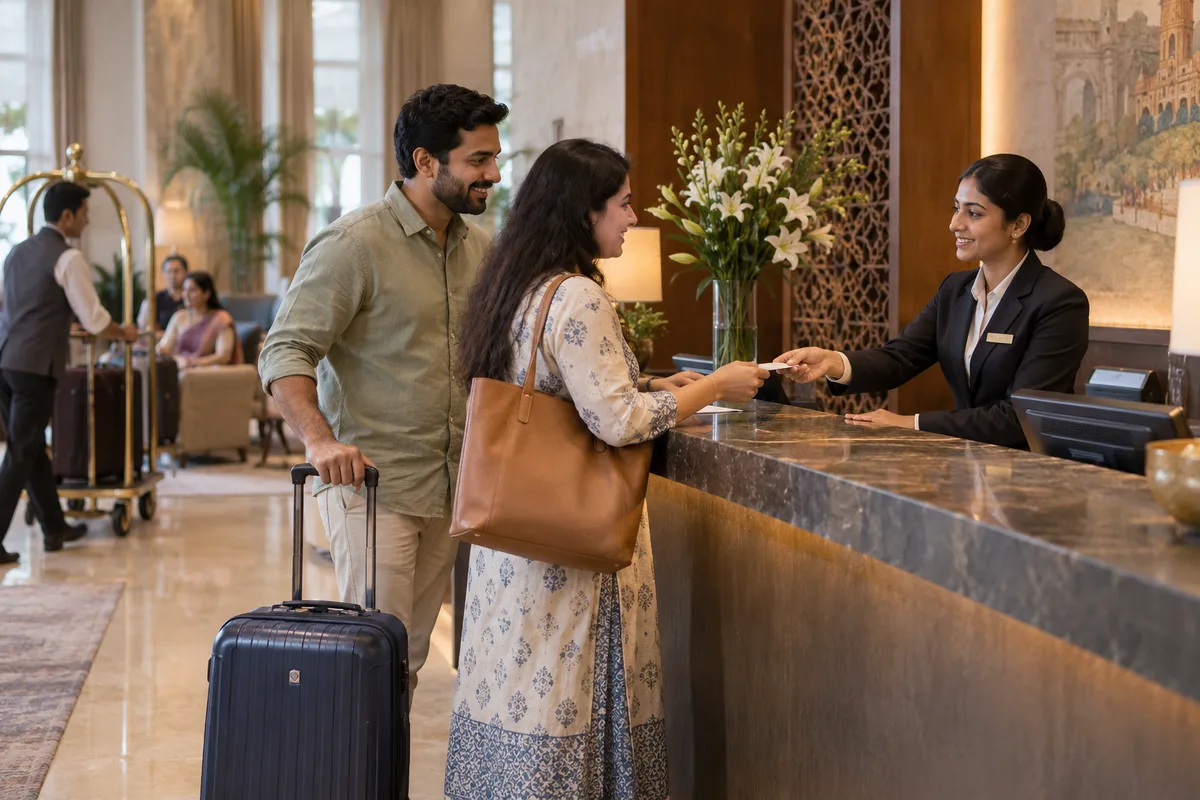
What lead generation means
Lead generation is the combined work of every channel that brings in a new enquiry, whether from search, adverts, referrals or a stall at an exhibition. GullySales runs these channels together and reports the number of enquiries each one produced, not the activity behind it.
Plan the next part of the work
Last updated 21 Nov 2026.
For business hotels
Where it usually goes wrong, and what we would do.
“The buyer is a desk, not the guest”
The engineer who sleeps in the room is rarely the person who chose the hotel. An admin executive or travel coordinator holds the approved list, so a lead is a named person at a company, and a click from a traveller is only the first clue to finding them.
“Your own register holds the first leads”
Every GST invoice you have issued names a company. Sorted by repeat stays per company, the register shows who already sends people, who stayed once and vanished, and who stays elsewhere because nobody from your side ever asked.
“A late-evening call is a lead with a deadline”
A project manager phoning at six for four rooms near the plant needs a quote now. When the call reaches a busy front desk or the rate takes a night to arrive, the group books whichever hotel answered first.
“Training days come from different people”
Meeting rooms are booked by HR heads, training firms and audit teams, not by the travel desk. Without their own enquiry route and a per-delegate offer, they are quoted a room tariff for a day that is sold by the head.
What we do
What we deliver for business hotels.
The work available for this need. We agree the deliverables and responsibilities for your engagement in writing.
A ranked account list
Nearby companies ordered by how many people they send to the city, with the admin, HR or travel contact and the source of each name.
Result: Your sales manager opens the list and knows whom to call first.
Register mining
Invoices and booking records grouped by company, showing first stay, latest stay and the channel each booking came through.
Result: You can see which companies stay but book through an app.
An enquiry route for desks
A short form and a WhatsApp number for corporate and group enquiries, asking for dates, rooms, the site being visited and billing details.
Result: A group enquiry arrives with the facts needed to quote.
A separate list for meeting rooms
HR heads, training firms and audit teams listed apart from travel desks, with a day-package sheet written for them.
Result: Training enquiries reach the person who prices them.
A lead record
Each enquiry logged with who asked, for what, which quote went out and what happened next.
Result: Every lead has a status anyone on the team can read.
How the result is measured
- Relevant enquiries by source
- Duplicate and unsuitable enquiries
- Time to the first response
- Accepted enquiries reaching an agreed next step
Recorded as a baseline before work starts, so every later report has an honest comparison.
What to capture or send
Record the facts a quote needs the moment a desk enquires.
- Company and the person asking
- The company name and the role of the caller, such as admin, HR or travel coordinator, so the right person is called back.
- Site or plant being visited
- The office, plant or project the guests are visiting. It sets the distance you quote and the transport you mention.
- Rooms, nights and arrival date
- The count and the dates, with a note on whether the group is one team or several, so the quote matches the need.
- Billing details for GST
- The registered name and GSTIN as given by the desk, captured at enquiry so the first invoice is right.
- Quote sent and next step
- What was quoted, to whom, and the day agreed to call again. The record shows the enquiry is open, not forgotten.
Who it is for
This is written for these business hotels.
- Hotels near IT parks and tech corridors
- Hotels in industrial areas and manufacturing belts
- Airport and transit business hotels
- Hotels near hospitals, courts and government offices
- Extended-stay business hotels with kitchenettes
- Hotels with meeting rooms and training halls
- Business hotels in tier 2 industrial towns
- Hotels attached to convention centres or trade fairs
Before you decide
When this may not be the right fit.
- No one in the hotel is named to take a corporate enquiry, so more leads would land in a general inbox.
- The rate contract is not set, and a sales manager would quote a different figure to each company.
- You hope to fill Saturday with this, when corporate leads fill the weekday nights.
Before you decide
Agree the work. Know how to judge it.
Lead generation for business hotels: use these checks to prepare, choose the scope, and review what changes.
Bring the right evidence
Define the organisations or buyers you can serve and the reasons they would consider a conversation. Bring examples of accepted and rejected prospects so the selection rule is visible.
Make the scope clear
Agree the research sources, contact approach, qualification rules, and handover. Clarify which meetings count as accepted and what happens to replies that are not ready to buy.
Check the work in use
Review why a prospect was selected and what was learned from the response. Count held, relevant conversations separately from contacts found, messages sent, or meetings booked.
Know when to change course
If the same objection appears repeatedly, adjust the offer or buyer group before increasing outreach. Respect a request to stop contact and keep the exclusion in the record.
These are discussion points, not a fixed package. GullySales confirms the deliverables, responsibilities, fee, and term in writing after reading your brief and speaking with you.
Before we start
What to have ready before the work starts.
The records, access and decisions this work needs from business hotels. Anything missing is noted in the written scope, with who will supply it.
- Guest register export for two years
- Lead generation here begins with who already stays, so we need the register with company names, room nights and booking dates. A spreadsheet export from the property system is fine, even if the company field is messy. Without it we start from public listings and the account list is slower to trust.
- Folder of corporate GST invoices
- Company names in the register are short forms, while the invoice header carries the full legal name and city. We use these to match one company to its different spellings. Scanned copies are acceptable if the header is readable. Without them, repeat accounts get split and counted as small ones.
- Your sales manager's time for calls
- Someone from your side must make or sit in on the first calls, because desks answer a hotel employee differently from an agency. We need the manager free for the calls and for the quick review after each. If nobody is named, we draft scripts but the list sits idle.
- A rate card for corporate bands
- The offer must quote what a desk will actually be charged, so we need the corporate rate bands, the tax treatment and what each band includes. A rate card on one sheet suffices. Where the owner has not decided, we mark the offer as pending and hold the outbound calls until it is fixed.
- The late-evening call rota
- Enquiries from a desk arrive after office hours with a deadline attached, so we need to know who picks up at night and from which number. A written rota is enough. If the night manager is not part of it, we plan the enquiry route to send late messages to a morning inbox.
How it works
How the lead generation work runs
The work itself, in order. How an engagement starts, from your brief to a written scope, is set out on our method page.
- 1
Pull company names from GST invoices
We start with the guest register and the GST invoices your front office has raised, because the companies already sending people to your town are written there. You hand us the export or the invoice folders. We read the company names from the headers, group the repeats, and mark the ones nobody in sales has ever called.
- 2
Sort accounts by distance and grade
Next we place each company on a map against your property and note the grade of traveller it sends, from trainee engineers to plant heads. You tell us which grades your rooms and rate suit. We drop companies too far for a traveller to accept, and the ranked list that remains is what your sales manager calls.
- 3
Write the offer a desk can compare
A travel desk compares hotels on a few facts, so we write the corporate offer in those terms: distance to their gate, check-in and checkout rules, breakfast start time, invoice handling and Wi-Fi. You confirm every line is true on a normal Tuesday. We keep it to one page a desk can forward.
- 4
Set up the desk enquiry route
We build the route a desk uses to reach you: a form, a number and a short email address that all land with the same person. You name who answers and who covers the late evening. We test it by sending enquiries as a fake travel coordinator and watching where each one lands.
- 5
Call the first ranked accounts together
Your sales manager and one of us make the first calls from the ranked list, so the opening line and the questions are tested against real answers. You listen for what desks ask that we missed. Each call is written into the lead record with the contact, the answer and the next step.
- 6
Compare enquiries with the register baseline
We read the lead record against the room-night and company counts we noted from your register at the start. You see which accounts replied, which sent a first booking, and which sources produced nothing. Together we decide which desks to keep calling and which part of the list to drop.
Where this fits
Three pieces of sales work, in this order.
This work sits inside sales process design, at stage 1, prospecting and lead generation. The audit comes before it, and sales management keeps it running.
Step 1
Sales audit
Find where deals are being lost and what to fix first.
Start here if you cannot say where orders are lost.
Step 2 · you are here
Sales process design
One written way to sell, from first enquiry to repeat order.
Start here if every salesperson sells differently.
Step 3
Sales management
A target, a review routine and someone who owns the number.
Start here if the team has targets and no routine.
FAQ
Questions owners ask before they call.
Not here? More answers, or ask on WhatsApp.
How do we find the right person at a company?
Should we buy a contact database?
Should a business hotel chase leads from the OTAs?
Do we need a sales manager to run corporate lead generation?
Do we have to share our guest register with GullySales?
What if our existing sales manager already calls these companies?
How much does it cost?
How long is the contract?
How soon will we see results?
Who will actually do the work?
More for business hotels
Related work to consider.
Closest to this: leads and follow-up
Also for business hotels
Or start from the overview: sales and marketing for business hotels.
Your next practical step
Tell us what you are trying to grow, and we will read it before we call.
Eight short steps, mostly taps. Skip anything you would rather answer on the call.