Caterers · Social media
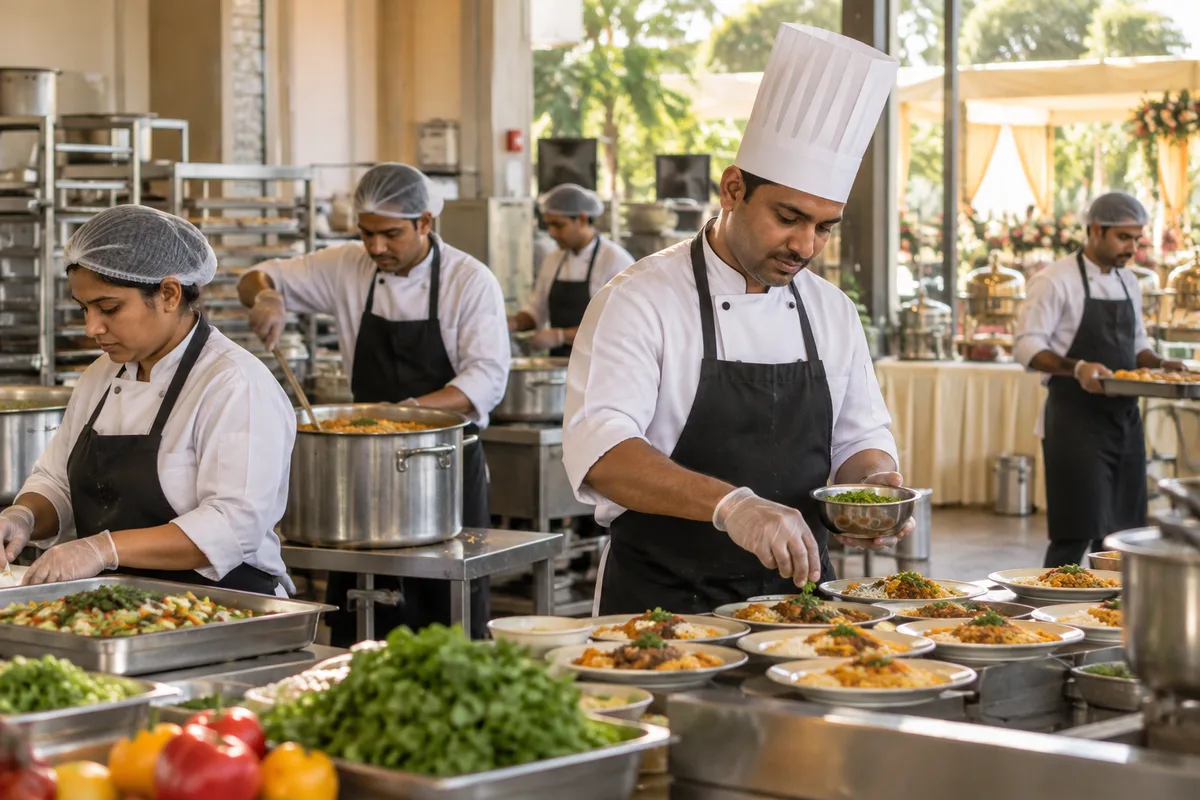
Post the counter in full service, not another close-up of a plate.
Social media for a caterer is proof that you have fed a crowd the size of the one being planned. GullySales sets what gets shot at each function, plans the posting around the wedding season, and gets permission from the host before anything goes up.
Scope, fee, reporting and term are agreed in writing after we have read your brief and spoken to you.
What social media means
Social media is the ongoing posting your business does on platforms such as Instagram, Facebook and LinkedIn to stay visible to customers and prospects between purchases. GullySales plans a posting calendar, writes captions and designs the images so the page looks active and answers what a visitor would ask.
Last updated 5 Oct 2026. Rules for this trade differ by state and professional body, and they change. We describe restrictions in general terms, so check the current position with your own council or adviser before you publish anything.
For caterers
Where it usually goes wrong, and what we would do.
“Families fear the queue, not the recipe”
Show the counters running smoothly at the peak, because that is the worry nobody says out loud at a tasting.
“The host owns the photographs of their own function”
A wedding is private, and posting the family without asking costs you the referral you were hoping for.
“WedMeGood and Instagram do different jobs”
One is a shortlist a bride works through. The other is where a cousin sees your work and passes the number on.
What we do
What we deliver for caterers.
Every deliverable, what it covers for you, and the result it is there to produce. Nothing here is an extra.
A shot list built around service, not styling
The counters in full flow, the team plating, the crowd being fed and the dishes as served, decided before the function rather than remembered afterwards.
Result: You come back with proof, not a food photoshoot.
Permission taken from the host before the function
Photography and posting agreed in the booking note, with what may be shown and what may not, so nothing goes up unexpectedly.
Result: You can post the wedding without an awkward call.
Posts that carry the guest count and the menu
Each post naming how many were served, what the menu was and where, since that is the only information a family is actually looking for.
Result: A family planning six hundred can see six hundred.
The wedding platform profile kept current
WedMeGood and the other listings updated with this season's photographs, your cuisines, capacity and reviews, checked against the enquiries they bring.
Result: The free listing earns its place or gets dropped.
A backlog banked before the season starts
Posts prepared from last season's material before the muhurtham months begin, since nobody is editing reels during a wedding week.
Result: The feed keeps running while the kitchen is flat out.
Messages treated as enquiries and logged
Instagram and Facebook messages checked twice a day by a named person and written into the same enquiry list as the phone.
Result: A message at night reaches somebody by morning.
How the result is measured
- Posts published
- Engagement rate
- Enquiries from social profiles
Recorded as a baseline before work starts, so every later report has an honest comparison.
Platform for this buyer
Where a family or a hall manager checks a caterer, and what to post in each place.
- Instagram reels of the live counter and plating
- Show the counters in service and the team plating at pace, with the guest count and the menu in the caption. The action is to message the date, venue and number of guests.
- YouTube, for the traditional spread
- Show a leaf meal served in the order a family expects, with the cook naming each item. Elders watch this before they agree to a tasting. The action is to book the tasting.
- WhatsApp for past hosts and hall managers
- Send the menu options for the coming muhurtham season to hosts and hall managers who asked for them. The action wanted is a reply with date and guest count so you can hold the kitchen.
- Google Business Profile
- Add kitchen photographs, your FSSAI licence number, the types of event you cater and the area you serve. A family searching for a caterer reads this. The action is to call to fix a tasting.
- What not to post
- A host's function without permission, a dish photograph from another caterer or stock, kitchen footage showing a hygiene lapse, or a per-plate price for a menu you cannot repeat at that rate.
Who it is for
This is written for these caterers.
- Wedding and function caterers
- Traditional vegetarian and Brahmin cooks for ceremonies
- Non-vegetarian and biryani specialists
- Corporate event and party caterers
- Office cafeteria and daily meal providers
- Industrial and factory canteen contractors
- School and hostel meal providers
- Live counter and snack specialists
- Home-based caterers for small gatherings
Not for
It is not the right fit if.
- You want a guaranteed Google ranking or a guaranteed number of leads. Nobody honest can promise either.
- You need enquiries by next week and have nobody to answer them.
- You want posts and reach reported, not enquiries and orders.
How it works
From your first message to the first report.
No open-ended retainer. Every step gives you something in writing.
First
Your brief
You tell us what you need in a few short steps: your business, what you want, where enquiries come from and how they are handled.
After the brief
A conversation and a written scope
We read it, then talk with whoever handles your enquiries. If you want our help, the scope, the fee and the reporting come in writing, and nothing starts before you have read them.
Before work starts
Baseline recorded
Enquiries by source, reply time, conversion and cost per order, written down so every later report has an honest comparison.
After the baseline
The first fix goes live
The fix we agreed to start with is put in place and measured against the baseline, whether that is reply time, a follow-up sequence, the page buyers land on or the handover between marketing and sales.
As agreed
Report against the baseline
What moved, what did not, and what changes next, in plain words. How often you get it is set in writing before work starts.
At renewal
Renew on the numbers
The term ends and you decide whether to continue from the results. The length is agreed in writing before anything starts.
How the social media work runs
- 1
Understand your audience and platforms
We identify which platforms your specific buyers actually use and what kind of content they respond to.
- 2
Audit current presence
We review existing pages, past content performance and any gaps in consistency.
- 3
Build the content calendar
A plan is created, balancing genuine value with occasional direct offers.
- 4
Implement and post
Content is created and published consistently on the agreed schedule.
- 5
Measure and optimise
We track enquiries alongside engagement and adjust the content mix based on what actually performs.
Why us
Why owners pick GullySales over an agency.
Marketing and sales, as one job
Most agencies stop at the enquiry. We also fix what happens after it: the reply, the follow-up, the quote and the CRM.
The person on the first call does the work
No account managers in between. You are never handed to someone you have not met.
A baseline before anything starts
Your numbers are written down on day one, so every later report compares against something honest.
The fee in writing, split three ways
Our time, your media spend and production on separate lines. You always see what goes to us.
No guarantees we cannot keep
The term is agreed in writing and never a default twelve months. We never promise a ranking or a lead count, because nobody controls those.
One office, and we say so
Nagarbhavi, Bengaluru. We work across India by call and WhatsApp and travel when a session needs to be in person.
#257, 3rd floor, Sri Nanjundeshwara Complex, Nagarbhavi 8th Block, Outer Ring Road. How we work.
Your brief
Tell us what you need, and we will read it before we call.
Eight short steps about your business, what you want and who decides. Most questions are a tap, and you can skip any you would rather answer on the call.
FAQ
Questions owners ask before they call.
Not here? More answers, or ask on WhatsApp.
Can we post a client's wedding?
Do reels bring enquiries?
Our staff post from functions on their own phones. Is that a problem?
We cook veg and non-veg. Should they be separate accounts?
Should we give a per-plate price over the phone?
Should we charge for tastings?
How long is the contract?
How soon will we see results?
Who will actually do the work?
What do you need from us?
From the blog
Further reading for caterers.
 5 min read · 6 Oct 2026What buyers check before they book a stay or a catererGuests, tenants and event families judge hotels, homestays, PGs, serviced apartments and caterers on the same four checks. Here is what each check looks like and how to pass it.
 7 min read · 21 Sept 2026How to advertise to women entrepreneursNothing useful here comes from gender. It comes from how these businesses are financed, where they sell from and which hours of the day the founder is actually free.
 7 min read · 18 Nov 2025How to promote a new restaurantOpening week is about being found, not discounted. The first month is about repeat visits and honest reviews. After week three, most launch offers should stop.
More for caterers
Everything else we would do for you.
Closest to this: content and social
Also for caterers
Or start from the overview: sales and marketing for caterers.
Your next practical step
Tell us what you are trying to grow, and we will read it before we call.
Eight short steps, mostly taps. Skip anything you would rather answer on the call.