Caterers · Website
Give the family a page that shows the menu, the events and a way to book a tasting.
A website for a caterer is the page a family or an office admin opens after a recommendation to check whether you are real, capable and in their city. GullySales plans and writes the pages around menus, event photographs, documents and a clear enquiry route, and builds them to open well on a phone.
Scope, fee, reporting and term are agreed in writing after we have read your brief and spoken to you.
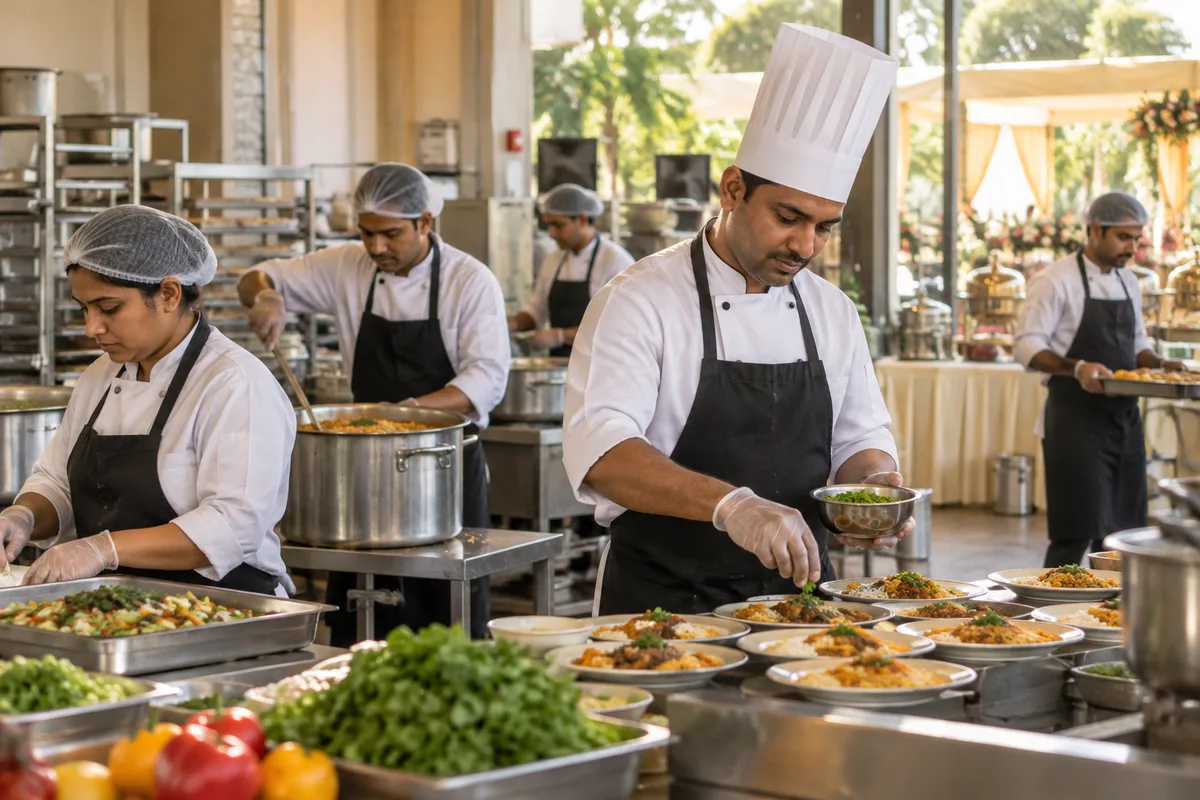
What website means
A website is the page a customer lands on after searching, clicking an advert or scanning a code, and it decides whether they call or leave. GullySales builds and maintains sites that load quickly, explain the offer plainly and make the enquiry form or phone number easy to find.
Last updated 5 Oct 2026. Rules for this trade differ by state and professional body, and they change. We describe restrictions in general terms, so check the current position with your own council or adviser before you publish anything.
For caterers
Where it usually goes wrong, and what we would do.
“A relative's recommendation sends the buyer to your name first”
Someone hears your name at a function and searches it that evening. If the first result is a thin listing with no menu, the recommendation weakens. A site that answers the first questions keeps it alive.
“Menus buried in images cannot be read, searched or compared”
A menu pasted as a photograph is hard to read on a small screen and invisible to search. Typed menus by price band, with inclusions, let a family compare you properly.
“A corporate buyer looks for documents before taste”
An admin team wants the licence, the kitchen process and sample menus to forward upward. A page that holds them means the shortlist includes you rather than a caterer who sent a PDF sooner.
“The enquiry form asks too much or too little”
A form with ten fields is abandoned. A form with only a phone number gets a call with no context. The right form asks date, guest count, city and diet, then offers a WhatsApp option.
What we do
What we deliver for caterers.
The work available for this need. We agree the deliverables and responsibilities for your engagement in writing.
Page plan for your kind of catering
A map of the pages you need: weddings, ceremonies, corporate, cafeteria, menus, gallery, contact.
Result: You can see which pages each buyer needs.
Menus as readable text
Menu bands written out with items, counters, staff and inclusions, plus a downloadable card.
Result: A family compares your offer on their phone.
Event gallery with captions
Photographs of counters, service and crowds, captioned with the kind of event and the guest count when the host agrees.
Result: A buyer sees you handling their size of event.
Corporate document page
FSSAI licence, GST details, hygiene process and sample menus on a page or a downloadable pack.
Result: An office admin can forward it internally.
Enquiry and WhatsApp route
A short form and a WhatsApp button that arrive with date, guests and diet already filled.
Result: Every enquiry arrives ready to quote.
How the result is measured
- Page load time
- Bounce rate
- Enquiries from the website
Recorded as a baseline before work starts, so every later report has an honest comparison.
Searches your buyers type
What a family or an office types before booking a caterer, and the page that answers it.
- vegetarian catering menu for 300 guests
- A menu page with every item listed, the counters and the staff for that guest range, so the family reads the offer without calling.
- caterers near me with FSSAI licence
- A kitchen page showing the licence number, the kitchen's location and the hygiene routine, written for a corporate buyer and a worried family alike.
- catering price per plate
- A page that explains what moves the plate price, with a range you will stand by for each menu and guest count.
- book caterer for housewarming
- A small-function page with the minimum guests, what the cooks bring and a short enquiry form that asks the date and diet.
- wedding caterer photos of past functions
- Event pages that show the hall, the guest count and the serving style, each used with the host's agreement.
- caterer for office lunch boxes
- A corporate page with sample menus, packing, the GST invoice and how an office places and changes an order.
Who it is for
This is written for these caterers.
- Wedding and function caterers
- Traditional vegetarian and Brahmin cooks for ceremonies
- Non-vegetarian and biryani specialists
- Corporate event and party caterers
- Office cafeteria and daily meal providers
- Industrial and factory canteen contractors
- School and hostel meal providers
- Live counter and snack specialists
- Home-based caterers for small gatherings
Not for
It is not the right fit if.
- Your menus, guest ranges and kitchen details are not settled, so a site would print answers you would later change.
- Nobody can update the site when a menu or a licence changes, and a stale page is worse to a corporate buyer than none.
Before you decide
Agree the work. Know how to judge it.
Website for caterers: use these checks to prepare, choose the scope, and review what changes.
Bring the right evidence
List the pages that support a buying decision and the actions visitors must complete. Keep examples of failed forms, unclear product information, and questions your team answers repeatedly.
Make the scope clear
Agree the page list, content ownership, integrations, and who controls the domain and hosting. Include redirects and existing search traffic in a redesign brief, before changing addresses.
Check the work in use
Complete a real enquiry journey on a phone and a laptop. Check that the confirmation appears, the enquiry reaches the right person, and tracking records the action once.
Know when to change course
If visitors can enquire but the team does not follow up, start with the sales handover. A larger website will not resolve that delay.
These are discussion points, not a fixed package. GullySales confirms the deliverables, responsibilities, fee, and term in writing after reading your brief and speaking with you.
How it works
How the website work runs
The work itself, in order. How an engagement starts, from your brief to a written scope, is set out on our method page.
- 1
Build scope agreement
Your requirements brief comes first, followed by a conversation. We agree the build scope, fee, and term in writing before work starts.
- 2
Access and content confirmation
We check available content, domain access, and hosting arrangements. You confirm missing material and whether preserving an existing site’s search standing requires a redesign scope.
- 3
Sitemap and design approval
You approve the page list, platform, and content responsibilities. Phone and desktop designs then go to you for approval before development.
- 4
Test-site content approval
The approved designs become working pages with real content. You review business details on the test site and approve the content before launch checks.
- 5
Launch approval
You approve the finished pages and launch checklist before the site goes live. Where an old site exists, its addresses are mapped to destinations you approve as part of this decision.
- 6
Live checks and access handover
After launch, we test the live enquiry routes and tracking, complete agreed corrections, and hand over documented account access and source files for your acceptance. Further improvements are distinguished from build corrections and scoped separately.
Where this fits
Three pieces of sales work, in this order.
This work sits inside sales process design, at stage 1, prospecting and lead generation. The audit comes before it, and sales management keeps it running.
Step 1
Sales audit
Find where deals are being lost and what to fix first.
Start here if you cannot say where orders are lost.
Step 2 · you are here
Sales process design
One written way to sell, from first enquiry to repeat order.
Start here if every salesperson sells differently.
Step 3
Sales management
A target, a review routine and someone who owns the number.
Start here if the team has targets and no routine.
FAQ
Questions owners ask before they call.
Not here? More answers, or ask on WhatsApp.
Do we need a website if we already have Instagram?
Can we show prices on the site?
Are there rules for how we describe food and hygiene?
Should the website list per-plate prices?
How long is the contract?
How soon will we see results?
Who will actually do the work?
What do you need from us?
What if we are not happy with the work?
From the blog
Further reading for caterers.
 5 min read · 6 Oct 2026What buyers check before they book a stay or a catererGuests, tenants and event families judge hotels, homestays, PGs, serviced apartments and caterers on the same checks. What each looks like.
 7 min read · 21 Sept 2026How to advertise to women entrepreneursNothing here comes from gender. It comes from how these businesses are financed, where they sell from and which hours the founder is free.
 6 min read · 6 Sept 2026Quoting a wedding or event: what to include so the customer can compareA wedding or event quotation should list inclusions, extras and a valid-until date, so a family can compare venues line by line.
More for caterers
Related work to consider.
Closest to this: search and visibility
Also for caterers
Or start from the overview: sales and marketing for caterers.
Your next practical step
Tell us what you are trying to grow, and we will read it before we call.
Eight short steps, mostly taps. Skip anything you would rather answer on the call.