Fine dining restaurants · Buyer persona
A fine dining room is booked by at least four different people with different worries.
A buyer persona for a fine dining restaurant describes who books the table, what the occasion is and what they check before deciding. GullySales works with the host and the manager to write these personas from the guests and enquiries the restaurant has actually had.
Scope, fee, reporting and term are agreed in writing after we have read your brief and spoken to you.
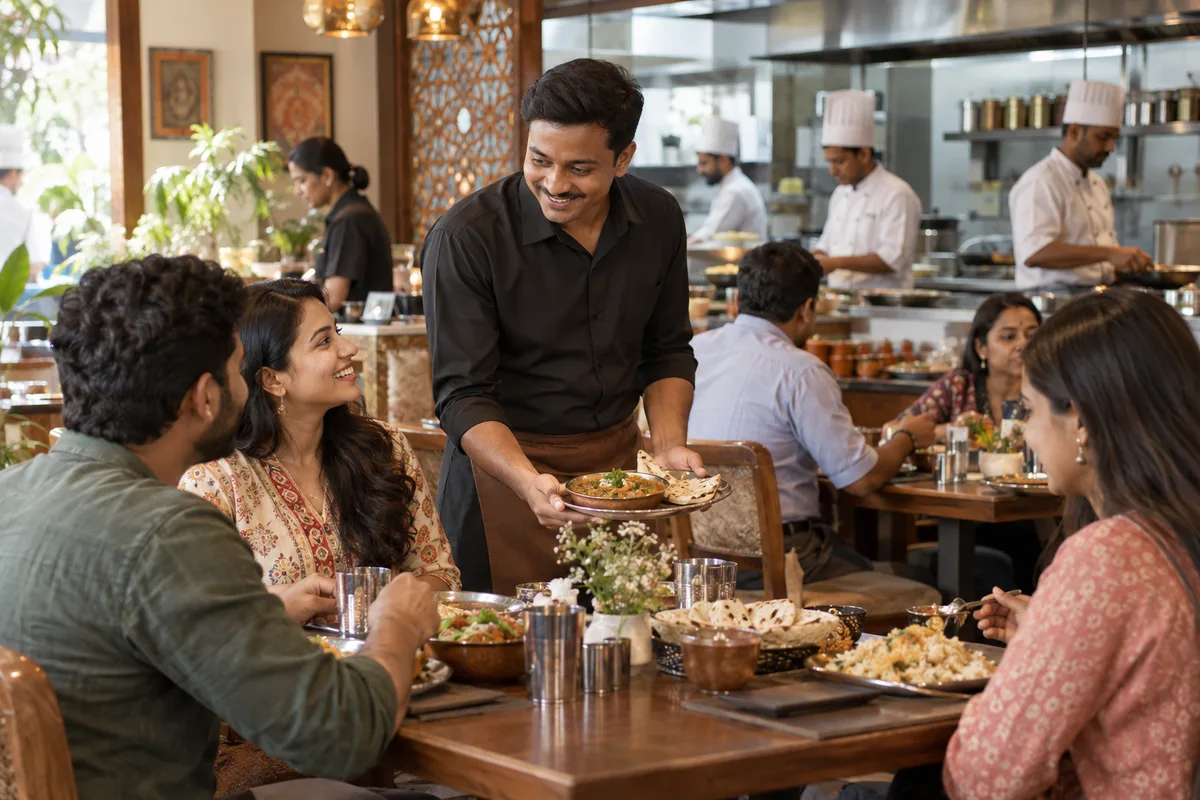
What buyer persona means
A buyer persona is a plain description of the kind of customer who actually buys from you. It includes what they search, what worries them and who else they ask before deciding. GullySales builds this from real enquiries and past sales rather than a generic template, then uses it to write every page and advert.
Also for fine dining restaurants
- Digital marketing for fine dining restaurants
- Lead generation for fine dining restaurants
- SEO for fine dining restaurants
- Local SEO for fine dining restaurants
- Social media marketing for fine dining restaurants
- Content marketing for fine dining restaurants
- CRM for fine dining restaurants
- Follow-up systems for fine dining restaurants
Sales and marketing for fine dining restaurants, the overview.
Last updated 14 Nov 2026.
For fine dining restaurants
Where it usually goes wrong, and what we would do.
“The celebrating couple wants discretion”
A proposal or an anniversary is planned weeks ahead, and the couple's worry is the surprise: who knows, where the ring goes, whether the dessert plate can carry a message. They compare how each restaurant handles the detail.
“The business host wants no risk”
A manager entertaining a visiting client needs a quiet table, a menu that suits mixed diets and a bill handled without fuss. The cost matters less than the chance of a bad evening in front of an important guest.
“The assistant booking for someone else wants clarity”
An executive assistant is not the diner. They want a reply in writing, with the menu, the per-head cost and the cancellation terms, because they must defend the choice to the person who asked.
“The family organiser wants the room to suit all ages”
A milestone birthday brings grandparents, adults and sometimes children. The organiser asks about seating, menu options for those who do not eat the tasting menu, and whether the private room can be closed off.
What we do
What we deliver for fine dining restaurants.
The work available for this need. We agree the deliverables and responsibilities for your engagement in writing.
Four written personas
One page per buyer, covering the occasion, the questions, the worries and the words they use, drawn from your own enquiries.
Result: The manager can describe each buyer in the buyer's own words.
Question bank from real enquiries
The questions guests have asked on calls, WhatsApp and at the host stand, grouped by persona and by occasion.
Result: The team holds a written list of what guests actually ask.
Reply wording for each persona
Opening replies for the couple, the host, the assistant and the organiser, each answering their main worry first.
Result: Each buyer receives a reply that deals with their worry first.
Page and menu changes per persona
Changes to the website, the private dining sheet and the booking form so each buyer finds what they need.
Result: Each persona has a route on the site built for them.
Occasion calendar
A year view of the dates each persona books around, such as wedding months, Diwali and year end.
Result: The restaurant has a dated list of when each buyer is planning.
How the result is measured
- Enquiry match to persona
- Conversion rate by persona
- Content aligned to persona
Recorded as a baseline before work starts, so every later report has an honest comparison.
Who is asking
These are the people who book a fine dining room, and what each wants answered first.
- The couple marking an anniversary
- They want discretion, a quiet table and no surprise on the bill. Say what the room arranges and what it does not.
- The host of a client dinner
- They want a table that never fails, a menu that suits mixed diets and a bill that goes to the company. Risk is the worry.
- The assistant booking for someone senior
- They want a written confirmation, a contact on the day and clear rules on cancellation. They write rather than ring.
- The family organiser for a milestone
- They want a table for several ages, a menu a grandparent can eat and a plan for children. They ask whether the room suits everyone.
- The planner of a private dinner for 14
- They want the room, a set menu and a quote in one forward-able page. They compare two or three rooms by what is written.
Who it is for
This is written for these fine dining restaurants.
- Standalone chef-led restaurants
- Restaurants inside five-star hotels
- Rooftop and terrace fine dining rooms
- Tasting-menu and chef's table concepts
- Fine dining in heritage havelis and palaces
- Wine and whisky pairing restaurants
- Fine dining with a private dining room
- Single-cuisine fine dining, such as Japanese or modern Indian
Before you decide
When this may not be the right fit.
- You have not logged any real enquiries, so the sketches would be built from guesses
- Your host team will not read or use the sketches, so replies would stay the same
- You serve only a set tasting menu with no flexibility, so most of the questions would have one fixed answer
Before you decide
Agree the work. Know how to judge it.
Buyer personas for fine dining restaurants: use these checks to prepare, choose the scope, and review what changes.
Bring the right evidence
Write the decision the research must support, such as entering a market or choosing a buyer group. Separate what you know from sales records from what the team currently assumes.
Make the scope clear
Agree which buyers to speak to, which sources to review, and what access you can provide. Include lost enquiries and people who chose another supplier, where they are willing to take part.
Check the work in use
Look for source dates, sample limitations, and evidence that disagrees with the preferred answer. A recommendation should show how it follows from the findings.
Know when to change course
Do not treat a few positive conversations as proof of demand. Test the proposed offer with an actual buying decision before committing to a wider launch.
These are discussion points, not a fixed package. GullySales confirms the deliverables, responsibilities, fee, and term in writing after reading your brief and speaking with you.
Before we start
What to have ready before the work starts.
The records, access and decisions this work needs from fine dining restaurants. Anything missing is noted in the written scope, with who will supply it.
- A season of reservation and enquiry records
- The personas come from your bookings, not from guesses. Bring the reservation book, system export or notebook for one full season, including special requests. Without it, the personas are drawn from general ideas of diners and miss your real guests.
- Guests willing to talk for a short while
- Interviews need consent and goodwill. Pick regulars who enjoy your room and agree in advance. Without any, we rely on the records alone, and the personas are thinner on what guests feel.
- The host's own list of who books and why
- Your host knows who calls and who messages. A rough list in the host's own words is enough. Without it, we test our reading of the records against nothing.
- A record of enquiries that did not become bookings
- The lost enquiries show what a persona doubts. A line per enquiry with the reason, if known, is enough. Without them the personas show only guests who succeeded.
- An hour from the manager to correct the drafts
- The personas are right only if the manager corrects them. Reserve an hour for review of the first draft. Without it, the drafts stay unapproved and are not used in replies. Add anything you already know about the guests the personas should include, so the manager's own knowledge is tested against the records.
How it works
How the buyer persona work runs
The work itself, in order. How an engagement starts, from your brief to a written scope, is set out on our method page.
- 1
Read a season of reservation notes with the host
We sit with the host and read a season of reservation records, enquiries and the notes on special requests. You mark which bookings were occasions and who made them. The marks show who really books the table, and the differences between a couple, a business host, an assistant and a family organiser.
- 2
Collect the questions asked before booking
From WhatsApp chats, phone notes and emails, we list the questions people put before they reserved: privacy, noise, set menus, the bill, access for elders. You tell us which questions led to a booking and which to silence. The list is the raw material for each persona. We also note which questions came from an assistant and which from the guest, because the two ask for different proof.
- 3
Interview a few regular guests who agree
You select a few guests who agree to a short conversation, and we prepare the questions: how they chose the room, what nearly put them off and what made them return. The host asks, and we write down their words. Guests who prefer not to take part are left alone.
- 4
Write four personas with their worries
We draft the celebrating couple, the business host, the assistant booking for someone else and the family organiser. Each persona carries the occasion, the first question, the worry and the proof they look for. Your manager reads them and marks what is wrong.
- 5
Test replies on the persona
We take three enquiries from the season and write the reply each persona would want. You compare them with the ones you sent. The comparison shows where a single reply serves one group and misses another.
- 6
Agree changes to pages, menu and calendar
From the personas we list the changes: a line on the page for the business host, a seating note for the family, a calendar of occasions. You choose the first few. After they are live we compare reservations against the earlier figures and revise. Each change is tied to one persona, so you can see whose problem it solves.
Where this fits
Three pieces of sales work, in this order.
This work sits inside sales process design, at stage 0, foundation. The audit comes before it, and sales management keeps it running.
Step 1
Sales audit
Find where deals are being lost and what to fix first.
Start here if you cannot say where orders are lost.
Step 2 · you are here
Sales process design
One written way to sell, from first enquiry to repeat order.
Start here if every salesperson sells differently.
Step 3
Sales management
A target, a review routine and someone who owns the number.
Start here if the team has targets and no routine.
FAQ
Questions owners ask before they call.
Not here? More answers, or ask on WhatsApp.
How many personas does a restaurant need?
Where does the information come from?
Should each persona get its own page?
Can one reply serve the couple and the business host?
Should the personas include a guest who is price conscious?
Do guests need to know they are being studied?
How long is the contract?
How soon will we see results?
What do you need from us?
What if we are not happy with the work?
More for fine dining restaurants
Related work to consider.
Closest to this: strategy and research
Also for fine dining restaurants
Or start from the overview: sales and marketing for fine dining restaurants.
Your next practical step
Tell us what you are trying to grow, and we will read it before we call.
Eight short steps, mostly taps. Skip anything you would rather answer on the call.