International tour operators · Buyer persona
Describe the family, the couple and the company admin who actually book abroad.
A buyer persona for an international tour operator is a written profile of who books each kind of trip, who decides, who pays and what they fear. GullySales builds those profiles from your own enquiries and calls, so your pages and quotes speak to the right person.
Scope, fee, reporting and term are agreed in writing after we have read your brief and spoken to you.
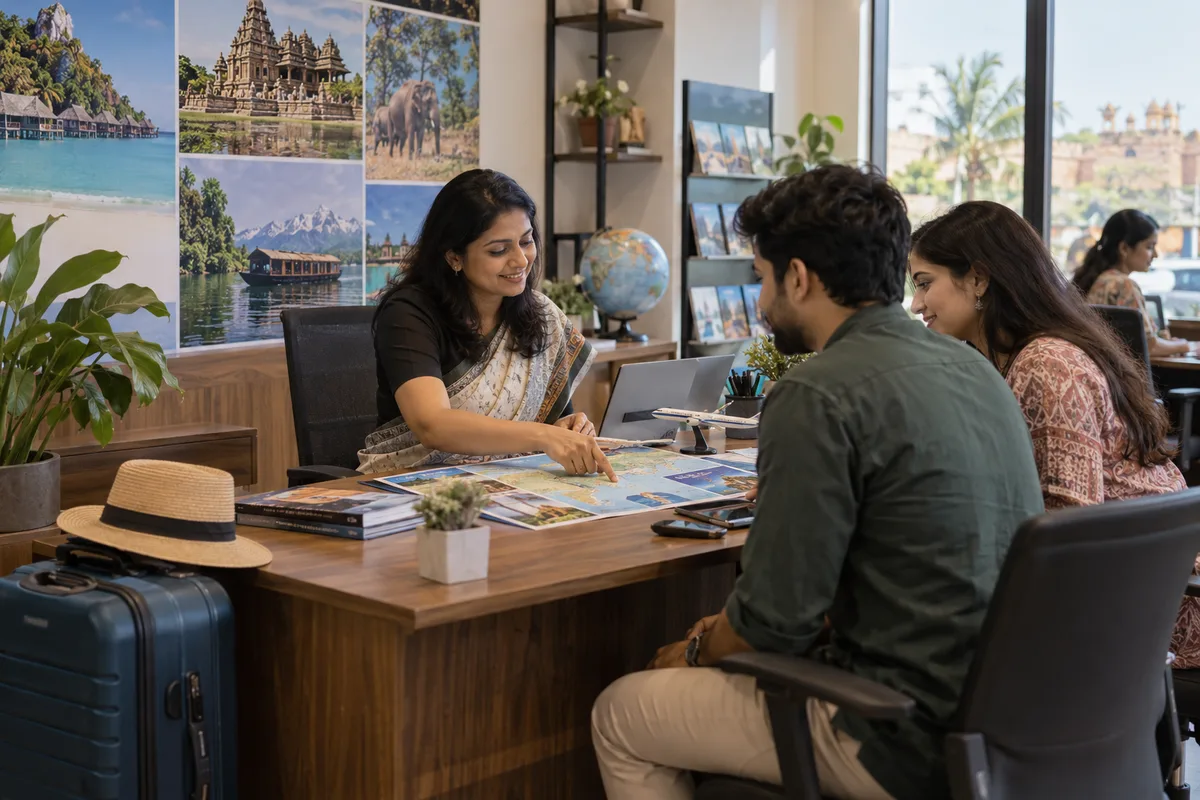
What buyer persona means
A buyer persona is a plain description of the kind of customer who actually buys from you. It includes what they search, what worries them and who else they ask before deciding. GullySales builds this from real enquiries and past sales rather than a generic template, then uses it to write every page and advert.
Also for international tour operators
- Digital marketing for international tour operators
- Lead generation for international tour operators
- SEO for international tour operators
- Local SEO for international tour operators
- Social media marketing for international tour operators
- Content marketing for international tour operators
- CRM for international tour operators
- Follow-up systems for international tour operators
Sales and marketing for international tour operators, the overview.
Last updated 14 Nov 2026.
For international tour operators
Where it usually goes wrong, and what we would do.
“The honeymoon couple wants privacy and an easy visa”
Bali and Maldives couples choose private packages, compare photographs of rooms and ask about visa on arrival. They worry about being treated as a group booking and about a hidden charge at the resort.
“The family trip has a researcher and a payer”
One adult reads reviews and itineraries. Another holds the budget. Parents ask for Indian food and a tour manager. Your answer has to satisfy the researcher in detail and the payer in total, which are not the same page.
“The company admin is protecting a reputation”
An HR or admin contact booking an incentive trip fears a failed event more than a high price. They ask about group handling, past corporate clients and who is on call. A proposal that answers these will be shared upward.
What we do
What we deliver for international tour operators.
The work available for this need. We agree the deliverables and responsibilities for your engagement in writing.
Three to five written personas
Profiles for each group you serve, such as honeymooners, families, seniors and corporate admins, built from real enquiry notes.
Result: Your team can name who a given enquiry resembles.
A decision map for each persona
Who researches, who pays, who approves, and what each asks before saying yes.
Result: You can see which person on a call still needs an answer.
Objection lists by persona
The doubts each group raises, such as visa risk, hidden costs and group size, with plain answers.
Result: Calls open with the answers that persona wants first.
Page and quote changes drawn from the personas
Edits to destination pages, quotes and WhatsApp replies so each speaks to its persona.
Result: The pages read differently for a couple than for a family.
A review of won and lost enquiries
A look at past bookings and losses sorted by persona.
Result: You can see which type of buyer you win and which you lose.
How the result is measured
- Enquiry match to persona
- Conversion rate by persona
- Content aligned to persona
Recorded as a baseline before work starts, so every later report has an honest comparison.
Who is asking
Know the people who actually book abroad and what each asks first.
- Honeymoon couple
- Wants privacy, a smooth visa and a hotel that suits a couple. Asks what is included and whether anyone meets them on arrival.
- Family with a researcher and a payer
- One person reads reviews and itineraries, another approves the money. Both need the price lines and the visa timing in writing.
- Retired couple joining a group
- Wants a tour manager, Indian meals, a gentle pace and clear information on walking and medical support.
- Company admin planning an incentive trip
- Wants a written proposal, a point of contact and assurance the group will be looked after, because their name is on it.
- School teacher organising an educational tour
- Wants supervision ratios, safety arrangements and a proposal the management and parents accept.
Who it is for
This is written for these international tour operators.
- Group tour operators with tour managers for Europe, Japan and Southeast Asia
- Honeymoon and private package specialists for Bali, Maldives, Dubai and Thailand
- Family holiday operators selling Singapore, Malaysia and Dubai
- Senior citizen group travel operators
- Operators for cruise add-ons and Alaska or Scandinavia trips
- Corporate incentive and MICE operators abroad
- School and college international educational tour operators
- Operators selling Australia, New Zealand and USA packages for families
- Pilgrimage and heritage operators for Nepal, Sri Lanka and Bhutan
Before you decide
When this may not be the right fit.
- You have booked too few trips to know who your buyers are, and personas would be inventions.
- You sell only one product to one kind of traveller, so a single note is enough.
- Nobody will use the personas to change a page or a quote, and they would sit in a folder.
Before you decide
Agree the work. Know how to judge it.
Buyer personas for international tour operators: use these checks to prepare, choose the scope, and review what changes.
Bring the right evidence
Write the decision the research must support, such as entering a market or choosing a buyer group. Separate what you know from sales records from what the team currently assumes.
Make the scope clear
Agree which buyers to speak to, which sources to review, and what access you can provide. Include lost enquiries and people who chose another supplier, where they are willing to take part.
Check the work in use
Look for source dates, sample limitations, and evidence that disagrees with the preferred answer. A recommendation should show how it follows from the findings.
Know when to change course
Do not treat a few positive conversations as proof of demand. Test the proposed offer with an actual buying decision before committing to a wider launch.
These are discussion points, not a fixed package. GullySales confirms the deliverables, responsibilities, fee, and term in writing after reading your brief and speaking with you.
Before we start
What to have ready before the work starts.
The records, access and decisions this work needs from international tour operators. Anything missing is noted in the written scope, with who will supply it.
- Twenty past enquiry files
- A mix of booked and lost enquiries, with the messages, the quote and the outcome. Personas are built from what people did, so we need records. If your files are thin, we use fewer and mark the persona as a first draft to be corrected after the next departures.
- Three travellers willing to be called
- Names and a go-ahead from three people who travelled with you and are happy to talk. Their answers keep the personas honest. If none are available, we rely on your staff's accounts and say so in the document.
- Two real quotes you have sent
- Two real quotes, one for each kind of traveller, with the price lines as sent. We read how the quote speaks to the person who receives it. Without a sample, we cannot suggest changes, and we list the points to check when you next write one.
- Your staff's memory of who rang
- Half an hour with the counter staff and the tour manager to describe who calls, who accompanies whom and what is said at the office visit. This detail is not written anywhere else. If time is short, we shorten the personas rather than invent detail.
- A decision on who the persona is for
- Your decision on which two or three buyers matter above the others this year, such as families to Dubai and Singapore, or senior groups. Personas for every possible buyer dilute each one. If you cannot decide, we start with the highest-volume group.
How it works
How the buyer persona work runs
The work itself, in order. How an engagement starts, from your brief to a written scope, is set out on our method page.
- 1
Pull twenty booked and lost files
We ask for a spread of recent files, some that became bookings and some that went quiet, covering honeymoons, families, senior groups and one corporate admin. For each we write who enquired, who paid and what the last message said. You fill in what the file does not show. These files are the evidence; a persona written without them would only describe how we imagine travellers.
- 2
Telephone three families you have served
With your permission, or with you present, we speak to a few travellers who booked, asking how they found you, who else weighed in and what nearly stopped them. You choose whom to approach and start with those who parted warmly. Their own words about a visa worry or a parent's diet are kept, and nothing is attributed by name.
- 3
Separate the researcher from the payer
For the family trip, we write down the person who reads reviews, the person who controls the money and the person who decides the dates, since they can be three different people. You correct us where your experience differs. This turns one vague family persona into a decision map your staff can use when a daughter enquires and the family's payer later calls.
- 4
Write the honeymoon, family and admin sheets
We draft three to five sheets, each with the traveller's situation, what they fear, which questions they ask and what would settle the matter. For the company admin, we note the fear of a poor trip reflecting on them. You read each one and strike anything that sounds false to you. A sheet that you recognise is worth keeping.
- 5
List the objections and the honest answers
Against each sheet we place the objections your team hears, such as price against a portal or doubts about a visa, and the plain answer your office would give. You supply the answers that depend on your policy. We do not invent assurances. These lists go to the person who handles the phone.
- 6
Compare messages with the next enquiries
We change a page or a quote according to a persona and watch which enquiries arrive and who they come from, comparing them with the files taken at the start. You tell us whether the enquirers resemble the sheets. We revise the sheets where they do not, and none of this promises more bookings.
Where this fits
Three pieces of sales work, in this order.
This work sits inside sales process design, at stage 0, foundation. The audit comes before it, and sales management keeps it running.
Step 1
Sales audit
Find where deals are being lost and what to fix first.
Start here if you cannot say where orders are lost.
Step 2 · you are here
Sales process design
One written way to sell, from first enquiry to repeat order.
Start here if every salesperson sells differently.
Step 3
Sales management
A target, a review routine and someone who owns the number.
Start here if the team has targets and no routine.
FAQ
Questions owners ask before they call.
Not here? More answers, or ask on WhatsApp.
How do we build personas without data?
Is one persona per destination enough?
When should personas be revised?
How do personas differ for a group and a private tour?
Is a company admin really a separate persona?
Do personas include the traveller's age and income?
How much does it cost?
How long is the contract?
How soon will we see results?
Who will actually do the work?
More for international tour operators
Related work to consider.
Closest to this: strategy and research
Also for international tour operators
Or start from the overview: sales and marketing for international tour operators.
Your next practical step
Tell us what you are trying to grow, and we will read it before we call.
Eight short steps, mostly taps. Skip anything you would rather answer on the call.