Serviced apartments · Pay per click advertising
Pay for the search that names a stay of weeks, and block the one that wants a PG.
PPC for serviced apartments is paid search advertising that puts your building in front of someone searching for a furnished flat for a stay of weeks, at the moment they search. GullySales runs it for named buyers and gaps that need filling, sends each click to a page that answers the question, and counts calls and enquiries instead of clicks.
Scope, fee, reporting and term are agreed in writing after we have read your brief and spoken to you.
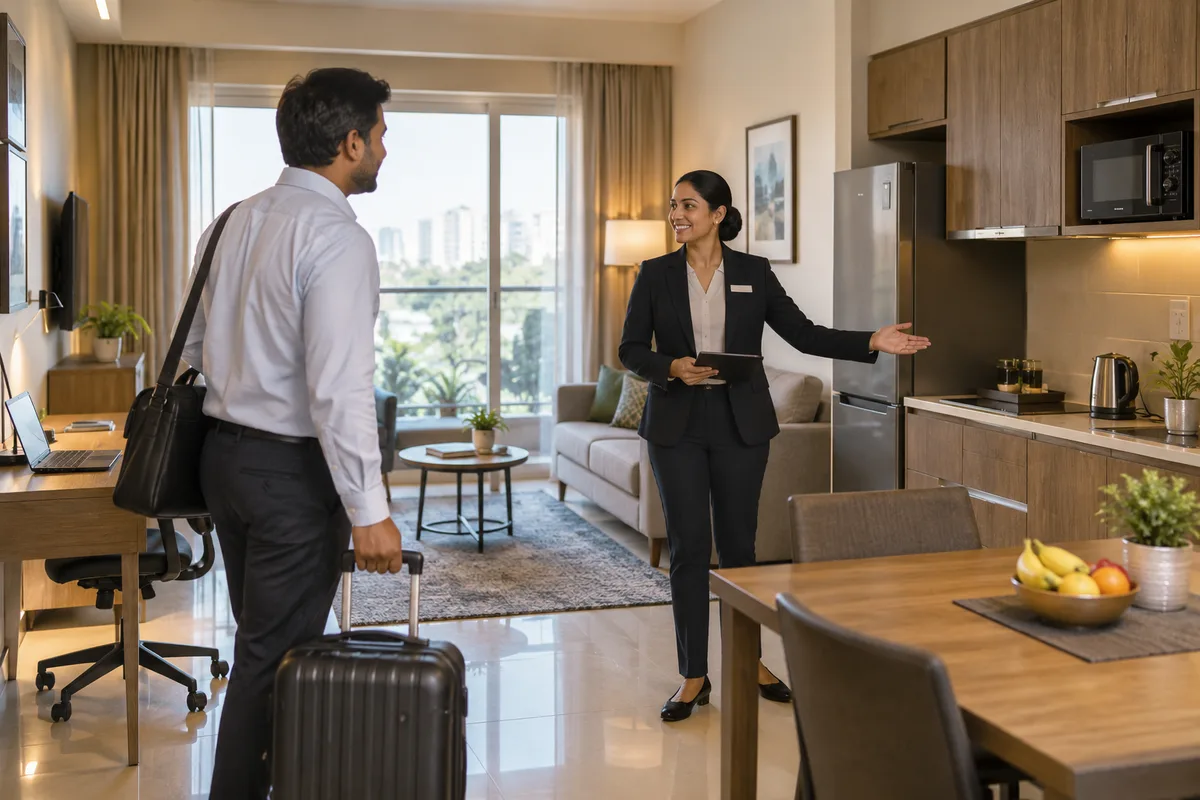
What pay per click advertising means
Pay per click advertising (PPC) is paying a fee each time someone clicks your advert on Google or another platform. It puts you at the top of a search page immediately, instead of waiting for ranking to build. GullySales sets the targeting, writes the ad text and checks spend against enquiries received.
Also for serviced apartments
- SEO for serviced apartments
- Local SEO for serviced apartments
- Reputation management for serviced apartments
- Email marketing for serviced apartments
- WhatsApp marketing for serviced apartments
- Website development for serviced apartments
- Content marketing for serviced apartments
- Customer retention for serviced apartments
Sales and marketing for serviced apartments, the overview.
Last updated 14 Nov 2026.
For serviced apartments
Where it usually goes wrong, and what we would do.
“The cheap click is the wrong stay”
A search for a room for one night near the bus stand brings callers who leave after a night and haggle. The click worth paying for names a company, a tech park, a hospital or a stay of weeks.
“A long-stay buyer will not book from the homepage”
An advertisement for corporate stays that lands on a page of nightly rates loses the HR executive in seconds. The page must carry the long-stay rate, the invoice terms and a number someone answers.
“Call ads suit this trade, and are easy to waste”
Some bookings begin as a call from an office admin desk. If nobody picks up after six in the evening, the money is spent on a missed call.
What we do
What we deliver for serviced apartments.
The work available for this need. We agree the deliverables and responsibilities for your engagement in writing.
Campaigns for the company, the family and the relocating household
Separate campaigns for corporate stays, patient families and relocating households, each with its own words and its own landing page.
Result: Each buyer lands on the answer to their own question.
A block list for this trade
A list of searches kept out: PG, hostel, flat for rent, lodge, housekeeping jobs and per-bed rooms.
Result: Money does not go on people who want another product.
Landing pages with a long-stay rate path
A page for each campaign showing the rate for the length of stay, what it includes, the invoice terms and a form that asks for move-in date.
Result: A click arrives at a page that answers the search.
Call tracking and a missed-call rule
A tracked number for each campaign, and a written rule on who calls back a missed call.
Result: A buyer who rang once is not lost to a busy desk.
Your own building name, kept apart
A small separate campaign on your building name, with competitor names and booking-site names left alone.
Result: A guest who typed your name meets your page before a platform's.
Enquiry-based report
Spend, calls and enquiries by campaign, with the ones that became a booking marked, against the baseline.
Result: You see which search filled an apartment, not which one drew a click.
How the result is measured
- Cost per click
- Cost per enquiry
- Enquiries from paid search
Recorded as a baseline before work starts, so every later report has an honest comparison.
Searches to bid on and block
The searches worth paying for at a serviced apartment, and the ones to keep out.
- serviced apartments near [tech park or office area]
- Bid. The searcher names a place and a purpose. Send the click to the page for that area, with the long-stay rate path and a call button at the top.
- Furnished apartment for weeks or months
- Bid, with a landing page that states kitchen, laundry, utilities, deposit and notice. Ask for the move-in date and the length of stay in the form, not just a phone number.
- Serviced apartments near [hospital]
- Bid, in its own campaign. The searcher is a family on a treatment stay. Show the distance, a kitchen and a quiet room, and write nothing about treatment or outcomes.
- Your building name and its misspellings
- Bid, small and separate. Platforms bid on the name too. A direct page that shows a reason to book direct takes the click a commission page would otherwise take.
- PG, hostel, flat for rent, lodge, jobs
- Block. These come from people who want another product or a job. Add them as negatives, and read the search terms report for new ones that slip through.
- Landing page, and which enquiries to count
- Land the click on the page that matches the search, not the homepage. Count a call or a form that gives a move-in date and a length of stay, not every click or every missed call.
Who it is for
This is written for these serviced apartments.
- Purpose-built serviced apartment buildings with a reception
- Furnished flats run by an operator inside a gated community
- Apartments near tech parks for project teams and new joiners
- Medical-stay apartments near hospitals
- Villa-style serviced residences for families and expats
- Single-owner flats let out through a management company
- Studio and one-bedroom blocks for consultants and transferred staff
Before you decide
When this may not be the right fit.
- Nobody answers calls after office hours, so paid clicks from the evening would end in missed calls you have already paid for
- You have no page that states the long-stay rate and the invoice terms, so an advertisement would send a company desk to nightly prices
- Most of your flats are already full for the coming months, and paying for more enquiries would only make you turn buyers away
Before you decide
Agree the work. Know how to judge it.
PPC for serviced apartments: use these checks to prepare, choose the scope, and review what changes.
Bring the right evidence
Bring search-term reports, conversion definitions, and the sales outcome of past enquiries where available. Identify products, locations, and enquiries you cannot serve.
Make the scope clear
Choose the offer and landing page before setting a media budget. Agree who pays the platform, which actions count as conversions, and how unsuitable searches will be reviewed.
Check the work in use
Trace a test enquiry from the advert to the sales record. Review qualified enquiries and orders alongside spend, and separate duplicates or spam from genuine buyer demand.
Know when to change course
If the advert generates enquiries that do not fit, revise targeting and qualification before increasing spend. If suitable enquiries are lost after contact, work on the sales process.
These are discussion points, not a fixed package. GullySales confirms the deliverables, responsibilities, fee, and term in writing after reading your brief and speaking with you.
Before we start
What to have ready before the work starts.
The records, access and decisions this work needs from serviced apartments. Anything missing is noted in the written scope, with who will supply it.
- An advertising budget you approve
- The budget decides how many areas and buyers we can cover at once. Give a figure you are comfortable losing if a campaign needs correcting. If it is lower than the area demands, we run one campaign and say so, and the others wait.
- Access to Google Ads and the website
- We need an advertising account in your name, linked to your payment card, and edit rights on the website to add tracking. If an old agency owns the account, ask for ownership to be transferred. Without it, we cannot show you the spend.
- A rate sheet for each stay length
- Landing pages need a rate path for a week, a month and a longer stay, agreed by you. Approximate figures lead to wrong enquiries. If rates change by season or by company, bring the current sheet and say which it is.
- The person who answers the advertised number
- Call ads reach whoever answers the front desk phone. That person needs the rate sheet, the vacancy list and a script for a first call. If calls fall to voicemail, spend is wasted, so we pause call ads until cover is fixed.
How it works
How the pay per click advertising work runs
The work itself, in order. How an engagement starts, from your brief to a written scope, is set out on our method page.
- 1
Name the stays you want filled
We start from your vacancy picture, not from keywords. You tell us which unit types sit empty and which buyers you want: a company placing joiners, a family near a hospital, a household between homes. We write each as its own campaign target, with the stay length it suits. Anything you cannot fill, or do not want, is listed so ads never bring it.
- 2
Set up the call and form counting
Before an advertisement runs, we connect call tracking, the enquiry form and the WhatsApp tap so that each one reports to a single sheet. Your front desk learns to note the caller's reason on the call log. We make a test call and a test form together, and confirm both appear. If counting does not work, the campaign does not start.
- 3
Build the block list from a PG search
Paying guests and hostel seekers click furnished-flat ads and never book. We list the words they type, plus nightly-rate and hourly searches that do not fit a stay of weeks, and block them. You add your own words, from the calls that wasted your desk's time. This list grows as the search terms report comes back.
- 4
Write the page each click lands on
A desk comparing three buildings will not read a homepage. For each campaign we write a landing page with the unit, the long-stay rate path, inclusions and a form asking for move-in date and stay length. You approve the facts. A call ad goes only to the front desk number that someone is certain to answer in working hours.
- 5
Launch small and read calls against the count
The campaigns go live on a limited budget you set, and we read the search terms the advertisements matched, blocking those that brought a PG seeker or a name you did not choose. You tell us which calls became real enquiries. Afterwards we set enquiries and booked stays beside the count from before, by campaign, and you decide where the spend moves.
Where this fits
Three pieces of sales work, in this order.
This work sits inside sales process design, at stage 1, prospecting and lead generation. The audit comes before it, and sales management keeps it running.
Step 1
Sales audit
Find where deals are being lost and what to fix first.
Start here if you cannot say where orders are lost.
Step 2 · you are here
Sales process design
One written way to sell, from first enquiry to repeat order.
Start here if every salesperson sells differently.
Step 3
Sales management
A target, a review routine and someone who owns the number.
Start here if the team has targets and no routine.
FAQ
Questions owners ask before they call.
Not here? More answers, or ask on WhatsApp.
Should we bid on our own building's name?
Are call-only ads right for us?
People who want a PG keep clicking our ads. How do we stop it?
How do we know a call was a real enquiry?
Which unit types should we advertise first?
How much does it cost?
How long is the contract?
How soon will we see results?
Who will actually do the work?
What do you need from us?
From the blog
Further reading for serviced apartments.
 5 min read · 6 Oct 2026What buyers check before they book a stay or a catererGuests, tenants and event families judge hotels, homestays, PGs, serviced apartments and caterers on the same checks. What each looks like.
 5 min read · 6 Oct 2026How serviced apartments quote a one-month stayHow to write a one-month stay quote: what is included, what the deposit covers and what happens on an early exit, so the guest can say yes.
More for serviced apartments
Related work to consider.
Or start from the overview: sales and marketing for serviced apartments.
Your next practical step
Tell us what you are trying to grow, and we will read it before we call.
Eight short steps, mostly taps. Skip anything you would rather answer on the call.