Tourism experience providers · Local SEO
Be the experience that appears when a visitor searches on a phone near your lane.
Local SEO for an experience provider means showing up on maps and in nearby searches when visitors look for something to do right now. GullySales works on the Google listing, the photos, the directions and the reviews that decide whether a visitor taps your name.
Scope, fee, reporting and term are agreed in writing after we have read your brief and spoken to you.
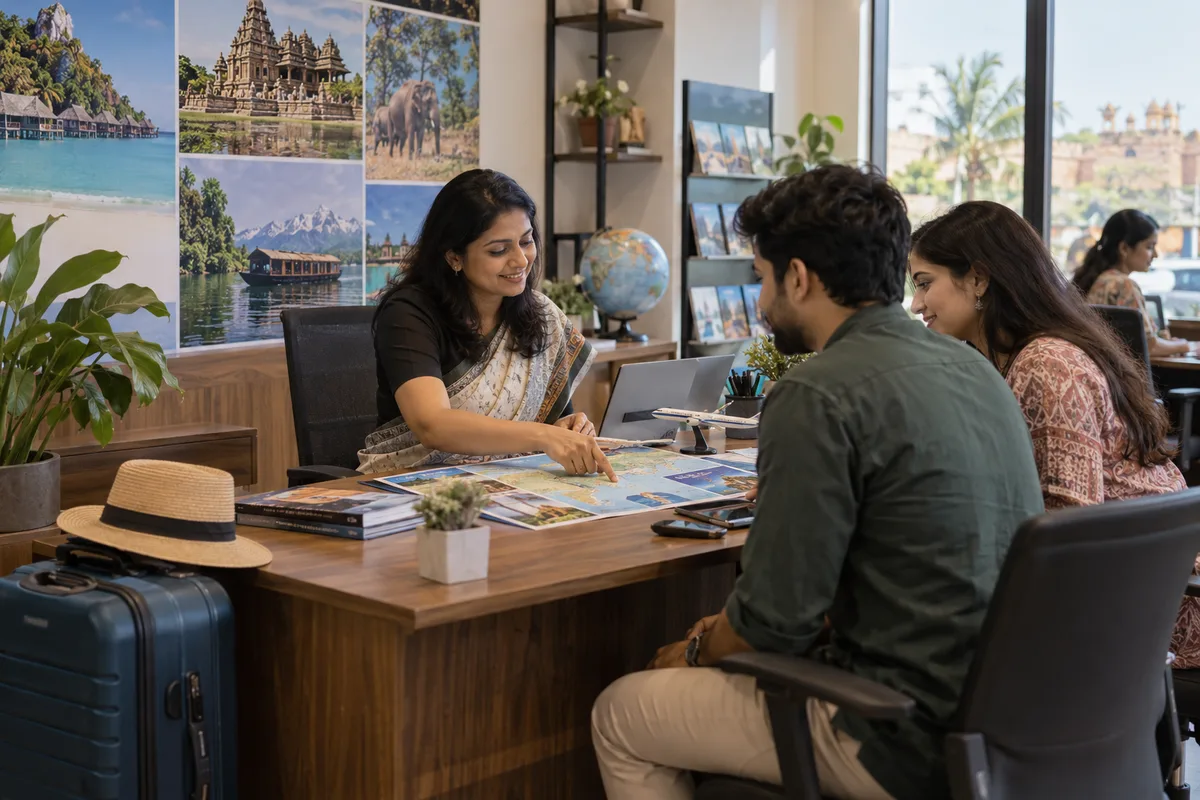
What local SEO means
Local SEO is the work of making your business show up for searches that name your town or locality, such as a service plus an area name. GullySales sets up locality pages, local citations and map listings so nearby customers find you before a competitor across town.
Also for tourism experience providers
Sales and marketing for tourism experience providers, the overview.
Last updated 14 Nov 2026.
For tourism experience providers
Where it usually goes wrong, and what we would do.
“The meeting point is the first thing a visitor needs”
A hidden lane with no signboard turns a booked guest into a lost one. A listing with a pin on the exact spot, a landmark and a photo of the door saves the start of every session.
“Photos on the listing do the selling”
A visitor swiping through a map result judges you by images. Pictures of real guests mid-activity, with consent, say more than a stock sunset; a listing without them looks closed.
“Reviews carry the word authentic”
Visitors read recent reviews for proof that the experience is real and the host is on time. A reply to each review shows an active business, even on a bad day.
“Categories and hours decide visibility”
A listing set up as a general tour service competes with every agency. One that names the actual activity and lists true session timings is matched to the searcher who wants it.
What we do
What we deliver for tourism experience providers.
The work available for this need. We agree the deliverables and responsibilities for your engagement in writing.
A complete Google listing
Business name, activity description, session timings, booking link and WhatsApp button filled in correctly.
Result: The listing shows what you sell and how to book it.
Meeting point guidance
A pin, a landmark description and a short photo guide from the main road to the door.
Result: Guests arrive at the right place without calling.
A photo set for the listing
A planned list of pictures to gather, such as the space, the activity, the group and the end result, with guest consent.
Result: The listing looks active and honest.
Review request and reply drafts
A short message to send after a session and drafted replies for the reviews that come in.
Result: Reviews arrive steadily and each one gets an answer.
Nearby-search pages
Pages for the neighbourhoods and stays around you, such as the guesthouses within walking distance.
Result: A visitor staying nearby sees a page that mentions where they are.
How the result is measured
- Map pack ranking
- Local search visibility
- Enquiries by locality
Recorded as a baseline before work starts, so every later report has an honest comparison.
Searches your buyers type
The map searches that bring a visitor to the meeting point, and what the listing must hold.
- things to do near me
- A listing with the right label for the activity, a pin on the meeting point and photographs of the session. The searcher is standing in town and picks from the first few results.
- [activity] near [landmark or hotel]
- The landmark named in the description and on the page. Visitors give directions by what they can see and search the same way.
- workshop open today
- Session times set for each day, including closed days and festival dates. A listing that shows closed when a session runs loses the visitor on a short stay.
- [host name] meeting point
- A written line and a photograph of where the group gathers, with the nearest gate or shop. A wrong pin sends guests to the wrong lane.
- [activity] reviews
- Reviews that mention the activity and the host, answered with the facts. A visitor reads these before booking.
Who it is for
This is written for these tourism experience providers.
- Food walk, cooking class and tasting hosts
- Craft, pottery, weaving and art workshop hosts
- Village stay and rural life experience providers
- Adventure activity operators for kayaking, cycling and trekking
- Heritage walk and evening storytelling hosts
- Farm, plantation and spice garden visit providers
- Wellness, yoga and sunrise session hosts
- Corporate team outing and school activity providers
Before you decide
When this may not be the right fit.
- Your sessions have no fixed place and move each day, so a single map pin would send guests to the wrong spot
- The phone on the listing is the host's own and is off during sessions, so a call from the map would go unanswered
- You are about to change the meeting point, and every pin and photograph would need to be corrected
Before you decide
Agree the work. Know how to judge it.
Local SEO for experience providers: use these checks to prepare, choose the scope, and review what changes.
Bring the right evidence
Confirm the real business address, service area, contact details, and who controls the business listings. Keep examples of calls that came from the wrong location or asked for a service you do not provide.
Make the scope clear
Choose the locations you actually serve and the information each needs. Agree who approves listing changes, responds to enquiries, and keeps opening hours accurate.
Check the work in use
Check the journey from a local search to a call or enquiry on a phone. The address, service area, and description should agree across your website and listings.
Know when to change course
Do not create an office claim for a place where you only serve customers remotely. Clear service coverage is more useful than a misleading local presence.
These are discussion points, not a fixed package. GullySales confirms the deliverables, responsibilities, fee, and term in writing after reading your brief and speaking with you.
Before we start
What to have ready before the work starts.
The records, access and decisions this work needs from tourism experience providers. Anything missing is noted in the written scope, with who will supply it.
- Owner access to the Google listing
- The listing must sit in the host's own account, or a verified manager role must be given to us. If a former guide or a relative made it, ownership is recovered first. If we are not given access, we can only advise and correct nothing on the listing. Note any lane or gate that a vehicle cannot pass, since directions that ignore it send guests the wrong way.
- A clear meeting-point description
- Write how a stranger finds you, with a landmark, a turning and a time to arrive. Test it by asking a friend to follow it. A vague description produces missed pickups and bad reviews.
- Photographs with guests' consent
- Pictures of real sessions, with a message from each guest agreeing to their use, give the listing its force. Consent can be a chat message. Without it, we use photographs of the place and the host.
- Hours, seasons and rest days decided
- Tell us when sessions run, when you close and how guests book. A wrong hour on the map is the quickest way to lose a visitor. We keep them current, but only you decide them. Also note where guests may park, and where they should not.
- The venues you use and your rights to them
- If sessions run in a temple lane, a farm or another person's workshop, tell us who has agreed to be named. We list only places whose owners are content to appear.
How it works
How the local SEO work runs
The work itself, in order. How an engagement starts, from your brief to a written scope, is set out on our method page.
- 1
Stand at the meeting point and photograph it
We go to the place where guests meet you, at the hour a session begins, and photograph the approach from the road, the landmark and the spot itself. You tell us where visitors get lost. These photographs and a written route become the first thing the listing says.
- 2
Choose the listing type and the name
You decide whether the listing is a tour, a class, a stay or an activity centre, and which name guests actually say. We pick the primary type and the extras, and make the name match what is on your board and your page. The choice decides which searches you appear in. We check that the name on the listing matches the name on your board, your page and your messages.
- 3
Settle the address for a place with no street
For a village stay or a farm, we write directions the way a local would give them, mark the pin on the map and agree a pickup point if the road is hard to follow. If your sessions run at several venues, we decide whether each gets its own listing or the main one lists them.
- 4
Photograph the sessions with permission
A set of photographs shows the group, the craft, the food and the setting, with guests' agreement. You mark any picture that shows a child or a face that should not appear. The listing then shows what a visitor will see, not a stock picture.
- 5
Prepare review requests and replies
We write the message that asks a guest for a review after the session, and replies for praise and for complaints. The host approves the wording and decides who answers. A visitor reads the reply as well as the review, so the replies are written to be read by a stranger. Replies never argue with the guest and never reveal another guest's details.
- 6
Read the listing against calls and visits
We compare the direction requests, calls and messages from the listing with the count taken before the changes, and with the guests who said they found you on Maps. You decide whether the hours, the photographs or the meeting point text need work.
Where this fits
Three pieces of sales work, in this order.
This work sits inside sales process design, at stage 1, prospecting and lead generation. The audit comes before it, and sales management keeps it running.
Step 1
Sales audit
Find where deals are being lost and what to fix first.
Start here if you cannot say where orders are lost.
Step 2 · you are here
Sales process design
One written way to sell, from first enquiry to repeat order.
Start here if every salesperson sells differently.
Step 3
Sales management
A target, a review routine and someone who owns the number.
Start here if the team has targets and no routine.
FAQ
Questions owners ask before they call.
Not here? More answers, or ask on WhatsApp.
Should we list our activity as a tour operator?
What if guests leave a negative review?
We run sessions at different venues. Can one listing cover all?
Can a village stay with no street address have a listing?
Can a village stay with no street address have a listing?
Can a listing be created for a place that moves between venues?
How much does it cost?
How long is the contract?
How soon will we see results?
Who will actually do the work?
More for tourism experience providers
Related work to consider.
Closest to this: search and visibility
Also for tourism experience providers
Or start from the overview: sales and marketing for tourism experience providers.
Your next practical step
Tell us what you are trying to grow, and we will read it before we call.
Eight short steps, mostly taps. Skip anything you would rather answer on the call.