Aluminium die casting companies · Website
Build a site that states tonnage, alloy and inclusions before the buyer has to ask.
A website for a die caster is the page set a sourcing engineer reads to decide whether to send the model. GullySales works on the structure, the specification detail and the enquiry form that turns a visit into a quote request.
Scope, fee, reporting and term are agreed in writing after we have read your brief and spoken to you.
What website means
A website is the page a customer lands on after searching, clicking an advert or scanning a code, and it decides whether they call or leave. GullySales builds and maintains sites that load quickly, explain the offer plainly and make the enquiry form or phone number easy to find.
Also for aluminium die casting companies
Sales and marketing for aluminium die casting companies, the overview.
Last updated 18 Oct 2026.
For aluminium die casting companies
Where it usually goes wrong, and what we would do.
“A machine photograph is not a capability”
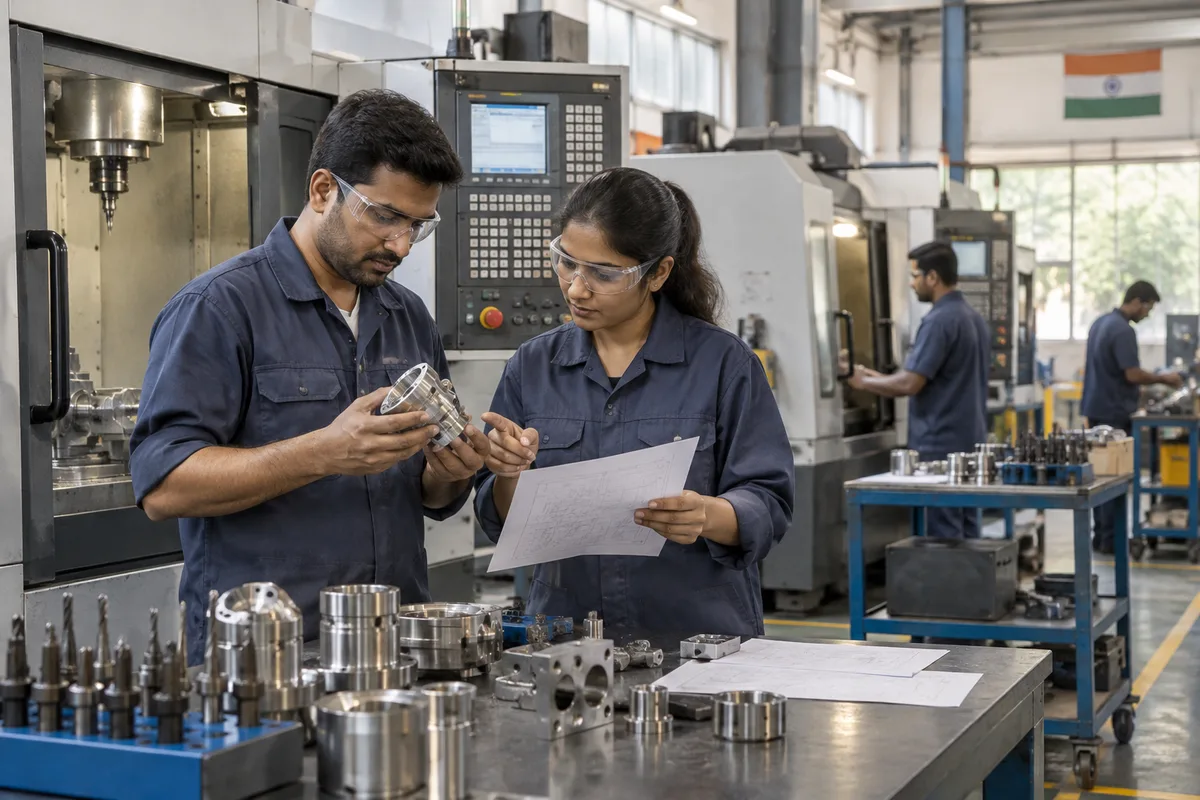
A shiny casting and a press image tell a buyer little. The engineer wants tonnage, alloy grades, in-house die making, machining and coating written as text. Without them the visit ends and the buyer opens the next shop's site.
“The quote path should be short”
A buyer ready to send a model needs a form that accepts the file, the alloy, the volume and the date. A form that asks only for a name and a message creates a second round of emails. Fewer back-and-forths shorten the path to a quote.
“Trust pages carry weight”
Buyers look for the quality and inspection page, the die and sample plan and an honest list of what is and is not done in house. A site that hides outside processing loses the buyer when it comes out later, while a clear page earns respect.
What we do
What we deliver for aluminium die casting companies.
Every deliverable, what it covers for you, and the result it is there to produce. Nothing here is an extra.
A site map built around parts and process
Pages for each part family, alloy and process, plus pages for quality, the die plan and contact.
Result: Every page answers one buyer question.
Specification and capability pages
Readable text for tonnage, alloys, machining, testing and coating, with in-house or outside noted.
Result: An engineer confirms fit without calling.
An enquiry form for models
A form that takes the file, the alloy, the volume and the launch date, and sends the enquiry to the shared sheet.
Result: Each enquiry arrives with the details needed to quote.
Mobile and speed checks
A check that pages open well on a phone and that large images do not slow them.
Result: The site opens cleanly on an ordinary phone.
How the result is measured
- Page load time
- Bounce rate
- Enquiries from the website
Recorded as a baseline before work starts, so every later report has an honest comparison.
Who it is for
This is written for these aluminium die casting companies.
- Two-wheeler and four-wheeler die casters supplying engine and chassis parts
- Electric vehicle component die casters making motor and battery housings
- LED lighting and electrical housing die casters
- Pump, compressor and appliance die casters
- Gravity and low pressure die casting units
- Die casters with in-house die making
- Die casters with machining, leak testing and powder coating
- Small die casting job-work shops serving other manufacturers
How it works
From your first message to the first report.
No open-ended retainer. Every step gives you something in writing.
First
Your brief
You tell us what you need in a few short steps: your business, what you want, where enquiries come from and how they are handled.
After the brief
A conversation and a written scope
We read it, then talk with whoever handles your enquiries. If you want our help, the scope, the fee and the reporting come in writing, and nothing starts before you have read them.
Before work starts
Baseline recorded
The numbers this work is meant to move, such as enquiries, quotations, orders, visits or renewals, written down so every later report has an honest comparison.
After the baseline
The first fix goes live
The fix we agreed to start with is put in place and measured against the baseline, whether that is a reply, a follow-up, a page, a listing or the handover between marketing and sales.
As agreed
Report against the baseline
What moved, what did not, and what changes next, in plain words. How often you get it is set in writing before work starts.
At renewal
Renew on the numbers
The term ends and you decide whether to continue from the results. The length is agreed in writing before anything starts.
How the website work runs
- 1
Confirm structure and content
We agree the site's pages and content needs before design begins, drawing on website strategy where it exists.
- 2
Design the site
Every page is designed against your brand identity and checked for how it should convert a visitor.
- 3
Build and test
The site is developed and tested across devices and browsers before anything goes live.
- 4
Load real content
Actual copy, images and information about your business replace placeholder content before launch.
- 5
Launch and hand over access
The site goes live with domain, hosting and content management access clearly handed to you.
Why us
Why owners pick GullySales over an agency.
Marketing and sales, as one job
Most agencies stop at the enquiry. We also fix what happens after it: the reply, the follow-up, the quote and the CRM.
The person on the first call does the work
No account managers in between. You are never handed to someone you have not met.
A baseline before anything starts
Your numbers are written down on day one, so every later report compares against something honest.
The fee in writing, split three ways
Our time, your media spend and production on separate lines. You always see what goes to us.
No guarantees we cannot keep
The term is agreed in writing and never a default twelve months. We never promise a ranking or a lead count, because nobody controls those.
One office, and we say so
Nagarbhavi, Bengaluru. We work across India by call and WhatsApp and travel when a session needs to be in person.
#257, 3rd floor, Sri Nanjundeshwara Complex, Nagarbhavi 8th Block, Outer Ring Road. How we work.
Your brief
Tell us what you need, and we will read it before we call.
Eight short steps about your business, what you want and who decides. Most questions are a tap, and you can skip any you would rather answer on the call.
FAQ
Questions owners ask before they call.
Not here? More answers, or ask on WhatsApp.
Do we need to show every customer?
Can we update the site ourselves?
How much does it cost?
How long is the contract?
How soon will we see results?
Who will actually do the work?
What do you need from us?
What if we are not happy with the work?
More for aluminium die casting companies
Everything else we would do for you.
Closest to this: search and visibility
Also for aluminium die casting companies
Or start from the overview: sales and marketing for aluminium die casting companies.
Your next practical step
Tell us what you are trying to grow, and we will read it before we call.
Eight short steps, mostly taps. Skip anything you would rather answer on the call.