3D printing service bureaus · Lead generation
Win the enquiries that arrive with a file, a material and a deadline attached.
Lead generation for a 3D printing bureau means bringing in people who have a part to print and a reason to print it now, not people who only want to know the rate per gram. GullySales works on the pages, listings and outreach that attract designers, startups, colleges and factories with jobs your machines suit.
Scope, fee, reporting and term are agreed in writing after we have read your brief and spoken to you.
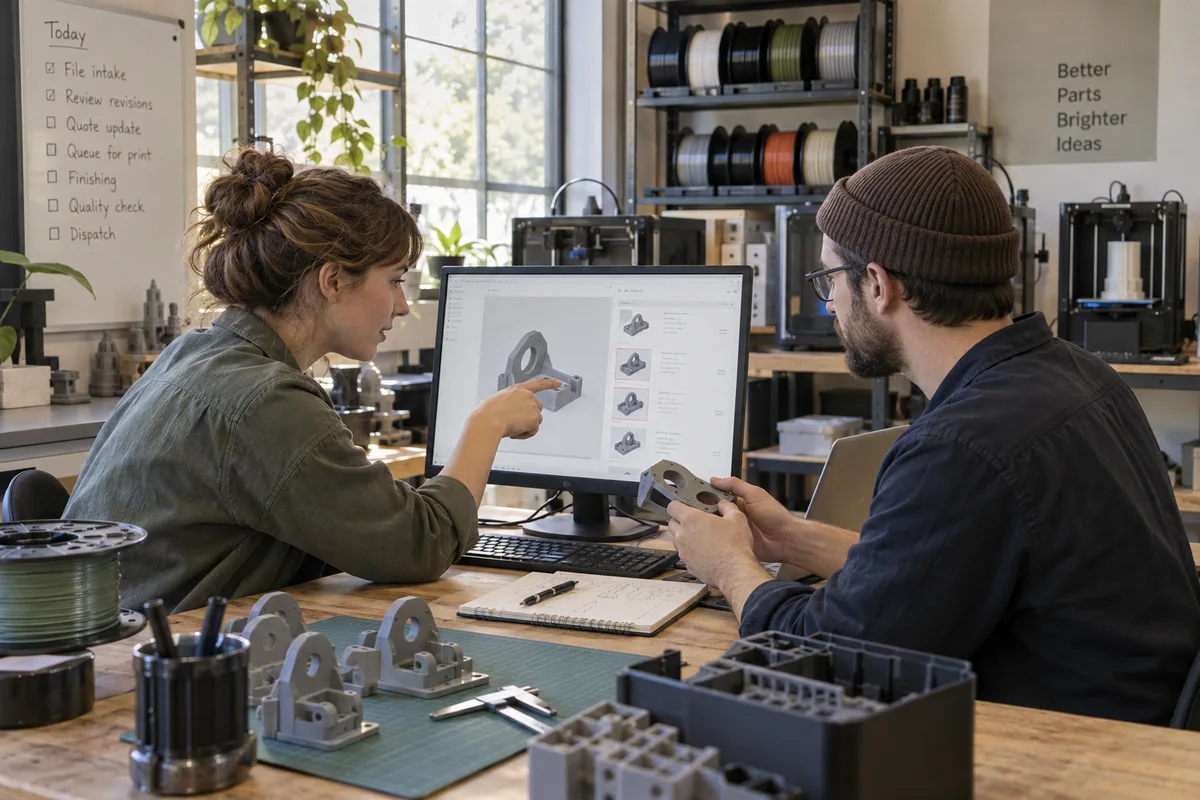
What lead generation means
Lead generation is the combined work of every channel that brings in a new enquiry, whether from search, adverts, referrals or a stall at an exhibition. GullySales runs these channels together and reports the number of enquiries each one produced, not the activity behind it.
Also for 3D printing service bureaus
Sales and marketing for 3D printing service bureaus, the overview.
Plan the next part of the work
Last updated 21 Nov 2026.
For 3D printing service bureaus
Where it usually goes wrong, and what we would do.
“A file in hand is a stronger lead than a price question”
The buyer who uploads an STL, names a material and states a deadline is ready to order. The buyer who asks for the rate per gram is still shopping. Lead sources that bring the first kind are worth more than a larger pile of the second.
“Each machine you own is a different lead source”
FDM, resin, powder and metal serve different people. A jeweller needs castable resin, a factory needs nylon fixtures, a student needs cheap PLA. One general page attracts all of them and satisfies none, so the enquiry never matches the machine.
“Repeat engineers are the leads nobody works”
A product designer who printed a bracket last spring is a warmer lead than any stranger. Without a record of past jobs and a reason to write, that designer drifts to whichever bureau replied last.
“Marketplace enquiries need a human in the first hour of the thread”
Listings on IndiaMART and similar sites generate enquiries that are one line long. The bureau that asks one sharp question about material and use turns a vague line into a quotable job.
What we do
What we deliver for 3D printing service bureaus.
The work available for this need. We agree the deliverables and responsibilities for your engagement in writing.
Process and material landing pages
One page for each process and material you run, written for the person who searches for that job, with the file types you accept and a clear way to send the file.
Result: A designer can tell from the page whether your machines suit the part.
A file-first enquiry route
A form and a WhatsApp number that ask for the file, the material, the quantity and the need-by date, in that order.
Result: Every enquiry arrives with the details you need to quote.
Marketplace listing set-up
Product listings for each process on the marketplaces your buyers use, with photographs of real parts and a standard first reply.
Result: Listings show what you print, not only that you print.
Outreach to design studios and colleges
A named list of studios, workshop heads and project coordinators, with a short note that offers a sample part rather than a brochure.
Result: You can see which names were written to and who replied.
A lead source log
A sheet that records where each job came from, so the owner sees which source brings paid work and which brings idle questions.
Result: The owner can compare sources by jobs won, not by enquiries received.
How the result is measured
- Relevant enquiries by source
- Duplicate and unsuitable enquiries
- Time to the first response
- Accepted enquiries reaching an agreed next step
Recorded as a baseline before work starts, so every later report has an honest comparison.
What to capture or send
The details that turn a loose enquiry into a quotable print job.
- STL, STEP or OBJ file
- Ask for the file before anything else. A bureau cannot estimate machine hours or support material from a photograph of a part on a desk.
- Material and finish wanted
- PLA, ABS, nylon, castable resin or metal powder decide which machine takes the job. Record the answer so the quote names the right process.
- Need-by date
- A date on the enquiry tells you whether a project can wait for a build plate to fill. Without it, urgent jobs and idle questions sit in one queue.
- Use of the part
- A fixture, a visual model and a jeweller's casting pattern need different tolerances. One line on use saves a back-and-forth call.
- Quantity and repeat chance
- One prototype and a batch of fifty are different quotes. Note whether the buyer expects reorders so the job goes on the repeat list.
- Marketplace enquiry source
- Tag jobs that came from a listing, the site or a referral, so the owner sees which source brings paid files and which brings one-line questions.
Who it is for
This is written for these 3D printing service bureaus.
- Product designers and industrial design studios in Bengaluru, Pune and Chennai
- Start-ups testing a hardware product before tooling
- Engineering and polytechnic colleges with final-year project deadlines
- Architects and interior studios ordering scale models
- Dental labs and clinics that print surgical guides and models
- Jewellery makers who need resin patterns for casting
- Small factories that need jigs, fixtures and spare parts for old machines
- Auto and electronics suppliers that need low-volume plastic parts
- Film, cosplay and prop makers who print large pieces in sections
- Hobbyists and drone and robotics clubs
Before you decide
When this may not be the right fit.
- Your machines are booked with current jobs and no one can open a file and reply to a new enquiry the same day, so more leads would only go cold.
- You have no photographs of finished parts to show on a page or listing, so the first task is to shoot them, not to buy enquiries.
- Your quote is still a figure worked out in someone's head each time, so a rise in enquiries would only slow every reply.
Before you decide
Agree the work. Know how to judge it.
Lead generation for 3D printing bureaus: use these checks to prepare, choose the scope, and review what changes.
Bring the right evidence
Define the organisations or buyers you can serve and the reasons they would consider a conversation. Bring examples of accepted and rejected prospects so the selection rule is visible.
Make the scope clear
Agree the research sources, contact approach, qualification rules, and handover. Clarify which meetings count as accepted and what happens to replies that are not ready to buy.
Check the work in use
Review why a prospect was selected and what was learned from the response. Count held, relevant conversations separately from contacts found, messages sent, or meetings booked.
Know when to change course
If the same objection appears repeatedly, adjust the offer or buyer group before increasing outreach. Respect a request to stop contact and keep the exclusion in the record.
These are discussion points, not a fixed package. GullySales confirms the deliverables, responsibilities, fee, and term in writing after reading your brief and speaking with you.
Before we start
What to have ready before the work starts.
The records, access and decisions this work needs from 3D printing service bureaus. Anything missing is noted in the written scope, with who will supply it.
- A list of jobs from the past year
- Targeting is built on who actually sent files and paid, so bring the job list with material, quantity and customer type. A simple sheet is fine. Without it we guess at who buys, and the target list is weaker.
- A photograph of each machine's best part
- Pitches work when they carry a real printed object. Bring clear photographs of one good part per process, with the material noted. If no photograph is cleared for use, we ask the customer and the outreach waits.
- Login for the marketplace listings
- We need to see and edit how the bureau is described on its listings, because wrong machine claims bring wrong enquiries. Bring the logins, or the person who holds them. Without access we can only advise, not correct.
- Your estimator's rule for a quotable file
- State what a file must have before the bureau can quote: format, size limits, material choice and use. The form is built on that rule. If it is not written down, the form asks for too little and quotes stall.
- A decision on which buyers to refuse
- Say whether the bureau wants hobby orders, student rushes or only company work. We aim outreach at what you choose. If undecided, outreach is spread thin and the machine schedule fills with jobs that pay badly.
How it works
How the lead generation work runs
The work itself, in order. How an engagement starts, from your brief to a written scope, is set out on our method page.
- 1
Sort last year's files by machine and sender
We open the bureau's job folder and group past files by machine, material and who sent them, whether a studio, a college, a start-up or a factory. You mark the jobs that paid properly and ran smoothly. Those jobs describe the buyer worth finding, and the rest are set aside.
- 2
Match each machine to a buyer who needs it
The resin printer, the powder machine and the large-format FDM each suit a different part. With your lead technician, we write which kind of part and which kind of buyer suits each one. The result is one short page the whole bureau can pitch from.
- 3
Prepare a sample part for each pitch
For each process we choose one finished part you may show, with a line on the material, the layer height and the use. You confirm that the customer allows it. Outreach to design studios and colleges then carries a real object, not a general promise.
- 4
Build the file-first enquiry route
The form asks for the file, the material, the quantity and the use of the part before it asks for a name. A test file is sent through it, and your estimator confirms the reply has what a quote needs. Fields that only slow the sender are removed.
- 5
Set up the marketplace listings and tags
We review how the bureau appears on IndiaMART and similar listings, correct what the listing says each machine can do, and add a source tag to the enquiry log. You decide who answers a marketplace thread so no message waits without a person.
- 6
Read the source log against the starting count
We compare enquiries, quotes sent and files accepted with the figures noted before the work began, grouped by source. You see which route brought parts your machines suit, and which brought only price questions, then decide where the next effort goes.
Where this fits
Three pieces of sales work, in this order.
This work sits inside sales process design, at stage 1, prospecting and lead generation. The audit comes before it, and sales management keeps it running.
Step 1
Sales audit
Find where deals are being lost and what to fix first.
Start here if you cannot say where orders are lost.
Step 2 · you are here
Sales process design
One written way to sell, from first enquiry to repeat order.
Start here if every salesperson sells differently.
Step 3
Sales management
A target, a review routine and someone who owns the number.
Start here if the team has targets and no routine.
FAQ
Questions owners ask before they call.
Not here? More answers, or ask on WhatsApp.
Should we chase hobbyists or companies?
Do we need to show prices to get leads?
Where should the first effort go?
Is it worth targeting dental labs or jewellers?
How do we handle a file that arrives with no explanation?
How long is the contract?
How soon will we see results?
Who will actually do the work?
What do you need from us?
What if we are not happy with the work?
More for 3D printing service bureaus
Related work to consider.
Closest to this: leads and follow-up
Also for 3D printing service bureaus
Or start from the overview: sales and marketing for 3D printing service bureaus.
Your next practical step
Tell us what you are trying to grow, and we will read it before we call.
Eight short steps, mostly taps. Skip anything you would rather answer on the call.