3D printing service bureaus · Search engine optimisation
Let the person searching for a printed bracket find the bureau that prints brackets.
SEO for a 3D printing bureau is the work of making your pages the answer when someone searches for a material, a process or a part they need printed. GullySales works on page structure, wording and proof so that search engines and buyers can both tell what you print.
Scope, fee, reporting and term are agreed in writing after we have read your brief and spoken to you.
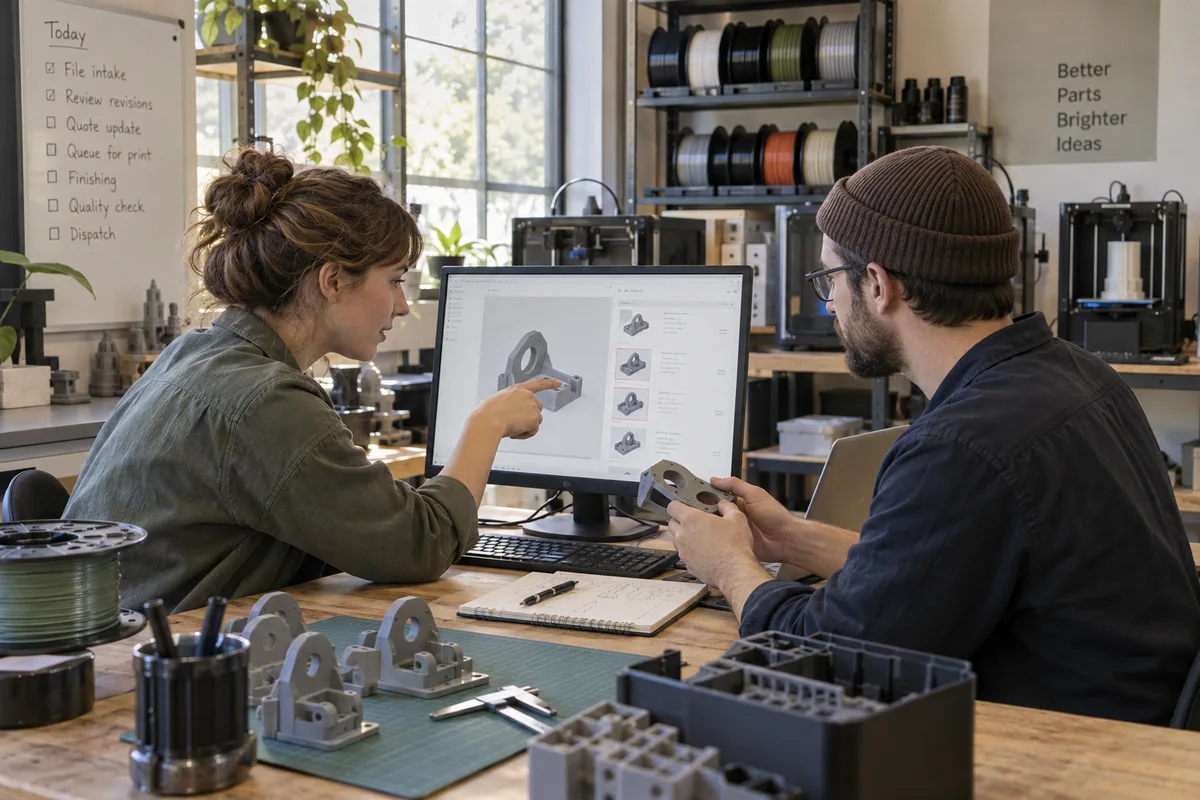
What search engine optimisation means
Search engine optimisation (SEO) is the work of getting your website to appear when a buyer searches Google for what you sell. GullySales builds pages around real search terms, fixes technical issues that block ranking, and tracks which searches actually bring enquiries.
Also for 3D printing service bureaus
Sales and marketing for 3D printing service bureaus, the overview.
Last updated 14 Nov 2026.
For 3D printing service bureaus
Where it usually goes wrong, and what we would do.
“Searchers describe the part, not the technology”
A founder types a phrase about a prototype enclosure or a gear that is no longer made. A site that only says 3D printing services never matches that wording. Pages written around the part and the job do.
“Process names mean different things to different buyers”
SLA, SLS and FDM are clear to an engineer and meaningless to a jeweller. Each page needs the term the searcher uses, with a plain explanation beside it, so the right person recognises the page as theirs.
“Photographs carry the ranking and the sale”
A page with a gallery of real finished parts, each captioned with material and use, shows both search engines and designers that the work exists. A page of stock renders shows neither.
“Thin pages drag the whole site down”
Ten near-identical pages for ten cities or ten materials teach a search engine nothing. A smaller set of pages with real differences in machine, tolerance and use serves the searcher better.
What we do
What we deliver for 3D printing service bureaus.
The work available for this need. We agree the deliverables and responsibilities for your engagement in writing.
Keyword map by process and use
A list of the words buyers use for each machine and job, matched to a page, so no page competes with another.
Result: Every page has one job and one set of words.
Process and material page rewrites
Pages that state the build size, the materials, the finish options and the file types, in the order a designer reads them.
Result: A buyer finds the technical facts without asking.
Captioned gallery of finished parts
Photographs of real parts with material, process and purpose written beside each, taken with permission or from your own samples.
Result: Each image supports a page and answers a likely question.
Technical checks on the site
Page speed, mobile layout, titles, headings and the way file upload behaves on a phone.
Result: Fixes are listed and each one can be verified on the live site.
A plain guide to preparing a file
A short page on file format, wall thickness and orientation that engineers search for.
Result: The site earns visits from people before they need a quote.
How the result is measured
- Ranking positions
- Organic traffic
- Enquiries from organic search
Recorded as a baseline before work starts, so every later report has an honest comparison.
Searches your buyers type
Part, process and material searches, and the page each one should land on.
- SLA resin printing service Bengaluru
- A resin page with the layer detail, the resins you stock and a gallery of small, fine parts. Name the city only where a buyer can really visit or receive the part.
- nylon 3D printing for functional parts
- A powder or nylon page that states strength, finish and the largest part you can build, with a photograph of a hinge or a gear.
- 3D printed prototype for startup India
- A prototype page for founders, explaining the path from file to first part and what you need from them before a build.
- 3D printing for architecture scale models
- A page for architects and studios with model scale, sectional builds and a gallery of finished massing models.
- metal 3D printing service near me
- If you offer metal, a page with the alloys, the machine type and the post-processing. If you only broker it, say so plainly on the page.
- how to prepare an STL file for printing
- A plain guide with wall thickness, orientation and unit notes, ending in your upload route. Engineers search it before they send the file.
Who it is for
This is written for these 3D printing service bureaus.
- Product designers and industrial design studios in Bengaluru, Pune and Chennai
- Start-ups testing a hardware product before tooling
- Engineering and polytechnic colleges with final-year project deadlines
- Architects and interior studios ordering scale models
- Dental labs and clinics that print surgical guides and models
- Jewellery makers who need resin patterns for casting
- Small factories that need jigs, fixtures and spare parts for old machines
- Auto and electronics suppliers that need low-volume plastic parts
- Film, cosplay and prop makers who print large pieces in sections
- Hobbyists and drone and robotics clubs
Before you decide
When this may not be the right fit.
- Your site is one page that lists every machine you own, so adding SEO work first would only spread weak pages across searches.
- You have not decided which processes you want more work in, so search effort would bring jobs your machines are not set up to run well.
- You cannot photograph finished parts, and search pages without images lose to bureaus that show the part.
Before you decide
Agree the work. Know how to judge it.
SEO for 3D printing bureaus: use these checks to prepare, choose the scope, and review what changes.
Bring the right evidence
Bring the pages for the products or services you want to sell, the search queries available in your reports, and examples of enquiries from search. Separate branded searches from buyers discovering you for the first time.
Make the scope clear
Agree which pages and technical fixes come first, who can publish changes, and who supplies subject knowledge. Link search work to a relevant enquiry route on each priority page.
Check the work in use
Follow the trail from a relevant query to its landing page and then to an enquiry. Review whether those enquiries fit your offer, alongside indexing and search visibility.
Know when to change course
A ranking movement alone is not a buying signal. If traffic grows but relevant enquiries do not, revisit page intent and the offer before producing more pages.
These are discussion points, not a fixed package. GullySales confirms the deliverables, responsibilities, fee, and term in writing after reading your brief and speaking with you.
Before we start
What to have ready before the work starts.
The records, access and decisions this work needs from 3D printing service bureaus. Anything missing is noted in the written scope, with who will supply it.
- Website and analytics access
- Without a login to the site and to its visit figures, we cannot see what already works. Bring editor access and view access to analytics. If analytics were never set up, we install them first and the starting record begins later. We then agree who holds the passwords and who may publish.
- Photographs of real printed parts
- Pages for buyers need pictures of finished parts, with the material and the process in the caption. Bring original files, not messaging copies. If photographs are few, we plan a workshop shoot, and the pages wait for it. A dozen good images are enough to begin.
- A technician who can answer technical questions
- Statements about layer height, finish and what each material suits must be right. Name a technician who will read the drafts. Without that reader, the pages stay general, which buyers and search engines both discount. Name a second reader for when the first is busy.
- A statement of what you do not print
- Buyers search for things the bureau cannot make. Say what is outside the machines' reach. We write that plainly on the pages, which saves unsuitable enquiries and keeps the pages trusted. Even a short list of three or four items helps.
How it works
How the search engine optimisation work runs
The work itself, in order. How an engagement starts, from your brief to a written scope, is set out on our method page.
- 1
Search for parts the way a designer would
We search for the parts, materials and uses that bring buyers: a bracket, a drone housing, a dental model, a prototype shell. We note which pages answer and whether any are bureaus like yours. You say which results you would be glad to rival. These searches become the page map. We keep the search results as screenshots so the starting picture is on record.
- 2
Take stock of the site and photograph folder
We need the website login, the analytics view and the folder of photographs of finished parts. We record which pages exist, which receive visits and which say nothing about a process or a material. That record is the starting point for every later comparison. Pages with no visits are listed too, as they may be merged.
- 3
Decide which pages get written first
You and your lead technician choose the processes and materials that bring the best work. We give each its own page so resin, nylon and metal pages do not compete. The order of the pages is agreed before a word is drafted, and thin pages are listed for merging. A page that cannot say something different is not written.
- 4
Write process pages from the workshop's own account
We talk to the technician who runs each machine and write what it prints, what it does not, and what a buyer should send. Every page carries captioned photographs of real parts. You correct any statement about tolerance or finish before it is published. Alt text for each photograph is written while the caption is drafted.
- 5
Read search results against the first count
After the pages are live and the technical checks are done, we compare enquiries from search with the figures recorded at the start. You see which pages bring file-ready buyers, and decide which to extend and which to join to another. A page that brought nothing is read again before anything new is added.
Where this fits
Three pieces of sales work, in this order.
This work sits inside sales process design, at stage 1, prospecting and lead generation. The audit comes before it, and sales management keeps it running.
Step 1
Sales audit
Find where deals are being lost and what to fix first.
Start here if you cannot say where orders are lost.
Step 2 · you are here
Sales process design
One written way to sell, from first enquiry to repeat order.
Start here if every salesperson sells differently.
Step 3
Sales management
A target, a review routine and someone who owns the number.
Start here if the team has targets and no routine.
FAQ
Questions owners ask before they call.
Not here? More answers, or ask on WhatsApp.
Do we need a blog for SEO?
Can we rank for 3D printing in a big city?
Will SEO bring student projects or company jobs?
Should we write separate pages for resin, nylon and metal?
Should the site name each printer model we own?
What if a competitor has the same photographs?
How much does it cost?
How long is the contract?
How soon will we see results?
Who will actually do the work?
More for 3D printing service bureaus
Related work to consider.
Closest to this: search and visibility
Also for 3D printing service bureaus
Or start from the overview: sales and marketing for 3D printing service bureaus.
Your next practical step
Tell us what you are trying to grow, and we will read it before we call.
Eight short steps, mostly taps. Skip anything you would rather answer on the call.