Bakery product manufacturers · Content marketing
Publish the answers a hotel kitchen head wants before asking for a quote.
Content marketing for a bakery manufacturer is the writing, photographs and sheets that answer what shops, kitchens and gifting buyers ask before they order. GullySales works on which questions to answer, who drafts them with you and where the sales team uses each piece.
Scope, fee, reporting and term are agreed in writing after we have read your brief and spoken to you.
What content marketing means
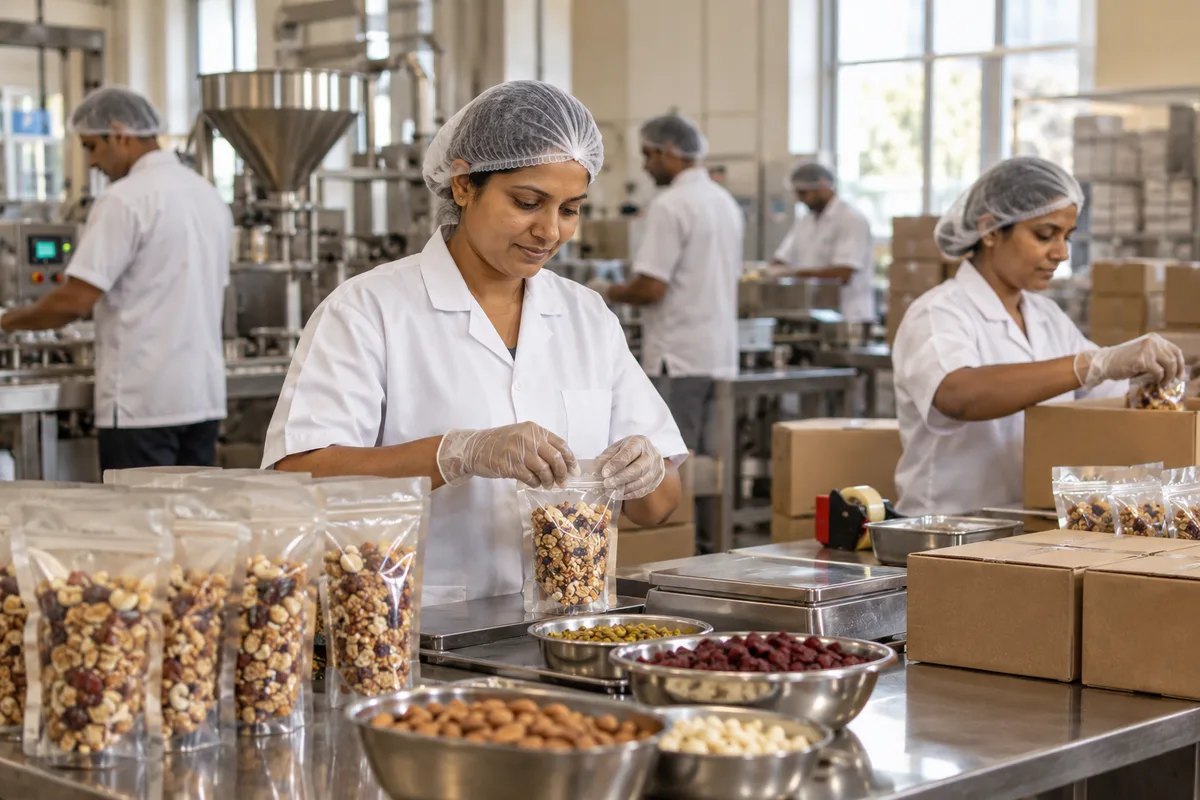
Content marketing is writing articles, guides and pages that answer the questions buyers search before they are ready to enquire. This makes your business visible and trusted before the first call. GullySales plans this content from the first conversation onward, choosing topics that match real search demand rather than guesses.
Also for bakery product manufacturers
- Social media marketing for bakery manufacturers
- Lead generation for bakery manufacturers
- SEO for bakery manufacturers
- Local SEO for bakery manufacturers
- Buyer personas for bakery manufacturers
- CRM for bakery manufacturers
- Follow-up systems for bakery manufacturers
- WhatsApp marketing for bakery manufacturers
Sales and marketing for bakery product manufacturers, the overview.
Last updated 14 Nov 2026.
For bakery product manufacturers
Where it usually goes wrong, and what we would do.
“Buyers ask the same questions”
Minimum order, shelf life on the shop shelf, whether buns come sliced, how returns are counted. The office answers by phone each time. Written once, the answers serve every new buyer and every new driver.
“A range sheet counts as content”
The most useful piece for a purchase head is a clean sheet of sizes, weights, pack counts and delivery windows. It travels by WhatsApp and is forwarded to whoever signs the order, so it deserves the same care as a brochure.
“Seasonal pieces carry a date”
A booking guide for plum cakes is useful in October and useless in January. Writing it ahead of the season, then reusing it with new dates the next year, costs less than starting again each time.
“Praise words need care”
Fresh, pure and healthy sound harmless but are the words advertising rules look at. Content that states ingredients and process stays on firmer ground than praise. Rules differ by state, so check with your own adviser.
What we do
What we deliver for bakery product manufacturers.
The work available for this need. We agree the deliverables and responsibilities for your engagement in writing.
A buyer question bank
Questions taken from calls, WhatsApp and the enquiry log, each with an agreed answer.
Result: Common buyer questions have one approved answer the whole office uses.
A range and pack sheet
A designed sheet of products, sizes, weights, slicing and pack counts that can be sent on WhatsApp.
Result: A purchase head can forward one sheet instead of explaining the range.
A festival booking guide
What is offered, how to book and the closing date, written ahead of the season and reused with fresh dates.
Result: The guide is ready before the first festival enquiry arrives.
A plant story page
A plain account of what is made, how it is packed and who to call, with photographs from the working floor.
Result: A buyer can see who makes the product before the first call.
A sales shelf
A shared folder of sheets, photographs and answer texts, named so the drivers and the office find them.
Result: Everyone on the team sends the same current version.
How the result is measured
- Pages published
- Organic traffic
- Enquiries from content pages
Recorded as a baseline before work starts, so every later report has an honest comparison.
Posts and pieces to plan
Pieces that answer what a hotel kitchen or shop buyer asks before a quote.
- How to place a standing order
- A one-page guide with cut-off hour, delivery window options and who confirms the order, shown in a simple flow.
- Range and pack sheet
- A table of products with pack weights and shelf arrangement notes. Needs your real current range and photographs.
- Festival booking guide
- A dated page with cake types, order cut-off and pickup or delivery routes, rewritten each season.
- How returns are handled
- A plain explanation of your return and replacement rule for stale or damaged lots, agreed in writing by your owner.
- A day at the bakery
- A short plant story on mixing, baking and dispatch, with the permission of anyone pictured.
Who it is for
This is written for these bakery product manufacturers.
- Bread, bun and pav manufacturers supplying general stores and supermarkets
- Cake and pastry makers supplying cafes, hotels and retail counters
- Rusk, toast and tea-time bakery manufacturers
- Plum cake and festival cake specialists
- Bakery makers supplying QSR chains and burger buns
- Biscuit and cookie bakeries linked to bakery retail
- Frozen dough and par-baked product suppliers
- Bakeries that run their own outlets and also supply wholesale
Before you decide
When this may not be the right fit.
- You have not written down your return rule, so a returns page would only invite disputes you cannot settle.
- Your range and pack sizes change every few weeks and nobody owns the sheet that shows them.
- No one on the team can write a short page in plain words, and a stretched piece would hide the facts a buyer needs.
Before you decide
Agree the work. Know how to judge it.
Content marketing for bakery manufacturers: use these checks to prepare, choose the scope, and review what changes.
Bring the right evidence
Bring questions from sales calls and examples of objections that delay a decision. Choose a subject expert who can check the substance, and identify evidence that can be published.
Make the scope clear
Agree the reader, buying question, format, and distribution route for each piece. Set the approval process and distinguish new research from rewriting material you already have.
Check the work in use
Ask a colleague to use the draft in a real buyer conversation. It should answer the question, support its claims, and make the next step clear without requiring a sales pitch to explain it.
Know when to change course
If the same unanswered question appears in several articles, improve the strongest page before commissioning another. More words are not a substitute for missing evidence.
These are discussion points, not a fixed package. GullySales confirms the deliverables, responsibilities, fee, and term in writing after reading your brief and speaking with you.
Before we start
What to have ready before the work starts.
The records, access and decisions this work needs from bakery product manufacturers. Anything missing is noted in the written scope, with who will supply it.
- A note of questions from the sales team
- The question bank is only as good as what the team has heard. Ask the sales staff and drivers to write down the questions buyers put to them over a short stretch. Without those notes, the pieces answer questions that we imagined and buyers never asked. Ask them to write down who asked, not only what was asked.
- Your current price list and pack sizes
- The range sheet states what you sell and how it is packed. Bring the price list even if it is marked for internal use. Where prices change from week to week, tell us, and the sheet carries a date so that a buyer knows how current it is.
- The plant's licence and label details
- Content about shelf life or ingredients must match the label and the licence. Bring a sample label and a copy of the licence. Without them, claims in the pieces cannot be checked against anything, and we leave them out rather than guess. Mention any claim on the label that is a printed word, such as a standard or a mark.
- A production head to review claims
- Someone who knows the process must read what we write about it. Name that person and when they are free to read drafts. Without a reviewer, plant descriptions wait, because a wrong sentence about ingredients or process is worse than a missing one. Name a second person who can read drafts when the first is away from the plant for a few days.
- Photographs of products on the shelf
- Pieces use real pictures of your products in pack and on a shop shelf. Bring the best you have, with the date taken if you know it. If none are usable, a short photo session comes before the writing, and the pieces wait for it. Pictures taken in a shop with the buyer's permission carry the strongest weight with a buyer.
How it works
How the content marketing work runs
The work itself, in order. How an engagement starts, from your brief to a written scope, is set out on our method page.
- 1
Collect the questions buyers ask on calls
We begin by gathering the questions that shops, kitchens and gifting buyers put to your sales staff and drivers, from minimum order to shelf life and returns. You ask the team to note what they hear for a short stretch. The buyer question bank is built from those words and not from an outside list.
- 2
Sort the questions by who asks them
Together we separate the shopkeeper's questions about margin and returns from the kitchen head's about consistency and the gifting buyer's about dates. You tell us which buyers you want more of. Each group then gets its own set of pieces, written for one reader and not for everybody. Questions that only the owner can answer, such as price changes, are marked for the owner.
- 3
Write the range and pack sheet from your data
We produce a sheet that sets out each product, its pack sizes, weight, how it is delivered and the order quantity. You check every figure against your own price list. A buyer should be able to compare you with another supplier from this sheet alone, without phoning first. The sheet is dated, and replaced whenever the price list is revised.
- 4
Draft the festival booking guide
For cakes and gift lines, we write a guide that states the products, the last date for bulk orders and the dispatch dates. You confirm the limits of the plant. It is written before the season opens, so that buyers can plan their own orders around it. Dispatch dates are shown by town where vans leave on different days.
- 5
Tell the plant's story with permission
We write a short page about how the plant works, drawn from a visit and from what your production head tells us. You decide what may be shown and named. Praise words are cut unless you can support them with records a buyer could ask to see. The page is read aloud to the production head, who corrects anything that does not match the floor.
- 6
Shelve the pieces for the sales team
Finished pieces are filed in one place the sales team can open on a phone, and we show them how to send the right one to a buyer. You review which pieces buyers use. Afterwards we compare enquiries with the baseline and retire the pieces nobody opens. Each piece is given a short name so a salesperson can find it while a buyer waits on the line.
Where this fits
Three pieces of sales work, in this order.
This work sits inside sales process design, at stage 0, foundation. The audit comes before it, and sales management keeps it running.
Step 1
Sales audit
Find where deals are being lost and what to fix first.
Start here if you cannot say where orders are lost.
Step 2 · you are here
Sales process design
One written way to sell, from first enquiry to repeat order.
Start here if every salesperson sells differently.
Step 3
Sales management
A target, a review routine and someone who owns the number.
Start here if the team has targets and no routine.
FAQ
Questions owners ask before they call.
Not here? More answers, or ask on WhatsApp.
Who writes the content?
How do we know a piece is useful?
Should content mention shelf life?
Do we need photographs of every product?
Can we publish a buyer's praise for our bread?
What happens to the pieces when the range changes?
How much does it cost?
How long is the contract?
How soon will we see results?
Who will actually do the work?
More for bakery product manufacturers
Related work to consider.
Closest to this: content and social
Also for bakery product manufacturers
Or start from the overview: sales and marketing for bakery product manufacturers.
Your next practical step
Tell us what you are trying to grow, and we will read it before we call.
Eight short steps, mostly taps. Skip anything you would rather answer on the call.