Bathroom fitting manufacturers · Lead generation
Find the dealers, builders and designers who will stock and specify your fittings.
Lead generation for a bathroom fitting maker means finding the right trade buyers: dealers who will hold your finishes, builders who buy sets by the lot and designers who pick from a board. GullySales works on where those enquiries come from, how each is recorded and which ones deserve a sample set.
Scope, fee, reporting and term are agreed in writing after we have read your brief and spoken to you.
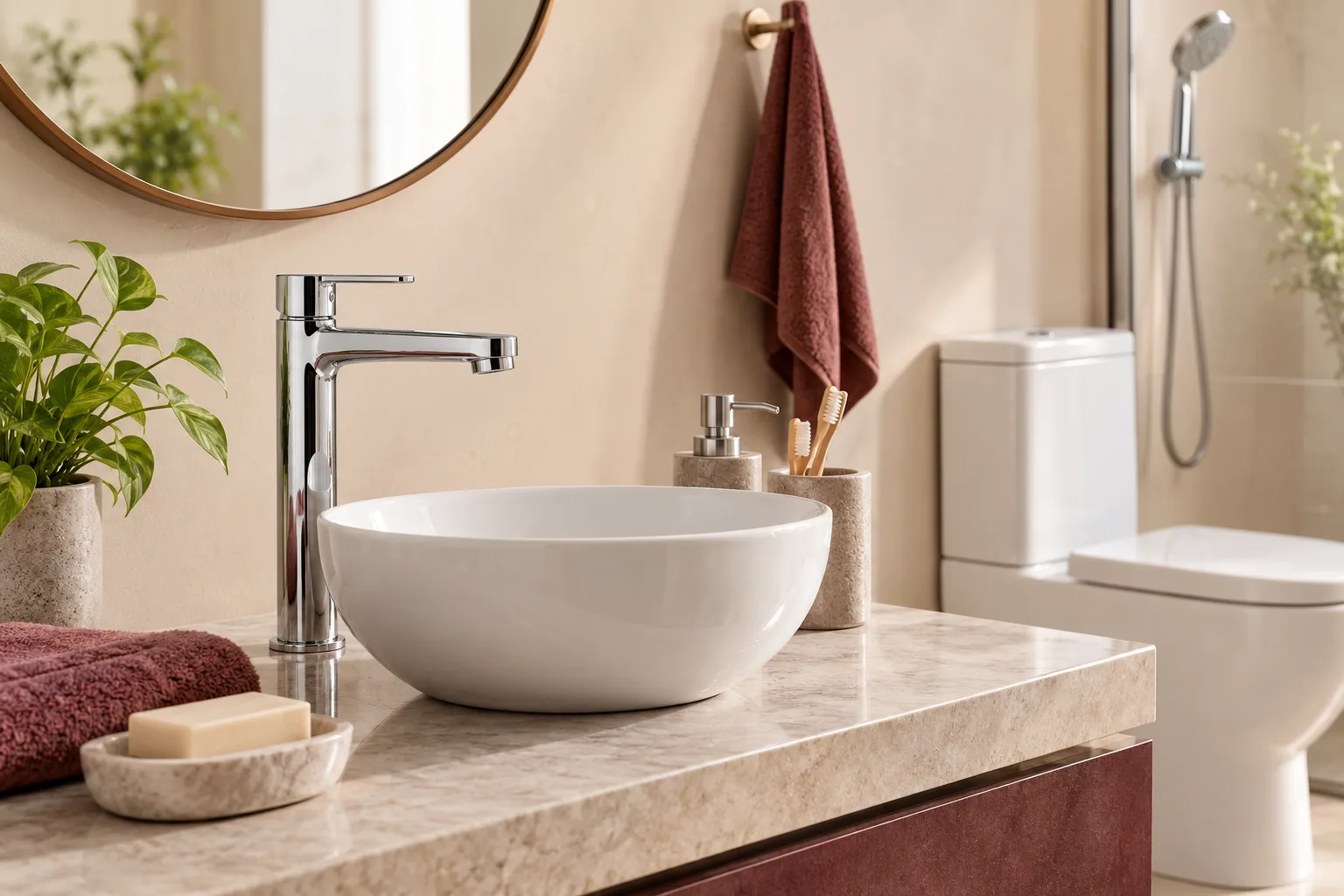
What lead generation means
Lead generation is the combined work of every channel that brings in a new enquiry, whether from search, adverts, referrals or a stall at an exhibition. GullySales runs these channels together and reports the number of enquiries each one produced, not the activity behind it.
Also for bathroom fitting manufacturers
- CRM for bathroom fitting manufacturers
- Follow-up systems for bathroom fitting manufacturers
- SEO for bathroom fitting manufacturers
- Social media marketing for bathroom fitting manufacturers
- Content marketing for bathroom fitting manufacturers
- Buyer personas for bathroom fitting manufacturers
- WhatsApp marketing for bathroom fitting manufacturers
- Digital marketing for bathroom fitting manufacturers
Sales and marketing for bathroom fitting manufacturers, the overview.
Plan the next part of the work
Last updated 21 Nov 2026.
For bathroom fitting manufacturers
Where it usually goes wrong, and what we would do.
“A dealer enquiry and a homeowner enquiry are different leads”
A homeowner who finds your tap online cannot buy from the factory, while a dealer who asks for the price list is a trade lead. Sorting the two at the first message saves your sales desk from answering retail questions as if they were dealership questions.
“Builders reveal themselves through projects, not forms”
A purchase officer rarely fills a website form. Apartment projects are announced on hoardings, in RERA listings and through architects, so the useful lead is the project name, the number of bathrooms and the stage of fit-out.
“Designers respond to a finish in hand”
An interior designer who sees matte black on a screen moves on. The same designer who holds a finish board with a code in the studio comes back with a specification, so the board is the lead magnet.
“Plumber referrals are leads that never reach a form”
A plumber who tells a homeowner which tap to fit has generated a sale you cannot see. Without a register and a way to trace orders back, that source looks empty on paper.
What we do
What we deliver for bathroom fitting manufacturers.
The work available for this need. We agree the deliverables and responsibilities for your engagement in writing.
Lead source sheet
A single list of where trade enquiries arrive from: dealer calls, marketplace messages, plumber referrals, exhibition cards and designer requests, each with a named owner.
Result: Every enquiry in the sheet carries a source, so you can see which one fills the order book.
Dealer enquiry page
A page for shops that want to stock your range, asking for city, shop type and finishes currently sold.
Result: A new dealer lead arrives with the city and the existing brands already filled in.
Builder project tracker
A running list of apartment and villa projects in your cities, with the builder, the stage and the contact for purchase.
Result: You can see which projects are at the fit-out stage before another brand reaches the purchase officer.
Sample set request flow
A short route for designers and builders to ask for a finish board or a sample set, logged against the studio or project.
Result: Each sample sent is on a list, so the follow-up names what was received.
Lead qualification questions
Five questions your team asks on the first call to separate a stocking dealer from a one-off buyer.
Result: The sales desk spends time on leads that fit the way you sell.
How the result is measured
- Relevant enquiries by source
- Duplicate and unsuitable enquiries
- Time to the first response
- Accepted enquiries reaching an agreed next step
Recorded as a baseline before work starts, so every later report has an honest comparison.
What to capture
Record these details when a dealer, builder or designer enquires.
- Dealer, builder, designer or plumber
- Sets the whole follow-up. A dealer wants terms, a builder wants a set price and a designer wants a finish sample.
- Shop or project location
- Tells you whether the dealer's town already has a counter of yours, and whether the builder's site is inside your delivery reach.
- Product line asked about
- Taps, showers, concealed bodies or health faucets. The right catalogue and sample set depend on it.
- Finish of interest
- Chrome, matt black, brushed gold or another finish in your range. A designer's enquiry is lost if the sample sent is wrong.
- Brand currently stocked or specified
- Shows who you are replacing and what price and service the buyer compares you with.
Who it is for
This is written for these bathroom fitting manufacturers.
- Brass tap and mixer manufacturers
- Stainless steel bathroom fitting makers
- Shower, shower panel and rain shower producers
- Concealed body, diverter and flush valve makers
- Health faucet, jet spray and accessory makers
- CP and PVD finish specialists supplying designer ranges
- Hospital and hotel fitting suppliers
- Regional makers supplying plumbers and dealers in one area
Before you decide
When this may not be the right fit.
- You have no sample sets ready to dispatch, so a dealer or designer enquiry would be answered with a catalogue alone.
- You have not decided your dealer terms or territories, so every dealer enquiry would start a fresh negotiation.
- Nobody can visit a builder's site or answer a project query, so project leads would age without a reply.
Before you decide
Agree the work. Know how to judge it.
Lead generation for bathroom fitting manufacturers: use these checks to prepare, choose the scope, and review what changes.
Bring the right evidence
Define the organisations or buyers you can serve and the reasons they would consider a conversation. Bring examples of accepted and rejected prospects so the selection rule is visible.
Make the scope clear
Agree the research sources, contact approach, qualification rules, and handover. Clarify which meetings count as accepted and what happens to replies that are not ready to buy.
Check the work in use
Review why a prospect was selected and what was learned from the response. Count held, relevant conversations separately from contacts found, messages sent, or meetings booked.
Know when to change course
If the same objection appears repeatedly, adjust the offer or buyer group before increasing outreach. Respect a request to stop contact and keep the exclusion in the record.
These are discussion points, not a fixed package. GullySales confirms the deliverables, responsibilities, fee, and term in writing after reading your brief and speaking with you.
Before we start
What to have ready before the work starts.
The records, access and decisions this work needs from bathroom fitting manufacturers. Anything missing is noted in the written scope, with who will supply it.
- The enquiry diary or call register
- Bring whatever records incoming dealer and builder calls, even a notebook with gaps. We use it to see which sources really brought buyers. If nothing is recorded, we start the diary first and the plan begins from a clean count. Rough handwriting is fine; what matters is that the date and the caller's town are readable.
- A list of exhibition cards and referrals
- Gather the visiting cards from trade shows and the names passed on by plumbers or architects. A box of cards is fine. These are your warmest leads, and without them the tracker starts empty and the outreach has nobody to write to. Cards from visitors who asked for prices carry more weight than cards left at the stall, so mark which is which.
- The sales head for the question session
- The person who closes dealer deals must be in the room when the qualification questions are set. If only a manager is present, the questions come out generic and the desk ignores them. A short session is enough. A free half hour in the middle of a working week is more useful than a formal meeting.
- Stock status of each finish
- Tell us which finishes and sizes are ready to ship and which are made to order. Sample set promises depend on it. If stock status is unknown, we leave finish names out of replies, and enquiries wait longer for a firm answer. Where a finish is out of stock for a season, tell us, so enquiries do not arrive for what you cannot send.
- Names of the stockists you want more of
- Write down the towns and dealer types you wish to add, such as sanitaryware shops or plumbing wholesalers. Outreach is aimed at them. If the list is blank, we aim at the towns where enquiries already arrive and say that the choice was ours. If the answer is not known, the list is still useful because it shows us where the gaps in your reach are.
How it works
How the lead generation work runs
The work itself, in order. How an engagement starts, from your brief to a written scope, is set out on our method page.
- 1
Sort last year's enquiries by buyer type
We take your enquiry diary, sales calls and the cards collected at exhibitions, and sort each into dealer, builder, designer, plumber or retail buyer. You tell us which of these ever became an order. That sorting shows where your real leads come from and which source is only noise.
- 2
Sit with the sales desk on live calls
One of us listens as your sales staff take dealer and builder calls, noting what is asked first, what is promised and what is left unrecorded. You decide who owns each kind of enquiry afterwards. We also record current enquiries per source, so the later reading has figures to match.
- 3
Write the dealer enquiry questions together
With your sales head we draft the few questions that separate a stockist from a one-time buyer: shop size, brands now held, towns served and the finishes wanted. You strike anything dealers resist answering. The sheet ends up short enough to complete during a phone call. Each question is tried on two real callers before it is fixed.
- 4
Set the sample set request route
We agree who may request a sample set, who dispatches it from the stores and what is noted when it leaves. Builders and designers get one route, dealers another. You decide the rule for who pays the courier, and we write it into the reply a buyer receives. The sheet that goes out with a sample set has a reply slip, so the buyer's answer returns to the same place.
- 5
Test each source with a dummy enquiry
We send a dummy dealer enquiry from the website, the directory listing and the exhibition card, and follow each through your desk to the tracker. Wherever a source label fails to appear, we repair it. You see every test result before the routes are used for real. We also send one from a phone number the desk does not recognise, since that is how a stranger will arrive.
- 6
Read orders against the starting enquiry count
We set dealer appointments, builder project entries and sample requests beside the counts taken before the work. Your sales head tells us which of these turned into dispatches. Together we choose which sources to keep paying for and which to drop. We also note which sample sets were never followed by a visit, as these show where the route leaks.
Where this fits
Three pieces of sales work, in this order.
This work sits inside sales process design, at stage 1, prospecting and lead generation. The audit comes before it, and sales management keeps it running.
Step 1
Sales audit
Find where deals are being lost and what to fix first.
Start here if you cannot say where orders are lost.
Step 2 · you are here
Sales process design
One written way to sell, from first enquiry to repeat order.
Start here if every salesperson sells differently.
Step 3
Sales management
A target, a review routine and someone who owns the number.
Start here if the team has targets and no routine.
FAQ
Questions owners ask before they call.
Not here? More answers, or ask on WhatsApp.
Should we buy leads from a directory?
How do we know a lead is a dealer and not a retail buyer?
Can you promise a number of dealer leads?
What should we do with an enquiry from a retail homeowner?
Do our existing distributors count as leads?
Who qualifies a lead, our staff or yours?
How much does it cost?
How long is the contract?
How soon will we see results?
Who will actually do the work?
More for bathroom fitting manufacturers
Related work to consider.
Closest to this: leads and follow-up
Also for bathroom fitting manufacturers
- SEO for bathroom fitting manufacturers
- Social media marketing for bathroom fitting manufacturers
- Content marketing for bathroom fitting manufacturers
- Buyer personas for bathroom fitting manufacturers
- WhatsApp marketing for bathroom fitting manufacturers
- Digital marketing for bathroom fitting manufacturers
Or start from the overview: sales and marketing for bathroom fitting manufacturers.
Your next practical step
Tell us what you are trying to grow, and we will read it before we call.
Eight short steps, mostly taps. Skip anything you would rather answer on the call.