Blow moulding companies · Social media
Show the shop floor and the sample table to the people who buy packaging.
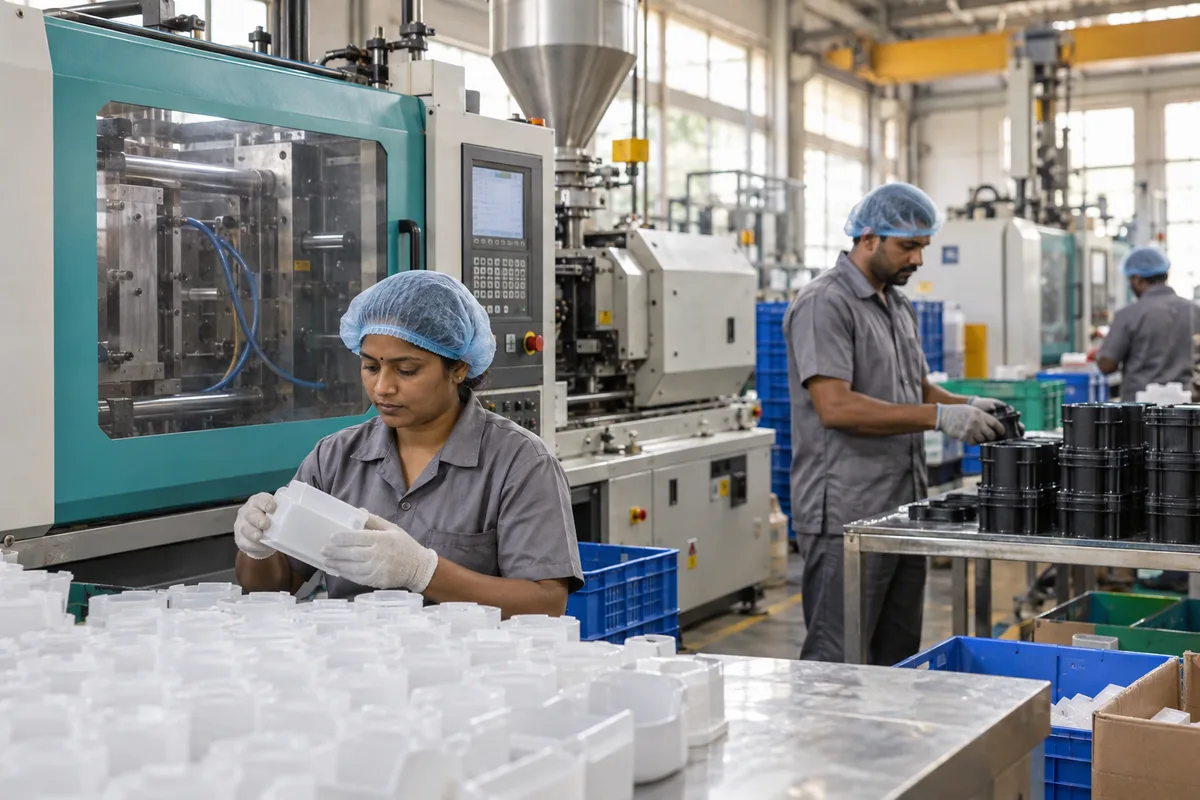
Social media for a blow moulder is a steady record of the plant, the moulds and the finished bottles, shown to packaging managers and brand founders. GullySales works on what to post, which profile carries it and how a comment becomes a recorded enquiry.
Scope, fee, reporting and term are agreed in writing after we have read your brief and spoken to you.
What social media means
Social media is the ongoing posting your business does on platforms such as Instagram, Facebook and LinkedIn to stay visible to customers and prospects between purchases. GullySales plans a posting calendar, writes captions and designs the images so the page looks active and answers what a visitor would ask.
Also for blow moulding companies
- Content marketing for blow moulding companies
- Lead generation for blow moulding companies
- SEO for blow moulding companies
- Buyer personas for blow moulding companies
- CRM for blow moulding companies
- Follow-up systems for blow moulding companies
- WhatsApp marketing for blow moulding companies
- Digital marketing for blow moulding companies
Sales and marketing for blow moulding companies, the overview.
Last updated 14 Nov 2026.
For blow moulding companies
Where it usually goes wrong, and what we would do.
“LinkedIn reaches the packaging manager”
The person who approves a bottle for a filling company is found on LinkedIn, not on a consumer app. Posts about a new mould, a drop test or a stock shape reach that person where they already read about suppliers.
“A bottle photographed well is half a catalogue”
A clean photograph of a finished bottle beside its closure shows neck fit at a glance. Dark phone pictures taken on the factory floor hide the details a buyer is checking.
“The plant itself builds trust”
Buyers who cannot visit want to see the machines, the mould store, the inspection table and the packing. A short walk-through post answers a question they hesitate to ask.
“Comments and messages disappear without a routine”
A buyer who comments asking about a neck finish and gets no reply forms an opinion of the unit. Someone must own the replies and record the serious ones.
What we do
What we deliver for blow moulding companies.
The work available for this need. We agree the deliverables and responsibilities for your engagement in writing.
Profile set-up for the plant
A company page and a short profile text naming the bottles, resins and buyers you serve.
Result: A visitor to the profile understands what you make within a few lines.
A post plan by topic
Mould stories, new stock shapes, inspection steps, packing and a bottle of the month, planned in an order.
Result: The team knows what to photograph before the next post is due.
Photography instructions for the floor
A simple guide to lighting, background and angles for photographing bottles with closures.
Result: Bottle pictures look consistent across the catalogue and the posts.
A reply and handover routine
Who answers comments and messages, and how a serious question is entered in the enquiry record.
Result: A comment that signals interest appears in the same record as a call.
Posts for existing buyers
Notes to current customers about new shapes, spare capacity and changes to the schedule.
Result: Reorders are prompted by something the buyer saw, not by chance.
How the result is measured
- Posts published
- Engagement rate
- Enquiries from social profiles
Recorded as a baseline before work starts, so every later report has an honest comparison.
Posts and pieces to plan
Posts that show a packaging manager the floor, the mould and the sample.
- A parison dropping and the mould closing
- A short video from the machine, shot with the operator's care for safety. It shows buyers the process they only read about.
- A new bottle shape in the sample room
- A photograph of the bottle with capacity and neck in the caption. Post it only after the client agrees.
- Mould storage and tool care
- A floor photo of the mould racks with a note on how moulds are labelled and kept. It speaks to buyers who fear losing a tool.
- Packaging manager's question of the week
- A post answering a question real buyers asked, such as wall build against drop strength. It needs a technical person's name and view.
- A reorder run leaving for a regular buyer
- A dispatch photograph, with consent, showing cartons and pallets. It suggests steady supply to those who read it.
Who it is for
This is written for these blow moulding companies.
- HDPE bottle and jerry can makers
- Extrusion blow moulders for lubricant and edible oil packs
- Pharma syrup and tablet container makers
- Agrochemical and pesticide bottle makers
- Household chemical and home-care bottle makers
- Drum and large container moulders
- PET stretch blow moulders for water and soft drink bottles
- Cosmetic and personal-care bottle makers
Before you decide
When this may not be the right fit.
- Your regular customers do not allow their bottles to be shown, which leaves little to photograph.
- Nobody will watch the page's messages, so a packaging manager's question would sit unanswered.
- You expect brand-owner enquiries from a single post, when the buyer reads several before writing.
Before you decide
Agree the work. Know how to judge it.
Social media marketing for blow moulding companies: use these checks to prepare, choose the scope, and review what changes.
Bring the right evidence
Review the posts that produced useful conversations, not only the ones with the most views. Gather buyer questions and decide which team member can contribute credible material.
Make the scope clear
Choose the audience and channel before setting a posting volume. Agree who supplies material, approves posts, and handles messages, including complaints or questions the agency cannot answer.
Check the work in use
Follow a post through to the profile, website, and response. A useful report explains the quality of conversations and enquiries, alongside reach and engagement.
Know when to change course
If publishing takes time away from unanswered buyer messages, fix the response routine first. Do not expand to another channel without a clear reason for being there.
These are discussion points, not a fixed package. GullySales confirms the deliverables, responsibilities, fee, and term in writing after reading your brief and speaking with you.
Before we start
What to have ready before the work starts.
The records, access and decisions this work needs from blow moulding companies. Anything missing is noted in the written scope, with who will supply it.
- Admin access to the company profile
- We need a named admin role on whichever profile the plant uses. If the profile was set up by someone who left, tell us, and we ask the platform for recovery. Without admin access, we cannot schedule or read anything. The login can be held by one person, as long as a second director knows who it is and how to recover the account if the phone is lost.
- Permission to photograph on the floor
- The plant manager must clear areas where pictures may be taken, and which customer moulds or labelled stock must be moved out of frame. Without clearance, pictures are limited to the sample table. A short written clearance from the plant manager is enough, listing the areas where pictures may be taken and the stock that should be moved aside.
- A list of customers you may name
- State which customers have agreed to be mentioned, if any. A packaging manager looks for proof, but logos shown without consent cause damage. Without a list, no customer is named. Customers who agreed by email should have that email forwarded to us, so that the permission is on file and not just remembered.
- A person to answer messages
- Name who replies to comments and direct messages, with their working hours. A reply that comes late loses a lead. If nobody is named, the profile carries posts but no message button. Someone with the authority to send a specification belongs on the rota, because an answer without the figure wastes a good enquiry.
- Samples of current bottles for photography
- Set aside clean bottles in several sizes, with the cap fitted if you supply one. Dust and scuffs show in pictures. If stock is limited, tell us which sizes matter more to you. Cap and label should be fitted only if you supply them; a bare bottle is better than a mismatched closure.
How it works
How the social media work runs
The work itself, in order. How an engagement starts, from your brief to a written scope, is set out on our method page.
- 1
Decide which profile carries the plant
We list the profiles that exist, the owner's, the company's and any foreman who posts, and find the one buyers would look up. You choose where the plant's voice lives and who holds the login. For this trade the professional network is the first place a packaging manager looks. The owner, the company and any engineer who posts are listed so that nobody is surprised by a post.
- 2
Walk the floor and note what shows well
We walk the plant with your production head and mark what makes good material: the parison dropping, the mould changeover, finished bottles at the packing table, the leak test, the sample shelf. You rule out anything confidential. This walk gives the photography list. The walk takes a morning, and a foreman who knows the machines is the best guide.
- 3
Photograph the bottles and the machines
Someone from your team, or a visiting photographer, takes clear pictures to our list, bottles on a plain table and machines at work with no customer's mould or label showing. You choose what is used. The result is a bank of images that look like your plant. We ask that finished stock be wiped and set under daylight, since a dusty bottle photographs poorly.
- 4
Plan the posts around buyer questions
We turn the buyer questions heard in enquiries into a set of post topics: how to choose a neck, what a mould costs, why weight matters. You approve the set. Each post ends with a single next step, such as sending a specification. Topics that turn out to need a drawing or figure are checked by your technical person.
- 5
Draft posts and the reply routine
We write captions in plain words for your voice and a short reply guide for comments and messages, with a rule that every real enquiry is copied into the enquiry record. You edit and approve. Replies from the owner's phone are included in the routine. The guide also says what is never replied to in public, such as a price.
- 6
Read enquiries traced back to posts
We count the messages, comments and calls that mention a post, and enquiries that began on the profile, against the figures noted at the start. You decide which post types continue. Followers and likes are not read as the outcome. Posts that led to a specification request are kept as models for the next batch.
Where this fits
Three pieces of sales work, in this order.
This work sits inside sales process design, at stage 0, foundation. The audit comes before it, and sales management keeps it running.
Step 1
Sales audit
Find where deals are being lost and what to fix first.
Start here if you cannot say where orders are lost.
Step 2 · you are here
Sales process design
One written way to sell, from first enquiry to repeat order.
Start here if every salesperson sells differently.
Step 3
Sales management
A target, a review routine and someone who owns the number.
Start here if the team has targets and no routine.
FAQ
Questions owners ask before they call.
Not here? More answers, or ask on WhatsApp.
Which platform matters for a bottle maker?
Can we post our customers' logos?
Is it safe to show a mould on social media?
What do packaging managers look for on a plant page?
Can we show a customer's bottle we have made?
Who should post, the owner or the company?
How much does it cost?
How long is the contract?
How soon will we see results?
Who will actually do the work?
More for blow moulding companies
Related work to consider.
Closest to this: content and social
Also for blow moulding companies
Or start from the overview: sales and marketing for blow moulding companies.
Your next practical step
Tell us what you are trying to grow, and we will read it before we call.
Eight short steps, mostly taps. Skip anything you would rather answer on the call.