Glass manufacturers · Social media
Show the cut, the edge and the packed vehicle where glaziers already scroll.
Social media marketing for a glass manufacturer is the use of short posts and videos to show glaziers, fabricators and builders how your glass is cut, processed and packed. GullySales works on the posts, the plant footage and the route from a viewer to a size-list enquiry.
Scope, fee, reporting and term are agreed in writing after we have read your brief and spoken to you.
What social media means
Social media is the ongoing posting your business does on platforms such as Instagram, Facebook and LinkedIn to stay visible to customers and prospects between purchases. GullySales plans a posting calendar, writes captions and designs the images so the page looks active and answers what a visitor would ask.
Last updated 14 Nov 2026.
For glass manufacturers
Where it usually goes wrong, and what we would do.
“Glass makes better pictures than most trades”
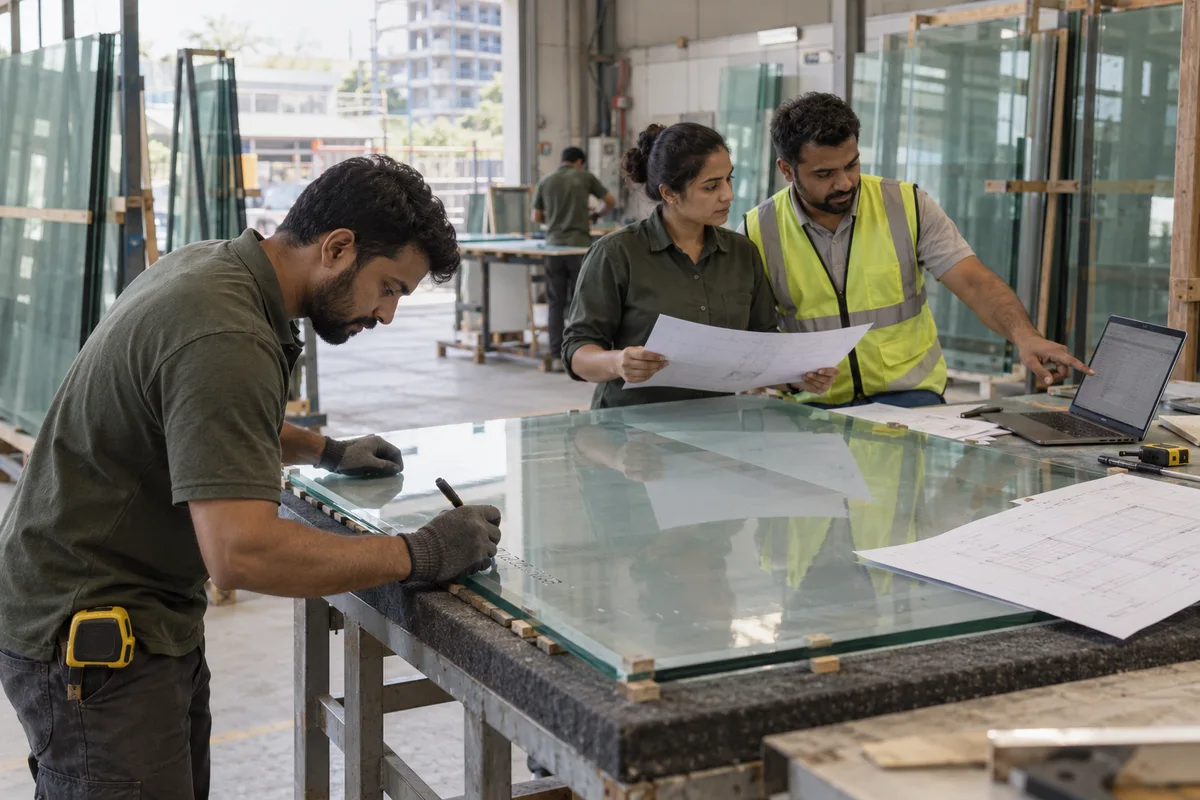
A pane leaving the toughening line, a polished edge catching light or a rack being loaded is a clear fact in a few seconds. The buyer sees capacity and care without a sales line, so footage from the floor beats a designed banner.
“Glaziers watch other glaziers”
The audience is a trade audience: fabricators, installers and shopfitters who follow each other. A post that shows a tricky cut-out or a large pane handled well is shared inside that circle and carries more weight than an advert.
“Breakage is the post nobody makes”
Showing how a lot is packed, braced and loaded speaks to the worry that decides repeat orders. A short clip of the process says more than a promise of safe delivery, and it can be checked against what arrives.
“The comment section is the enquiry desk”
A glazier who writes 'rate for 8 mm?' in a comment has asked for a quote in public. Without a set reply that moves them to WhatsApp and asks for a size list, the enquiry is lost under the next post.
What we do
What we deliver for glass manufacturers.
The work available for this need. We agree the deliverables and responsibilities for your engagement in writing.
Plant footage plan
A list of shots to capture on the floor: cutting, edge work, toughening loads, lamination, racking and loading.
Result: Your phone camera is aimed at the same useful shots each time.
Post formats for trade buyers
A small set of repeatable post types, such as a process clip, a finished-job photograph and a packing demonstration.
Result: Each post has a format and a purpose.
Comment and message reply set
Short replies for rate, thickness and availability questions that move the buyer to a size list.
Result: A rate question in a comment is answered the same way each time.
Permission note for site photographs
A short note for asking builders and glaziers before their site or project appears in your posts.
Result: You do not post a project the owner has not agreed to.
Post-to-enquiry record
A log of which posts brought a message, a call or a size list.
Result: You can see which format brought a buyer.
How the result is measured
- Posts published
- Engagement rate
- Enquiries from social profiles
Recorded as a baseline before work starts, so every later report has an honest comparison.
Posts and pieces to plan
Show glassmaking steps a trade buyer would stop to watch.
- A pane leaving the toughening furnace
- A short clip of the quench and the cooling, captioned with the thickness and use, filmed with the plant's safety rules followed.
- Edge polishing close up
- A photograph of a finished edge beside a rough one, showing what the extra processing gives the fabricator.
- A packed vehicle ready to leave
- The racks, the padding and the strapping shown, which tells a glazier how you reduce breakage in transit.
- A project made with your glass
- A railing or façade from a glazier you supply, posted with their agreement and credited.
- The size list you can read
- A post showing how to send a size list clearly, so the enquiries you get are priced the first time.
Who it is for
This is written for these glass manufacturers.
- Float glass makers and re-rollers
- Toughened and heat-strengthened glass processors
- Laminated glass makers for facades, railings and vehicles
- Insulated glass unit makers for windows and offices
- Coated and reflective glass makers
- Decorative, printed and acid-etched glass producers
- Mirror and furniture glass manufacturers
- Glass processors serving one city and its glaziers
Before you decide
When this may not be the right fit.
- Nobody has permission to film on the plant floor, so posts would depend on stock images.
- You have no one to reply to comments and messages that a post brings in.
- You expect followers to place orders without a rate-and-size route behind the account.
Before you decide
Agree the work. Know how to judge it.
Social media for glass manufacturers: use these checks to prepare, choose the scope, and review what changes.
Bring the right evidence
Review the posts that produced useful conversations, not only the ones with the most views. Gather buyer questions and decide which team member can contribute credible material.
Make the scope clear
Choose the audience and channel before setting a posting volume. Agree who supplies material, approves posts, and handles messages, including complaints or questions the agency cannot answer.
Check the work in use
Follow a post through to the profile, website, and response. A useful report explains the quality of conversations and enquiries, alongside reach and engagement.
Know when to change course
If publishing takes time away from unanswered buyer messages, fix the response routine first. Do not expand to another channel without a clear reason for being there.
These are discussion points, not a fixed package. GullySales confirms the deliverables, responsibilities, fee, and term in writing after reading your brief and speaking with you.
Before we start
What to have ready before the work starts.
The records, access and decisions this work needs from glass manufacturers. Anything missing is noted in the written scope, with who will supply it.
- Written leave to film in the plant
- Filming inside a glass plant touches safety, so the plant head must say in writing which areas may be filmed and at what times. A signed note is enough. Without it, footage is limited to the packing area and the yard, and the posts lose the cutting and furnace scenes that glaziers watch with the keenest eye.
- Passwords for each social account
- We need the account owner's login or an invitation to manage the page, not a shared personal login. Keep the recovery phone and email in your own hands. If an old agency or employee holds the account, recovery must come first, because posts published from an account you do not control can be lost.
- A shot list of finished jobs
- Bring the names of five or six recent jobs that are worth showing, such as a shop front, a railing or a partition, with the buyer's permission noted beside each. We build posts around them. If no permission exists, the posts stay inside the plant and show process only.
- A named person for comments
- Someone must read the comment section and the messages and reply in words the owner would use. This is the sales person or the pricer, as you choose. If nobody is named, comments sit unanswered and a glazier who asked for a rate is lost to the rival whose page replied.
- The owner's approval for your faces
- Operators, the owner and the salespeople who appear on video must agree to it, and the owner must decide the rule for faces, names and uniforms. A short note is enough. Without it, we shoot hands, machines and glass only, and the posts feel less personal.
How it works
How the social media work runs
The work itself, in order. How an engagement starts, from your brief to a written scope, is set out on our method page.
- 1
Agree which pages carry the plant's name
We sit with the owner and decide which accounts exist and who holds the passwords: the company page, a plant video channel, a sales person's profile or none of these. Access goes into one record in your name. You also decide whether glaziers see the company or a person, because a glazier will talk to a person faster than a logo.
- 2
Walk the plant with a phone and a guard
With the shop-floor supervisor we walk the cutting table, the edge grinder, the toughening furnace and the packing area, deciding which spots are safe to film and which are not. The supervisor names the hours when the line is quiet enough to shoot. You mark any machine, customer glass or process that must stay out of the frame.
- 3
Film the work in the order it happens
We shoot a sheet from rack to cut, from edge work to furnace and from crate to vehicle, so each short video has a clear beginning and end. Your operators say aloud what they are doing and we keep their words for the captions. You choose which operators are happy to appear, since nobody should be filmed without being asked.
- 4
Write post formats a glazier would stop for
From the footage we shape a small set of post formats: a cut in progress, a corner before and after polishing, a crate being loaded, a finished sheet on a rack. Each closes with the same invitation to send a size list. You read the captions for any claim about strength or safety and cut what your quality head cannot support.
- 5
Set the reply desk for comments and messages
Comments are enquiries, so we agree who answers them and in what words. We write short replies for a request for a rate, a request for a size, a complaint about breakage and a question about a brand. Anyone who asks for figures is moved to the pricer's WhatsApp. You name the person who watches the comments and who takes over when they are away.
- 6
Read posts against the starting figures
We take the figures recorded before posting began, such as followers, messages and size lists that mention a post, and set them beside the post-to-enquiry record. You and we read which formats brought a size list and which only brought praise. You decide which formats are repeated, which are dropped and whether any site photographs, with permission, join the plan.
Where this fits
Three pieces of sales work, in this order.
This work sits inside sales process design, at stage 0, foundation. The audit comes before it, and sales management keeps it running.
Step 1
Sales audit
Find where deals are being lost and what to fix first.
Start here if you cannot say where orders are lost.
Step 2 · you are here
Sales process design
One written way to sell, from first enquiry to repeat order.
Start here if every salesperson sells differently.
Step 3
Sales management
A target, a review routine and someone who owns the number.
Start here if the team has targets and no routine.
FAQ
Questions owners ask before they call.
Not here? More answers, or ask on WhatsApp.
Which platform suits a glass manufacturer?
Can we post customer projects?
Does a viral clip bring orders?
Is it safe to post factory footage?
Should operators be named in the videos?
What if a video shows a defect or a breakage?
How much does it cost?
How long is the contract?
How soon will we see results?
Who will actually do the work?
More for glass manufacturers
Related work to consider.
Closest to this: content and social
Also for glass manufacturers
Or start from the overview: sales and marketing for glass manufacturers.
Your next practical step
Tell us what you are trying to grow, and we will read it before we call.
Eight short steps, mostly taps. Skip anything you would rather answer on the call.