Medical device manufacturers · Sales presentation and demo improvement
A device demonstration should answer the question each person in the room came with.
Sales presentation and demo improvement for a device manufacturer is a review and rebuild of how your team presents to hospital committees and demonstrates equipment on a ward, in a showroom or over a screen. GullySales reads recent meetings against what each buyer asked, then rewrites the running order, scripts and checklists around the buyer's problem.
Scope, fee, reporting and term are agreed in writing after we have read your brief and spoken to you.
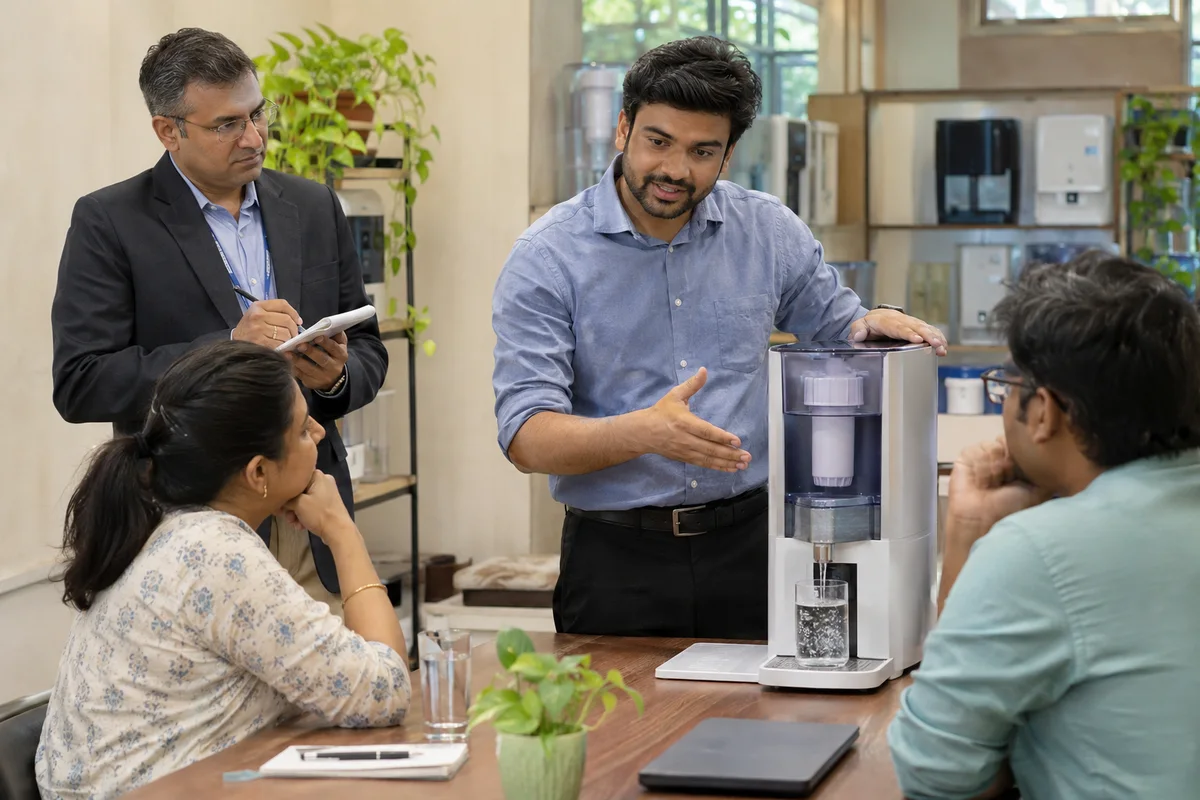
What sales presentation and demo improvement means
Sales presentation and demo improvement is a review and rebuild of how your team presents and demonstrates in front of buyers, whether on a site visit, a screen share or a showroom floor. GullySales reads your recent decks and demos against what each buyer asked, then rewrites the structure, scripts and checks around the buyer's problem.
Also for medical device manufacturers
- Sales management for medical device manufacturers
- Sales metrics for medical device manufacturers
- Sales strategy for medical device manufacturers
- Sales training for medical device manufacturers
- Account-based selling for medical device manufacturers
- Enterprise and solution selling for medical device manufacturers
- Field sales support for medical device manufacturers
- Inside sales for medical device manufacturers
Sales and marketing for medical device manufacturers, the overview.
Last updated 14 Nov 2026. Rules for this trade differ by state and professional body, and they change. We describe restrictions in general terms, so check the current position with your own council or adviser before you publish anything.
For medical device manufacturers
Where it usually goes wrong, and what we would do.
“One demonstration is given to three kinds of listener”
The department head wants to see handling and the workflow, the biomedical engineer wants calibration, power and maintenance, and the purchase officer wants terms. A script built only around features answers the engineer's question and loses the other two before the end of the first screen.
“The sample goes to the ward and the checklist stays at the office”
A unit missing a probe, a cable or a consumable turns a hospital visit into a rescheduled one. A named person ticking a list before the van leaves removes the commonest avoidable failure, and the list should cover the demonstration site's power and space too.
“Unanswered questions are written nowhere”
A hospital asks whether the device fits an existing system or how a service call is handled. The rep promises to revert and the question lives in memory. Capturing it on a feedback form after each demonstration shows which questions the deck should answer in advance.
“A confident claim in the room is still a claim”
A rep who tells a clinician what a device will achieve in patients goes beyond the registered intended use. Scripts should state specification and intended use as registered, and any performance claim should be cleared by your regulatory adviser before it is spoken.
What we do
What we deliver for medical device manufacturers.
The work available for this need. We agree the deliverables and responsibilities for your engagement in writing.
Review of recent hospital meetings
Notes on recent decks, demonstrations and site visits set against what the hospital asked beforehand, marking each point where a question went unanswered.
Result: You see where in the meeting the buyer's concern was missed.
Running order for each buyer type
A written sequence for a clinician, a biomedical team and a purchase committee, each opening with their stated concern, then showing the device against it, then closing on the decision and next step.
Result: The rep knows whom the meeting is for before it starts.
Demonstration script for each device
What to show, what to say, what to ask the buyer and where to stop, with a branch for the objection your reps hear at this stage and a note on which statements need adviser clearance.
Result: Two reps demonstrate the same device in the same order.
Equipment and sample checklist
A list for the unit, probes, cables, consumables, brochures, power adaptors and site access, to be ticked by a named person before departure.
Result: A missing accessory is found at the office, not at the ward.
Recorded practice sessions
Reps run the new script on a phone or camera and review it with a coach. The recordings stay with your team.
Result: Each rep has heard their own demonstration before the next hospital.
After-demonstration feedback form
A one-page form recording who attended, what was asked, what was shown, what is still open and the agreed next step.
Result: Unanswered questions become a list that product and service teams can act on.
How the result is measured
- Demos and presentations reviewed against the buyer's questions
- Buyer questions answered during the demo
- Equipment and sample checks completed before meetings
Recorded as a baseline before work starts, so every later report has an honest comparison.
Who it is for
This is written for these medical device manufacturers.
- Diagnostic equipment manufacturers
- Surgical instrument manufacturers
- Hospital furniture and equipment makers
- Disposable and consumable device manufacturers
- Implant and orthopaedic device makers
- Home healthcare device manufacturers
- In-vitro diagnostic kit manufacturers
- Export-focused medical device units
Before you decide
Agree the work. Know how to judge it.
Sales presentation and demo improvement for medical device manufacturers: use these checks to prepare, choose the scope, and review what changes.
Bring the right evidence
Bring questions from sales calls and examples of objections that delay a decision. Choose a subject expert who can check the substance, and identify evidence that can be published.
Make the scope clear
Agree the reader, buying question, format, and distribution route for each piece. Set the approval process and distinguish new research from rewriting material you already have.
Check the work in use
Ask a colleague to use the draft in a real buyer conversation. It should answer the question, support its claims, and make the next step clear without requiring a sales pitch to explain it.
Know when to change course
If the same unanswered question appears in several articles, improve the strongest page before commissioning another. More words are not a substitute for missing evidence.
These are discussion points, not a fixed package. GullySales confirms the deliverables, responsibilities, fee, and term in writing after reading your brief and speaking with you.
Before we start
What to have ready before the work starts.
The records, access and decisions this work needs from medical device manufacturers. Anything missing is noted in the written scope, with who will supply it.
- Decks and notes from recent hospital meetings
- These show how the team actually presents. Bring the files, the quotation emails and any notes. If nothing is written down, we ask each salesperson to reconstruct one recent meeting in a short session. Include the quotation that followed each meeting, so we can see whether the promises made in the room reached the paper.
- Two lost cases to study
- Lost meetings teach more than won ones. Bring two cases where a demonstration went well and the order was lost, with what you know of the reason. Names may be hidden. Without them we study successes only and risk missing the real problem.
- The demonstration units and their accessories
- Scripts are written around the equipment you carry. Bring one set of each device with its accessories, or arrange a session in the store. If units cannot be released, we write the checklist from a list and test it later. Tell us also which accessories travel with each unit and which are borrowed from the store, since a missing cable is a frequent reason a demonstration stumbles.
- A record of questions the team could not answer
- Ask the engineers and salespeople to note questions they could not answer in recent meetings. Even a short list is valuable. Each unanswered question becomes a line in the script, answered by the right expert.
- Time for three practice sessions
- The new routine only works if rehearsed. Block the time and the people before we begin. If the team cannot attend practice, we deliver the materials but cannot say the demonstration has improved.
How it works
How the sales presentation and demo improvement work runs
The work itself, in order. How an engagement starts, from your brief to a written scope, is set out on our method page.
- 1
Collect the last meetings in the buyer's words
We collect the decks, demonstration notes, quotation emails and any recordings from recent hospital meetings, and ask the salespeople to write what the buyer asked. We also ask you for two lost cases. The folder gives us the real presentation, not the intended one, and the buyers' own questions. Where a meeting was held over a video call, we ask for the shared screen files as well, because what the buyer saw is the evidence we need.
- 2
Match the demo against the buyer's questions
For each meeting we list the buyer's questions and mark whether the presentation answered them. Clinicians, engineers and procurement officers asked different things, and one demonstration is given to all three. You see the gaps in a plain table, with examples from your own meetings. We also note the questions asked by the person who did not speak much, since a quiet biomedical engineer in the corner turns out to be the one who decides whether the device is shortlisted.
- 3
Rebuild the order of the meeting and the scripts
We rewrite the running order for each kind of listener and a demonstration script for each device, starting from the buyer's problem. The engineer checks every technical statement and the regulatory lead the wording on use. You decide who delivers which part. Each script marks the points at which the salesperson stops talking and hands the device to the buyer, because a clinician learns more from touching the controls than from hearing a description of them.
- 4
Write the checklists for the unit and the samples
We write a checklist for the equipment, accessories, consumable samples, documents and spare parts that go with every demonstration, and a return checklist for the unit. The service coordinator tests it on the next visit. This prevents a ward demonstration that fails on a missing cable. The list also names who signs the unit out, who checks its calibration or self-test before the visit, and what is photographed at handover so a later dispute about damage can be settled.
- 5
Practise on camera with your team
Each salesperson gives the new demonstration to colleagues playing a clinician, an engineer and a buyer, and we record the session on a phone. We replay it with them, pausing where a question was dodged or a claim went too far. The regulatory lead attends at least one session.
- 6
Start the feedback form and read the first results
After each real demonstration the salesperson fills a short form: who attended, what was asked, what was not answered and what the buyer said next. After several demonstrations we compare the outcomes with the meetings before the work. You see which questions still have no answer.
Where this fits
Three pieces of sales work, in this order.
This work sits inside sales process design, at stage 1, prospecting and lead generation. The audit comes before it, and sales management keeps it running.
Step 1
Sales audit
Find where deals are being lost and what to fix first.
Start here if you cannot say where orders are lost.
Step 2 · you are here
Sales process design
One written way to sell, from first enquiry to repeat order.
Start here if every salesperson sells differently.
Step 3
Sales management
A target, a review routine and someone who owns the number.
Start here if the team has targets and no routine.
FAQ
Questions owners ask before they call.
Not here? More answers, or ask on WhatsApp.
Should the deck lead with our certifications?
We demonstrate over a video call for distant hospitals. Is that covered?
Can GullySales sit in on demonstrations?
Who owns the demonstration script after we finish?
What if the demonstration unit fails in front of a buyer?
How much does it cost?
How long is the contract?
How soon will we see results?
Who will actually do the work?
What do you need from us?
From the blog
Further reading for medical device manufacturers.
 6 min read · 6 Oct 2026What healthcare buyers check before they choose youA patient, a referring doctor and a hospital purchase team each check different things before choosing a provider. See what each looks at.
 7 min read · 21 Sept 2026How to advertise to hospital ownersA hospital owner operates on Tuesday and signs cheques on Sunday. Sell to the consultant who starts the purchase, and lead with the finance structure.
 8 min read · 21 Sept 2026How to advertise to hospital administratorsThe administrator scopes the purchase, the head of department asks for it and the trust signs. Write the specification and be one of the three quotations.
More for medical device manufacturers
Related work to consider.
Closest to this: sales craft
- Sales management for medical device manufacturers
- Sales metrics for medical device manufacturers
- Sales strategy for medical device manufacturers
- Sales training for medical device manufacturers
- Account-based selling for medical device manufacturers
- Enterprise and solution selling for medical device manufacturers
- Field sales support for medical device manufacturers
- Inside sales for medical device manufacturers
Also for medical device manufacturers
Or start from the overview: sales and marketing for medical device manufacturers.
Your next practical step
Tell us what you are trying to grow, and we will read it before we call.
Eight short steps, mostly taps. Skip anything you would rather answer on the call.