Manufacturing · Food, chemicals, pharma and medical
Hospitals and distributors cannot buy from a maker they cannot find or check.
A hospital purchase officer rarely buys a device on first sight. A doctor asks for it, a biomedical engineer checks it, the stores team asks for the catalogue and the price list, and accounts want three quotations on the file. Your product can be right and still lose at the second step, because nobody on the other side could find your datasheet or a person who would answer.
Scope, fee, reporting and term are agreed in writing after we have read your brief and spoken to you.
In one paragraph
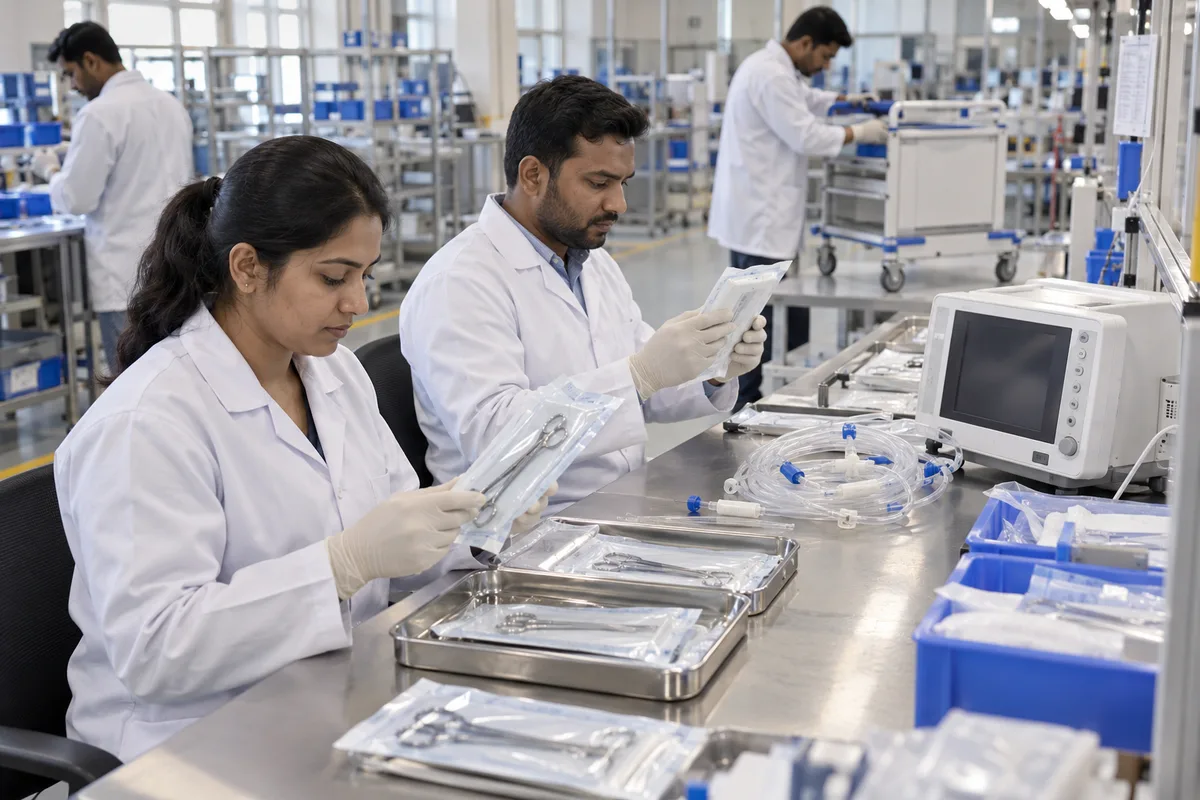
Medical device and equipment manufacturing covers instruments, equipment, furniture, disposables, diagnostics, implants and moulded parts sold to hospitals, clinics, laboratories and distributors. GullySales builds the enquiry, quotation and follow-up work that puts your products in front of purchase teams and dealers, and keeps each lead alive until a tender, trial or order is decided.
Most makers in this segment sell through distributors, hospital supply dealers and tenders. That puts a layer between you and the user. The dealer decides which brand to carry, and the doctor decides which brand to ask for. Marketing to only one of them leaves the other gap open.
GullySales does not make or supply medical products, and it does not advise on licences or approvals. It works on the part that comes before and after your regulatory file: being found, answering the request for quotation properly, following up, and winning the repeat order.
Last updated 16 Oct 2026. Licence, certification, labelling and advertising rules for medical devices & equipment differ by product and change. We describe them in general terms, so check the current position with your own adviser or the regulator before you publish a claim.
7 types of work
Each kind of medical devices & equipment is bought differently, so each has its own page.
Open the one that matches what you make. It covers who buys it, where the order is lost and what we would do.
- Surgical InstrumentsSurgeons ask for the instrument by pattern name, and your pattern is not on any page they can find.
- Medical EquipmentA hospital will not buy a machine from a maker whose service engineer it cannot picture.
- Hospital FurnitureThe bed was approved on a sample, and the next hospital never saw it.
- Medical DisposablesOur gloves, syringes and dressings are the same as everyone's, so the buyer picks the cheapest.
- Diagnostic EquipmentThe laboratory owner wants to know who will recalibrate it, and our page does not say.
 Orthopaedic ImplantsSurgeons choose an implant system they trust, and trust is built before the first case.
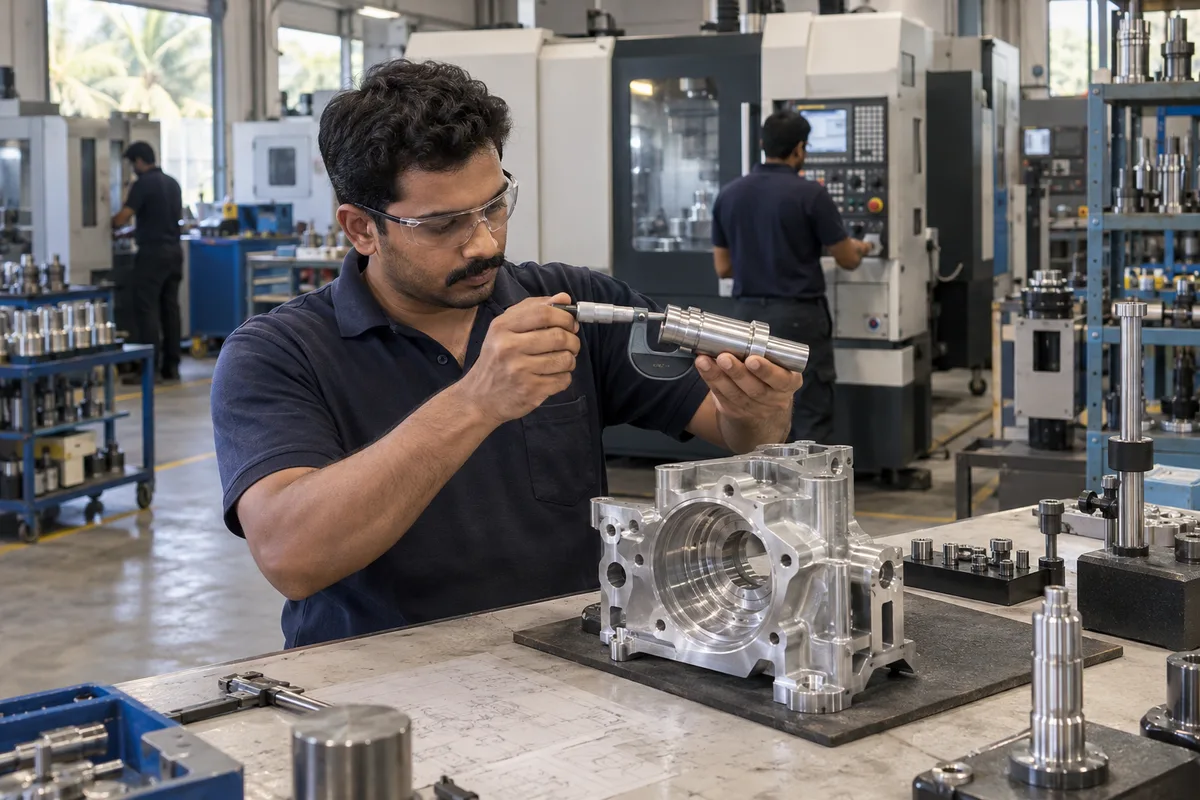
 Medical PlasticsA device brand looks for a moulder it can audit, and our shop floor is not on any page.
Who it is for
This is written for you if medical devices & equipment is what you make or sell.
- Makers of surgical instruments, hospital furniture or equipment who sell through dealers and want direct hospital enquiries too
- Disposables and consumables units whose order depends on a few distributors and a few buying groups
- Diagnostic equipment makers with a good product and a thin online presence
- Implant and moulded-part manufacturers who work to a customer's specification and need to be found by device brands
- Established units that already export a little and want a steadier flow of enquiries
Before you decide
When this may not be the right fit.
- Anyone who wants help with a licence, certification or approval file. That is for your regulatory adviser and the certifying body.
- Makers who sell only by government tender with no private channel. Tender follow-up helps, but there is little marketing to build.
- Units with no one who can answer a technical question from a buyer. We can bring the enquiry. Someone on your side has to talk to the engineer.
How buyers choose
What decides who wins in medical devices & equipment.
The clinician asks, the purchase team decides
A surgeon or physician names a brand or a type. The purchase team then asks for quotations, compares price and after-sales terms, and may buy from a dealer they already pay. Your material has to work for both readers.
Documents before demonstration
Buyers ask for the catalogue, the datasheet, the certificate copies you hold, the warranty terms and the list of installed hospitals. A product that is easy to describe on paper reaches the demonstration stage. One that cannot be described does not.
Dealers and distributors carry the brand
A hospital supply dealer in a city will stock only a few makers in each product line. Getting listed depends on margin, stock availability, a person to call and how quickly you answer a dealer's question.
Tenders and rate contracts
Government and large private hospital groups buy through tenders, empanelment and annual rate contracts. The work is in watching for the notice, responding on time with the right documents, and following up after the technical evaluation.
Where orders are lost
What usually goes wrong when you sell medical devices & equipment.
In the words owners use on the first call.
“Our product is good but hospitals have never heard of us”
A maker with no clear website page for each product is invisible to the biomedical engineer who searches by item name. The dealer's catalogue shows the dealer, not you.
“We send the quotation and then silence”
Hospital purchases move slowly and across several desks. A quotation emailed as a PDF with no follow-up gets filed. The order goes to the maker whose representative called the stores manager again.
“Dealers push another brand”
If the dealer earns more on a competing brand, that brand is what the hospital hears about. A dealer needs a reason to recommend yours: a clear price sheet, a sample, a quick answer and a doctor who asks for it.
“IndiaMART brings enquiries we cannot sort”
Listings pull in students, traders and price shoppers along with genuine hospital buyers. Without a way to sort them, the sales team stops calling any of them back.
The scope
The work we would propose for medical devices & equipment.
Measured on qualified enquiries, quotation requests, follow-up on each quotation, trial orders won and repeat orders. Anything here that needs a platform, directory or tool we have not used with you is confirmed with you before it goes in the scope.
- A page for each product lineA page for each instrument, machine or consumable family, with the specification, the material or model range, the intended use and a request-for-quotation form. The text is checked against what your regulatory file allows you to say.
- Search presence for the item names buyers typeBiomedical engineers and purchase officers search by item name, model and specification. We work out those searches for your range and build the pages and listings to match.
- Marketplace enquiry handlingEnquiries from IndiaMART, TradeIndia and similar listings are recorded, sorted into hospital, dealer, trader and noise, and answered in order of fit.
- A quotation follow-up routineEvery quotation sent is logged with its date, the buyer and the next call. Quiet ones get a defined second and third contact, so the sale does not depend on someone's memory.
- Dealer and distributor developmentA list of hospital supply dealers by city, a short pack that gives them reasons to carry you, and a follow-up routine for the ones who ask for samples.
Tender watching and response checklist
A simple routine for noticing relevant tenders and a checklist of the documents each one asks for, so a missing certificate copy does not knock you out on the last day.
What we do
What you get for medical devices & equipment.
Each deliverable and what it is there to change.
A product catalogue that works as a purchase document
One PDF and one set of web pages with model numbers, specification, packing and ordering information, so a purchase officer can raise a requirement without phoning you.
A quotation request form for hospital and dealer buyers
It asks who is buying, the item, the quantity, the delivery location and whether this is a tender, so your reply is the right one the first time.
A follow-up routine for quotations that went quiet
A written sequence of calls and messages with a named owner on your side, so the stores manager hears from you after the first send.
A dealer onboarding pack
Price structure, product range, a sample request process and a contact for questions. It is what you send a hospital supply dealer who asks what you can offer.
A reference list of installed hospitals you may name
Built only from customers who agree to be named, and used on product pages and in quotations to answer the question every purchase team asks.
How the result is measured
- Qualified enquiries by source
- Quotation requests received
- Follow-up completed on each quotation
- Trial orders and sample approvals
- Repeat orders from hospitals and dealers
- Dealers added and dealers who reordered
Recorded as a baseline before work starts, so every later report has an honest comparison.
How it works
What the work involves for medical devices & equipment
The work itself, in order. How an engagement starts, from your brief to a written scope, is set out on our method page.
- 1
Read your product range and your sales records
We go through your catalogue, price list, past quotations and current enquiry sources, and record a baseline of enquiries and orders by source.
- 2
Decide who the buyers are for each line
For each product family we name the actual buyer: hospital purchase team, biomedical engineer, dealer or export importer. That sets the pages and the replies.
- 3
Build the pages, forms and listings
Product pages, request forms, a catalogue and a corrected marketplace listing go up, with every claim checked against your own documents.
- 4
Put the follow-up routine in place
Quotation logging, dealer outreach and tender watching start, with an owner named on your side for each.
- 5
Report against the baseline
Enquiries, quotations followed up, samples approved and repeat orders are compared with where you began. The reporting schedule is agreed in writing.
What we need from you
What to have ready before we talk.
None of it has to be tidy. We read what you have.
- Your website link and any marketplace listings you hold
- The last twenty quotations sent, with what happened to each
- Catalogue, datasheets and price list as they stand now
- A list of current dealers, distributors and hospital customers you can name
- Copies of the certificates you hold, so we know what the pages may refer to
- A sample of recent enquiries from IndiaMART or phone calls
Export and new regions
Selling medical devices & equipment beyond your home market.
Where you sell decides standards, documents, payment terms and freight. We work from Bengaluru and have no overseas office, so for a new region we start from your own enquiries, your existing buyers and the directories you already use.
Importers and distributors in countries you already ship to
The first step is your own export enquiry data and the buyers you already have. Markets in Africa, the Middle East and South-East Asia are common for Indian device makers, and we would check which of them fit your range in the audit.
Documents an overseas buyer asks for
Importers and agents ask for certificates, a quality system statement and product registration status in their country. We do not advise on those. We lay out what you hold so the buyer finds it on one page.
Samples, freight and payment terms
Sample cost, freight to the buyer, advance or letter-of-credit terms and time zones decide whether a first order happens. They are written into the reply template so the enquiry does not stall on a question you could have answered at once.
A practical starting point · Medical Devices & Equipment
Start with one buying journey.
Use a real enquiry to find the first useful change. You do not need to buy every service listed on this page.
- The record to review
- Start with a recent RFQ and the quotation it produced. Remove buyer identifiers, then retain the specification, quantity, delivery requirement, and reason the order moved forward or stopped.
- The buyer's question
- Check whether the buyer can establish technical fit before asking for a price. Purchasing, engineering, and the end user may need different evidence from the same product page.
- The handover to agree
- Give the technical question to someone who can answer it, and keep the commercial follow-up with a named owner. A vague request for a catalogue should not be treated as a qualified RFQ.
FAQ
Questions about selling medical devices & equipment.
Not here? More answers, or ask on WhatsApp.
Can you market a medical device before it has its approval?
Should I sell to hospitals directly or through dealers?
Is IndiaMART enough for a medical device maker?
Do you help with government tenders?
How much does it cost?
How long is the contract?
How soon will we see results?
Who will actually do the work?
What do you need from us?
What if we are not happy with the work?
Makers of medical devices & equipment also need
Looking for the wider industry page? See medical device manufacturers.
This page is part of the manufacturing section. The hub also lists every manufacturing industry we write for.
Why us
Why owners pick GullySales over an agency.
Marketing and sales, as one job
Most agencies stop at the enquiry. We also fix what happens after it: the reply, the follow-up, the quote and the CRM.
The person on the first call does the work
No account managers in between. You are never handed to someone you have not met.
A baseline before anything starts
Your numbers are written down on day one, so every later report compares against something honest.
The fee in writing, split three ways
Our time, your media spend and production on separate lines. You always see what goes to us.
No guarantees we cannot keep
The term is agreed in writing and never a default twelve months. We never promise a ranking or a lead count, because nobody controls those.
One office, and we say so
Nagarbhavi, Bengaluru. We work across India by call and WhatsApp and travel when a session needs to be in person.
#257, 3rd floor, Sri Nanjundeshwara Complex, Nagarbhavi 8th Block, Outer Ring Road. How we work.
Engagement options
Ways to work with us.
Pick the size of commitment that fits. Every option starts with your brief and a conversation.
Option 1
The conversation on its own
A call after you send your brief. It says honestly whether you need outside help, and many fixes are ones your own team can make.
Option 2
One fix, scoped
Start with the fix that matters most, such as reply time or follow-up. The fee is in writing before anything starts.
Option 3
An ongoing programme
We run the work, report against the baseline, and you renew on the numbers. The term and the reporting are agreed in writing first.
Option 4
Guidance for your own team or agency
We plan, brief and check the work of your in-house team or current agency, instead of replacing them.
All services
All services for medical devices & equipment manufacturers.
Marketing, sales and channel work in one list. Open a group or search, then read what the service covers.
1,579 services in 17 groups.
Marketing strategy and research (53)
Branding and creative (37)
Websites and conversion (30)
Search, local and AI visibility (28)
Content, video and thought leadership (798)
Advertising and performance marketing (107)
Social media, PR and reputation (232)
Email, WhatsApp and automation (27)
Lead generation and outbound (20)
Sales strategy and process (29)
Sales training and enablement (38)
CRM, sales operations and RevOps (48)
Dealers, distributors and partners (42)
Customer success and retention (42)
Fractional leadership and audits (27)
AI for sales and marketing (8)
Growth and go-to-market strategy (13)
Your brief
Tell us what you need, and we will read it before we call.
Eight short steps about your business, what you want and who decides. Most questions are a tap, and you can skip any you would rather answer on the call.
Your next practical step
Tell us what you are trying to grow, and we will read it before we call.
Eight short steps, mostly taps. Skip anything you would rather answer on the call.