Metal forging companies · Content marketing
Publish the answers a design engineer needs before a drawing is sent.
Content marketing for a forge is the writing and filming of notes that settle the questions a buyer carries into a quote, such as die ownership, machining allowance and grain flow. GullySales works on which questions to answer, who in the forge reviews each piece and where each one is published.
Scope, fee, reporting and term are agreed in writing after we have read your brief and spoken to you.
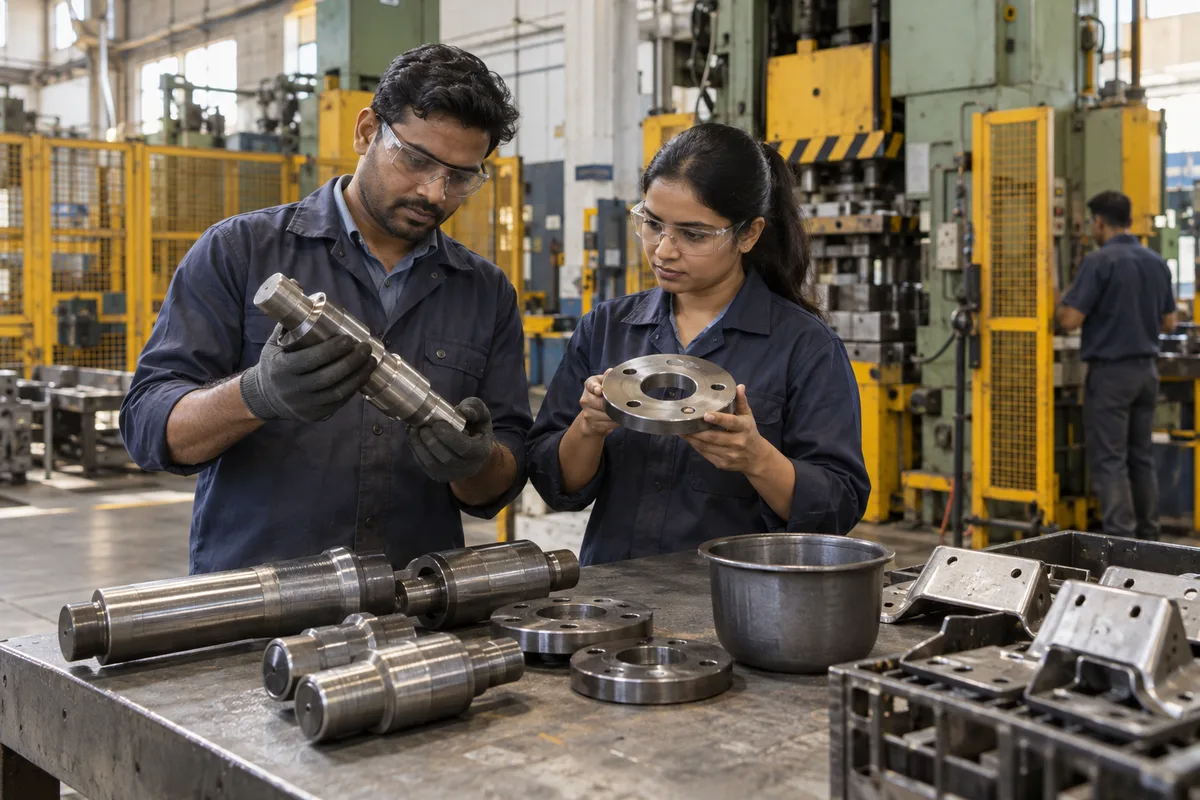
What content marketing means
Content marketing is writing articles, guides and pages that answer the questions buyers search before they are ready to enquire. This makes your business visible and trusted before the first call. GullySales plans this content from the first conversation onward, choosing topics that match real search demand rather than guesses.
Last updated 14 Nov 2026.
For metal forging companies
Where it usually goes wrong, and what we would do.
“The same questions are answered again and again”
The estimating desk explains die cost, allowance and heat treatment each time an enquiry arrives. Every answer lives in a call or a chat and leaves with the person. Written once and published, it serves the next buyer without taking the owner's time.
“Engineers trust specifics”
A design engineer choosing between open die and closed die for a shaft wants the trade-offs in plain terms: die cost against piece price, grain flow, tolerance and lot size. A note by someone who runs the press is believed over a general article.
“Part stories can be told without naming the customer”
A buyer wants proof that the forge has solved a problem like theirs. A note can describe the part type, the grade and the difficulty, with the customer unnamed and the facts approved by the buyer. No result figures are added that the shop cannot document.
“A wrong figure costs the engineer's trust”
A mistaken tolerance or grade on a page ends the reader's confidence at once, however good the rest is. Each piece is read by the person who runs the press, or by the quality head, before it goes live.
What we do
What we deliver for metal forging companies.
The work available for this need. We agree the deliverables and responsibilities for your engagement in writing.
A question bank from sales calls
A list of the questions buyers ask on calls and chats, sorted by role and by stage of the order.
Result: A sheet of real questions that decides what gets written next.
A die and piece price explainer
A note setting out die cost, ownership, maintenance, machining allowance and piece price as separate lines.
Result: A buyer can read how a forging quote is built before asking for one.
Process comparison guides
Plain guides comparing open die, closed die and ring rolling for the parts you forge.
Result: Each guide ends by saying which process suits which part and lot size.
Part notes with the customer unnamed
Short write-ups of a part, its grade and the issue solved, approved by the buyer before publication.
Result: Each note carries the buyer's written approval on file.
A sample certificate walkthrough
A page explaining each line of a test certificate and heat number, using a sample with buyer details removed.
Result: A quality head can see what arrives with a lot.
A publishing plan
A list of where each piece goes: the site, LinkedIn, YouTube and the capability pack used in outreach.
Result: Each note has a home and an owner on the shop side.
How the result is measured
- Pages published
- Organic traffic
- Enquiries from content pages
Recorded as a baseline before work starts, so every later report has an honest comparison.
Pieces worth writing
The explainers a design engineer reads before sending a drawing.
- Die cost, piece price and allowance explained
- A note that sets the three numbers apart with a worked example in words. It answers the question that stalls most quotes and cuts repeat calls.
- Open die, closed die or ring rolling
- A comparison by part shape, quantity and tolerance. The buyer should finish it knowing which process fits their part, and why you quote it that way.
- What heat treatment does to a forged shaft
- A plain account of normalising, quenching and tempering as you run them, with the hardness range you test. Written by the person who supervises the furnace.
- Reading a forging test certificate
- A walk through a sample certificate: heat number, chemistry, mechanical test and hardness. Helps a new purchase head ask for the right document.
- Preparing a forging enquiry
- A checklist of what to send with a drawing: grade, weight, quantity, end use and inspection needs. Saves the estimating desk its first round of questions.
Who it is for
This is written for these metal forging companies.
- Closed die forging shops for auto and two-wheeler components
- Open die forgers of shafts, rings and large blocks
- Ring rolling units making bearing races and flanges
- Valve and flange forgers for oil, gas and process plants
- Railway and heavy engineering forgers
- Hand tool and agricultural implement forgers
- Cold and warm forging units for fasteners and small precision parts
- Forge shops with in-house machining and heat treatment
Before you decide
When this may not be the right fit.
- No one at the forge is willing to write down how the process works, and a ghost-written piece without the shop's own detail would read like every other page.
- You have no sample certificate or part photographs to illustrate a piece, so each explainer would be abstract and the engineer would not trust it.
- Your sales problem is that drawings already arrive and go unquoted, so more articles would add enquiries before the quoting desk can handle them.
Before you decide
Agree the work. Know how to judge it.
Content marketing for forging companies: use these checks to prepare, choose the scope, and review what changes.
Bring the right evidence
Bring questions from sales calls and examples of objections that delay a decision. Choose a subject expert who can check the substance, and identify evidence that can be published.
Make the scope clear
Agree the reader, buying question, format, and distribution route for each piece. Set the approval process and distinguish new research from rewriting material you already have.
Check the work in use
Ask a colleague to use the draft in a real buyer conversation. It should answer the question, support its claims, and make the next step clear without requiring a sales pitch to explain it.
Know when to change course
If the same unanswered question appears in several articles, improve the strongest page before commissioning another. More words are not a substitute for missing evidence.
These are discussion points, not a fixed package. GullySales confirms the deliverables, responsibilities, fee, and term in writing after reading your brief and speaking with you.
Before we start
What to have ready before the work starts.
The records, access and decisions this work needs from metal forging companies. Anything missing is noted in the written scope, with who will supply it.
- The estimator's list of repeated questions
- A page of questions heard in calls and mails, however rough. It shapes the whole plan. Without it, the content answers questions nobody asks. Include the questions that came from export agents and traders, whose wording differs from a plant buyer.
- Time with the quality head
- A recorded session of the person who knows the test methods and the certificates. Their words give the content its authority. If they are unavailable, the pieces stay in draft. Choose a time when the presses are idle, because machine noise ruins a recording.
- Die and customer details to keep private
- Process parameters, die details and customer names that stay private. We write around them. Without a list, drafts wait for repeated checks. Include the customer names that must never appear, even in a part note.
- Sample parts with permission to describe them
- A few parts across your families, with the customer's agreement to a description without a name. Part notes depend on them. Without permission, notes describe the process and size only. Mark which parts are too distinctive to describe, since an engineer could identify the plant from the shape.
How it works
How the content marketing work runs
The work itself, in order. How an engagement starts, from your brief to a written scope, is set out on our method page.
- 1
Collect the questions from sales calls
We sit with the estimator and write down what buyers ask on calls and in mails: who owns the die, what machining allowance is left, how grain flow is checked, what certificate arrives with the lot. Add the questions you wish buyers would raise. This bank decides what we write. We also ask which questions arrive from export agents and which from plants, since the same words mean different things to each.
- 2
Sort the questions by who asks
Purchase heads ask about die cost and price per piece, design engineers about grade and allowance, quality heads about paperwork. We assign each question to a reader and a page. You approve the order of writing, which follows the buyers you want to reach first and the questions that take up your estimator's time.
- 3
Interview the quality head and the die shop
A recorded conversation with the people who know the answers, in their own words. We write from the recording and send each draft back for correction. A wrong figure costs an engineer's trust, so this step cannot be skipped. The quality head checks each test method named against the certificate you actually issue, and the die shop confirms any statement about tooling.
- 4
Write the explainers and part notes
The die and piece price explainer, the process comparison guides and part notes with the customer unnamed. Each draft is checked by the quality head. You decide what process detail stays private. Part notes describe the process route, the grade and the weight range, and say what the inspection covered, in the plain order a buyer would ask.
- 5
Publish and note which pieces draw enquiries
Each piece goes up with a route for a drawing. We record the enquiries that follow each page and compare them with the earlier count. You see which questions the buyers were reading. A short line at the end of each piece names the person who answers, so a buyer who has read it knows whom to write to.
Where this fits
Three pieces of sales work, in this order.
This work sits inside sales process design, at stage 0, foundation. The audit comes before it, and sales management keeps it running.
Step 1
Sales audit
Find where deals are being lost and what to fix first.
Start here if you cannot say where orders are lost.
Step 2 · you are here
Sales process design
One written way to sell, from first enquiry to repeat order.
Start here if every salesperson sells differently.
Step 3
Sales management
A target, a review routine and someone who owns the number.
Start here if the team has targets and no routine.
FAQ
Questions owners ask before they call.
Not here? More answers, or ask on WhatsApp.
Who writes the technical content?
Do we need a blog?
Will content bring enquiries?
Is it safe to publish how we forge and heat treat a part?
How long should a technical piece be?
Can content mention a competitor's process?
How much does it cost?
How long is the contract?
Who will actually do the work?
What do you need from us?
More for metal forging companies
Related work to consider.
Closest to this: content and social
Also for metal forging companies
Or start from the overview: sales and marketing for metal forging companies.
Your next practical step
Tell us what you are trying to grow, and we will read it before we call.
Eight short steps, mostly taps. Skip anything you would rather answer on the call.