Metal forging companies · Lead generation
Fill the press schedule with drawings from buyers who need a forged part.
Lead generation for a forge is the steady arrival of drawings, grades and quantities from plants that forge, machine or assemble parts that carry load. GullySales works on the sources of those drawings, the questions asked at first contact and the record that shows which source brought which part.
Scope, fee, reporting and term are agreed in writing after we have read your brief and spoken to you.
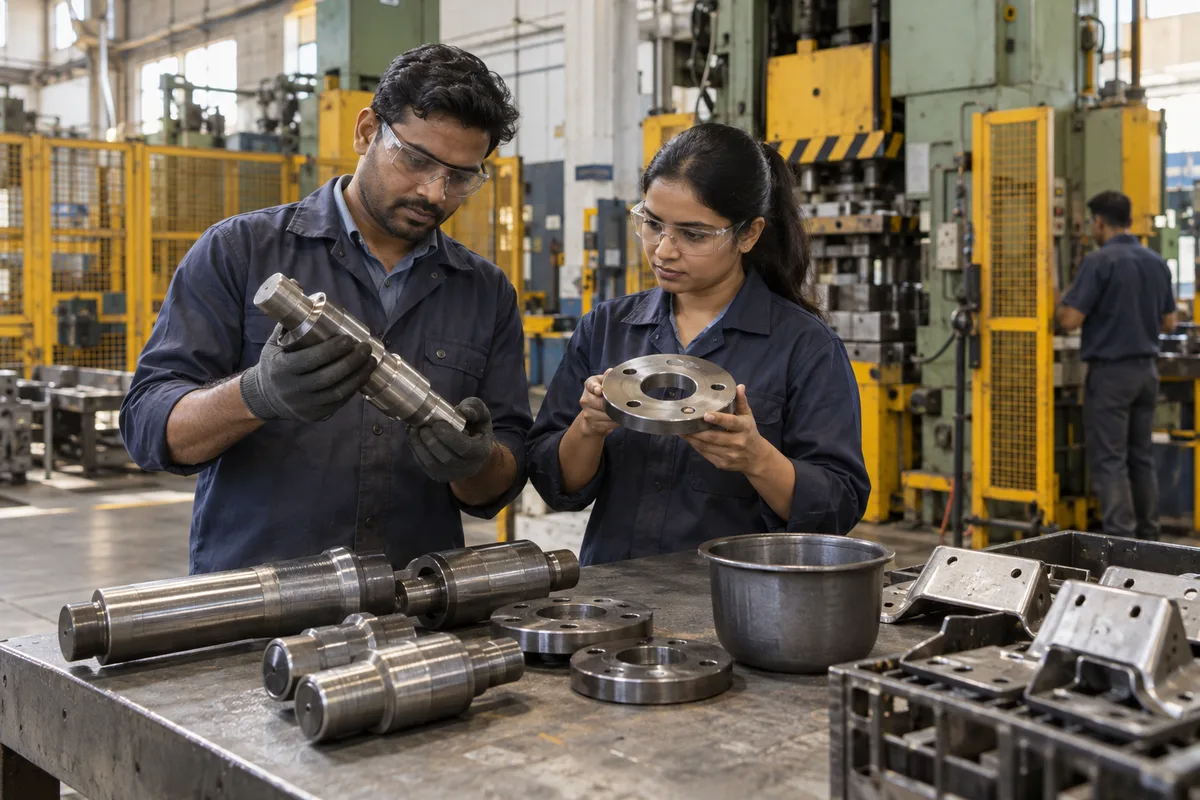
What lead generation means
Lead generation is the combined work of every channel that brings in a new enquiry, whether from search, adverts, referrals or a stall at an exhibition. GullySales runs these channels together and reports the number of enquiries each one produced, not the activity behind it.
Plan the next part of the work
Last updated 21 Nov 2026.
For metal forging companies
Where it usually goes wrong, and what we would do.
“A drawing is the real enquiry”
A message that says send rate for forgings is a fishing trip. The enquiry worth pricing carries a drawing, a grade, a finished weight and a yearly quantity. A forge that asks for those four items at first contact turns browsers away early and gives the estimating desk something it can price properly.
“Valve and machinery makers do not know you yet”
Auto and bearing customers already know where the forge is. The valve maker in Pune, the pump maker in Coimbatore and the gear shop in Rajkot also buy forged bodies and blanks, and none of them has your forge on a shortlist. Reaching them means naming the part each plant buys.
“Marketplace enquiries arrive thin”
Listings on IndiaMART and similar directories bring traders with a one-line need. Some stand in for a real plant buyer and some are price checks. A reply that asks for the drawing and the end use sorts the two without losing the genuine buyer.
“Idle press hours point to nearby buyers”
When the hammer or press has open capacity, the nearest buyers are past enquirers who asked for a quote and never ordered. Their details sit in old mailboxes and quote files. Going back to them with the billet sizes you can take is a shorter road than finding strangers.
What we do
What we deliver for metal forging companies.
The work available for this need. We agree the deliverables and responsibilities for your engagement in writing.
An enquiry route built around the drawing
A form and a WhatsApp prompt that ask for the drawing, grade, finished weight, yearly quantity and end use. Every enquiry lands with one named person.
Result: A buyer can send a complete enquiry in one message, and the log shows which fields were missing.
A researched buyer list outside your top customers
Valve, pump, gear, bearing and machinery makers in your region, matched to the forged parts each one buys.
Result: A named list that gives the part family to offer each plant.
A reply script for marketplace enquiries
Wording for IndiaMART and similar listings that asks for the drawing, the grade and the end use before a price goes out.
Result: A script the sales desk can paste, with the questions in a fixed order.
A lead log with forging fields
A sheet recording source, part, grade, finished weight, quantity, quote sent and outcome for every enquiry.
Result: The owner can read which source brought quotes and which brought trial lots.
A revival note for past enquirers
A short message to buyers who asked for a quote and went silent, naming the part they asked about and the capacity now open.
Result: A list of past enquirers with the part each one asked for.
How the result is measured
- Relevant enquiries by source
- Duplicate and unsuitable enquiries
- Time to the first response
- Accepted enquiries reaching an agreed next step
Recorded as a baseline before work starts, so every later report has an honest comparison.
What to capture or send
The details that tell a priceable forging enquiry from a fishing trip.
- Drawing or sample photograph
- A drawing lets the estimating desk cost the die. A photograph of an old part still lets you ask the right follow-up. Record which one arrived.
- Grade and standard
- Carbon steel, alloy steel or stainless, and the standard the buyer works to. It decides the billet, the heat treatment and whether the press can take the job.
- Finished weight and envelope
- The weight of the forged piece sets the hammer or press size. Capture it at first contact so a part outside your range is declined politely.
- Yearly quantity and lot size
- A one-off prototype and a standing schedule need different die decisions. Ask for the quantity before anyone talks about die cost.
- End use and sector
- A flange for a process plant and a blank for a gear shop carry different test needs. The answer also shows which buyer list this enquirer belongs to.
- Source of the enquiry
- Marketplace, referral, search, outreach or an old quote. Tag it at entry so the log shows which source brings drawings you actually quote.
Who it is for
This is written for these metal forging companies.
- Closed die forging shops for auto and two-wheeler components
- Open die forgers of shafts, rings and large blocks
- Ring rolling units making bearing races and flanges
- Valve and flange forgers for oil, gas and process plants
- Railway and heavy engineering forgers
- Hand tool and agricultural implement forgers
- Cold and warm forging units for fasteners and small precision parts
- Forge shops with in-house machining and heat treatment
Before you decide
When this may not be the right fit.
- Your estimating desk is one person who is also running the shop, so more drawings would sit unpriced and the buyers would go elsewhere.
- You cannot yet say which weights and grades your presses take, so enquiries outside your range would arrive and have to be turned away.
- Your press schedule is full this year and you are not taking new dies, so fresh enquiries would only create waiting lists.
Before you decide
Agree the work. Know how to judge it.
Lead generation for forging companies: use these checks to prepare, choose the scope, and review what changes.
Bring the right evidence
Define the organisations or buyers you can serve and the reasons they would consider a conversation. Bring examples of accepted and rejected prospects so the selection rule is visible.
Make the scope clear
Agree the research sources, contact approach, qualification rules, and handover. Clarify which meetings count as accepted and what happens to replies that are not ready to buy.
Check the work in use
Review why a prospect was selected and what was learned from the response. Count held, relevant conversations separately from contacts found, messages sent, or meetings booked.
Know when to change course
If the same objection appears repeatedly, adjust the offer or buyer group before increasing outreach. Respect a request to stop contact and keep the exclusion in the record.
These are discussion points, not a fixed package. GullySales confirms the deliverables, responsibilities, fee, and term in writing after reading your brief and speaking with you.
Before we start
What to have ready before the work starts.
The records, access and decisions this work needs from metal forging companies. Anything missing is noted in the written scope, with who will supply it.
- The quote register for the last year
- Every quote sent, with the plant, part, grade and result, in whatever form it exists. It shows which drawings turned into trial lots. If quotes are scattered across mails, the estimator collects them first, because the baseline depends on them.
- Press capacity by weight range
- A short sheet stating which presses or hammers run which weights and sections, and which are under maintenance. Outreach built on a wrong range brings drawings you cannot forge, and the buyer who learns that does not return.
- Marketplace login and enquiry history
- Access to the listing where thin enquiries arrive, with the messages of the last year. We read them to see what is asked and what is missing. If a former employee opened the account, recovering it comes first.
- A decision on the weight and section you decline
- Only you can say which parts are too light, too heavy or too complex to be worth a die. The reply and the website state it. If the limit is vague, the log fills with drawings that waste the estimator's time.
How it works
How the lead generation work runs
The work itself, in order. How an engagement starts, from your brief to a written scope, is set out on our method page.
- 1
Chart the press hours that sit idle
We begin with your production head and the press schedule, marking which presses and weight ranges wait for work and which are fully booked. You tell us the parts that leave the best margin. We write down the capacity we are looking to fill, so the search for drawings begins from the shop floor and not from a general wish for more enquiries.
- 2
Read the drawings that arrived last year
We lay the enquiries from the marketplace, mail and phone beside the quote register and mark which carried a drawing, a grade and a quantity. You show us which became trial lots. From this we learn which sources give real drawings and which give names only, and that count becomes the baseline.
- 3
List plants outside your top buyers
Using your product families, we research valve makers, pump builders, machinery and auto suppliers who forge or buy forged blanks within your weight range. You strike out plants you already serve or would not take. What remains is a named list with the part each plant is likely to use.
- 4
Write the first reply and the drawing request
The estimator and we write the first answer to a thin enquiry, asking for the drawing, grade, weight, quantity and machining allowance in plain words. You approve it. The same wording goes on the website form and the marketplace reply, so every source asks for the same four things.
- 5
Compare drawings by source with the starting count
We read the log against the figures recorded before the work: drawings received, die quotes sent and trial lots by source. You see which sources brought drawings the presses could take. Then you decide which route to widen, which to leave and which past enquirers to approach with a revival note.
Where this fits
Three pieces of sales work, in this order.
This work sits inside sales process design, at stage 1, prospecting and lead generation. The audit comes before it, and sales management keeps it running.
Step 1
Sales audit
Find where deals are being lost and what to fix first.
Start here if you cannot say where orders are lost.
Step 2 · you are here
Sales process design
One written way to sell, from first enquiry to repeat order.
Start here if every salesperson sells differently.
Step 3
Sales management
A target, a review routine and someone who owns the number.
Start here if the team has targets and no routine.
FAQ
Questions owners ask before they call.
Not here? More answers, or ask on WhatsApp.
Which enquiries deserve a full die quote?
Should we pay for marketplace listings?
Does lead generation matter if a few customers give us the bulk of the tonnage?
Our presses only take a limited weight range. Does that limit lead generation?
How do we reach new plants when a few customers give us the bulk of the tonnage?
How much does it cost?
How long is the contract?
How soon will we see results?
Who will actually do the work?
What do you need from us?
More for metal forging companies
Related work to consider.
Closest to this: leads and follow-up
Also for metal forging companies
Or start from the overview: sales and marketing for metal forging companies.
Your next practical step
Tell us what you are trying to grow, and we will read it before we call.
Eight short steps, mostly taps. Skip anything you would rather answer on the call.