How people choose in this industry
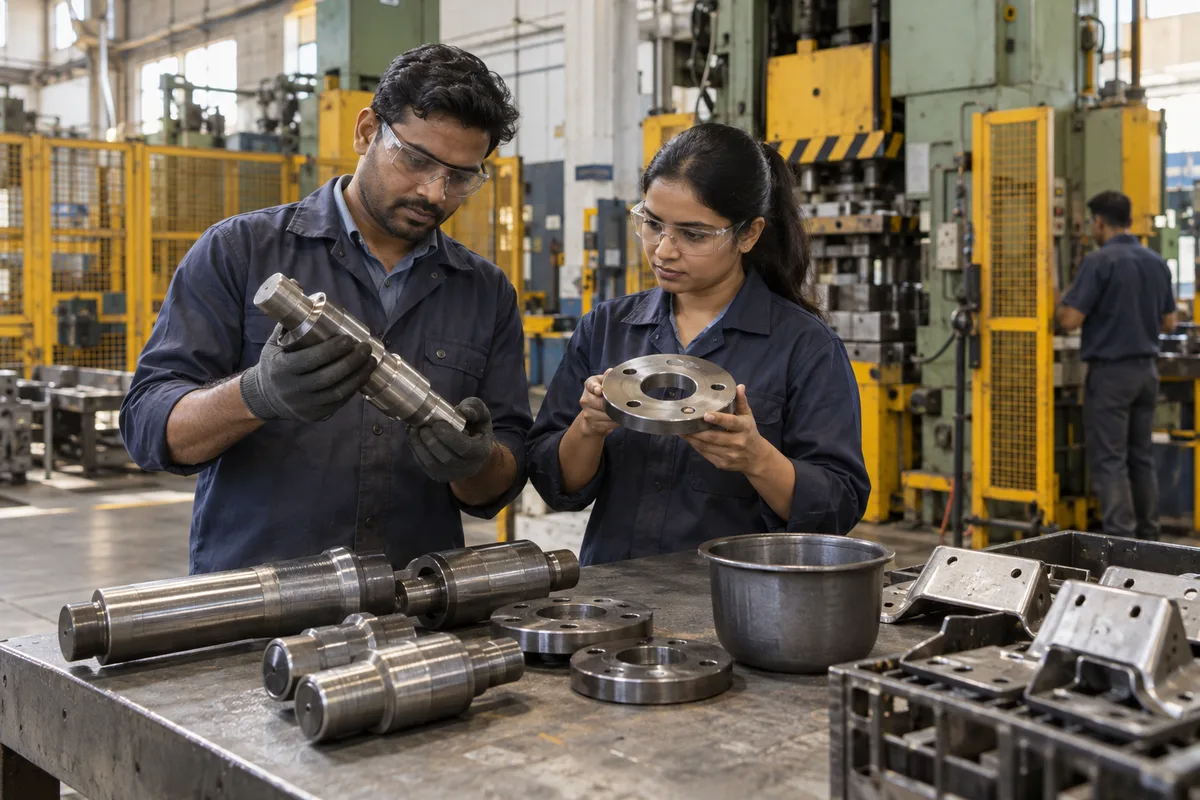
The buyer is a purchase head or a design engineer, with a quality head checking the paperwork. They search by process and part, such as ring rolled flanges, closed die forged gear blanks or open die forged shafts. They shortlist forges that list the equipment, the weight range, the grades and the certificates issued.
The commercial talk covers die cost, ownership, the piece price per kilogram or per part, and the machining allowance left on the forging. A buyer who machines the part in-house cares about grain flow, hardness and how consistent the allowance is. Oil and gas and railway buyers also ask about third party inspection and about traceability from billet to finished lot.
Repeat orders go to the forge that delivers to schedule, keeps the dies in good condition and sends the test certificate with the goods. A forge that is hard to reach when a lot is rejected is quietly moved down the vendor list.
The decision before implementation
Define the process and access permissions before changing software settings or adding automation.
Existing industry priorities to review
- Closed die forgings for auto and two-wheeler plants
- Flanges and valve bodies with test certificates
- Ring rolled bearing races and gear blanks
- Open die shafts and forged blocks
- Forgings with machining and heat treatment finished
These describe the industry's wider priorities. The written scope identifies which this service will address.