Rubber gasket manufacturers · Digital marketing
Put one plan behind search, listings, WhatsApp and the plant visit.
Digital marketing for a rubber gasket maker is the set of online routes by which plant stores, dealers and equipment makers find you and reach you. GullySales works on choosing the routes your buyers use and making each one end in an enquiry you can answer.
Scope, fee, reporting and term are agreed in writing after we have read your brief and spoken to you.
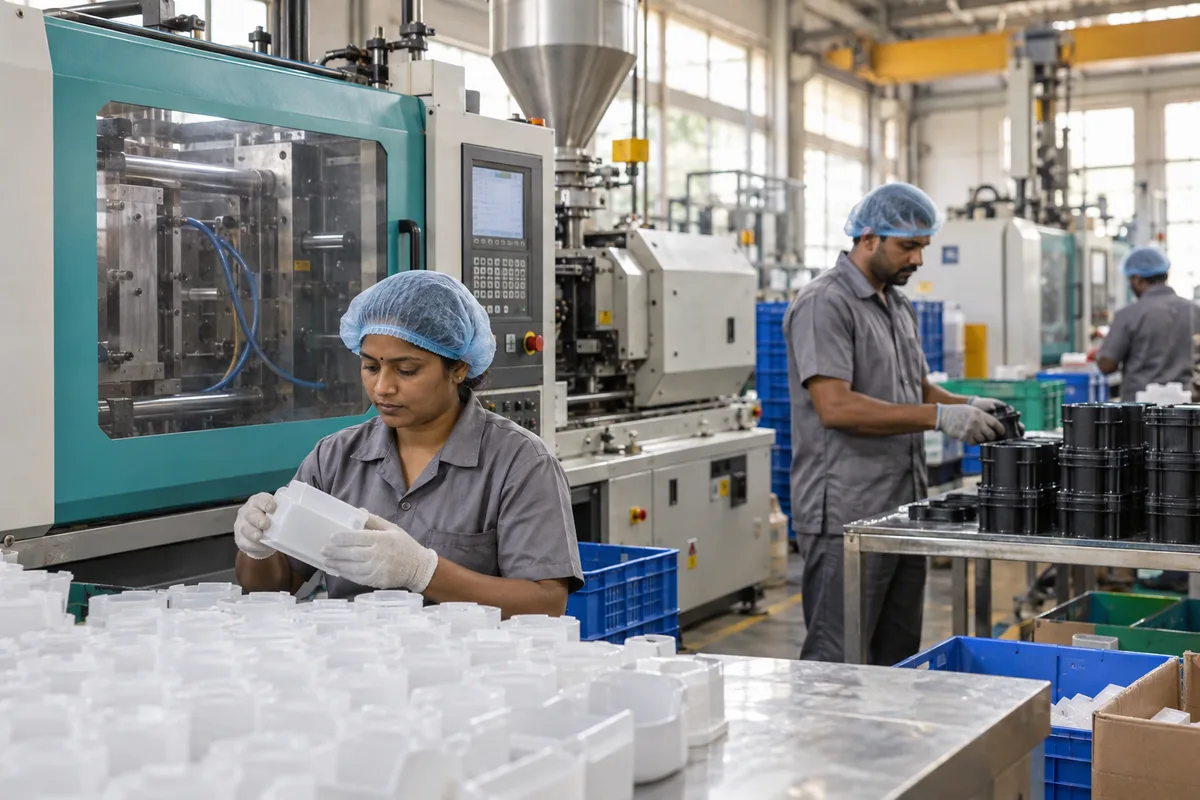
What digital marketing means
Digital marketing is the combined work of search, social media, advertising and website channels running together rather than as separate projects with separate people. GullySales runs these as one connected system so a change in one channel, such as a new offer, is reflected everywhere at once.
Also for rubber gasket manufacturers
- Buyer personas for rubber gasket manufacturers
- Lead generation for rubber gasket manufacturers
- SEO for rubber gasket manufacturers
- Local SEO for rubber gasket manufacturers
- Social media marketing for rubber gasket manufacturers
- Content marketing for rubber gasket manufacturers
- CRM for rubber gasket manufacturers
- Follow-up systems for rubber gasket manufacturers
Sales and marketing for rubber gasket manufacturers, the overview.
Last updated 14 Nov 2026.
For rubber gasket manufacturers
Where it usually goes wrong, and what we would do.
“Effort is spread across channels that do not meet”
A site, a marketplace listing, a social page and a WhatsApp number sit as four separate efforts with four different phone numbers. The buyer cannot tell they belong to one shop, and the enquiries scatter.
“Paid search works on exact parts”
A store typing a specific gasket and rubber into Google is close to buying. Paid placement on those exact phrases, sent to a page about that gasket, spends less on idle clicks than a broad advert for the whole shop.
“The plant visit and the screen are one journey”
The storekeeper who saw your sample board will search for your name afterwards on a phone. If the search shows an old address or a sparse site, the good work of the visit is lost at the first glance, before anyone calls.
“Marketplace spend needs a reply routine behind it”
More budget on IndiaMART or a similar listing only raises the volume of unanswered messages if nobody owns the reply. Spend should rise only after the reply routine has been tested on the enquiries already arriving.
What we do
What we deliver for rubber gasket manufacturers.
The work available for this need. We agree the deliverables and responsibilities for your engagement in writing.
A channel plan from your order mix
The routes that suit your buyers, such as search, marketplace, WhatsApp and visits, chosen from where your past orders actually began.
Result: You know which routes get your effort and which do not.
Google Ads on exact gasket searches
Paid search built around specific gasket types and rubber grades, with each advert sent to its own page.
Result: Spend goes to searches that name a part you cut.
A landing page per advert
A page for each advertised gasket with sizes, grades, a photograph and a click-to-call and WhatsApp button.
Result: Each click lands on the part that was searched.
Call and WhatsApp tap tracking
Tracking set up so that calls, WhatsApp taps and form fills are counted against the route that brought them.
Result: You can see which route produced an enquiry.
A single contact set across routes
One name, number and address used consistently across the site, listings, profiles and printed material.
Result: A buyer sees the same shop wherever they look.
A plain review of spend against enquiries
Your enquiry log set beside what each route cost, read together with your sales team before budget moves.
Result: Budget moves toward the routes that brought answerable enquiries.
How the result is measured
- Enquiries across channels
- Cost per enquiry overall
- Channel mix by contribution
Recorded as a baseline before work starts, so every later report has an honest comparison.
Searches your buyers type
Match each channel to the way a gasket buyer searches.
- gasket manufacturer [industrial area]
- A Maps profile and a search ad on exact part terms, landing on the matching page with call and WhatsApp buttons.
- EPDM gasket sheet supplier
- A page and an ad for dealers who buy sheet, stating thicknesses and minimum quantities.
- heat exchanger gasket replacement
- A landing page for dairy and beverage plants with a form that takes the plate model and a photograph.
- industrial rubber gasket on a marketplace
- A marketplace listing that links back to your own page, with a person named to answer within the working day.
- gasket supplier for shutdown maintenance
- A seasonal outreach to purchase heads before planned shutdowns, with a stock list and a rate sheet.
Who it is for
This is written for these rubber gasket manufacturers.
- Die-cut and punched flat gasket makers from rubber sheet
- Moulders of ring, O-ring style and custom profile gaskets
- Plate heat exchanger and clamp gasket makers for dairy and beverage plants
- Flange and manhole gasket makers for chemical and process plants
- EPDM and silicone gasket suppliers to pharma and food equipment makers
- Cutters supplying pump, compressor and boiler maintenance stores
- Makers of gaskets for pressure cookers and kitchen appliances
- Wholesale gasket sheet and cut-to-size dealers
Before you decide
When this may not be the right fit.
- You cannot answer a call or message on the day, and paid enquiries for breakdowns would be wasted.
- Your range is mainly one-off specials, and ads on standard parts would bring unsuitable enquiries.
- You do not track calls and chats, and spend would go on without a view of what works.
Before you decide
Agree the work. Know how to judge it.
Digital marketing for rubber gasket manufacturers: use these checks to prepare, choose the scope, and review what changes.
Bring the right evidence
Bring a recent won order and an enquiry that went nowhere. Trace how each buyer found you, what they asked, and who handled the next step. A channel list alone will not explain the difference.
Make the scope clear
Choose one offer and one buyer group first. Agree which part needs attention: being found, getting a useful enquiry, or turning an enquiry into an order. Separate recommendations from the work required to carry them out.
Check the work in use
A useful plan names the first change, its owner, the evidence behind it, and the number that will show whether it worked. Ask what has deliberately been left out and why.
Know when to change course
If your team cannot answer the enquiries it already receives, improve that handover before buying more traffic. If the offer itself is unclear, test it with buyers before adding channels.
These are discussion points, not a fixed package. GullySales confirms the deliverables, responsibilities, fee, and term in writing after reading your brief and speaking with you.
Before we start
What to have ready before the work starts.
The records, access and decisions this work needs from rubber gasket manufacturers. Anything missing is noted in the written scope, with who will supply it.
- Your press and cutting capacity
- What the bench and the press can take. Marketing beyond that brings buyers who wait for a date you cannot give. If the figure is unknown, we start modestly and widen the plan only as the bench shows room.
- A budget ceiling you have approved
- Name the amount you will test with. We do not suggest a figure. Without a ceiling we plan unpaid routes only. If the ceiling changes midway, tell us, because the plan then changes the routes rather than thinning all of them.
- Access to advert, search and map accounts
- The company, not an agency or an individual, should be the registered holder. Accounts under an agency or former employee delay the plan. The advert account, the search tools, the map profile and the website editor are each needed, and each must be reachable by the company.
- A record of past orders with sources
- A note of the source for each order, as far as you can recall. Rough notes work. Without them no route can be judged fairly later. Where the source is unknown, write unknown, because an honest gap is better than a guessed figure.
- A reply routine for marketplace enquiries
- A named person and a time to answer. Without one, marketplace spend brings enquiries that go cold. Late replies are the quickest way to waste what the routes bring in.
How it works
How the digital marketing work runs
The work itself, in order. How an engagement starts, from your brief to a written scope, is set out on our method page.
- 1
Look at the order mix before choosing channels
We begin with your order book. You tell us how orders split between regular stores, dealers and equipment makers, and which gaskets give the best return on press time. The channels are chosen to reach the buyers behind those orders. We also note which gaskets are slow to cut and which are quick, so the adverts lean towards work that fits your bench.
- 2
Check the site, listings and tracking
We look at the site on a phone, the map profile, the enquiry form and call tracking. Anything broken is listed with an owner. Advert money spent before these are fixed only sends visitors to a dead end. The check includes whether calls from the site are logged as calls, since a missed call is a lost enquiry.
- 3
Draw a scorecard in your terms
We write a one-page scorecard with enquiries, quotations sent, trials and orders, each with its source. Because you approve it, no one can later dispute whether clicks or calls are the measure. We keep to a handful of lines on it so that your sales head can read it at the counter without help from a specialist.
- 4
Write adverts for exact gasket searches
We draft search adverts for specific gasket types and sizes, and a landing page for each so the promise and the page match. You read each advert, and your production head checks the technical words. Each advert names the sizes you cut, so a buyer needing something else sees at once that you are not the right shop.
- 5
Set tap tracking on calls and messages
We add tracking to the call button and the message button, so each enquiry can be traced to its route, including enquiries from marketplaces. Your staff test the tracking by placing calls themselves. Landing pages are read at the same time, so the promise in the advert and the page match.
- 6
Reconcile spend with quotations and orders
We put each route's cost beside the quotations and orders it produced, using the figures recorded before the work began. You decide which route gets more attention.
Where this fits
Three pieces of sales work, in this order.
This work sits inside sales process design, at stage 0, foundation. The audit comes before it, and sales management keeps it running.
Step 1
Sales audit
Find where deals are being lost and what to fix first.
Start here if you cannot say where orders are lost.
Step 2 · you are here
Sales process design
One written way to sell, from first enquiry to repeat order.
Start here if every salesperson sells differently.
Step 3
Sales management
A target, a review routine and someone who owns the number.
Start here if the team has targets and no routine.
FAQ
Questions owners ask before they call.
Not here? More answers, or ask on WhatsApp.
Where should a small gasket maker start?
Is paid advertising worthwhile for gaskets?
Do we need all the channels?
Should a marketplace enquiry be treated differently?
How do we count a buyer who arrives by three routes?
Should our adverts quote a price?
How long is the contract?
How soon will we see results?
Who will actually do the work?
What do you need from us?
More for rubber gasket manufacturers
Related work to consider.
Closest to this: strategy and research
Also for rubber gasket manufacturers
Or start from the overview: sales and marketing for rubber gasket manufacturers.
Your next practical step
Tell us what you are trying to grow, and we will read it before we call.
Eight short steps, mostly taps. Skip anything you would rather answer on the call.