Transformer manufacturers · Social media
Post the factory floor and the test bay where purchase engineers already look.
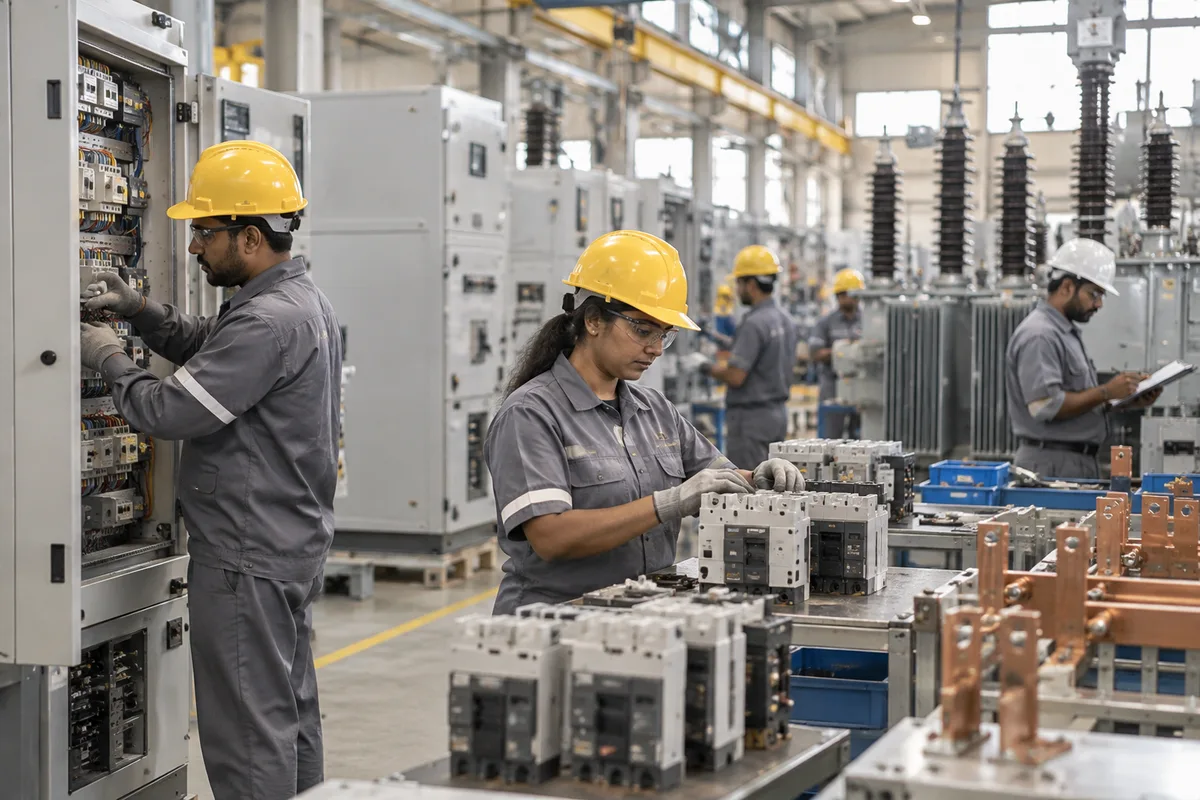
Social media for a transformer maker means showing the plant, the testing and the supply record to the engineers and contractors who follow industry names. GullySales plans the posts, drafts them from your own photographs and reports, and keeps the account consistent with the website.
Scope, fee, reporting and term are agreed in writing after we have read your brief and spoken to you.
What social media means
Social media is the ongoing posting your business does on platforms such as Instagram, Facebook and LinkedIn to stay visible to customers and prospects between purchases. GullySales plans a posting calendar, writes captions and designs the images so the page looks active and answers what a visitor would ask.
Also for transformer manufacturers
- Content marketing for transformer manufacturers
- Lead generation for transformer manufacturers
- SEO for transformer manufacturers
- Buyer personas for transformer manufacturers
- CRM for transformer manufacturers
- Follow-up systems for transformer manufacturers
- WhatsApp marketing for transformer manufacturers
- Digital marketing for transformer manufacturers
Sales and marketing for transformer manufacturers, the overview.
Last updated 14 Nov 2026.
For transformer manufacturers
Where it usually goes wrong, and what we would do.
“Buyers check a maker's LinkedIn before a visit”
An EPC purchase manager looks up a supplier before asking for a quotation. An account with plant photographs and dispatch pictures reads as a working factory, while an empty page raises doubt.
“A dispatch photograph is stronger than a slogan”
A loaded truck with a unit heading to a site shows capacity and delivery in one image. Your team already takes these photographs; they rarely reach a post.
“Engineers share technical explanations”
A short explainer on how oil is filtered before filling, or what a routine test checks, gets passed between engineers. It positions your people as the ones who know the work.
“Repair work needs its own posts”
A before-and-after of a rewound unit tells a plant engineer you can handle failures. Without these posts, the repair line stays invisible beside the supply business.
What we do
What we deliver for transformer manufacturers.
The work available for this need. We agree the deliverables and responsibilities for your engagement in writing.
A page-by-page profile set-up
Company profile on LinkedIn, plus Facebook and YouTube where your buyers are, with consistent name, description and website link.
Result: Each profile describes the same company in the same words.
A post bank from your plant
A set of post drafts built from your photographs, test reports and dispatch records, with your engineer approving each technical line.
Result: Your team picks from ready drafts instead of starting from blank.
Technical explainer posts
Short posts on winding, oil treatment, testing and installation, written from your engineers' notes.
Result: Each post can be traced to a source your engineers confirmed.
A repair showcase series
Posts on units received, work done and units returned, with the customer's permission.
Result: Repair work has its own visible record.
An enquiry route from every post
Each post points to a rating page or enquiry form on the website.
Result: A reader who is interested can reach your estimator in one click.
How the result is measured
- Posts published
- Engagement rate
- Enquiries from social profiles
Recorded as a baseline before work starts, so every later report has an honest comparison.
Posts and pieces to plan
Posts a transformer works can plan from what it already photographs.
- Core assembly on the shop floor
- A photograph of a core being stacked with a short caption on the steel used. It shows a purchase engineer what the unit is made of.
- Oil filtering and filling
- A short video or picture of the process with two lines on why it is done. Engineers share it, and the works engineer confirms the caption.
- Routine test in progress
- A post from the test bay naming the test and what it checks. It needs the test engineer's approval of the words, not a figure.
- A unit loaded for dispatch
- A truck, a unit and a destination type, such as a solar site, with the customer's permission if the site is named.
- A rewound unit before and after
- A repair post showing the stripped winding and the finished unit, so a plant engineer sees the workshop can handle a failure.
Who it is for
This is written for these transformer manufacturers.
- Distribution transformer makers supplying power utilities
- Power transformer manufacturers for industrial and substation use
- Dry-type and cast resin transformer makers
- Furnace, rectifier and special-duty transformer makers
- Solar and inverter-duty transformer manufacturers
- Transformer repair, rewinding and refurbishment workshops
- Instrument transformer makers
- Servo stabiliser and isolation transformer manufacturers
Before you decide
When this may not be the right fit.
- Nobody can approve technical captions, and a wrong detail on a transformer post is read closely by engineers.
- You plan to name customer sites and units without written permission, which the buyer may object to.
- Your buyers are tender officers who never look at social pages, and the effort would be better spent on tender papers.
Before you decide
Agree the work. Know how to judge it.
Social media marketing for transformer manufacturers: use these checks to prepare, choose the scope, and review what changes.
Bring the right evidence
Review the posts that produced useful conversations, not only the ones with the most views. Gather buyer questions and decide which team member can contribute credible material.
Make the scope clear
Choose the audience and channel before setting a posting volume. Agree who supplies material, approves posts, and handles messages, including complaints or questions the agency cannot answer.
Check the work in use
Follow a post through to the profile, website, and response. A useful report explains the quality of conversations and enquiries, alongside reach and engagement.
Know when to change course
If publishing takes time away from unanswered buyer messages, fix the response routine first. Do not expand to another channel without a clear reason for being there.
These are discussion points, not a fixed package. GullySales confirms the deliverables, responsibilities, fee, and term in writing after reading your brief and speaking with you.
Before we start
What to have ready before the work starts.
The records, access and decisions this work needs from transformer manufacturers. Anything missing is noted in the written scope, with who will supply it.
- A folder of dispatch and plant photographs
- Pictures of loaded trucks, finished units, the winding hall and the test bay are the raw material. Phone shots are acceptable if sharp and uncluttered. If a customer's nameplate or drawing shows, tell us. Without photographs we cannot draft the post bank, and posts would rest on stock images, which we do not use.
- Written permission for any customer site image
- If you want a unit shown at a customer's substation or plant, you need the customer's written consent first. Keep the email or letter. Without it, we show the unit in your yard only and leave the site out of the post.
- Names of engineers who may be profiled
- Buyers like to see the people who design and test the units. Give us the names and roles of those who have agreed to appear, with a line they approve. If nobody agrees, the account runs as a company page only, which is slower to build trust.
- Login to the company pages
- We need administrator access to your existing company page, or the name of the person who created it. Without admin rights we cannot edit the profile or read the post figures, and the first step becomes recovering the page.
- A list of customers who may be named
- Tell us which customers have said you may name them. A buyer may not want its supplier list shown. Anything not on the list stays unnamed in every post, and the plan relies on process and plant photographs instead.
How it works
How the social media work runs
The work itself, in order. How an engagement starts, from your brief to a written scope, is set out on our method page.
- 1
Audit the pages buyers will check first
We open your company page, the pages of your senior engineers and the accounts your competitors keep, the way a purchase manager does before a factory visit. We note what is missing, wrong or out of date, such as an old logo or a plant described in last decade's words. You choose the platforms to keep. The result is a short list of fixes and a clear decision on where to post.
- 2
Set up matching profiles on each platform
We write the company description, the product family list and the contact route for each platform you kept, in the same words as the website. You approve the text and name two or three engineers who may be shown. After this step, a buyer who looks you up on any platform finds the same company, with the same ratings and the same way to ask.
- 3
Walk the plant with a camera
A photo walk through the winding hall, core cutting, tanking, the test bay and the dispatch yard gives us the raw material for the post bank. Your plant head tells us which areas may be shown and which carry customer drawings or nameplates that must stay private. You decide which photographs are used and which are discarded.
- 4
Draft the technical explainer posts
From questions your estimators answer all the time, such as how to read a nameplate or what the cooling class means, we draft explainer posts in plain language. Your design head checks each statement of fact. We keep to general explanations and quote no standard clause or limit, since those are for the buyer to check.
- 5
Prepare the repair showcase posts
We write a small series on the repair and rewinding shop from your photographs of units under inspection, never naming the customer without their written consent. Each post describes the work done and what the plant is asked to send. The repair manager approves the text first. No post claims a result for any unit.
- 6
Trace enquiries back to posts
Each post carries a route to your enquiry form or a WhatsApp number with a source tag. After the posts have run, we read the enquiries in your register against the tags and note which posts brought a nameplate photograph or a quotation request. You then decide what to repeat, measured against enquiries before the work began.
Where this fits
Three pieces of sales work, in this order.
This work sits inside sales process design, at stage 0, foundation. The audit comes before it, and sales management keeps it running.
Step 1
Sales audit
Find where deals are being lost and what to fix first.
Start here if you cannot say where orders are lost.
Step 2 · you are here
Sales process design
One written way to sell, from first enquiry to repeat order.
Start here if every salesperson sells differently.
Step 3
Sales management
A target, a review routine and someone who owns the number.
Start here if the team has targets and no routine.
FAQ
Questions owners ask before they call.
Not here? More answers, or ask on WhatsApp.
Which platform matters most for us?
Can we show customer sites?
Can we post photographs of customer sites?
Does LinkedIn suit a small transformer maker?
Who posts on the account once it is running?
What if an engineer from a utility comments with a complaint?
How much does it cost?
How long is the contract?
How soon will we see results?
Who will actually do the work?
More for transformer manufacturers
Related work to consider.
Closest to this: content and social
Also for transformer manufacturers
Or start from the overview: sales and marketing for transformer manufacturers.
Your next practical step
Tell us what you are trying to grow, and we will read it before we call.
Eight short steps, mostly taps. Skip anything you would rather answer on the call.