Religious trusts · Social media
Post the festival, the seva and the accounts so the community sees the trust at work.
Social media marketing for a religious trust is the steady sharing of festival notices, seva work and project progress with the community on the platforms it already uses. GullySales works on what is posted, who approves it and how a response from a devotee reaches a trustee.
Scope, fee, reporting and term are agreed in writing after we have read your brief and spoken to you.
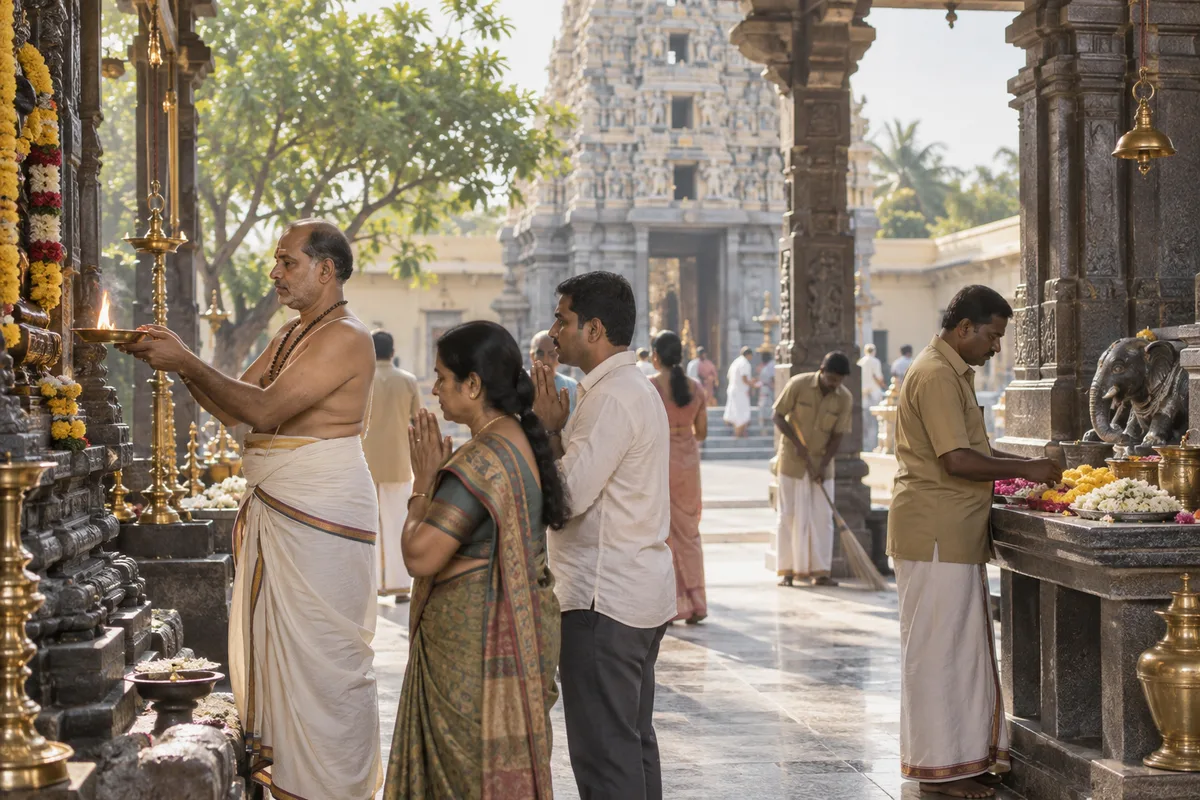
What social media means
Social media is the ongoing posting your business does on platforms such as Instagram, Facebook and LinkedIn to stay visible to customers and prospects between purchases. GullySales plans a posting calendar, writes captions and designs the images so the page looks active and answers what a visitor would ask.
Last updated 18 Oct 2026.
For religious trusts
Where it usually goes wrong, and what we would do.
“A greeting posted after the festival is a missed greeting”
Posts wait for three approvals, so the Navratri message appears when the days are over. A trust that writes its festival and anniversary posts ahead and has one name to approve them is present on the day itself.
“The audience is mixed in age and habit”
Elders see the trust through the family WhatsApp group, younger members through Instagram and relatives abroad through Facebook. A single post pasted everywhere reads awkwardly on each, so the same facts are shaped for the place where they will be read.
“Respect decides what can be shown”
Photographs of worshippers, of children in the school or of the sanctum need the consent of the people shown and the approval of the trustees. A trust that sets the rules once spares the volunteer from deciding the matter each time on the day.
“Likes are not gifts”
A festival film is shared widely and not one viewer knows how to give. A post that ends with the project, the cost and the route to the donation page converts attention into an enquiry a trustee can answer.
What we do
What we deliver for religious trusts.
The work available for this need. We agree the deliverables and responsibilities for your engagement in writing.
A festival and anniversary post calendar
The dates the community expects to hear from the trust, with drafts prepared ahead and sent for trustee approval.
Result: Greetings reach the community on the day, not after it.
A rule sheet for photographs and names
A short note on what may be shown, whose consent is needed and who gives the final yes for a person's image or a donor's name.
Result: A volunteer knows what to post and what to hold back.
Posts for each project, ending in the next step
Progress updates for the hall, the school fund or annadana, each pointing to the project page and to a person to ask.
Result: Each update has a clear next step for a reader.
A reply routine for comments and messages
Questions from devotees about timings, rooms and giving are answered by a named volunteer using agreed wording, and anything about money goes to the treasurer.
Result: No question sits unanswered under a post.
A record of what the posts brought
Enquiries and gifts traced back to the post or platform that prompted them, against the baseline recorded before the work started.
Result: Trustees can separate posts that drew enquiries from posts that only drew praise.
How the result is measured
- Posts published
- Engagement rate
- Enquiries from social profiles
Recorded as a baseline before work starts, so every later report has an honest comparison.
Posts and pieces to plan
The trust's posts show the festival, the work and the accounts.
- The morning abhishekam
- A short photograph set or video, filmed where the priests permit and without showing devotees' faces without consent.
- A festival preparation story
- Volunteers cleaning, cooking or decorating, posted with their agreement and a caption naming the festival.
- What the annadanam kitchen does
- A post on how meals are cooked and served, with the trust's name on the photograph of the kitchen.
- The school's annual day
- Photographs of the event, with permission from parents before children's faces are shown.
- A construction update
- A before and after of the renovation, with a plain statement of what is complete and what is not.
- A thank-you to volunteers
- A post naming those who agreed to be named, and showing what their time made possible.
Who it is for
This is written for these religious trusts.
- Temple trusts that manage one or more shrines
- Dharmashala and pilgrim rest-house trusts
- Trusts running schools, hostels or vedic pathshalas
- Goshala and cow-care trusts
- Samaj and community trusts of a caste or linguistic group
- Mutt and peetham trusts with branch centres
- Church and diocesan welfare trusts
- Dargah and mosque committees running schools and relief work
- Gurdwara management committees with langar and educational work
- Jain sangh and Parsi anjuman trusts running housing and hospitals
Not for
It is not the right fit if.
- No trustee has agreed what may be photographed inside the premises, so each post would wait for a decision.
- You plan to post images of beneficiaries and have no consent from them or their families.
- The trust wants to post donation targets and amounts, which it has not agreed to make public.
Before you decide
Agree the work. Know how to judge it.
Social media for religious trusts: use these checks to prepare, choose the scope, and review what changes.
Bring the right evidence
Review the posts that produced useful conversations, not only the ones with the most views. Gather buyer questions and decide which team member can contribute credible material.
Make the scope clear
Choose the audience and channel before setting a posting volume. Agree who supplies material, approves posts, and handles messages, including complaints or questions the agency cannot answer.
Check the work in use
Follow a post through to the profile, website, and response. A useful report explains the quality of conversations and enquiries, alongside reach and engagement.
Know when to change course
If publishing takes time away from unanswered buyer messages, fix the response routine first. Do not expand to another channel without a clear reason for being there.
These are discussion points, not a fixed package. GullySales confirms the deliverables, responsibilities, fee, and term in writing after reading your brief and speaking with you.
How it works
How the social media work runs
The work itself, in order. How an engagement starts, from your brief to a written scope, is set out on our method page.
- 1
Platform and access agreement
We confirm the audience and platforms covered, then check account ownership. You retain control of the pages and grant the access needed for the agreed work.
- 2
Content input handover
Your team supplies approved product information and usable images or footage. We review existing posts and agree who will answer factual questions during drafting.
- 3
Calendar approval
You review the proposed themes and response routes. Missing information is identified before posts enter production, rather than holding up a finished calendar.
- 4
Draft approval and publication
The named approver checks captions and creative files before scheduling. We also agree which replies can be sent directly and which need your team's decision.
- 5
Sales handover and content decisions
Buying questions go to the agreed sales contact with the conversation attached. Reported enquiries and sales feedback guide changes to the next calendar.
Where this fits
Three pieces of sales work, in this order.
This work sits inside sales process design, at stage 0, foundation. The audit comes before it, and sales management keeps it running.
Step 1
Sales audit
Find where deals are being lost and what to fix first.
Start here if you cannot say where orders are lost.
Step 2 · you are here
Sales process design
One written way to sell, from first enquiry to repeat order.
Start here if every salesperson sells differently.
Step 3
Sales management
A target, a review routine and someone who owns the number.
Start here if the team has targets and no routine.
FAQ
Questions owners ask before they call.
Not here? More answers, or ask on WhatsApp.
Which platform should a small trust choose?
Can we boost a festival post with ads?
Who decides what can be filmed during a ritual?
Is a social page worth it for a very small trust?
How much does it cost?
How long is the contract?
How soon will we see results?
Who will actually do the work?
What do you need from us?
What if we are not happy with the work?
More for religious trusts
Related work to consider.
Closest to this: content and social
Also for religious trusts
Or start from the overview: sales and marketing for religious trusts.
Your next practical step
Tell us what you are trying to grow, and we will read it before we call.
Eight short steps, mostly taps. Skip anything you would rather answer on the call.