Agricultural farms · Lead generation
Find the processor, caterer or trader who needs your crop before harvest begins.
Lead generation for a farm is the work of putting the crop in front of named bulk buyers who have a use for that grade, instead of waiting for whoever turns up at the mandi gate. GullySales researches buyers by crop and region, writes the introduction and keeps every reply in one list.
Scope, fee, reporting and term are agreed in writing after we have read your brief and spoken to you.
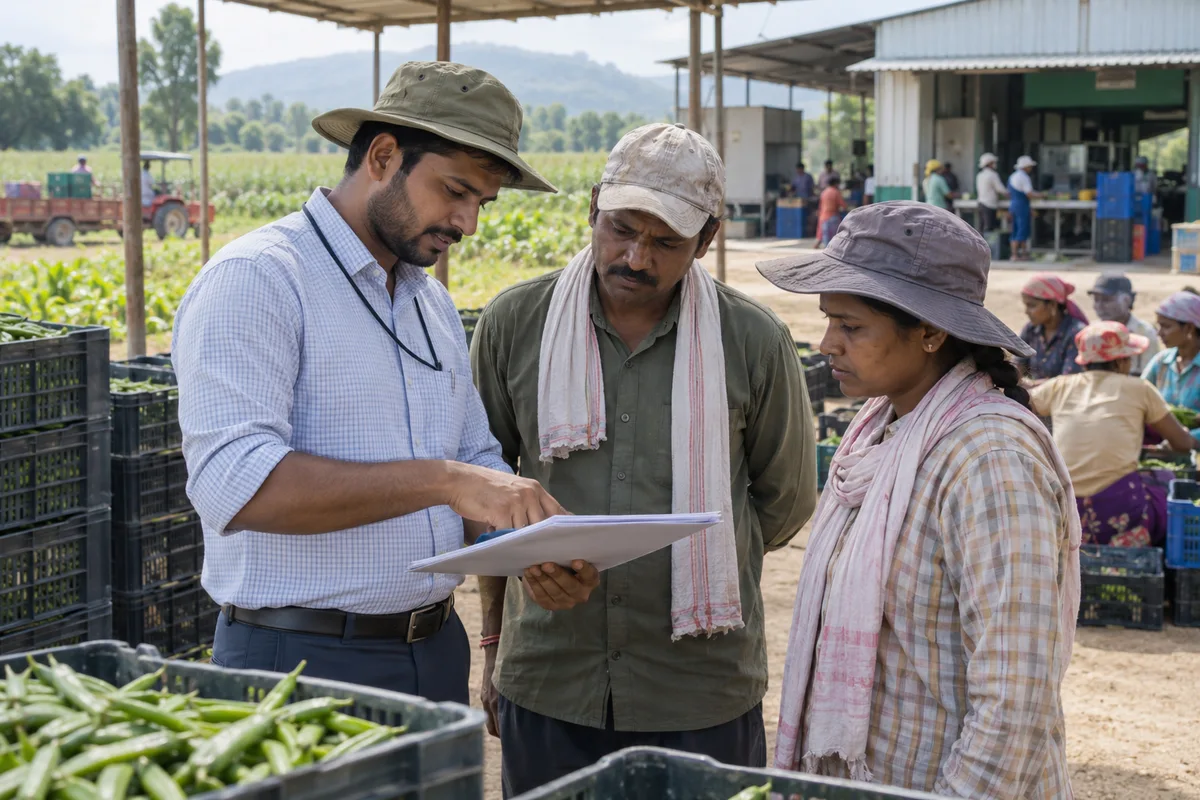
What lead generation means
Lead generation is the combined work of every channel that brings in a new enquiry, whether from search, adverts, referrals or a stall at an exhibition. GullySales runs these channels together and reports the number of enquiries each one produced, not the activity behind it.
Last updated 18 Oct 2026.
For agricultural farms
Where it usually goes wrong, and what we would do.
“A buyer needs a reason to ring a farm they have never heard of”
A purchase manager already has an agent who answers the phone. A farm earns a first call by naming the crop, the grade, the harvest weeks and a sample lot in the opening message, so the buyer has something to compare against the agent's offer.
“The right buyer depends on the crop, not the district”
A miller wants paddy of one moisture level, a hotel kitchen wants clean, even vegetables, a jaggery unit wants cane on a cutting schedule. A list built by district alone sends the wrong crop to the wrong desk and teaches buyers to ignore the farm.
“Harvest weeks swallow every enquiry”
The owner is in the field, the phone rings in the shed and the message sits unread. A lead that waits through harvest is a lead that ordered from the next farm, so reply cover has to be arranged before the crop is cut.
“One farm cannot fill a large order alone”
A retail chain asks for a volume the home acreage cannot reach. Without a plan for joining lots with neighbours or an FPO, the farm turns away the very buyer that would have stayed for seasons.
What we do
What we deliver for agricultural farms.
Every deliverable, what it covers for you, and the result it is there to produce. Nothing here is an extra.
A buyer list built crop by crop
Processors, wholesalers, caterers, institutional kitchens and sourcing desks that buy your crop, each with a contact person and the reason the buyer fits.
Result: You can open the list and see who buys what, and who has not yet been approached.
A first message for each type of buyer
One introduction for kitchens, another for mills, another for traders, each stating crop, grade, harvest weeks and the sample lot on offer.
Result: Every buyer type gets a message you have read and approved.
A sample lot rule
A written decision on lot size, who bears the carriage and what the buyer is asked to tell you after testing the lot.
Result: Whoever sends a sample sends it the same way each time.
A single enquiry sheet
Every call, message and forwarded contact entered in one place with the date, the crop asked about and the next step.
Result: No enquiry lives only in someone's phone.
A joint-supply proposal
A one-page note for neighbouring growers or an FPO, naming one coordinator who answers the buyer.
Result: A large buyer receives one reply, not five.
How the result is measured
- Enquiries generated
- Cost per enquiry
- Enquiries by source
Recorded as a baseline before work starts, so every later report has an honest comparison.
What to capture or send
What to record from a buyer before a quote leaves the farm.
- Crop, grade and quantity asked
- A mill manager asking for wheat and a caterer asking for tomatoes want different things. Record grade and quantity before any rate is spoken.
- Delivery place and date wanted
- A lot that must reach a hotel kitchen at dawn differs from one lifted from the farm gate. Note the place so the quote carries the transport.
- Buyer type and who decides
- Chef, purchase head, trader or factory clerk. Record the person who pays, since the one who tests the sample may not sign the order.
- Sample lot sent and date
- A sample with no note of the date becomes a lost sample. Record when it left and what lot it came from so the follow-up has a reference.
- Payment terms asked
- Cash on lifting, a cheque after delivery or credit. Write the ask down early so the farm decides before the harvest, not at the weighbridge.
- How the buyer heard of the farm
- Agent, neighbour, FPO, a search or a visit. The source shows which route sends buyers who place orders and which sends only price calls.
Who it is for
This is written for these agricultural farms.
- Vegetable growers supplying hotels, caterers and retail chains
- Grain and pulse farms selling to millers and traders
- Sugarcane and cash crop growers dealing with factories and jaggery units
- Oilseed and spice farms selling to processors
- Farms delivering to FPO collection centres
- Family farms moving from agent sales to direct buyers
- Large estates with several crops across the year
- Farm groups selling together under one brand name
Not for
It is not the right fit if.
- Your whole crop is already sold to an agent before harvest, so new buyers would be told there is nothing to supply.
- Nobody on the farm answers the phone during harvest weeks, so a buyer who calls would ring out and go elsewhere.
- You have no rule for who may take a sample lot, so each buyer would ask and the answer would change by who picks up.
How it works
How the lead generation work runs
The work itself, in order. How an engagement starts, from your brief to a written scope, is set out on our method page.
- 1
Understand your capacity
We ask how many enquiries your team can answer well, who answers after hours, and what a good enquiry looks like. Without this, the system fills a funnel nobody is watching.
- 2
Audit current sources
We read your call log, WhatsApp chats, enquiry sheet and platform dashboards. The baseline is recorded: enquiries by source, reply time, conversion and cost per order.
- 3
Strategise the channel mix
Search and maps are chosen for people ready to buy, ads for people who are not yet looking, and content and referrals for trust.
- 4
Implement capture and follow-up
Pages, forms, tags, the lead record and the first-reply message are built and tested end to end. We submit test enquiries ourselves before any media money is spent.
- 5
Measure and optimise
Enquiries are traced to source and judged by what became orders, not by volume alone. Channels that fill the sheet with poor enquiries are cut back. How often you are reported to is agreed in writing.
Where this fits
Three pieces of sales work, in this order.
This work sits inside sales process design, at stage 1, prospecting and lead generation. The audit comes before it, and sales management keeps it running.
Step 1
Sales audit
Find where deals are being lost and what to fix first.
Start here if you cannot say where orders are lost.
Step 2 · you are here
Sales process design
One written way to sell, from first enquiry to repeat order.
Start here if every salesperson sells differently.
Step 3
Sales management
A target, a review routine and someone who owns the number.
Start here if the team has targets and no routine.
FAQ
Questions owners ask before they call.
Not here? More answers, or ask on WhatsApp.
Do I have to give a sample to every buyer?
Will you fix the price for us?
We harvest in one short season. Is lead generation still worth doing?
How do we find buyers when our crop is the same as every farm in the block?
How soon will we see results?
Who will actually do the work?
What do you need from us?
What if we are not happy with the work?
More for agricultural farms
Everything else we would do for you.
Closest to this: leads and follow-up
Also for agricultural farms
Or start from the overview: sales and marketing for agricultural farms.
Your next practical step
Tell us what you are trying to grow, and we will read it before we call.
Eight short steps, mostly taps. Skip anything you would rather answer on the call.