Agricultural farms · Social media
Let a buyer watch the crop grow, the sorting and the loading before ever ringing you.
Social media for a farm is a record of the field, the harvest and the packing that a buyer can follow without a phone call. GullySales plans what to post, writes the captions and keeps the page tied to the buyer's next step.
Scope, fee, reporting and term are agreed in writing after we have read your brief and spoken to you.
What social media means
Social media is the ongoing posting your business does on platforms such as Instagram, Facebook and LinkedIn to stay visible to customers and prospects between purchases. GullySales plans a posting calendar, writes captions and designs the images so the page looks active and answers what a visitor would ask.
Last updated 18 Oct 2026.
For agricultural farms
Where it usually goes wrong, and what we would do.
“A buyer is judging the farm, not the feed”
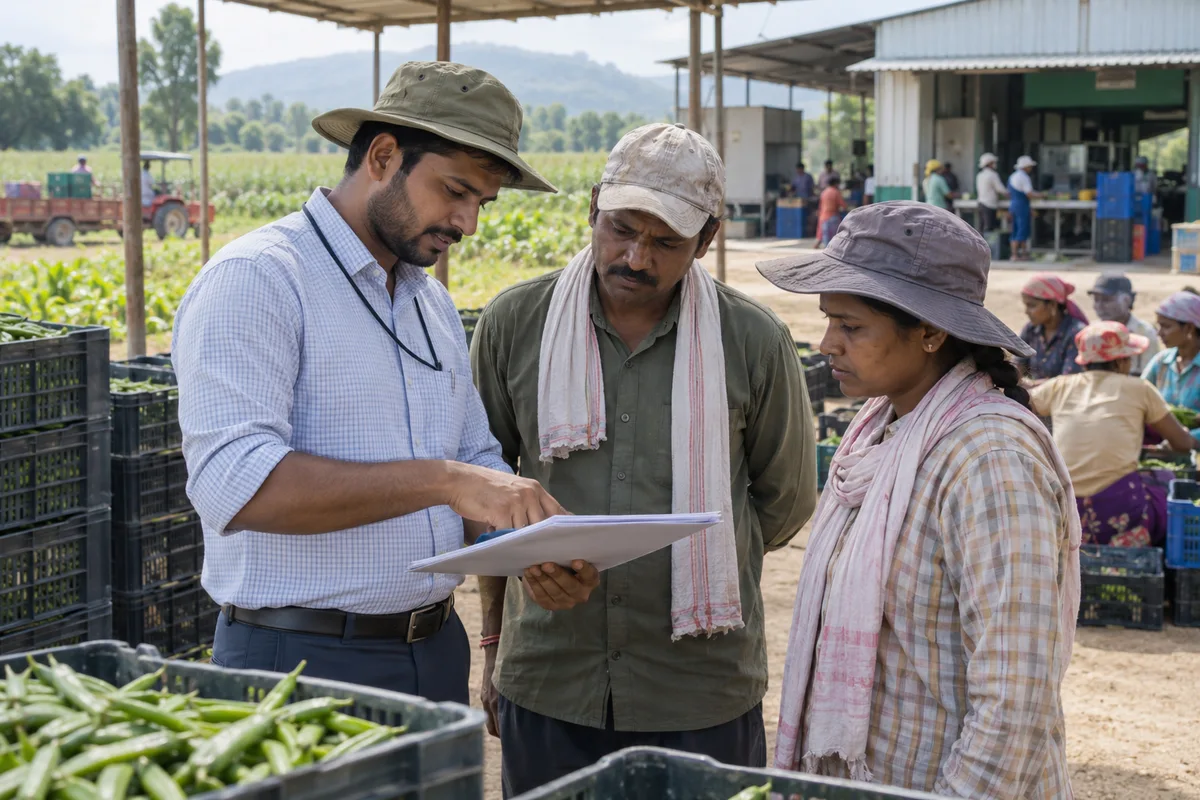
A purchase manager scrolls the page to see whether the crop is real, the sorting is careful and the loading is organised. Polished stock images answer none of those questions, while a dated field photograph answers all of them.
“Posting stops when harvest starts”
The weeks that matter most are the weeks nobody has time to post. A short list of what to photograph at each stage, set out before the season, keeps the page alive without a separate afternoon of work.
“The family and the farm hands are in the photographs”
Faces of workers and children need their consent, and a field photograph that shows a neighbour's land invites a quarrel. Decide beforehand what may be shown and who has agreed.
“A post with no way to order sends the buyer away”
A good picture of graded produce that gives no number, no crop sheet and no sample offer ends in a like. Every post needs one plain next step for a buyer who wants more.
What we do
What we deliver for agricultural farms.
Every deliverable, what it covers for you, and the result it is there to produce. Nothing here is an extra.
A stage-by-stage photo list
What to photograph at sowing, growth, harvest, grading, packing and loading, with the angle and caption that suits each.
Result: Whoever holds the phone knows what to capture.
A post plan for harvest weeks
A short run of posts written ahead for the weeks when nobody has time, scheduled in advance.
Result: The page does not go silent when the field gets busy.
Captions written for buyers
Crop, grade, packing and available quantity stated plainly, with a line pointing to the harvest calendar.
Result: A buyer reads the caption and knows what is on offer.
A consent note for faces and neighbouring land
A written rule on whose photographs may appear, on what is blurred or left out, and who gives permission.
Result: The team shares the rule before posting.
A reply routine for comments and messages
A short guide to who answers, what is said about price and where serious enquiries are moved.
Result: A buyer's comment gets an answer from a named person.
How the result is measured
- Posts published
- Engagement rate
- Enquiries from social profiles
Recorded as a baseline before work starts, so every later report has an honest comparison.
Posts and pieces to plan
The photographs and clips a buyer watches before ringing the farm.
- The crop at flowering or fruit set
- A photograph with the date and field named in the caption. Proof is the plant itself, shown from the ground, not a close-up of one good fruit.
- Sorting and grading under the shed
- A short clip of the grading table. A buyer sees how the lot is split and what the reject pile looks like, which a rate sheet cannot show.
- Weighing at the farm gate
- A post of the scale and the crates before loading. It tells a trader the farm weighs openly, which settles a common doubt.
- Loading at first light
- A clip of the crates going onto the truck, with the day and the buyer type. Show the hands at work, with consent from the people in view.
- Harvest calendar for the next crop
- A post naming the crop and the months it will be ready. A buyer plans a standing order from this and sees you as a planner.
Who it is for
This is written for these agricultural farms.
- Vegetable growers supplying hotels, caterers and retail chains
- Grain and pulse farms selling to millers and traders
- Sugarcane and cash crop growers dealing with factories and jaggery units
- Oilseed and spice farms selling to processors
- Farms delivering to FPO collection centres
- Family farms moving from agent sales to direct buyers
- Large estates with several crops across the year
- Farm groups selling together under one brand name
Not for
It is not the right fit if.
- The farm hands and family do not agree to appear in photographs, so the posts would have to avoid the very work buyers want to see.
- Nobody can reply to a message during harvest weeks, so a post that draws a buyer would leave the question unanswered.
- You would post a rate on a crop whose price changes each morning, which would bind you to a figure that no longer holds.
How it works
How the social media work runs
The work itself, in order. How an engagement starts, from your brief to a written scope, is set out on our method page.
- 1
Confirm audience, platforms and access
We note which platforms your buyers use and check that the pages sit under your own business accounts, with you as owner and us as added roles.
- 2
Review the current presence
We read the existing pages, the posts that drew replies and the gaps in posting.
- 3
Build the calendar
Themes, formats and dates are set out for your approval, with space for offers and news.
- 4
Create, approve and publish
Posts are made, approved by you and scheduled. Replies to the public are handled in your voice.
- 5
Record enquiries and adjust
Enquiries are logged against the post or platform where they began, and the mix changes to follow what brings them.
Where this fits
Three pieces of sales work, in this order.
This work sits inside sales process design, at stage 0, foundation. The audit comes before it, and sales management keeps it running.
Step 1
Sales audit
Find where deals are being lost and what to fix first.
Start here if you cannot say where orders are lost.
Step 2 · you are here
Sales process design
One written way to sell, from first enquiry to repeat order.
Start here if every salesperson sells differently.
Step 3
Sales management
A target, a review routine and someone who owns the number.
Start here if the team has targets and no routine.
FAQ
Questions owners ask before they call.
Not here? More answers, or ask on WhatsApp.
Which platform should a farm use?
Should we post prices?
Can we show pesticide or fertiliser use?
Can we show the neighbouring farm in the background?
How long is the contract?
How soon will we see results?
Who will actually do the work?
What do you need from us?
What if we are not happy with the work?
More for agricultural farms
Everything else we would do for you.
Closest to this: content and social
Also for agricultural farms
Or start from the overview: sales and marketing for agricultural farms.
Your next practical step
Tell us what you are trying to grow, and we will read it before we call.
Eight short steps, mostly taps. Skip anything you would rather answer on the call.