B2B SaaS startups · Inbound marketing
Let the buyer who is stuck on a task find you before they find a rival.
Inbound marketing for a software startup draws buyers in with guides and pages that answer the questions asked when a job has become painful, then offers a trial or demo to those who want one. GullySales builds the path from question to page to form to follow-up, and hands the right contacts to whoever sells.
Scope, fee, reporting and term are agreed in writing after we have read your brief and spoken to you.
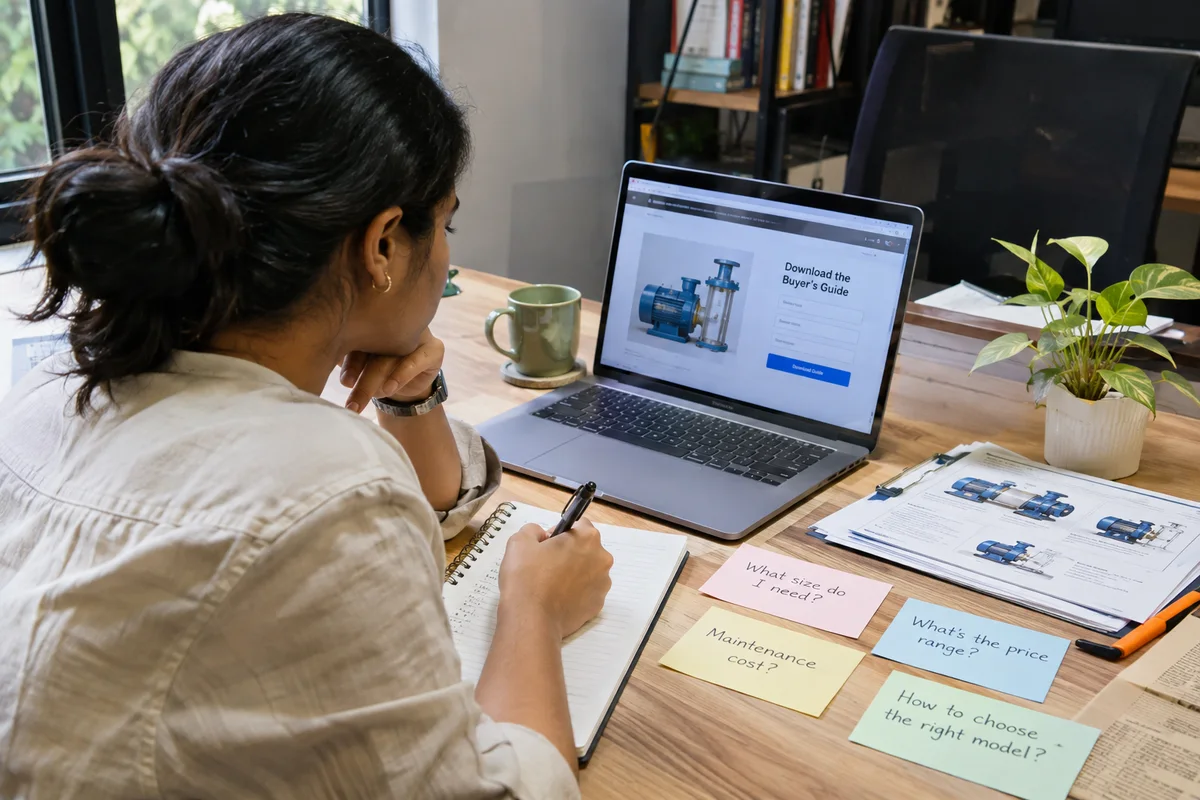
What inbound marketing means
Inbound marketing draws buyers to you with guides, pages and search results that answer their questions, then asks for their details in return for something useful. GullySales builds the whole path: the question list, the guide, the form, the follow-up after a download, and the hand-over to your salesperson.
Also for B2B SaaS startups
- Lead generation for B2B SaaS startups
- CRM for B2B SaaS startups
- Follow-up systems for B2B SaaS startups
- Deal risk assessment for B2B SaaS startups
- Sales escalation process design for B2B SaaS startups
- Sales approval workflow design for B2B SaaS startups
- CPQ consulting for B2B SaaS startups
- Webinar-to-pipeline conversion operations for B2B SaaS startups
Sales and marketing for B2B SaaS startups, the overview.
Last updated 14 Nov 2026.
For B2B SaaS startups
Where it usually goes wrong, and what we would do.
“The blog follows the founder's thesis, not the buyer's task”
Posts about where the market is going please investors. The person with an overwritten spreadsheet types a plain question about merging files or tracking approvals. A page that answers that question in the same words gets found; a thought piece does not.
“Gated guides collect addresses and no context”
A checklist behind a form gains an email and little else. Asking one extra question, such as what the visitor is trying to fix, lets the follow-up mention it, and tells your team whether the reader was a student or a buyer.
“Comparison pages are written from the vendor's side”
A buyer shortlisting tools wants differences stated plainly, including where your product is not the right fit. A page that praises only itself gets closed. One that names the buyer's trade-offs earns a second read.
“A download is followed by silence”
The guide is sent, and nothing comes after it. The reader who needed help next week has moved on by then. A short follow-up that offers the next useful page, and later a demo, keeps the conversation going without pressure.
What we do
What we deliver for B2B SaaS startups.
The work available for this need. We agree the deliverables and responsibilities for your engagement in writing.
Buyer question list from real conversations
Questions taken from demo calls, trial support chats, sales emails and search suggestions, ranked by closeness to a purchase.
Result: Every planned page traces back to a question a real person asked.
Problem pages and buying guides
One page per chosen question, written in the buyer's words and checked by your product lead for accuracy.
Result: A reader can tell within the first screen whether the page covers their job.
Comparison and alternatives page
A fair, plain comparison of ways to do the job, including the spreadsheet and the larger tools, with a note on who your product suits and who it does not.
Result: Your sales team can send it to a buyer who is weighing options.
Offer, form and thank-you pages
A short form per guide, asking only what sales needs, with a plain statement of what the person receives and how to stop it. Wording is written for your adviser to check against data-protection law.
Result: Each form submission arrives with its source page recorded.
Follow-up message sequence
A few messages after a download, each offering one next useful step, with a clear way to opt out.
Result: You can see which message drew a reply.
Hand-over rule to sales
A written agreement on which contacts the founder or sales lead calls, and which stay on the reading path.
Result: Nobody receives a sales call who only wanted a checklist.
How the result is measured
- Visits to guide pages, by question
- Form submissions per offer, separate from downloads that need no form
- Contacts with a recorded source page
Recorded as a baseline before work starts, so every later report has an honest comparison.
Who it is for
This is written for these B2B SaaS startups.
- Early-stage SaaS selling to Indian SMEs and mid-market firms
- Vertical SaaS for one trade, such as clinics, schools, dealers or builders
- Developer tools and APIs sold to engineering teams
- HR, payroll and compliance software for growing companies
- Finance and accounting tools sold through CA firms
- Indian-built SaaS selling to buyers in the US, UK or Middle East
- Spin-offs from services firms that turned an internal tool into a product
- Bootstrapped founders who have not raised and cannot hire a sales team yet
Before you decide
Agree the work. Know how to judge it.
Inbound marketing for B2B SaaS startups: use these checks to prepare, choose the scope, and review what changes.
Bring the right evidence
Define the organisations or buyers you can serve and the reasons they would consider a conversation. Bring examples of accepted and rejected prospects so the selection rule is visible.
Make the scope clear
Agree the research sources, contact approach, qualification rules, and handover. Clarify which meetings count as accepted and what happens to replies that are not ready to buy.
Check the work in use
Review why a prospect was selected and what was learned from the response. Count held, relevant conversations separately from contacts found, messages sent, or meetings booked.
Know when to change course
If the same objection appears repeatedly, adjust the offer or buyer group before increasing outreach. Respect a request to stop contact and keep the exclusion in the record.
These are discussion points, not a fixed package. GullySales confirms the deliverables, responsibilities, fee, and term in writing after reading your brief and speaking with you.
Before we start
What to have ready before the work starts.
The records, access and decisions this work needs from B2B SaaS startups. Anything missing is noted in the written scope, with who will supply it.
- Notes and tickets that hold buyer questions
- A set of recent call notes, chat logs and support tickets in which buyers asked questions in their own words. Rough material is fine. Without it the list of questions is invented, and the guides answer what you wish buyers asked instead of what they do. Tag each by the buyer's stage if you can, such as researching the problem or comparing vendors. Customer names can be removed if you prefer, since we need the wording and not the identity.
- A sandbox or sample data to share
- A way for a reader to see the product working without your help, such as a sandbox login, a sample workbook or a recorded walkthrough. If you have none, we plan the offer around a checklist, and the guide has less to lead into. A short recorded walkthrough is acceptable if a sandbox is not possible, though it is a weaker offer. The reader should reach the first useful result without help.
- A named person to answer follow-up questions
- The person who replies when a reader answers a message in the sequence, with permission to hold a call. Without a name, replies go unread and the sequence becomes a one-way broadcast that readers soon mute. Ideally this is someone from sales or product who knows the answers, not a shared inbox. Tell them in advance that readers may ask hard questions about price or data, and agree what they may say about both.
- Your approval on what stays gated
- A decision on which pieces are free to read and which ask for an email address. We give our reasons, but the call is yours. Without it, we assume everything is open, and the form-based offer is dropped until you choose. Mention any piece already behind a form and how many addresses it collected, since that history shows whether gating has been useful. We then keep or remove that gate.
- Facts about the alternatives buyers consider
- What you know about the other options your buyers weigh, including spreadsheets and in-house builds, drawn from lost-deal notes. Without it, the comparison page repeats generic points, and buyers who came to compare leave without reading it. Names of the products, spreadsheets and habits that rivals' customers talk about help too, as do reasons buyers gave for choosing someone else. Written reasons from lost deals are the best source we can use.
How it works
How the inbound marketing work runs
The work itself, in order. How an engagement starts, from your brief to a written scope, is set out on our method page.
- 1
Write down the questions buyers asked
We collect the questions buyers raised in calls, chats and support tickets, with the words they used, and sort them by how far along in a decision the person was. You strike questions you do not want to answer in public. The approved list becomes the base for every guide and page. Questions that repeat across several conversations move to the top of the list. Each carries a note of who asked.
- 2
Pick the guide and the offer
We choose the first guide and the offer that sits beside it, such as a worked example, a checklist or a short sandbox, and explain why. You approve what is given away and what stays behind a form. The aim is a download that carries a reason to reply. The decision is written with the reader's likely next question, so the offer leads into a conversation and not a dead end.
- 3
Build the form and the follow-up
We build the form to ask for the least that sales needs, set up the thank-you page, and write the sequence of messages that follows a download. The sequence answers the next question a reader would have. You read every message before it is switched on. The form is tested on a phone, since a software buyer may open a link from WhatsApp. Each message links back to the guide that started the conversation.
- 4
Write the comparison page honestly
We draft the comparison and alternatives page from the buyer's side, including the cases where another approach suits them better, such as a spreadsheet or an in-house build. Your product lead reads every line about your own product. Statements about others come from their public pages only. Where your product is the wrong choice, the page says so and names the circumstances, which readers trust more than a page where every row favours you.
- 5
Test the path from reader to rep
We follow a test reader from the guide to the form, the thank-you page, the first message and the hand-over to a salesperson in the CRM. You and the salesperson note what a real reader would find confusing. We fix it before the guide is promoted anywhere. Anything that fails is written down with the fix, and you retest it yourself on a phone from outside your office network.
- 6
Review who answered and who stayed silent
We read downloads, replies and demos against the figures from before the work, and ask the salesperson what readers said when they replied. You decide whether to write the next guide, rewrite the current one or change the offer. Silent downloads are examined for the cause. The salesperson's notes on what readers said are read beside the numbers, because a quiet reader may still have been useful. Pages with visits but no replies are read first.
Where this fits
Three pieces of sales work, in this order.
This work sits inside sales process design, at stage 0, foundation. The audit comes before it, and sales management keeps it running.
Step 1
Sales audit
Find where deals are being lost and what to fix first.
Start here if you cannot say where orders are lost.
Step 2 · you are here
Sales process design
One written way to sell, from first enquiry to repeat order.
Start here if every salesperson sells differently.
Step 3
Sales management
A target, a review routine and someone who owns the number.
Start here if the team has targets and no routine.
FAQ
Questions owners ask before they call.
Not here? More answers, or ask on WhatsApp.
How is this different from content marketing?
Will this fill the pipeline soon?
Who answers when a reader asks a follow-up question?
Do we have to give away our best ideas?
What if nobody replies to the sequence?
How much does it cost?
How long is the contract?
How soon will we see results?
Who will actually do the work?
What do you need from us?
More for B2B SaaS startups
Related work to consider.
Closest to this: leads and follow-up
- Lead generation for B2B SaaS startups
- CRM for B2B SaaS startups
- Follow-up systems for B2B SaaS startups
- Deal risk assessment for B2B SaaS startups
- Sales escalation process design for B2B SaaS startups
- Sales approval workflow design for B2B SaaS startups
- CPQ consulting for B2B SaaS startups
- Webinar-to-pipeline conversion operations for B2B SaaS startups
Also for B2B SaaS startups
Or start from the overview: sales and marketing for B2B SaaS startups.
Your next practical step
Tell us what you are trying to grow, and we will read it before we call.
Eight short steps, mostly taps. Skip anything you would rather answer on the call.