Cinema halls and multiplexes · CRM
Keep every group enquiry in one list so no booking dies on a personal phone.
A CRM for a cinema hall is a simple record of every group, school, company and private enquiry: who asked, what they wanted, what was quoted and what happens next. GullySales sets up the fields, the stages and the reminders that fit a hall's booking cycle.
Scope, fee, reporting and term are agreed in writing after we have read your brief and spoken to you.
What CRM means
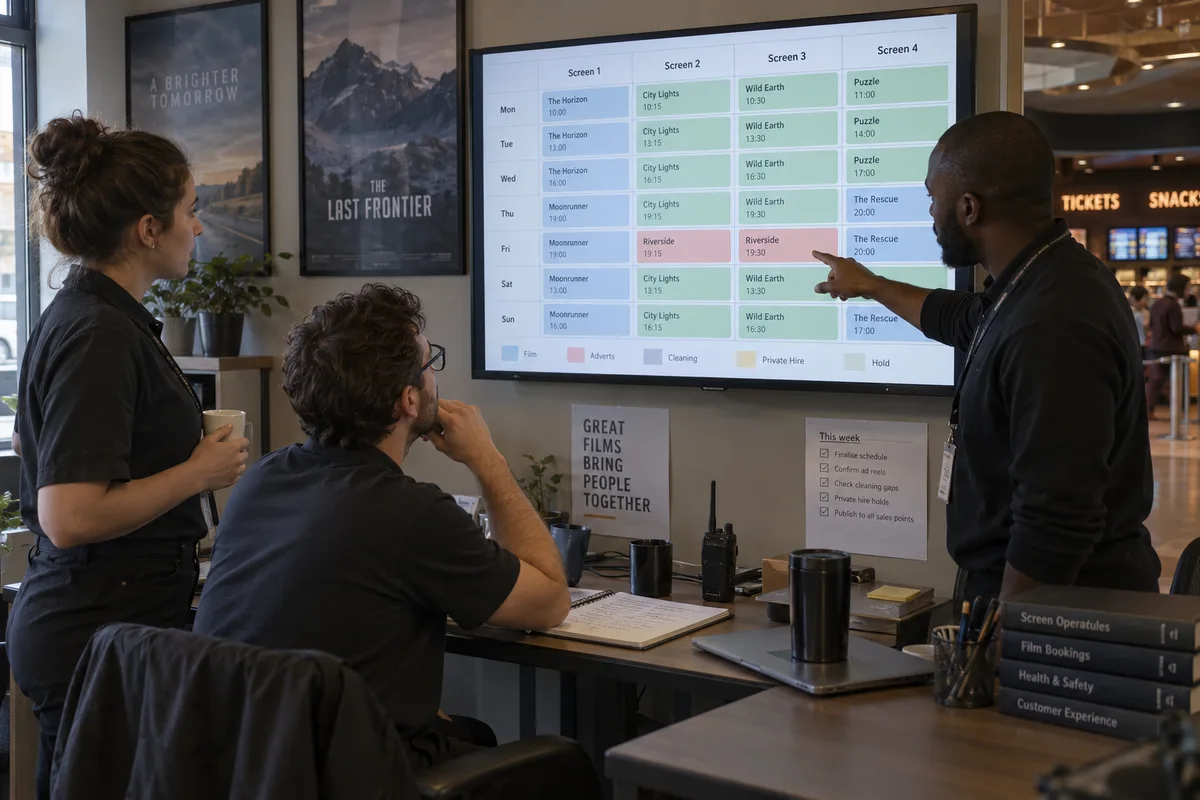
A CRM is the record where every enquiry, call and quote is kept against a customer, replacing separate notebooks, spreadsheets and memory. GullySales sets up or cleans an existing CRM and reports from it by enquiry outcome rather than by activity logged.
Also for cinema halls and multiplexes
Sales and marketing for cinema halls and multiplexes, the overview.
Last updated 22 Oct 2026.
For cinema halls and multiplexes
Where it usually goes wrong, and what we would do.
“The manager's WhatsApp is not a system”
A corporate enquiry that lands on one phone waits through a busy show day. If that person is away, no one else sees the message. A shared list gives the whole desk the same view.
“A quote without a follow-up goes cold”
A buyer who asked for a rate and heard nothing after the first reply books elsewhere. A reminder to chase the quote is what keeps the booking alive.
“Repeat organisers are your best leads”
A school or a club that held a screening last year is a ready buyer for the next. The hall that remembers who booked and what they liked can write to them at the right moment.
“Film-fan lists need consent and care”
A list of regulars who want to hear about special shows is useful only if they agreed to be on it and can leave it. Messages to people who did not ask damage the hall's name.
What we do
What we deliver for cinema halls and multiplexes.
Every deliverable, what it covers for you, and the result it is there to produce. Nothing here is an extra.
A booking enquiry pipeline
Stages from new enquiry to quoted, confirmed, held and followed up, using fields the hall already collects.
Result: Every enquiry can be placed at a stage the team agrees on.
A contact record for each organiser
Name, organisation, past bookings, preferences and notes in one record.
Result: The desk sees the history before replying.
Reminders for quotes and repeat approaches
Dated prompts to chase an open quote and to approach past organisers before a likely booking period.
Result: No quote or past customer is forgotten.
A consented list of film regulars
A list with the source and consent noted for each person who asked for show alerts.
Result: The hall messages only people who agreed to hear from it.
A simple view of group business
A count of enquiries, quotes and confirmed bookings by source.
Result: The owner sees which routes bring group bookings.
How the result is measured
- Enquiries logged in the CRM
- Data completeness
- Reports generated from CRM data
Recorded as a baseline before work starts, so every later report has an honest comparison.
Fields worth keeping
A cinema's group booking record holds the occasion, the date and the quote.
- Organiser name and role
- Filled by whoever takes the call. It separates a parent from a school coordinator, who needs an invoice and an approval chain.
- Occasion and headcount
- Entered at the first message. The manager uses it to match the enquiry to a screen and a food plan before quoting.
- Requested date and alternate dates
- Captured at intake. It lets the programming desk see which holds clash with a film release before the quote goes out.
- Quote sent and its status
- Updated by the manager. It stops a second person quoting a different rate for the same screen on the same day.
- Past event and repeat month
- Filled after the event. It marks the organiser to approach before the next birthday, school year or festival.
Who it is for
This is written for these cinema halls and multiplexes.
- Single-screen theatres in district towns and old city centres
- Multiplex operators with two to six screens inside malls
- Independent multiplexes in tier-2 and tier-3 towns
- Premium and recliner screens with in-seat food service
- Cinema halls that rent screens for private shows
- Halls that specialise in regional-language films
- Cinema halls inside colleges, clubs or large campuses
- Open-air and seasonal screening operators
Not for
It is not the right fit if.
- Enquiries come at the rate of a few a month, and a notebook with a named owner would serve better than a system.
- The hall has not agreed who sets rates, so records would hold quotes that contradict one another.
- Film-fan lists are already being kept without consent, which a new system would only make larger and riskier.
How it works
How the CRM work runs
The work itself, in order. How an engagement starts, from your brief to a written scope, is set out on our method page.
- 1
Map the sales process
We sit with the people who sell and write down how a deal moves from enquiry to payment, including where it stalls.
- 2
Agree stages, fields and owners
Each stage gets a name your team already uses and a proof that the deal has left it. We agree which fields are required at which stage, and who may change what.
- 3
Build on a copy
Pipeline, fields and views are built on a trial copy where the CRM offers one, or in a separate pipeline where the plan allows. Live work stays untouched.
- 4
Connect channels, then switch on automations
Channels are connected first. Each automation is then switched on separately, so a misfiring rule is easy to find.
- 5
Test with real deals
The people who will use the CRM run open deals through it. Gaps are fixed before the whole team switches over.
- 6
Switch over and trim
Once real use shows which fields stay empty and which stages nobody uses, those are cut and the handover record is updated.
Where this fits
Three pieces of sales work, in this order.
This work sits inside sales management. A target, a review routine and someone who owns the number.
Step 1
Sales audit
Find where deals are being lost and what to fix first.
Start here if you cannot say where orders are lost.
Step 2
Sales process design
One written way to sell, from first enquiry to repeat order.
Start here if every salesperson sells differently.
Step 3 · you are here
Sales management
A target, a review routine and someone who owns the number.
Start here if the team has targets and no routine.
FAQ
Questions owners ask before they call.
Not here? More answers, or ask on WhatsApp.
Do we need paid software?
Who should enter the enquiries?
How do we keep customer data safe?
What should the record keep about a repeat organiser?
How much does it cost?
How long is the contract?
How soon will we see results?
Who will actually do the work?
What do you need from us?
What if we are not happy with the work?
More for cinema halls and multiplexes
Everything else we would do for you.
Closest to this: leads and follow-up
Also for cinema halls and multiplexes
Or start from the overview: sales and marketing for cinema halls and multiplexes.
Your next practical step
Tell us what you are trying to grow, and we will read it before we call.
Eight short steps, mostly taps. Skip anything you would rather answer on the call.