Contract farming companies · Content marketing
Answer the questions a grower and a buyer ask before they sign.
Content marketing for a contract farming company is the set of pages, sheets and short films that answer what a farmer or a buyer wants to know before committing a season. GullySales works on which questions to answer first and in which language, with your legal adviser reviewing the wording on terms.
Scope, fee, reporting and term are agreed in writing after we have read your brief and spoken to you.
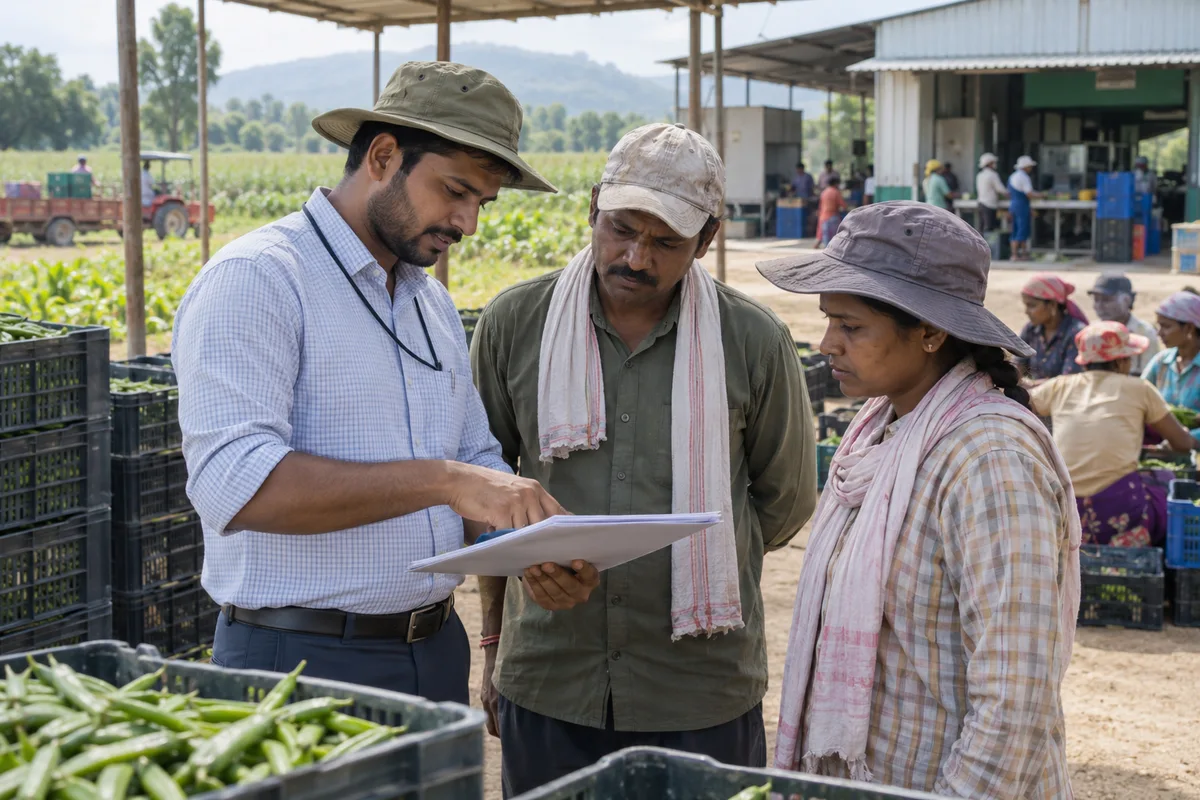
What content marketing means
Content marketing is writing articles, guides and pages that answer the questions buyers search before they are ready to enquire. This makes your business visible and trusted before the first call. GullySales plans this content from the first conversation onward, choosing topics that match real search demand rather than guesses.
Also for contract farming companies
- Social media for contract farming companies
- Lead generation for contract farming companies
- SEO for contract farming companies
- Buyer persona for contract farming companies
- CRM for contract farming companies
- Follow-up systems for contract farming companies
- WhatsApp marketing for contract farming companies
- Digital marketing for contract farming companies
Sales and marketing for contract farming companies, the overview.
Last updated 18 Oct 2026.
For contract farming companies
Where it usually goes wrong, and what we would do.
“The farmer's first question is about payment”
Before crop or variety, the grower asks when the money comes and what happens to rejected produce. Content that opens with agronomy and leaves payment to the last line loses that reader.
“The buyer's first question is about consistency”
A processor wants to know how you keep a variety and a grade steady across every farm in the group. A page describing the grading step, the field visits and the records answers it better than a mission statement.
“An explainer read out once is forgotten”
A terms sheet explained in a meeting and never handed over leaves the farmer with a memory and no paper. A one-page sheet and a short voice note in the language travel home with them.
“Rate content goes out of date”
Anything quoting a rate or a rule ages, and a farmer holding last year's sheet quotes it back at you. Dated content with a clear reissue habit prevents the argument.
What we do
What we deliver for contract farming companies.
Every deliverable, what it covers for you, and the result it is there to produce. Nothing here is an extra.
A farmer guide in the local language
A plain guide covering enrolment, seed and advice, grading and payment, with a voice version for farmers who prefer to listen.
Result: A grower can hear the answers without reading.
A buyer guide to your supply process
A document describing variety control, grading, records and delivery, with a sample record attached.
Result: A sourcing manager reads how supply works before the first call.
Crop calendars by district
A page per crop showing sowing, field visits, harvest and delivery windows as you plan them.
Result: Growers and buyers see the same calendar.
Answers to the recurring questions
A short set of questions drawn from field staff and sales calls, each with one agreed answer.
Result: Everyone gives the same answer to a rate or rejection question.
A dating and reissue habit
A date on every sheet and a named person who withdraws old versions.
Result: No grower is holding a superseded sheet without it being known.
A seasonal content plan
A list of sheets, films and pages timed to enrolment, sowing, harvest and buyer planning for each crop.
Result: Each piece is ready before the stage it supports.
How the result is measured
- Pages published
- Organic traffic
- Enquiries from content pages
Recorded as a baseline before work starts, so every later report has an honest comparison.
Posts and pieces to plan
Write the answers growers and buyers need before they sign.
- How the buy-back arrangement works, in the home language
- A farmer guide as a short voice note and a printed card, covering who supplies seed, who inspects and how payment is recorded.
- What the processor checks at collection
- A page on the grade and handling standards a buyer applies, written with the quality officer, so a grower knows what will be tested.
- Supply process for a sourcing manager
- A buyer guide from enrolment to dispatch, with the records kept at each step and what can be shared on request.
- Crop calendar for a district
- A dated card for the crop and district, with the field visits, so growers see the season laid out.
- Questions farmers ask before signing
- A list answered in plain words by a field officer, such as what happens if the crop fails. Answers must be what the agreement says and nothing more.
Who it is for
This is written for these contract farming companies.
- Contract growers for processing potatoes, gherkins and tomatoes
- Seed production contract farming for seed companies
- Contract farming for export crops such as pomegranate, banana and onion
- Herbal and medicinal plant contract growers
- Sugarcane, maize and oilseed contract farming for mills and processors
- Organic produce contract farming for retail brands
- Contract dairy and poultry farming arrangements
- Farmer producer company-led contract farming
Not for
It is not the right fit if.
- Your terms are not yet fixed, so guides would need rewriting after the first season.
- No field officer will write or check the farmer content, so it would read as an office document.
- You plan to publish rates that the buyer has not confirmed.
How it works
How the content marketing work runs
The work itself, in order. How an engagement starts, from your brief to a written scope, is set out on our method page.
- 1
Agree the plan
Topics and formats come from the content strategy and the buyer-question list. The volume goes into the written scope, agreed with you, not into a number quoted on a call.
- 2
Brief and draft
Each piece starts from its one-page brief and a short conversation with your technical person, recorded if they allow it, so the draft uses their words.
- 3
Check the facts
Your person marks the draft for accuracy and we correct it. Regulated subjects also go to your own adviser, because restrictions on claims apply to articles as much as to advertisements.
- 4
Publish and distribute
The piece goes live on your site, then out through the channels where your buyers already are.
- 5
Read the enquiries and adjust
Results are reported against the baseline recorded before work began. Topics that brought readers but no enquiries are changed or dropped. How often you are reported to is agreed in writing.
Where this fits
Three pieces of sales work, in this order.
This work sits inside sales process design, at stage 0, foundation. The audit comes before it, and sales management keeps it running.
Step 1
Sales audit
Find where deals are being lost and what to fix first.
Start here if you cannot say where orders are lost.
Step 2 · you are here
Sales process design
One written way to sell, from first enquiry to repeat order.
Start here if every salesperson sells differently.
Step 3
Sales management
A target, a review routine and someone who owns the number.
Start here if the team has targets and no routine.
FAQ
Questions owners ask before they call.
Not here? More answers, or ask on WhatsApp.
What should we write first?
Do we need a blog?
Who should write the farmer content?
How do we keep rate content from going out of date?
How much does it cost?
How long is the contract?
How soon will we see results?
Who will actually do the work?
What do you need from us?
What if we are not happy with the work?
More for contract farming companies
Everything else we would do for you.
Closest to this: content and social
Also for contract farming companies
Or start from the overview: sales and marketing for contract farming companies.
Your next practical step
Tell us what you are trying to grow, and we will read it before we call.
Eight short steps, mostly taps. Skip anything you would rather answer on the call.