Floriculture farms · Lead generation
Find the decorators and merchants who need your bloom before their date is fixed.
Lead generation for a flower farm means finding new buyers, such as decorators, planners, hotels and merchants, who would order your stems or loose flowers. GullySales works on the list of who to approach, what to say to each, and a record of every conversation.
Scope, fee, reporting and term are agreed in writing after we have read your brief and spoken to you.
What lead generation means
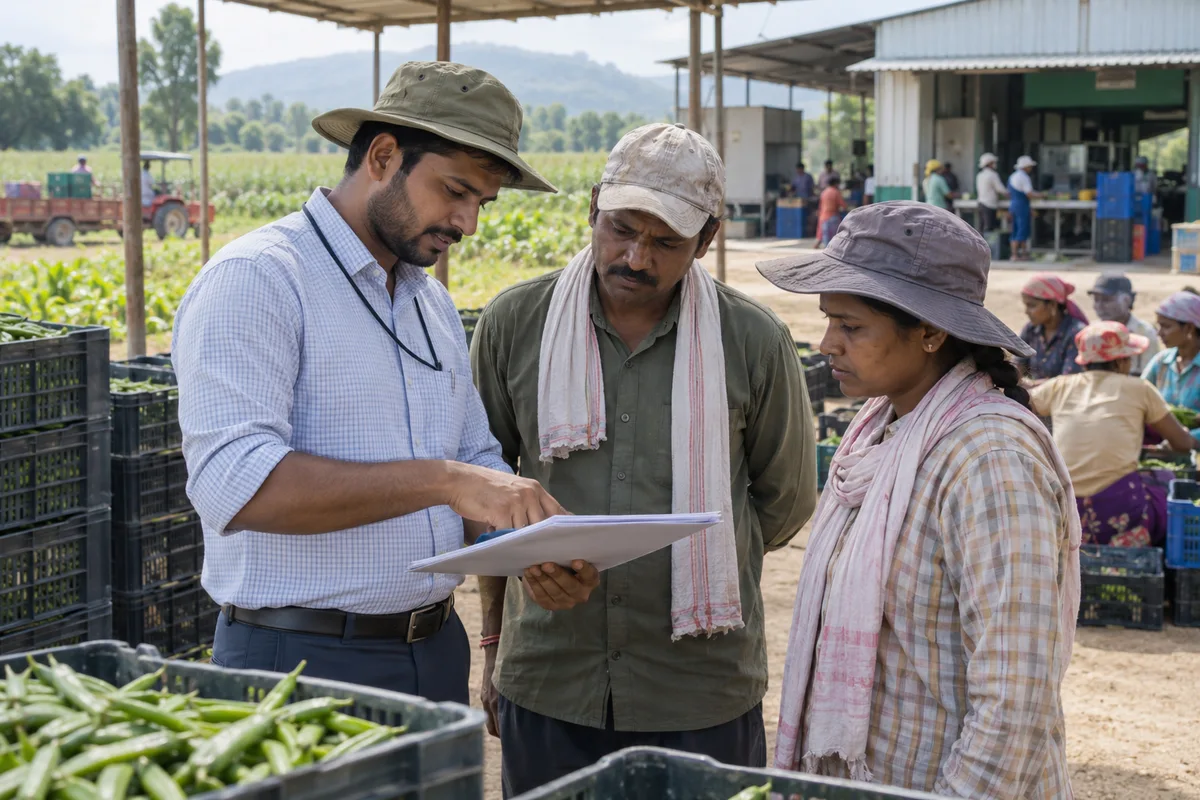
Lead generation is the combined work of every channel that brings in a new enquiry, whether from search, adverts, referrals or a stall at an exhibition. GullySales runs these channels together and reports the number of enquiries each one produced, not the activity behind it.
Last updated 18 Oct 2026.
For floriculture farms
Where it usually goes wrong, and what we would do.
“The buyer who needs you has not heard of you”
A wedding decorator in a neighbouring town is hunting for a colour of rose for a stage. Their usual supplier is a market stall. Your farm grows the colour, but nothing places your name in front of them before the date is booked elsewhere.
“The market agent is one lead, not a pipeline”
Selling everything through a single agent gives one buyer all the power on price. Leads from hotels, banquet halls, temple committees and planners spread the risk, but each of those buyers needs finding by name, and that is work nobody on the farm has time for.
“A lead means little without a date attached”
A decorator saying they need flowers someday is not a lead you can plan a crop around. The useful question is which event, which date, which colour and how many stems. Lead generation for a farm should capture those four things at first contact.
“Leads cool between festival peaks”
Interest raised in the run-up to Dasara is gone by the time the next wedding month arrives if nobody has kept in touch. A farm needs a rhythm of contact that matches the bloom calendar, not a burst of calls before each peak.
What we do
What we deliver for floriculture farms.
Every deliverable, what it covers for you, and the result it is there to produce. Nothing here is an extra.
A researched buyer list
Decorators, wedding planners, hotels, banquet halls and merchants, grouped by town and by what each buys, with the best route to reach them.
Result: A named list you can sort by town and by the flowers each buyer uses.
An opening message for each buyer type
A short WhatsApp message and call script for decorators, another for hotels and another for temple committees, each built on your bloom calendar.
Result: Separate openings, one per buyer type, that you have read and approved.
An enquiry capture sheet
One sheet that records event, date, colour, stem count and delivery point for every enquiry, however it arrives.
Result: Every enquiry sits in one place with its date beside it.
A sample stem offer
A note on what sample stems or a small trial lot you will send to a new buyer, who pays the carriage and what you ask in return.
Result: A written sample policy you can quote on the phone.
A source tally
A running count of where each buyer first heard of the farm: a referral, a call, an event, a page.
Result: You can see which route brought your latest buyers.
How the result is measured
- Enquiries generated
- Cost per enquiry
- Enquiries by source
Recorded as a baseline before work starts, so every later report has an honest comparison.
What to capture
Record the date and the flower before anything else.
- Event or festival date
- Asked first and entered by whoever answers, because supply can only be promised against a date that is known.
- Flower, colour and stem length
- Noted at enquiry so the farm can say at once whether the bed in bloom matches the request.
- Quantity in bunches or stems
- Recorded as the buyer states it, then confirmed, since decorators change the figure close to the date.
- Delivery point and who receives
- A market stall, a venue gate or a hotel kitchen, so the pack and the time of dispatch can be planned.
- How the buyer found the farm
- A market agent, a decorator's friend or a post, kept on the record so the buyer list can be built from what works.
Who it is for
This is written for these floriculture farms.
- Rose and gerbera growers under polyhouse
- Marigold, jasmine and loose flower farms for market and temple trade
- Chrysanthemum, tuberose and gladiolus growers
- Cut flower farms supplying wedding and event decorators
- Ornamental foliage and filler growers
- Dried flower and petal producers
- Export-oriented flower farms
- Flower farms that also sell potted plants
Not for
It is not the right fit if.
- You have no spare bloom beyond what the market agent already takes, so new buyers would be turned away.
- No one can answer a decorator's message on the day of the enquiry, since an unanswered date goes to a rival.
- You do not know what will flower on the dates buyers ask for, so you could not give a straight answer.
How it works
How the lead generation work runs
The work itself, in order. How an engagement starts, from your brief to a written scope, is set out on our method page.
- 1
Understand your capacity
We ask how many enquiries your team can answer well, who answers after hours, and what a good enquiry looks like. Without this, the system fills a funnel nobody is watching.
- 2
Audit current sources
We read your call log, WhatsApp chats, enquiry sheet and platform dashboards. The baseline is recorded: enquiries by source, reply time, conversion and cost per order.
- 3
Strategise the channel mix
Search and maps are chosen for people ready to buy, ads for people who are not yet looking, and content and referrals for trust.
- 4
Implement capture and follow-up
Pages, forms, tags, the lead record and the first-reply message are built and tested end to end. We submit test enquiries ourselves before any media money is spent.
- 5
Measure and optimise
Enquiries are traced to source and judged by what became orders, not by volume alone. Channels that fill the sheet with poor enquiries are cut back. How often you are reported to is agreed in writing.
Where this fits
Three pieces of sales work, in this order.
This work sits inside sales process design, at stage 1, prospecting and lead generation. The audit comes before it, and sales management keeps it running.
Step 1
Sales audit
Find where deals are being lost and what to fix first.
Start here if you cannot say where orders are lost.
Step 2 · you are here
Sales process design
One written way to sell, from first enquiry to repeat order.
Start here if every salesperson sells differently.
Step 3
Sales management
A target, a review routine and someone who owns the number.
Start here if the team has targets and no routine.
FAQ
Questions owners ask before they call.
Not here? More answers, or ask on WhatsApp.
Do you give us leads directly?
We sell only through the market agent. Is this worth doing?
Should we ask decorators for an advance?
What if bloom does not match the date asked?
How much does it cost?
How long is the contract?
How soon will we see results?
Who will actually do the work?
What do you need from us?
What if we are not happy with the work?
More for floriculture farms
Everything else we would do for you.
Closest to this: leads and follow-up
Also for floriculture farms
Or start from the overview: sales and marketing for floriculture farms.
Your next practical step
Tell us what you are trying to grow, and we will read it before we call.
Eight short steps, mostly taps. Skip anything you would rather answer on the call.