Milk collection centres · Lead generation
Find the farmers and dairy buyers who will keep your chilling tank full.
Lead generation for a milk collection centre means finding two kinds of enquirer: farmers within carrying distance who could supply, and dairy procurement officers who could buy. GullySales works on the village list, the farmer conversation and the dairy introduction that bring both to your counter.
Scope, fee, reporting and term are agreed in writing after we have read your brief and spoken to you.
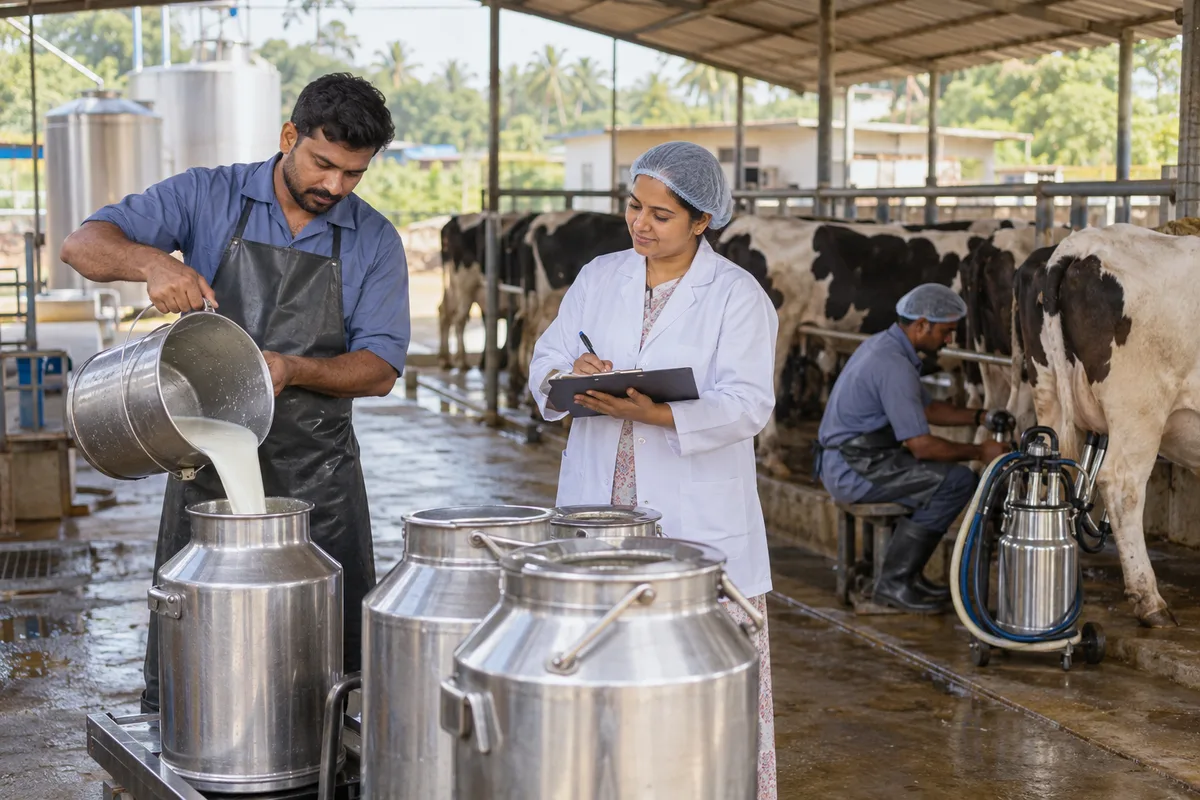
What lead generation means
Lead generation is the combined work of every channel that brings in a new enquiry, whether from search, adverts, referrals or a stall at an exhibition. GullySales runs these channels together and reports the number of enquiries each one produced, not the activity behind it.
Also for milk collection centres
- CRM for milk collection centres
- Follow-up systems for milk collection centres
- SEO for milk collection centres
- Local SEO for milk collection centres
- Social media marketing for milk collection centres
- Content marketing for milk collection centres
- Buyer personas for milk collection centres
- WhatsApp marketing for milk collection centres
Sales and marketing for milk collection centres, the overview.
Last updated 18 Oct 2026.
For milk collection centres
Where it usually goes wrong, and what we would do.
“The farmer lead lives within a can's ride”
The farmer who might switch is the one whose cans already pass your gate on the way to another centre, or who sells to a vendor at the lane. Leads here are villages and lanes, not search terms, so the list starts from a map and your own supplier register.
“A dairy lead is a named procurement officer”
A dairy does not respond to a general brochure. The lead is the person who decides where extra litres come from, and that person wants to see volume, testing method and chilling before agreeing to a visit.
“A farmer who left is the most useful prospect”
A former supplier left for a reason you can still learn: the rate, a late payment or a disputed reading. Asking politely and writing the answer in the register shows which fault to fix before approaching the next village.
“The flush season brings farmers looking for a buyer”
When animals give more milk, farmers with surplus ask around for a centre that will accept it. Being reachable then, with a clear word on acceptance limits, decides who gains the new supplier, because a farmer with surplus milk will not wait long for an answer.
What we do
What we deliver for milk collection centres.
Every deliverable, what it covers for you, and the result it is there to produce. Nothing here is an extra.
A village-by-village prospect list
Nearby villages marked by distance, existing centres and the lanes where cans travel, drawn from your register and a local walk.
Result: Each village has a status against it: supplying, approached or not yet visited.
A farmer enquiry sheet
A one-page form for the counter that records name, village, animals milked, current buyer and the reason a farmer is thinking of moving.
Result: Every walk-in enquiry is written down, with the farmer's own reason.
Lost-supplier follow-up list
The farmers who stopped bringing milk, with the date they stopped and a short, polite call script.
Result: You can see which causes repeat across the lost suppliers.
A dairy introduction pack
The supply profile and a covering letter addressed to the procurement officer of each dairy on your list.
Result: Every dairy contacted has a name, a date and a reply status.
A flush-season notice
A message to farmers and dairies stating what the centre will accept once volumes rise.
Result: The notice is in writing before the flush, and enquiries can be traced to it.
How the result is measured
- Enquiries generated
- Cost per enquiry
- Enquiries by source
Recorded as a baseline before work starts, so every later report has an honest comparison.
What to capture or send
What to note about a farmer or a dairy before the first conversation ends.
- Village, lane and distance to the centre
- A farmer beyond the can-carrying distance needs a different arrangement. Note the lane so the next visit or message goes to the right cluster.
- Animals milked and shed size
- Two animals and a shed of twelve are different suppliers. Ask in the first talk, since it tells you the volume and the likely shift.
- Current buyer and the reason for looking
- A farmer who left a centre over a rate reading or a late payment tells you what to fix. Record the reason in the farmer's words.
- Preferred shift and can or vehicle
- Morning, evening or both, and how the milk reaches the centre. Decides whether the farmer fits your chilling and testing hours.
- Dairy procurement officer and plant
- Name, role and the dairy's collection area. Lets the centre offer a supply profile to the person who actually allots milk.
- Source of the lead
- Village group, a supplier's word, a feed dealer or a dairy visit. Tag it so you know which route fills the tank.
Who it is for
This is written for these milk collection centres.
- Village-level collection centres run by a society or an individual
- Private collection centres supplying one dairy
- Bulk milk coolers at village level
- Chilling centres serving several collection points
- Centres selling to more than one dairy
- Women-run dairy co-operative collection points
- Centres that also sell cattle feed and mineral mixture
- Centres adding milk testing to farmers in new villages
Not for
It is not the right fit if.
- Your chilling tank is already full at peak and you have no spare capacity, so more farmers would only be turned away at the gate.
- You have no clear rate chart or reading method a farmer can follow, so new suppliers would quarrel at the counter and leave.
- You cannot pay on the day you promise, and signing up new farmers on a promise you cannot keep would damage the village group.
How it works
How the lead generation work runs
The work itself, in order. How an engagement starts, from your brief to a written scope, is set out on our method page.
- 1
Understand your capacity
We ask how many enquiries your team can answer well, who answers after hours, and what a good enquiry looks like. Without this, the system fills a funnel nobody is watching.
- 2
Audit current sources
We read your call log, WhatsApp chats, enquiry sheet and platform dashboards. The baseline is recorded: enquiries by source, reply time, conversion and cost per order.
- 3
Strategise the channel mix
Search and maps are chosen for people ready to buy, ads for people who are not yet looking, and content and referrals for trust.
- 4
Implement capture and follow-up
Pages, forms, tags, the lead record and the first-reply message are built and tested end to end. We submit test enquiries ourselves before any media money is spent.
- 5
Measure and optimise
Enquiries are traced to source and judged by what became orders, not by volume alone. Channels that fill the sheet with poor enquiries are cut back. How often you are reported to is agreed in writing.
Where this fits
Three pieces of sales work, in this order.
This work sits inside sales process design, at stage 1, prospecting and lead generation. The audit comes before it, and sales management keeps it running.
Step 1
Sales audit
Find where deals are being lost and what to fix first.
Start here if you cannot say where orders are lost.
Step 2 · you are here
Sales process design
One written way to sell, from first enquiry to repeat order.
Start here if every salesperson sells differently.
Step 3
Sales management
A target, a review routine and someone who owns the number.
Start here if the team has targets and no routine.
FAQ
Questions owners ask before they call.
Not here? More answers, or ask on WhatsApp.
Should we advertise online to find farmers?
How do we record a farmer who only asks the rate?
Can we approach a farmer who supplies another centre?
Milk cannot wait in the heat. Does that limit how far we can look for farmers?
How much does it cost?
How long is the contract?
How soon will we see results?
Who will actually do the work?
What do you need from us?
What if we are not happy with the work?
More for milk collection centres
Everything else we would do for you.
Closest to this: leads and follow-up
Also for milk collection centres
Or start from the overview: sales and marketing for milk collection centres.
Your next practical step
Tell us what you are trying to grow, and we will read it before we call.
Eight short steps, mostly taps. Skip anything you would rather answer on the call.