Milk collection centres · Buyer persona
Write down the supplier and the buyer you are trying to win, one person at a time.
A buyer persona for a milk collection centre is a plain description of the farmer who supplies and the dairy officer who buys, covering what each checks and what makes each leave or stay. GullySales builds these from your register, your counter conversations and the dairy's own requests.
Scope, fee, reporting and term are agreed in writing after we have read your brief and spoken to you.
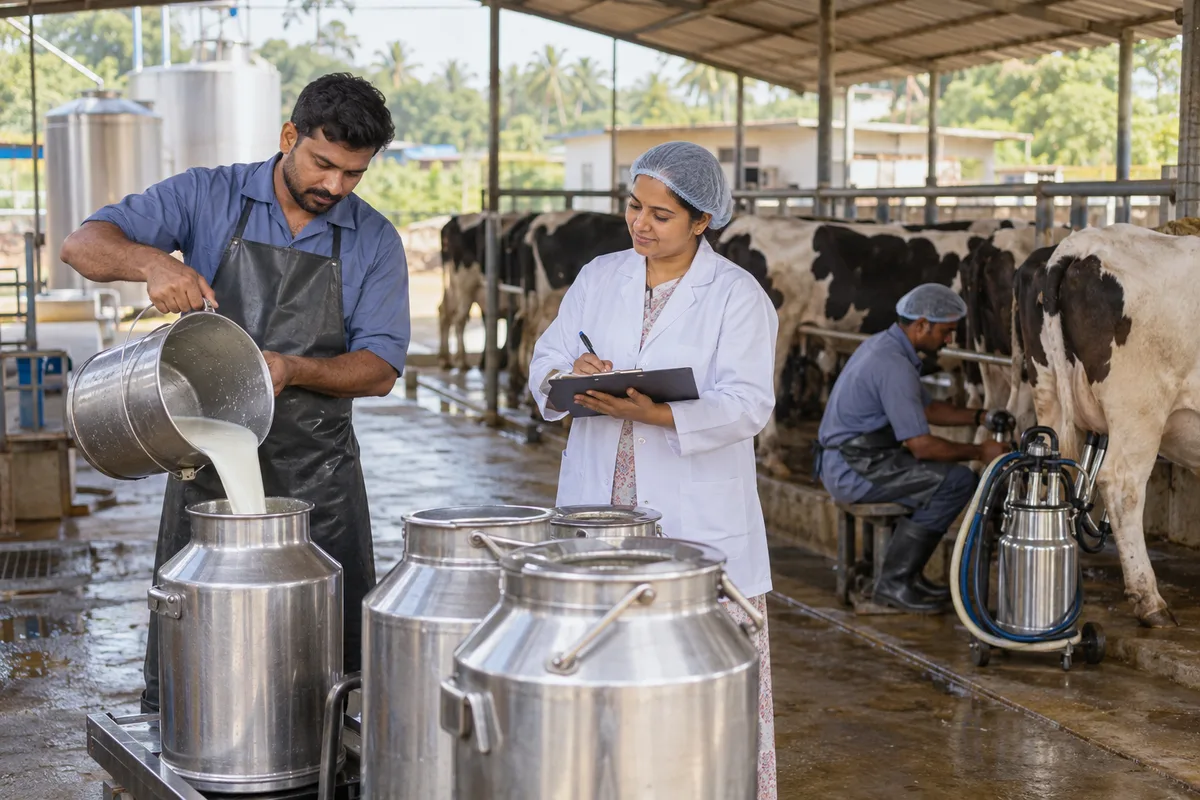
What buyer persona means
A buyer persona is a plain description of the kind of customer who actually buys from you. It includes what they search, what worries them and who else they ask before deciding. GullySales builds this from real enquiries and past sales rather than a generic template, then uses it to write every page and advert.
Also for milk collection centres
- Digital marketing for milk collection centres
- Lead generation for milk collection centres
- SEO for milk collection centres
- Local SEO for milk collection centres
- Social media marketing for milk collection centres
- Content marketing for milk collection centres
- CRM for milk collection centres
- Follow-up systems for milk collection centres
Sales and marketing for milk collection centres, the overview.
Last updated 18 Oct 2026.
For milk collection centres
Where it usually goes wrong, and what we would do.
“The small farmer with two animals”
This farmer brings a few litres each morning, depends on the payment for household costs and compares the slip with the neighbour's. The things that matter are a fair reading, a payment on the expected day and a counter staff member who explains.
“The larger farmer with a shed”
A farmer with a bigger herd can supply several centres and can bargain. This farmer weighs the rate difference, the payment record and whether the centre will take every litre in the flush. Loyalty is earned by a clear acceptance promise made in advance.
“The dairy procurement officer”
The officer is accountable for the daily intake and the quality of what arrives. Volume that does not fall short, a consistent fat and SNF record and a cooler that works are what earn a second visit.
“The feed dealer and the veterinarian”
These two do not supply milk, but farmers ask them where to take it. Their opinion of the centre travels along the lane, so they are a persona of their own, shaped by how they are treated.
What we do
What we deliver for milk collection centres.
Every deliverable, what it covers for you, and the result it is there to produce. Nothing here is an extra.
Persona sheets for each supplier type
One page each for the small farmer, the larger farmer and the member of a women's group, from your register and conversations.
Result: The sheets name what each supplier checks and what makes each leave.
A dairy officer sheet
A page on the procurement officer's questions, drawn from what the dairy asks the centre for.
Result: Your supply profile answers the officer's questions in order.
A referrer sheet
A page on the feed dealers and veterinarians in the area and what they need from the centre.
Result: Each referrer has a named contact at the centre.
Reasons-for-leaving list
The reasons suppliers gave for stopping, grouped, from the register.
Result: The reasons are in front of the centre's owner.
A counter script
Short answers to the questions each persona asks at the counter, in the local language.
Result: Staff respond the same way to the same question.
How the result is measured
- Enquiry match to persona
- Conversion rate by persona
- Content aligned to persona
Recorded as a baseline before work starts, so every later report has an honest comparison.
Who is asking
The suppliers and buyers a centre needs to understand one at a time.
- Farmer with two animals
- Wants a clear reading, payment on the promised day and a centre close to the lane. Compares one rupee's difference against trust.
- Farmer with a shed
- Supplies a larger volume and asks about collection from the shed, the cooler and payment terms. May hold an offer from another centre.
- Dairy procurement officer
- Reads the supply profile: area, testing, cooling and consistency in the flush and lean seasons. Visits before allotting milk.
- Women's group member or society secretary
- Handles a pooled supply and the accounts for it. Wants records to show the group and a payment schedule everyone can see.
- Feed dealer or veterinarian
- A trusted voice in the village. Hears first about a rate problem and tells farmers where to supply.
Who it is for
This is written for these milk collection centres.
- Village-level collection centres run by a society or an individual
- Private collection centres supplying one dairy
- Bulk milk coolers at village level
- Chilling centres serving several collection points
- Centres selling to more than one dairy
- Women-run dairy co-operative collection points
- Centres that also sell cattle feed and mineral mixture
- Centres adding milk testing to farmers in new villages
Not for
It is not the right fit if.
- You have not spoken to a single farmer who left or joined, and a persona built from guesses would repeat the centre's own view.
- You supply a single dairy under an arrangement that will not change, so a study of other buyers has no use yet.
- You plan to include income and land details of named farmers, which is personal data you should not collect for this.
How it works
How the buyer persona work runs
The work itself, in order. How an engagement starts, from your brief to a written scope, is set out on our method page.
- 1
Understand the current view
We start with how your team currently describes the customer, since the gap between belief and reality is the finding itself.
- 2
Audit past enquiries and sales
We look at recent enquiries and closed deals to see who actually bought, not who was assumed to buy.
- 3
Interview customers and staff
Structured conversations with recent buyers, held as talk about the last purchase and not a questionnaire. We ask what happened before they called, who else was involved and what they compared. Customers agree before we contact them, and their answers are reported without names.
- 4
Build the personas
Findings are written into short, usable persona documents rather than a long report.
- 5
Apply to your marketing
We show where each persona should change a page, an ad or a script you already have. The sales team reads the drafts and says which ring true. A persona they do not recognise is rewritten.
Where this fits
Three pieces of sales work, in this order.
This work sits inside sales process design, at stage 0, foundation. The audit comes before it, and sales management keeps it running.
Step 1
Sales audit
Find where deals are being lost and what to fix first.
Start here if you cannot say where orders are lost.
Step 2 · you are here
Sales process design
One written way to sell, from first enquiry to repeat order.
Start here if every salesperson sells differently.
Step 3
Sales management
A target, a review routine and someone who owns the number.
Start here if the team has targets and no routine.
FAQ
Questions owners ask before they call.
Not here? More answers, or ask on WhatsApp.
How do we build a persona without a survey?
Should the persona include income or land holding?
Is a women's group a separate persona?
How do we build a persona without a survey?
How much does it cost?
How long is the contract?
How soon will we see results?
Who will actually do the work?
What do you need from us?
What if we are not happy with the work?
More for milk collection centres
Everything else we would do for you.
Closest to this: strategy and research
Also for milk collection centres
Or start from the overview: sales and marketing for milk collection centres.
Your next practical step
Tell us what you are trying to grow, and we will read it before we call.
Eight short steps, mostly taps. Skip anything you would rather answer on the call.