How people choose in this industry
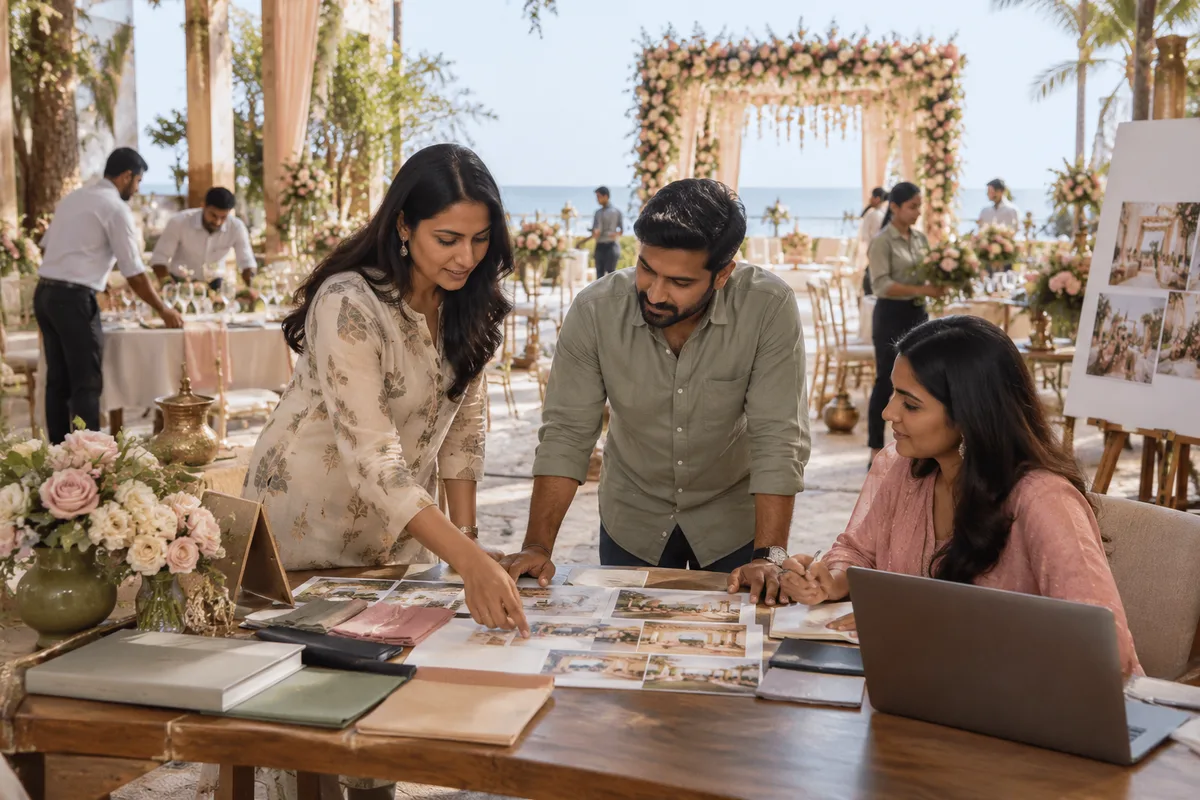
The couple start. Once the families agree on a date, the bride or groom searches Instagram, WedMeGood and Google for planners who have done their kind of wedding. They save reels of décor and entries and message four or five. The first reply that shows relevant work and asks about guest count and rituals moves ahead.
Parents enter at the meeting. They ask who will manage the rituals and how the budget will be controlled. They want to know which venues and vendors you use, and how many weddings your team runs on the same date. For destination weddings in Udaipur, Goa or Kerala, they also ask about room blocks and what happens if it rains.
Referrals carry real weight. A cousin whose wedding went well, or a venue that recommends you, can decide a close contest. The booking closes on a detailed proposal that separates the planning fee from vendor costs. The planner who follows up through the family's back-and-forth stands a better chance of collecting the advance.
The decision before implementation
Define the process and access permissions before changing software settings or adding automation.
Existing industry priorities to review
- Destination weddings
- Multi-day traditional weddings
- Intimate and small guest-list weddings
- Wedding décor and design
- Guest hospitality, travel and room blocks
These describe the industry's wider priorities. The written scope identifies which this service will address.