Wedding planners · Website
Build a site the paying parent can read and trust without calling anyone.
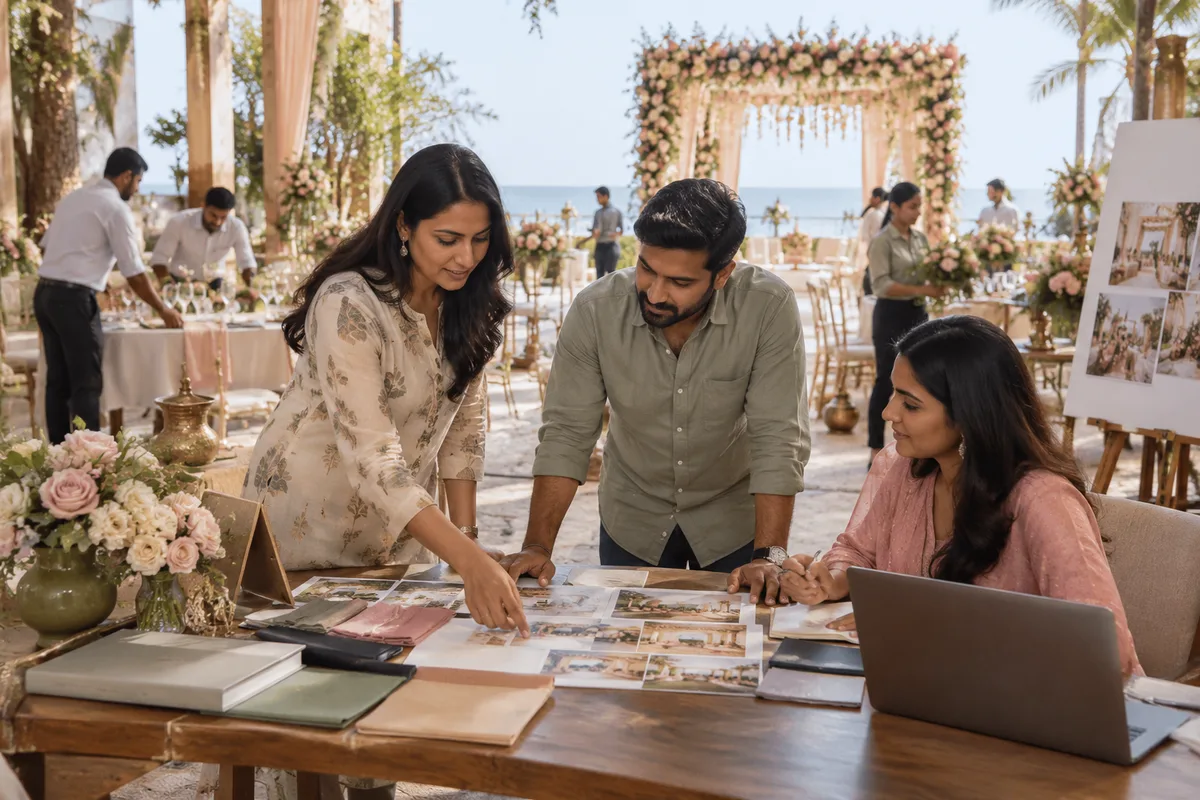
A website for a wedding planner is the page a couple and their parents open after seeing a reel, to check who you are, what you have done and how to start. GullySales works on the structure, the portfolio pages and the enquiry form so the site answers the family's questions.
Scope, fee, reporting and term are agreed in writing after we have read your brief and spoken to you.
What website means
A website is the page a customer lands on after searching, clicking an advert or scanning a code, and it decides whether they call or leave. GullySales builds and maintains sites that load quickly, explain the offer plainly and make the enquiry form or phone number easy to find.
Last updated 5 Oct 2026.
For wedding planners
Where it usually goes wrong, and what we would do.
“The parents open the site on a phone, after the couple send it”
The link arrives in a family group. A father reads it between meetings and wants to know your fee approach, your team and whether you have run weddings like the one planned. A gallery of mandaps with no words gives the reader nothing to forward.
“A portfolio sorted by date says nothing about fit”
A family planning a three-day Marwari wedding does not want to scroll past intimate beach events. Pages sorted by wedding type, city and guest scale let each visitor find the work that looks like theirs.
“The enquiry form asks too much or too little”
A form with only a name and phone number brings every budget. A form that demands a full guest list and venue scares off a couple at the first look. The right fields are date, city, guest count and budget range.
“The site hides what you manage”
Planners show décor and keep logistics off the page. A destination family wants to see room blocks, guest travel, rain plans and ritual management written plainly, with a real example of a problem your team solved.
What we do
What we deliver for wedding planners.
Every deliverable, what it covers for you, and the result it is there to produce. Nothing here is an extra.
Site structure by wedding type
Pages for destination, traditional, intimate and NRI weddings, plus a page for the venues and cities you work in.
Result: Each family finds a page about their kind of wedding.
Portfolio stories
Case pages with guest count, rituals, logistics and one problem solved, using photographs and names only with written permission.
Result: Parents see what you manage, not only what you decorate.
Fee and approach page
A plain page on how you charge, what is covered by the planning fee, what vendor costs are separate and how payment stages work, without quoting a price you have not set.
Result: The budget conversation begins before the meeting.
Qualifying enquiry form
A short form for date, city, guest count and budget range, with a clear note on when you reply and who will call.
Result: Serious enquiries arrive with the facts you need.
Team and venue-relationship page
Who leads, who runs the day and which venues and vendors you work with regularly, shown honestly.
Result: The family meets the people before the meeting.
Phone-first review
A check of every page on a mid-range phone and a slow connection, covering loading, tap targets and the call and WhatsApp buttons.
Result: The father's quick look on a phone still works.
How the result is measured
- Page load time
- Bounce rate
- Enquiries from the website
Recorded as a baseline before work starts, so every later report has an honest comparison.
Searches your buyers type
These are the searches a wedding planner's site should answer.
- wedding planner in Udaipur for a Bengaluru family
- A destination page naming the venues you have worked in, how guests travel and who from your team attends the event.
- destination wedding cost for two hundred guests
- A page explaining what goes into the planner's fee and the vendor costs, with a form to share a budget instead of a fixed price.
- Punjabi wedding planner
- A community page describing the ceremonies you have coordinated and how the family's own pandit and caterer fit into your plan.
- what does a wedding planner do
- An explainer that lays out the months before the event, so a parent understands why a fee exists and what it covers.
- NRI wedding planning India
- A page for families abroad, covering how you work across time zones, how proposals are shared and how payments are handled.
Who it is for
This is written for these wedding planners.
- Full-service wedding planners
- Destination wedding planners
- Décor-led planners and designers
- Budget and intimate wedding planners
- Planners specialising in regional and community weddings
- Wedding coordinators for the day of the event
- Planners handling guest hospitality and logistics
- Planners serving NRI families
- Multi-city wedding planning companies
Not for
It is not the right fit if.
- You have no album of your own work you may show, so a site would offer only stock pictures that undermine trust.
- You are still deciding whether to specialise by wedding type, so the pages would be rewritten after you decide.
- Nobody can answer the enquiry form promptly, so a better site would send families to an unanswered inbox.
How it works
How the website work runs
The work itself, in order. How an engagement starts, from your brief to a written scope, is set out on our method page.
- 1
Confirm structure and content
We agree the page list, what each page must answer, and who supplies the text and photographs, before any design starts.
- 2
Design the templates
The home page, a service page, a location page and the enquiry page are designed first, on phone and desktop, and shown to you.
- 3
Build and test
The site is built and checked on real phones and the common browsers. Every form, call button and WhatsApp link is tested end to end.
- 4
Load real content
Actual copy, images and information replace placeholders. Pages are read through once by you, since you spot wrong details we cannot.
- 5
Check before launch
Tracking, page titles, the sitemap and the privacy page are checked on the staging site. If an old site exists, its addresses are mapped so old links still land somewhere.
- 6
Launch and hand over access
The site goes live and we record the domain, hosting, content login and analytics in your name. The first live enquiry is traced to confirm tracking works.
Where this fits
Three pieces of sales work, in this order.
This work sits inside sales process design, at stage 1, prospecting and lead generation. The audit comes before it, and sales management keeps it running.
Step 1
Sales audit
Find where deals are being lost and what to fix first.
Start here if you cannot say where orders are lost.
Step 2 · you are here
Sales process design
One written way to sell, from first enquiry to repeat order.
Start here if every salesperson sells differently.
Step 3
Sales management
A target, a review routine and someone who owns the number.
Start here if the team has targets and no routine.
FAQ
Questions owners ask before they call.
Not here? More answers, or ask on WhatsApp.
Is Instagram enough without a website?
Should the site show our prices?
Can we use couples' photographs on the site?
Do we need separate pages for each venue city?
How long is the contract?
How soon will we see results?
Who will actually do the work?
What do you need from us?
What if we are not happy with the work?
From the blog
Further reading for wedding planners.

More for wedding planners
Everything else we would do for you.
Closest to this: search and visibility
Also for wedding planners
Or start from the overview: sales and marketing for wedding planners.
Your next practical step
Tell us what you are trying to grow, and we will read it before we call.
Eight short steps, mostly taps. Skip anything you would rather answer on the call.