Vaastu consultants · Buyer persona
Know who is asking before you decide what to say to them.
A buyer persona for a vaastu practice is a written description of each kind of person who books a consultation: the family facing a booking deadline, the builder with a launch, the designer with a plan awaiting sign-off. GullySales builds those descriptions from your own enquiry records and shapes pages and replies around each one.
Scope, fee, reporting and term are agreed in writing after we have read your brief and spoken to you.
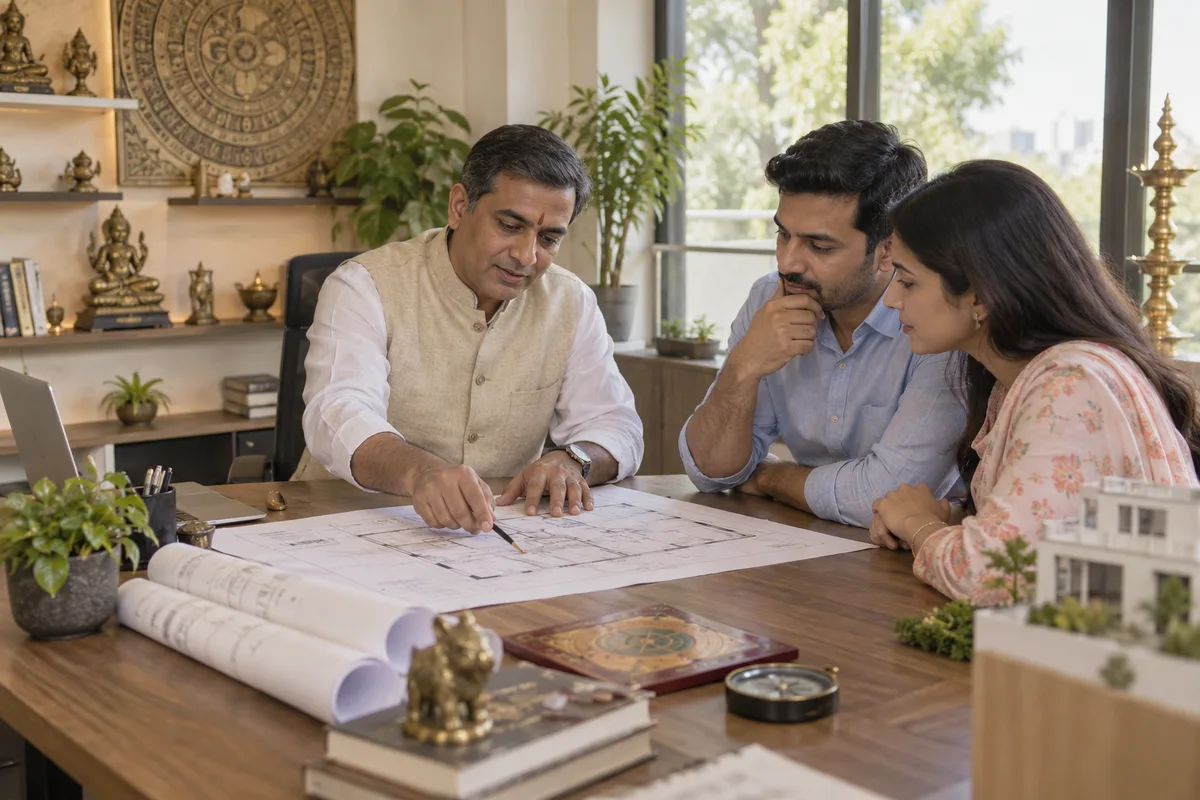
What buyer persona means
A buyer persona is a plain description of the kind of customer who actually buys from you. It includes what they search, what worries them and who else they ask before deciding. GullySales builds this from real enquiries and past sales rather than a generic template, then uses it to write every page and advert.
Also for vaastu consultants
- Digital marketing for vaastu consultants
- SEO for vaastu consultants
- PPC advertising for vaastu consultants
- Lead generation for vaastu consultants
- Reputation management for vaastu consultants
- Local SEO for vaastu consultants
- Branding and identity for vaastu consultants
- Social media marketing for vaastu consultants
Sales and marketing for vaastu consultants, the overview.
Last updated 14 Nov 2026.
For vaastu consultants
Where it usually goes wrong, and what we would do.
“The family is really two people”
The one who searches is a young buyer on a phone who wants a clear fee and a name. The one who decides is an elder who asks about your tradition and your years of practice. A page written for only one of them loses the other.
“A builder buys a different thing from a home buyer”
A developer wants a layout checked before the brochure is printed and a consultant whose name can sit beside the project. A home buyer wants reassurance about one flat. A single pitch written for both fits neither of them.
“The interior designer is both a buyer and a source”
The designer needs an opinion on the puja room and the main door before the modular kitchen is ordered. Having been served well, they pass your name to the next client. Their questions are about marked drawings and changes that spare the walls.
“The shop or factory owner assumes you only visit homes”
A business owner wonders about the cash counter, the owner's chair and where the machines stand. Nothing they have read suggests you answer those questions, so they ask a relative for a name instead of calling you.
What we do
What we deliver for vaastu consultants.
The work available for this need. We agree the deliverables and responsibilities for your engagement in writing.
One written profile for each kind of buyer
A short description of the family, the builder, the designer and the business owner, covering who searches, who decides, what deadline they carry and what worries them.
Result: You can say in one sentence who a given page is for.
The first question each buyer asks
The opening questions gathered from your calls and WhatsApp messages, such as fee, tradition followed, or whether walls must be broken, listed against each profile.
Result: Your pages answer the question the caller actually opens with.
A map of who searches and who decides
For family enquiries, a note on the searcher and the elder, and what each needs to see before agreeing to a site visit.
Result: The page and the reply speak to both people in the household.
Opening replies written for each profile
A first message for a floor plan from a family, another for a builder and another for a designer, each in your own voice and tradition.
Result: The first reply sounds like it was written for the sender.
Every enquiry tagged to a profile
A field in your enquiry record that notes which kind of buyer wrote in and how the booking went.
Result: You can see which buyer brings repeat work and which only asks for prices.
How the result is measured
- Enquiry match to persona
- Conversion rate by persona
- Content aligned to persona
Recorded as a baseline before work starts, so every later report has an honest comparison.
Who is asking
These are the people who ask about vaastu, and what each wants answered first.
- Elder of the family
- Wants to know your tradition, your training and whether you respect the family's customs. Reads the About page before anything else.
- Younger couple buying a flat
- Wants to know what you can say from a floor plan, what a visit adds and what the fee covers, before they commit.
- Builder or developer
- Wants a review of a layout before launch and a clear way to work with the architect. Asks about your process, not your beliefs.
- Interior designer
- Wants a consultant who works with a fit-out plan and will not change the design late. May refer clients if the working style fits.
- Shop or factory owner
- Wants to know if you visit commercial sites and what you look at there. Assumes you do homes only unless a page says otherwise.
Who it is for
This is written for these vaastu consultants.
- Independent vaastu consultants working from home or a small office
- Vaastu consultants attached to a temple, math or astrology practice
- Consultants who also practise as architects or civil engineers
- Vaastu advisers working with builders and developers on layouts
- Consultants specialising in commercial, shop and office vaastu
- Consultants advising on factories, warehouses and industrial plots
- Online vaastu consultants reviewing plans across cities
- Family practices passed down from a senior consultant
Before you decide
When this may not be the right fit.
- You take only a few referred families and all of them are known to you already.
- You have not yet decided what you will and will not say about a layout, so a persona could not be answered consistently.
Before you decide
Agree the work. Know how to judge it.
Buyer personas for vaastu consultants: use these checks to prepare, choose the scope, and review what changes.
Bring the right evidence
Write the decision the research must support, such as entering a market or choosing a buyer group. Separate what you know from sales records from what the team currently assumes.
Make the scope clear
Agree which buyers to speak to, which sources to review, and what access you can provide. Include lost enquiries and people who chose another supplier, where they are willing to take part.
Check the work in use
Look for source dates, sample limitations, and evidence that disagrees with the preferred answer. A recommendation should show how it follows from the findings.
Know when to change course
Do not treat a few positive conversations as proof of demand. Test the proposed offer with an actual buying decision before committing to a wider launch.
These are discussion points, not a fixed package. GullySales confirms the deliverables, responsibilities, fee, and term in writing after reading your brief and speaking with you.
Before we start
What to have ready before the work starts.
The records, access and decisions this work needs from vaastu consultants. Anything missing is noted in the written scope, with who will supply it.
- Enquiry history with details removed
- Bring a list or chats from the last busy period with names hidden. They show the real mix of buyers. Without them the profiles are guesses, and the replies miss the first question each type actually asks.
- A sitting with you, uninterrupted
- The interview needs your attention for one stretch. Choose a time away from consultations. If it is broken into snatches on the phone, the profiles lose depth and the worries of each buyer are described at a shallow level. Have a recent example of a visit that went well and one that did not in mind, as these give the profiles their sharpest detail.
- Names of builders and designers you work with
- Name those who send you work and those you want to. They shape the builder and designer profiles. Without the names, these profiles stay general, and outreach has no firm to start from. A single line on what each of them sent you, such as a layout, a referral or a repeat booking, is enough to start.
- A note on what you do not do
- Tell us the work you refuse, such as telephone opinions without a plan or work outside your region. A profile includes what the buyer should not expect. If this is missing, replies promise more than the practice offers.
How it works
How the buyer persona work runs
The work itself, in order. How an engagement starts, from your brief to a written scope, is set out on our method page.
- 1
Sort past enquiries by who sent them
We take your past enquiries and sort them by the kind of person: a family facing a deadline, a builder with a launch, a designer with a plan, a shop or factory owner. You correct our sorting from memory. The sorted list shows which kinds you serve and which are rare. We also note which kinds of buyer reach you only through a referral, since those profiles need replies and not search pages.
- 2
Interview you on each kind of buyer
In one sitting we ask you about each type: what the person asks first, who else is in the decision, what they fear and what makes them book. Your answers come from visits, not theory. We write them down in your words.
- 3
Map who searches and who decides
In a family the person who searches may be a younger member and the person who decides an elder. We draw this for each buyer type and note the language each reads. You tell us who pays, since that person may be a third party. Where the payer is a company or a builder paying for a buyer, we record that as a separate line, because the fee note goes to a different person.
- 4
Write one profile for each kind of buyer
Each profile states the buyer, the first question, the worry and the reply that suits. We keep any belief out of the record and describe only the practical need. You read each aloud, and anything that sounds like a stereotype is removed.
- 5
Write the opening replies and tag the enquiries
For each profile we draft an opening reply for WhatsApp and the phone. From then on, each enquiry is tagged with its profile. After a run of enquiries, we compare bookings by profile and you decide which needs more attention.
Where this fits
Three pieces of sales work, in this order.
This work sits inside sales process design, at stage 0, foundation. The audit comes before it, and sales management keeps it running.
Step 1
Sales audit
Find where deals are being lost and what to fix first.
Start here if you cannot say where orders are lost.
Step 2 · you are here
Sales process design
One written way to sell, from first enquiry to repeat order.
Start here if every salesperson sells differently.
Step 3
Sales management
A target, a review routine and someone who owns the number.
Start here if the team has targets and no routine.
FAQ
Questions owners ask before they call.
Not here? More answers, or ask on WhatsApp.
Do I need a persona if I only take referrals?
Where does the persona information come from?
Will this change how I describe the tradition?
Should the persona record a family's beliefs?
Can a persona be used by staff who take the first call?
How many profiles does a small practice need?
How much does it cost?
How long is the contract?
How soon will we see results?
Who will actually do the work?
More for vaastu consultants
Related work to consider.
Closest to this: strategy and research
Also for vaastu consultants
Or start from the overview: sales and marketing for vaastu consultants.
Your next practical step
Tell us what you are trying to grow, and we will read it before we call.
Eight short steps, mostly taps. Skip anything you would rather answer on the call.