Land surveying companies · Social media
Show the fieldwork a landowner cannot picture, one plot at a time.
Social media marketing for a land surveying company is posting the work that normally happens out of sight. GullySales plans what to show from the field, which platform each buyer uses, and how a comment becomes an enquiry.
Scope, fee, reporting and term are agreed in writing after we have read your brief and spoken to you.
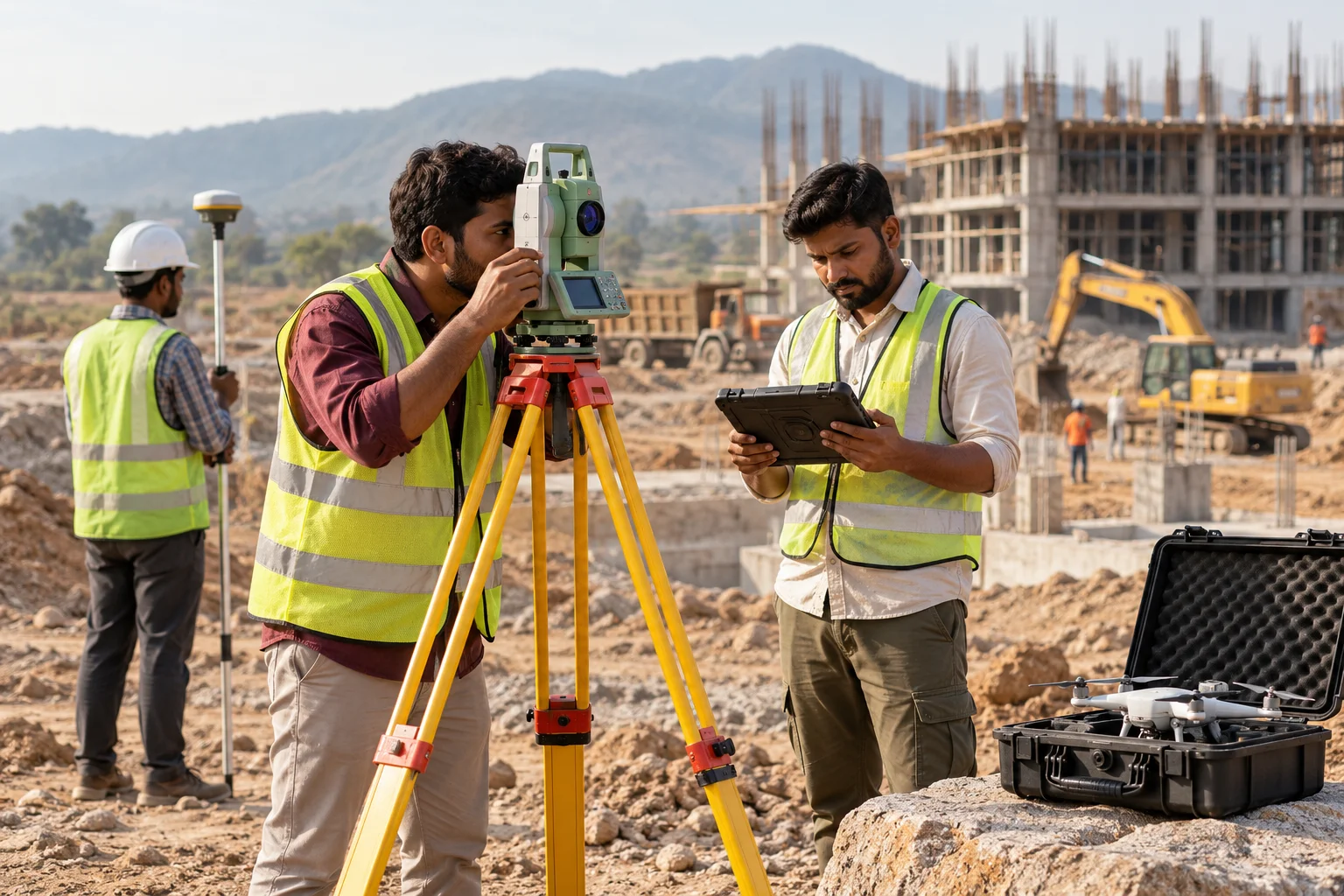
What social media means
Social media is the ongoing posting your business does on platforms such as Instagram, Facebook and LinkedIn to stay visible to customers and prospects between purchases. GullySales plans a posting calendar, writes captions and designs the images so the page looks active and answers what a visitor would ask.
Also for land surveying companies
- Content marketing for land surveying companies
- Lead generation for land surveying companies
- SEO for land surveying companies
- Local SEO for land surveying companies
- Buyer personas for land surveying companies
- CRM for land surveying companies
- Follow-up systems for land surveying companies
- WhatsApp marketing for land surveying companies
Sales and marketing for land surveying companies, the overview.
Last updated 14 Nov 2026.
For land surveying companies
Where it usually goes wrong, and what we would do.
“People do not know what a survey day looks like”
A crew setting out a total station or flying a drone over a layout is new to the owner. A short clip with a plain caption explains the work better than a service list. Show the crew at work in a plot, with a caption that says what is being settled.
“LinkedIn reaches builders; Facebook and WhatsApp status reach landowners”
A developer's project head scrolls LinkedIn. A farmer or a plot buyer is on Facebook and in family groups. One post does not fit both. Write two versions of each idea, one for the project head and one for the family group.
“Client plots cannot be shown freely”
A boundary job involves a family's land and sometimes a dispute. Anything posted needs written permission and no names, survey numbers or neighbours' details. Take written permission from the client first, then remove names, survey numbers and any neighbour's details from every image.
“Instrument photographs say little alone”
A picture of a total station impresses a surveyor and no one else. Pair it with the question it answers, such as where a boundary stone should sit. Say what the instrument is for, then show the result on paper, and the picture starts to mean something.
What we do
What we deliver for land surveying companies.
The work available for this need. We agree the deliverables and responsibilities for your engagement in writing.
Field-work content plan
A list of post ideas drawn from real jobs: setting out, measuring a boundary, reading old maps, delivering a drawing.
Result: Your team knows what to photograph on each job.
Permission note for client sites
A one-page form where the client agrees in writing what may be shown and what stays private.
Result: No post goes up without a signed yes.
Platform split for builders and landowners
LinkedIn for developers and architects, Facebook and WhatsApp status for landowners, each with its own tone.
Result: Each audience sees posts written for it.
Explainer posts on survey types
Short posts explaining a boundary survey, a contour plan and a layout survey in plain words.
Result: A follower can tell which survey they need.
Comment and message routine
Who answers a comment or a message, in what language, and where the enquiry is recorded.
Result: Every social enquiry reaches the quoting list.
Review of what drew calls
A look at which posts were followed by a call or message, so the next round of posts repeats the subjects that brought real questions from landowners.
Result: You keep the post types that lead to enquiries.
How the result is measured
- Posts published
- Engagement rate
- Enquiries from social profiles
Recorded as a baseline before work starts, so every later report has an honest comparison.
Posts to plan
Show the fieldwork a landowner cannot picture, one plot at a time.
- A total station set up at a boundary
- A photograph with a caption explaining what is being measured and why, without naming the owner or the dispute.
- Boundary pegs being fixed
- A short clip of pegs set and marked, which shows an owner what they receive after a demarcation.
- From field notes to drawing
- A before and after of a plot drawing, with names and survey numbers hidden, to show the output a client gets.
- A question owners ask
- A reply to something like the difference between a sketch and a survey, answered in the local language.
- Drone flying over a large site
- A short clip with a note on the approvals and rules for flying, to be checked before posting.
Who it is for
This is written for these land surveying companies.
- Individual plot and farmland buyers before registration
- Layout and plotted-development promoters in Hoskote, Anekal, Sarjapur or Hinjewadi type growth belts
- Apartment and commercial builders needing topographic and contour surveys
- Architects and civil consultants who want a survey drawn in their CAD format
- Highway, pipeline and power-line contractors needing route and corridor surveys
- Industrial plot owners in KIADB, MIDC or SIPCOT estates
- Banks, valuers and lawyers who need a demarcation sketch for a loan or a title opinion
- Families dividing ancestral land among heirs
Before you decide
When this may not be the right fit.
- You have no consent from clients to show their plots, so each post would carry a risk of exposing private land.
- The team has no one to answer messages from a post, and a survey enquiry left unanswered goes to the next surveyor.
- You plan to post a boundary dispute story, which could expose a family and invite legal trouble.
Before you decide
Agree the work. Know how to judge it.
Social media marketing for land surveying companies: use these checks to prepare, choose the scope, and review what changes.
Bring the right evidence
Review the posts that produced useful conversations, not only the ones with the most views. Gather buyer questions and decide which team member can contribute credible material.
Make the scope clear
Choose the audience and channel before setting a posting volume. Agree who supplies material, approves posts, and handles messages, including complaints or questions the agency cannot answer.
Check the work in use
Follow a post through to the profile, website, and response. A useful report explains the quality of conversations and enquiries, alongside reach and engagement.
Know when to change course
If publishing takes time away from unanswered buyer messages, fix the response routine first. Do not expand to another channel without a clear reason for being there.
These are discussion points, not a fixed package. GullySales confirms the deliverables, responsibilities, fee, and term in writing after reading your brief and speaking with you.
Before we start
What to have ready before the work starts.
The records, access and decisions this work needs from land surveying companies. Anything missing is noted in the written scope, with who will supply it.
- Permission from clients to show their plots
- Before we post any image of a client's land, the client must agree, even by message. Some clients are in a dispute and do not want the plot seen. Without permission, we show the instrument and the crew and leave the land out.
- A day when the crew can be photographed
- Choose a survey day with a friendly client and tell the crew that someone will take photographs. Crews that are not told can feel watched. Without a field day, the plan depends on instrument photographs, which say little alone.
- Admin access to your social accounts
- Add us as editors; do not share a password. If an old account is held by someone who left, recover it first. Without control of the page, we cannot schedule or record posts.
- The instruments and what each does
- List the instruments you own and write a line on what each lets you do for a client. We use this for posts that explain the work. Without it, instrument posts show equipment with no meaning for a landowner.
- A person to answer comments and messages
- Name who reads comments and messages and replies. A landowner who asks a question and hears nothing moves on. If nobody owns this, the comment box is closed. The reply should name the survey type and ask for the village.
How it works
How the social media work runs
The work itself, in order. How an engagement starts, from your brief to a written scope, is set out on our method page.
- 1
Go out with the crew for a survey day
We start in the field. With the crew head's agreement we plan what to photograph on a survey day: the boundary stones being found, the instrument being set up, the sketch being checked against the record. You decide which jobs may be shown and which clients have agreed. We leave with raw material that looks like real work.
- 2
Write a permission note for client sites
A client's plot must not appear without agreement. We write a short permission note that your team can send by message before a job, and a rule for jobs where the client says no. You approve the note, because the client relationship is yours.
- 3
Split the platforms by who you want to reach
Builders and architects read one platform, landowners and families another. We choose where each kind of post goes and who answers the messages. You tell us which accounts exist and who holds the passwords.
- 4
Plan explainer posts on survey types
A landowner who has never hired a surveyor cannot tell a boundary survey from a subdivision. We plan short posts that explain each in plain words and say which paper to bring along. Your surveyor reads every one for facts, and anything that sounds like legal advice is removed before it is posted.
- 5
Publish and route comments to the enquiry sheet
Posts go out in the order agreed. A comment that asks for a survey is moved to a message and then to the enquiry sheet with its source. You decide who replies. We do not leave a question unanswered.
- 6
Read which posts drew calls
We set the post record beside the figures from the start: messages, calls and quote requests, and which post each came from. Your office tells us which enquiries became site visits. You decide what to post next. The review reports the record and promises no jobs.
Where this fits
Three pieces of sales work, in this order.
This work sits inside sales process design, at stage 0, foundation. The audit comes before it, and sales management keeps it running.
Step 1
Sales audit
Find where deals are being lost and what to fix first.
Start here if you cannot say where orders are lost.
Step 2 · you are here
Sales process design
One written way to sell, from first enquiry to repeat order.
Start here if every salesperson sells differently.
Step 3
Sales management
A target, a review routine and someone who owns the number.
Start here if the team has targets and no routine.
FAQ
Questions owners ask before they call.
Not here? More answers, or ask on WhatsApp.
Is a drone clip safe to post?
Will posting bring jobs?
Can we post a boundary dispute story?
Is a drone clip safe to post?
Who should appear in the photographs of a survey day?
Which platform suits a rural landowner?
How much does it cost?
How long is the contract?
How soon will we see results?
Who will actually do the work?
More for land surveying companies
Related work to consider.
Closest to this: content and social
Also for land surveying companies
Or start from the overview: sales and marketing for land surveying companies.
Your next practical step
Tell us what you are trying to grow, and we will read it before we call.
Eight short steps, mostly taps. Skip anything you would rather answer on the call.