Modular and prefabricated building manufacturers · Branding
Every unit you deliver stands at a site with your name on it.
Branding for a prefab manufacturer is decided on the drawing title block, the name plate at site, and whether a buyer can tell you from a trader. GullySales settles that, and makes the quotation look like it came from a plant.
Scope, fee, reporting and term are agreed in writing after we have read your brief and spoken to you.
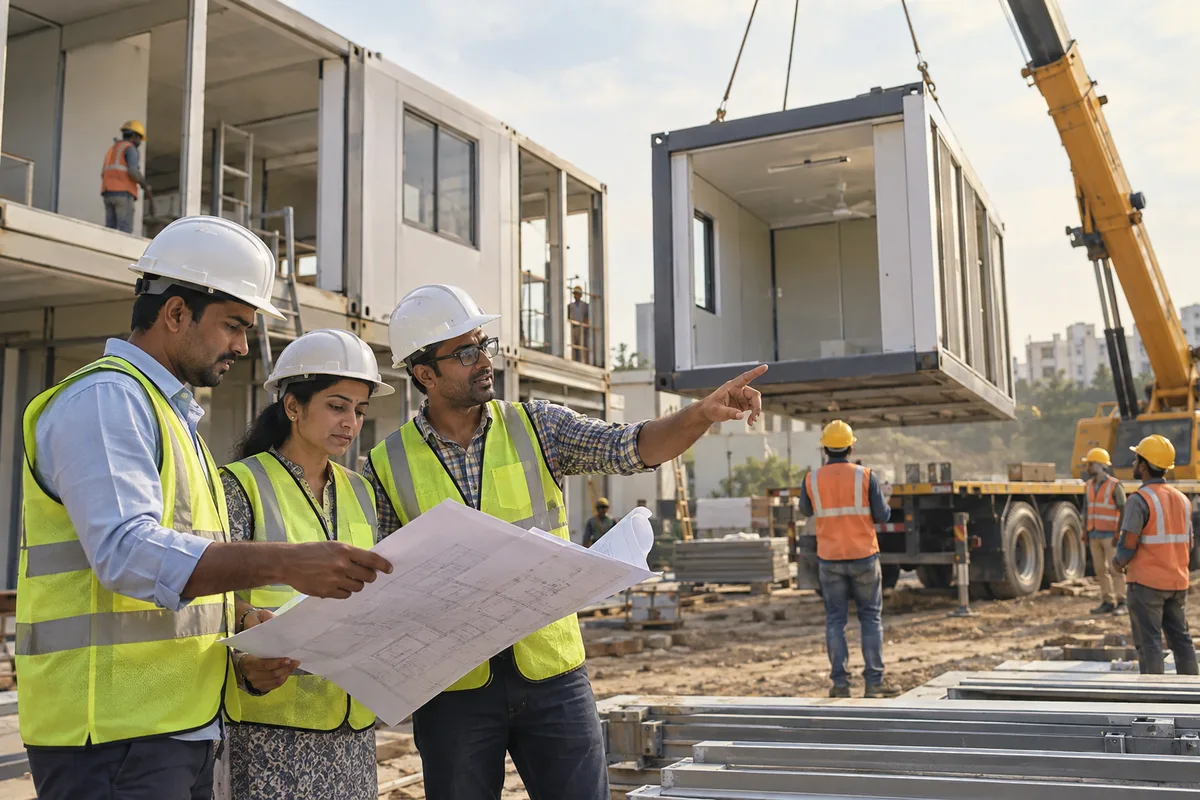
What branding means
Branding is what a customer remembers about your business beyond the product, including your name, colours, tone of voice and what you are known for locally. GullySales sets or corrects this once and applies it consistently across your website, signage and adverts so the business looks like one company everywhere.
Also for modular and prefabricated building manufacturers
- SEO for modular and prefabricated building manufacturers
- PPC ads for modular and prefabricated building manufacturers
- Lead generation for modular and prefabricated building manufacturers
- Digital marketing for modular and prefabricated building manufacturers
- Reputation management for modular and prefabricated building manufacturers
- Local SEO for modular and prefabricated building manufacturers
- Social media marketing for modular and prefabricated building manufacturers
- Content marketing for modular and prefabricated building manufacturers
Sales and marketing for modular and prefabricated building manufacturers, the overview.
Last updated 14 Nov 2026.
For modular and prefabricated building manufacturers
Where it usually goes wrong, and what we would do.
“Your cabins advertise at a site for two years”
Every contractor, consultant and inspector on that project walks past your name daily. Most units leave the works unmarked.
“A buyer cannot tell a manufacturer from a trader”
It is the first thing the buyer is trying to work out, and almost no website in this trade answers it.
“A drawing with a proper title block gets filed”
The consultant keeps it, and your section detail ends up inside the specification the consultant writes next year.
What we do
What we deliver for modular and prefabricated building manufacturers.
The work available for this need. We agree the deliverables and responsibilities for your engagement in writing.
A name plate standard applied at dispatch
One plate design fixed to every unit before it leaves, carrying the company name, the works and a telephone number.
Result: Your units sell for two years at somebody else's site.
A drawing title block and quotation layout
One format for drawings and quotations, with the specification at the top and transport shown as a separate line.
Result: Consultants file your drawing instead of redrawing it.
Plant and process photographs that show manufacture
The panel line, the press, the fabrication bay and the yard, used across the website and the profile document.
Result: Nobody mistakes you for a trader.
A product catalogue by unit type
Each unit with its specification, sizes, options and lead time, in one document a purchase officer can circulate internally.
Result: Your range travels inside their office.
An exhibition stand brief
Panel layout, a cutaway sample worth touching and a giveaway carrying the specification, planned before the show.
Result: Visitors remember the panel, not the banner.
One company name across portals and certificates
Legal name, trade name and works name matched on GeM, tender portals, certificates and industrial directories.
Result: A verification check finds one business.
How the result is measured
- Recognition in customer feedback
- Consistency across channels
- Repeat enquiries by name
Recorded as a baseline before work starts, so every later report has an honest comparison.
Positioning in one sentence
The sentence a prefab manufacturer can fill in so a site engineer sees a plant, not a trader.
We manufacture [cabins, panels or sheds] for [contractors, factories or government sites], and unlike [a trader] we supply [drawing, specification and erection] from our own plant.
- Who it is for
- A contractor opening a site office, a company housing labour, a food unit needing a cold room, a government department. Choose the first two, since their rate talk, drawings and deadlines differ.
- What you build
- Name the product by what it is on site: site office cabin, labour bunkhouse, PUF cold room, pre-engineered shed. State panel thickness and finish in the units a consultant checks.
- What the buyer gets that a trader does not
- A factory drawing, a stated specification, erection by your own team and a plate with your name. A buyer comparing rates per square foot needs a reason your rate differs, and these are it.
- The proof you can show
- Photographs of units at a working site after a monsoon, a drawing with your title block, factory photographs, and a site contact willing to confirm the work. Include a detail the consultant has questioned before.
- Words buyers ignore
- 'Quality', 'durable' and 'best price' fill every quotation. Replace with the panel specification, the foundation needed and what the rate includes, such as transport and erection.
- The name and tagline test
- Read the name on a title block and a nameplate. If a site engineer cannot tell whether you make or trade, add 'manufacturers' and the product line beneath it.
Who it is for
This is written for these modular and prefabricated building manufacturers.
- Portacabin and site office manufacturers
- Labour accommodation and bunkhouse makers
- PUF panel cold room and ripening chamber builders
- Pre-engineered steel building fabricators
- Container conversion units
- Modular toilet and sanitation block makers
- Security cabin and kiosk makers
- Prefab school, health centre and site canteen builders
- Portacabin rental fleets
- Clean room and modular partition contractors
Before you decide
When this may not be the right fit.
- Your range is still being decided, so an identity drawn now would be redrawn once the unit types settle.
- Units leave the yard with no plate or marking, so a new identity would never reach the site where it is seen.
Before you decide
Agree the work. Know how to judge it.
Branding and identity for modular and prefabricated building manufacturers: use these checks to prepare, choose the scope, and review what changes.
Bring the right evidence
Collect the sales presentation, website, quotations, and other material buyers actually see. Mark where the description of the business changes or where a claim has no supporting evidence.
Make the scope clear
Agree whether the work concerns the offer, the words, the visual identity, or all of them. List the formats that need updating and who owns the final approval.
Check the work in use
Test the proposed direction on a real sales page or proposal. A buyer should be able to tell who the offer is for, what is different, and what evidence supports it.
Know when to change course
A new identity will not fix an unresolved service problem. Put the delivery issue right before making a stronger public promise about it.
These are discussion points, not a fixed package. GullySales confirms the deliverables, responsibilities, fee, and term in writing after reading your brief and speaking with you.
Before we start
What to have ready before the work starts.
The records, access and decisions this work needs from modular and prefabricated building manufacturers. Anything missing is noted in the written scope, with who will supply it.
- Photographs of the plant in operation
- Brand work for a manufacturer rests on evidence that units are made in your shed. Photographs of the fabrication line, panel press and finishing bay are needed, with workers' faces optional. When they are missing, we plan a photo day first and delay the catalogue until it is done.
- Old drawings, quotations and name plates
- We need samples of what currently goes out so we can compare and redesign. A folder of scans and one physical name plate are enough. Without them, we would be designing against a memory of the documents, and the changes could miss the inconsistencies a buyer actually sees.
- A decision on one name or several
- If the company sells cabins, cold rooms and steel buildings, the owner must say whether they stay under one name. Our plan changes with the answer. Leaving it open stalls the catalogue, so we ask for a clear position at the first meeting, even if it is provisional.
- Certificates and registrations with exact names
- Names on tender portals, tax papers and quality certificates must match what we design. We need copies and the exact legal name of the company. Where they differ, the plan includes steps to reconcile them, and the owner decides which version is the correct one.
How it works
How the branding work runs
The work itself, in order. How an engagement starts, from your brief to a written scope, is set out on our method page.
- 1
Walk the yard and see what leaves it
We stand at dispatch and look at what leaves with your name on it: the name plate, the drawing sheet, the quotation. You show us where the brand is lost, for example a unit that reaches site with no mark at all. This walk gives us a list of surfaces to design, in order of how long a buyer looks at them.
- 2
Collect old quotations and drawing title blocks
We gather ten or so quotations and drawings from different engineers and compare them side by side. The differences in layout, wording and company name show how a buyer sees the company. You choose which version feels closest to how you want to be read, and that becomes the starting point.
- 3
Decide what separates you from a trader
With the owner and the plant head we write down what you make, in which sheds, on which machines and to which standards, and what a trader cannot say. That becomes the position behind the name plate, the catalogue and the portal profiles. You approve the line before any design begins.
- 4
Design the name plate and title block
We draw the plate fitted to each unit at dispatch, and the title block for drawings and quotations, with the company name, location and a number for traceability. Your plant head confirms the plate can be fixed in the line without delaying a unit. The same details then flow to the catalogue.
- 5
Roll out across portals and the exhibition stand
The final name is applied to directories, tender portals, certificates and the stand brief, and we hand over a short usage sheet to the team. You decide the order of change. Later, the sales head compares the quality of enquiries and quotation requests with what was noted at the start.
Where this fits
Three pieces of sales work, in this order.
This work sits inside sales process design, at stage 1, prospecting and lead generation. The audit comes before it, and sales management keeps it running.
Step 1
Sales audit
Find where deals are being lost and what to fix first.
Start here if you cannot say where orders are lost.
Step 2 · you are here
Sales process design
One written way to sell, from first enquiry to repeat order.
Start here if every salesperson sells differently.
Step 3
Sales management
A target, a review routine and someone who owns the number.
Start here if the team has targets and no routine.
FAQ
Questions owners ask before they call.
Not here? More answers, or ask on WhatsApp.
Does branding matter when we sell on rate?
Should the cabins carry our name at site?
Should we sell portacabins, PUF panels and cold rooms under one name?
How do we stop a trader quoting our products as the trader's own?
Will a new name plate slow dispatch?
Do we need a logo change as part of this?
How much does it cost?
How long is the contract?
How soon will we see results?
Who will actually do the work?
From the blog
Further reading for modular and prefabricated building manufacturers.

More for modular and prefabricated building manufacturers
Related work to consider.
- SEO for modular and prefabricated building manufacturers
- PPC ads for modular and prefabricated building manufacturers
- Lead generation for modular and prefabricated building manufacturers
- Digital marketing for modular and prefabricated building manufacturers
- Reputation management for modular and prefabricated building manufacturers
- Local SEO for modular and prefabricated building manufacturers
Or start from the overview: sales and marketing for modular and prefabricated building manufacturers.
Your next practical step
Tell us what you are trying to grow, and we will read it before we call.
Eight short steps, mostly taps. Skip anything you would rather answer on the call.