Plotted development companies · Follow up systems
Follow up each plot enquiry and Sunday visit until the buyer decides.
A follow-up system for a plotted development company is the set of calls, messages and reminders that carry a buyer from first enquiry to registration. GullySales writes the steps, the wording and the reminders and puts a named person on each.
Scope, fee, reporting and term are agreed in writing after we have read your brief and spoken to you.
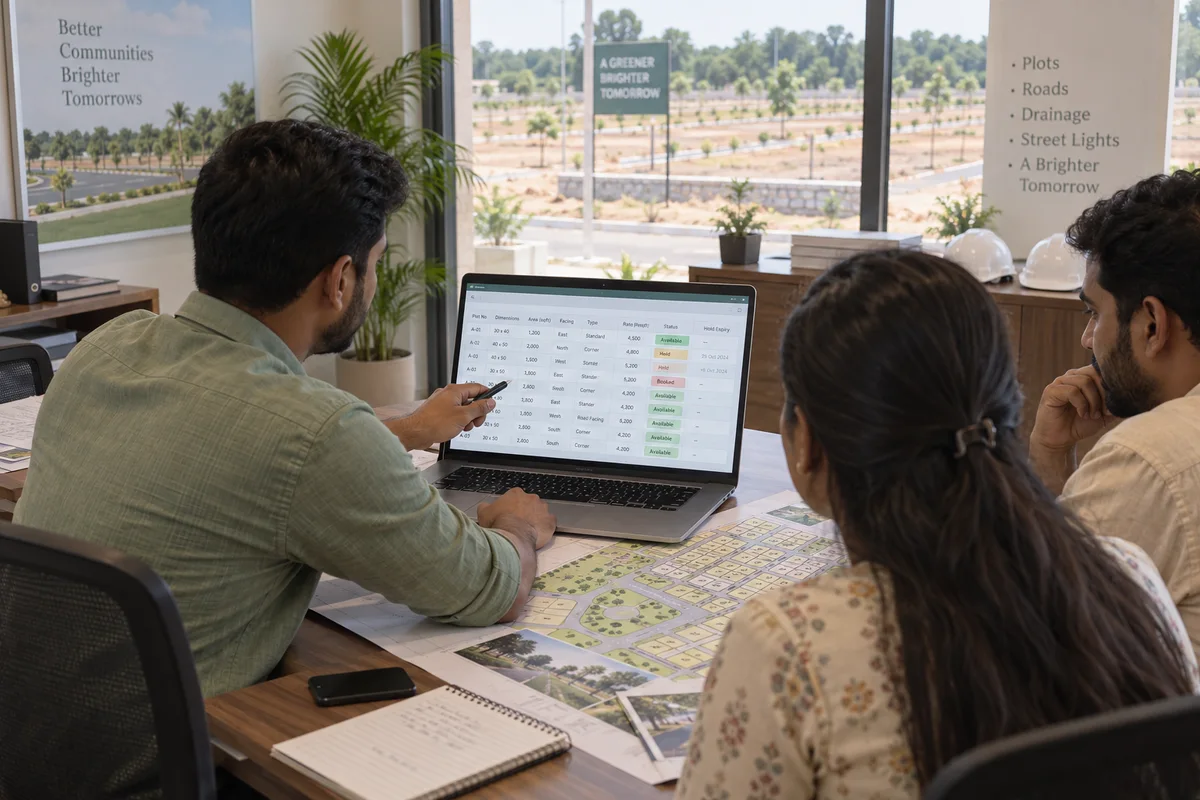
What follow up systems means
A follow-up system is the set routine for calling, messaging or emailing an enquiry more than once, since most buyers do not decide on the first conversation. GullySales sets the number and timing of follow-ups so an undecided buyer keeps hearing from you until they decide either way.
Also for plotted development companies
- Lead generation for plotted development companies
- CRM for plotted development companies
- SEO for plotted development companies
- Local SEO for plotted development companies
- Social media marketing for plotted development companies
- Content marketing for plotted development companies
- Buyer personas for plotted development companies
- WhatsApp marketing for plotted development companies
Sales and marketing for plotted development companies, the overview.
Last updated 14 Nov 2026.
For plotted development companies
Where it usually goes wrong, and what we would do.
“The buyer says they will think and the thread ends”
Land is a large decision, and the family needs time. A salesperson who calls once and waits loses the buyer to whoever calls next. A planned second contact with something new to say keeps the conversation going.
“Follow-up with nothing new to say annoys the buyer”
Asking whether the buyer has decided adds no value. A fresh plot map, a dated progress photograph or an answer to a question asked on site gives the call a reason.
“Visit follow-up decays after the first evening”
The best moment to call is soon after the site visit while the buyer remembers the walk. By the next Sunday the visit has been mixed with others. A named person with a reminder keeps the call from slipping.
“Broker buyers get chased by several people”
The broker, the company executive and a manager all call the same family. The buyer stops answering. One owner per enquiry, recorded in the CRM, prevents it.
What we do
What we deliver for plotted development companies.
The work available for this need. We agree the deliverables and responsibilities for your engagement in writing.
Follow-up sequence
A set of steps after enquiry, visit and shortlist, each with a purpose and a message the executive can edit.
Result: Every step has a reason that is not 'just checking in'.
Visit follow-up message
A message sent to every visitor after a visit with the plot they liked, the price sheet and the next step.
Result: Each visitor receives the same careful summary.
Reminder rules
Rules in the CRM that remind an owner when a follow-up is due and show the manager what is overdue.
Result: An overdue list exists and a named person owns each item.
Stop and park rules
Clear points at which a lead is closed, parked for later or passed to a manager.
Result: No enquiry sits half open without a decision.
Lost-buyer review
A short review of why buyers dropped out, drawn from notes, so the sequence can be changed.
Result: The reasons for lost enquiries are recorded in words.
How the result is measured
- Follow-up completion rate
- Average number of follow-ups before close
- Enquiries closed after repeat follow-up
Recorded as a baseline before work starts, so every later report has an honest comparison.
What to capture or send
What to record and send after each visit so a land buyer is not left guessing.
- Visit summary the same day
- A message that lists the plots the buyer saw, their sizes and facing, and the next step agreed. It gives the family something to discuss at home.
- Approval documents asked for
- Record which papers the buyer or the advocate requested and send them as a single set. A partial send makes the advocate suspect something is held back.
- Reason the buyer is waiting
- Loan sanction, a relative's opinion, sale of other land or a doubt about price. Note the reason in the buyer's words and follow up on that and nothing else.
- Price or plot change since the visit
- If a plot the buyer liked is booked, tell them first and offer a similar one. Hearing it from another source ends the conversation.
- Next contact set by the buyer
- Ask when the buyer wants to hear from you and write it down. A call at the buyer's chosen time is answered more readily than one that suits the office.
Who it is for
This is written for these plotted development companies.
- Authority-approved residential layouts on city outskirts
- Companies converting agricultural land into plotted layouts under local rules
- Gated plotted communities with roads, parks and a clubhouse
- Joint development partners who develop a landowner's land and share the plots
- Small layouts of ten to forty plots in towns
- Commercial and industrial plots near highways
- Plots sold with a construction option on the same land
- Companies selling plots in tier-two towns to families living abroad
Before you decide
When this may not be the right fit.
- You have no one assigned to call the buyers, so a follow-up record would show a list of promised calls nobody makes.
- Your visits are mostly brokers bringing groups, so there is no single buyer to follow up after the visit.
- The plot list is unreliable, and a message that confirms a plot that is already sold would do harm.
Before you decide
Agree the work. Know how to judge it.
Follow-up systems for plotted development companies: use these checks to prepare, choose the scope, and review what changes.
Bring the right evidence
Trace recent enquiries from arrival to the last recorded action. Include a won enquiry, an unsuitable one, and one that went quiet, with personal details removed for the initial discussion.
Make the scope clear
Agree who accepts each enquiry, what makes it qualified, and how ownership changes. Include a rule for missed replies and a clear reason for closing an enquiry.
Check the work in use
Pick an enquiry at random and ask the team to find its owner, latest conversation, and next action. Check that the record agrees with what actually happened.
Know when to change course
If no one has capacity to respond, assign that responsibility before buying more leads. Automation can support the owner, but it cannot replace an unresolved handover.
These are discussion points, not a fixed package. GullySales confirms the deliverables, responsibilities, fee, and term in writing after reading your brief and speaking with you.
Before we start
What to have ready before the work starts.
The records, access and decisions this work needs from plotted development companies. Anything missing is noted in the written scope, with who will supply it.
- The visit register for the layout
- A list of visitors with date, plot shown and executive is the base. Handwritten is acceptable. Without it, the first calls go to enquirers and not to the people who actually saw the layout. Add the plot the buyer liked, because the second call is about that plot and a general call about the layout wastes the chance.
- Notes on what buyers said when leaving
- Executives remember why a buyer hesitated. Write it down. Without notes, the follow-up asks what the buyer already told you.
- Buyers who asked to be left alone
- Names of people who asked not to be called. This respects them and protects the number. Without a list, we begin one from refusals you remember.
- New facts about each layout to share
- Roads laid, plots released and papers ready are reasons to call. Keep a note. Without them, messages have little to say and are skipped. Even small things count, such as the drainage reaching a section, the park fence going up, or a fresh set of documents ready to show.
- Broker contact rules for shared buyers
- Decide whether a broker's buyer may be called by your executive. We do not decide. Without a rule, broker buyers are only reminded through the broker. This also settles who pays the broker if the buyer later registers after a direct call, which is a matter only you can decide.
How it works
How the follow up systems work runs
The work itself, in order. How an engagement starts, from your brief to a written scope, is set out on our method page.
- 1
List the visitors who said they would think
We take the visit register and mark every buyer who left without paying a token, with the plot they liked and what they said. You tell us which are still alive. What exists afterwards is a sheet of open visits, with the date of the visit and the name of the executive, from which the first calls are made. We also mark the buyers who visited with family, since a second visit needs the family and the call must ask about a day that suits them.
- 2
Decide who owns each buyer
We sit with the sales head and agree that each buyer has one named executive, whether the buyer came direct or through a broker. You resolve the cases where two people claim the same buyer. The owner's name goes on the record. Where a broker brought the buyer, the broker is told when contact is made, so the buyer hears one story and the broker is not surprised.
- 3
Write a reason for every message
We list reasons to contact a buyer that are true and new: a road completed, a plot released, a document available to view, a site visit day. You approve each. A message with nothing new to say is not sent.
- 4
Prepare the visit-evening message
We write a short message to send on the day of the visit, thanking the buyer and recalling the plot discussed, with the document list they asked for. The executive adjusts it for each buyer. A family seen together gets one message, not several. The thank-you also carries the sales office address pin and the hours, so the buyer does not have to ask again.
- 5
Set the park and stop rules
We agree when a buyer is parked for later and when contact stops, such as after a clear no or a request not to call. You decide how a parked buyer is revisited. This prevents the same family being called until they block the number. A reason for stopping is written beside each parked or stopped buyer, so the next executive does not restart contact by mistake.
- 6
Read the open-visit sheet against decisions
We compare how many open visits turned into a second visit, a token or a clear no with the sheet made in the first step. The executives say what buyers told them. You decide which messages stay, without a rise being assumed.
Where this fits
Three pieces of sales work, in this order.
This work sits inside sales process design, at stage 2, qualification. The audit comes before it, and sales management keeps it running.
Step 1
Sales audit
Find where deals are being lost and what to fix first.
Start here if you cannot say where orders are lost.
Step 2 · you are here
Sales process design
One written way to sell, from first enquiry to repeat order.
Start here if every salesperson sells differently.
Step 3
Sales management
A target, a review routine and someone who owns the number.
Start here if the team has targets and no routine.
FAQ
Questions owners ask before they call.
Not here? More answers, or ask on WhatsApp.
How many times should we follow up?
Is it acceptable to message on WhatsApp?
Who should own follow-up?
What if a buyer says they will decide after consulting the family and goes silent?
Who should call a buyer who is silent after a visit?
Is it acceptable to message a buyer's family members?
How much does it cost?
How long is the contract?
How soon will we see results?
What do you need from us?
More for plotted development companies
Related work to consider.
Closest to this: leads and follow-up
Also for plotted development companies
Or start from the overview: sales and marketing for plotted development companies.
Your next practical step
Tell us what you are trying to grow, and we will read it before we call.
Eight short steps, mostly taps. Skip anything you would rather answer on the call.