Industries · Retail
Your shop has footfall, but you cannot say who comes back.
A shop owner knows the day by the till. What the till does not show is the family that asked the price on WhatsApp and never came, the electrician who steered a customer elsewhere, or the shopper who bought at Diwali and has not been back. Most of that happens off the shop floor, and none of it is written down.
Scope, fee, reporting and term are agreed in writing after we have read your brief and spoken to you.

In one paragraph
For owners of shops, showrooms and trade counters who sell across a counter or a WhatsApp chat. What differs here is that the sale is often decided before the customer walks in, and the next sale is lost at the billing desk.
Retail in India is sold in three ways at once. A walk-in buys on a glance and a price. A trade buyer, such as a carpenter, tailor, mason or office admin, buys on habit and credit. A planner buys for an event, a house or a gym, and wants a quote. Each needs a different reply, and a single counter often serves all three.
For example, a furniture showroom in Hyderabad measures a flat on Saturday and promises a quote. The owner is on the floor all day, the quote goes out on Tuesday, and the customer has already paid a deposit to a store that sent its quote the same evening. Nothing was wrong with the sofa.
Last updated 15 Oct 2026. Rules for regulated trades differ by state and professional body, and they change. Each page describes them in general terms only.
24 industries
Each trade here sells differently, so each has its own page.
Open the one that matches your business. Each lists the work we would do and why it fits that trade.
- BakeriesA parent sends a birthday cake enquiry at nine at night and books the first bakery that answers. Reply to the evening message first, then keep a list of birthdays to call before next year.
 Building material dealersWhichever yard quoted this morning gets the contractor's call. One rate message at the same hour each day keeps you in that race, with a note of which stage each site has reached.
 Clothing stores and boutiquesShoppers save wedding posts and message the boutique that replies fastest. Turn the DM into a fitting date, and write down each customer's sizes and the event.
 Computer and laptop dealersA student or office buyer messages three stores for a price before choosing one. Keep a current Maps listing and a written rate list for bulk orders, so you are among the three.
 Corporate gifting and gift businessesHR and admin teams fix a gifting shortlist well before Diwali, and the late supplier is the fifth quote. Put samples with them in August, grouped by budget per head.
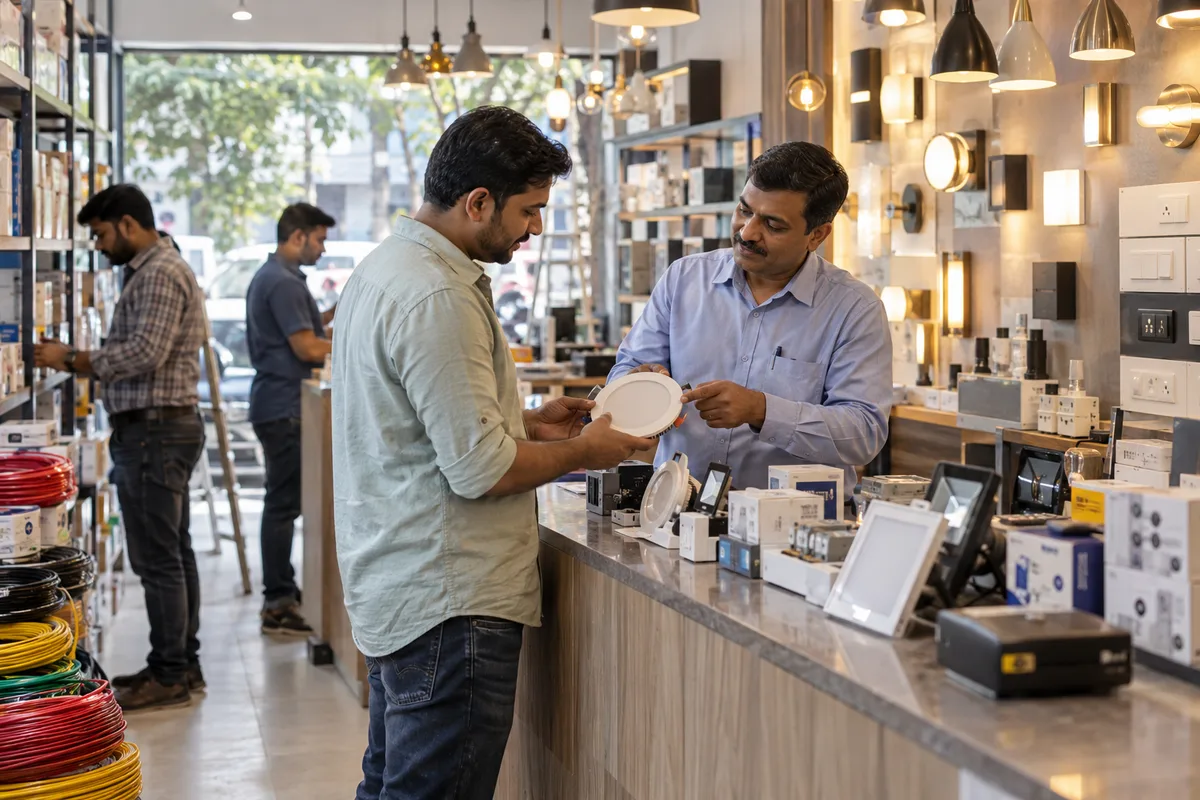 Electrical and lighting dealersThe family only sees the showroom lights, while the electrician chooses the brand. Look after the electricians who steer, and call each family who left with photos.
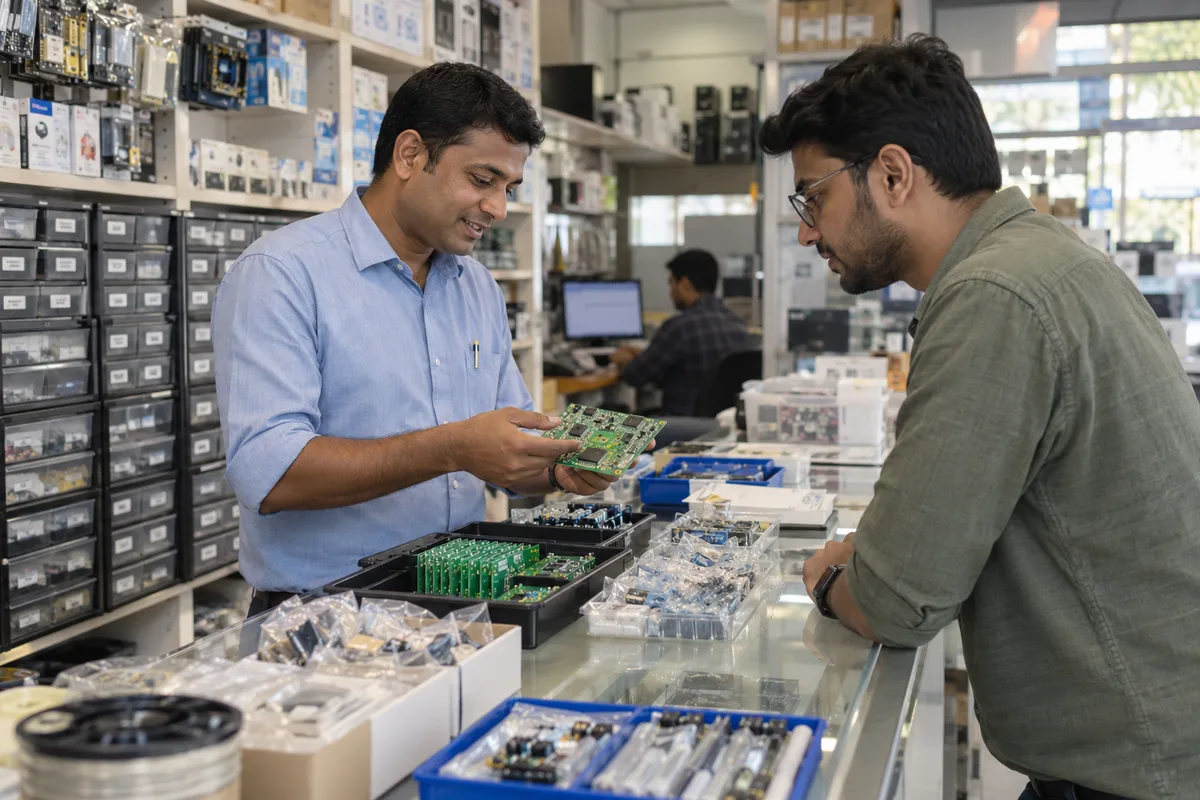 Electronic components distributorsAn engineer with a bill of materials and one part left searches by part number. Give each part and brand its own page, and chase every quote sent.
 Electronics and appliance storesA family checks the AC price on a phone while standing in your store. Ring every walk-out the same day, and note what each household already owns.
 Fabric shops and retailersWhere to buy the lining is the tailor's word, and it is rarely yours. Turn the shelves into a photographed catalogue, and call the tailors by name.
 Fitness equipment dealersBoth the flat owner wanting one treadmill and the gym wanting ten ask on the same number. Give them separate replies, and chase every gym quote.
 Flower shopsAn anniversary order is decided in minutes and a wedding is booked weeks ahead. Be found for the urgent search, and keep a portfolio ready for the wedding enquiry.
 Furniture stores and retailersA couple compares an L-shaped sofa across four showrooms and two websites. Show whole rooms, send the quote the same evening, and stay in touch until delivery.
 Grocery stores and supermarketsPhotographed ration lists sit on WhatsApp until the next morning. A daily slot for reading them, and a note of which families still order, keeps the regulars regular.
 Home decor businessesA shopper sends a screenshot of a room and asks whether you have it. Sort the catalogue by room and by occasion, and answer the screenshot with a price.
 Inverter, UPS and generator dealersThe shop that picks up first when a battery dies at the worst hour sells the replacement. Record each battery's age and ring before it fails.
 Jewellery retailersA bridal buyer compares making charges and hallmarking across showrooms for weeks. Give her a reason to visit before the shortlist closes, and answer her WhatsApp the same day.
 Luxury and premium brand retailersBuyers already know the brand and the piece, so the sale turns on the viewing. Set up a private-client WhatsApp routine, and record each viewing against what was bought.
 Optical businessesA family books an eye test, and the frame sale is lost at the counter if no one asks for the next visit. List the optometrist's credentials, and remind customers when a prescription is due.
 Pet product stores and brandsThe second bag of food is compared on an app, after the first was bought from you. Make reordering a WhatsApp message, and ask for a review once the first bag is finished.
 Plumbing and sanitaryware distributorsWhoever has the 25 mm elbow on the shelf gets the retailer's call, whatever the scheme says. Keep a register of buyers and their orders, and follow up each quote.
 Plywood and timber dealersCarpenters pick the grade and homeowners pay for it. Run a small programme for carpenters and designers, and explain BWP against MR in plain words.
 RetailersA general shop that fits none of the trades above still loses the Diwali shopper, because nobody took a number at billing. Ask for it at the counter, and keep your Maps listing current.
 Stationery and office supply dealersWhoever answers and quotes in writing gets the office admin's order. Give her a catalogue to order from, and remind her before the monthly stock runs out.
 Tile, flooring and bathware dealersThe family picks tiles in your showroom and the mason buys from his own dealer. Quote room by room, and ring the mason as well as the owner on every quote.
How buyers choose
What decides who wins in retail.
The person who picks is not always the person who pays
A carpenter chooses the plywood, an electrician chooses the wire, a tailor chooses the lining, and a mason chooses the tile dealer. The homeowner pays, but the trade has already decided. If your records only hold the customer's name, you cannot see the person who actually sent the order.
The price check happens on a phone
Before anyone enters a store for a TV, a laptop or an AC, they have looked up the rate on a marketplace. You will not win that comparison on price alone. You win it by answering on WhatsApp quickly, saying what is included, and giving a reason to prefer a shop they can walk back into.
The sale is decided in a single evening
A birthday cake, a same-day bouquet, a battery that has just died and a wedding outfit are all chosen within hours of the need. The shop that replies first usually wins. Replies that wait for the owner to finish with the queue go to the next number on the list.
Quotes go out and nobody calls back
Furniture, tiles, gyms, corporate gifts, electronic parts and bulk office orders all run on a written quote. Most are never followed up, because the owner is busy at the counter. The deal goes to whoever calls on the third day, not whoever quoted lowest.
The festival decides the year
Diwali, Dussehra, the wedding season, the start of the school year and the first hot week of April each pull a different part of the shop. Stock and calls are planned weeks ahead by the shops that do well. Everyone else is still ordering when the rush has passed.
The first sale is cheaper than the second
A pet owner's first bag, a family's first appliance, a first office order and a first bridal visit are all expensive to win. Whether the customer returns depends on a number taken at billing and a reason to message them later. Most shops never record either.
From the blog
Reading for retail owners.
 6 min read · 6 Oct 2026How trade buyers pick a dealer when the brands matchWhen every counter in town carries the same brands, trade buyers choose on stock, delivery, paperwork and returns. This post sets out how contractors, electricians, plumbers and purchase managers compare dealers.
 6 min read · 30 Jul 2026How to sell home decor online: pick the channel, then fix the photographsStart where your buyers already browse, and photograph every piece in a real room with its size. Plan packing and returns before the first order. Then sell again to past buyers on WhatsApp.
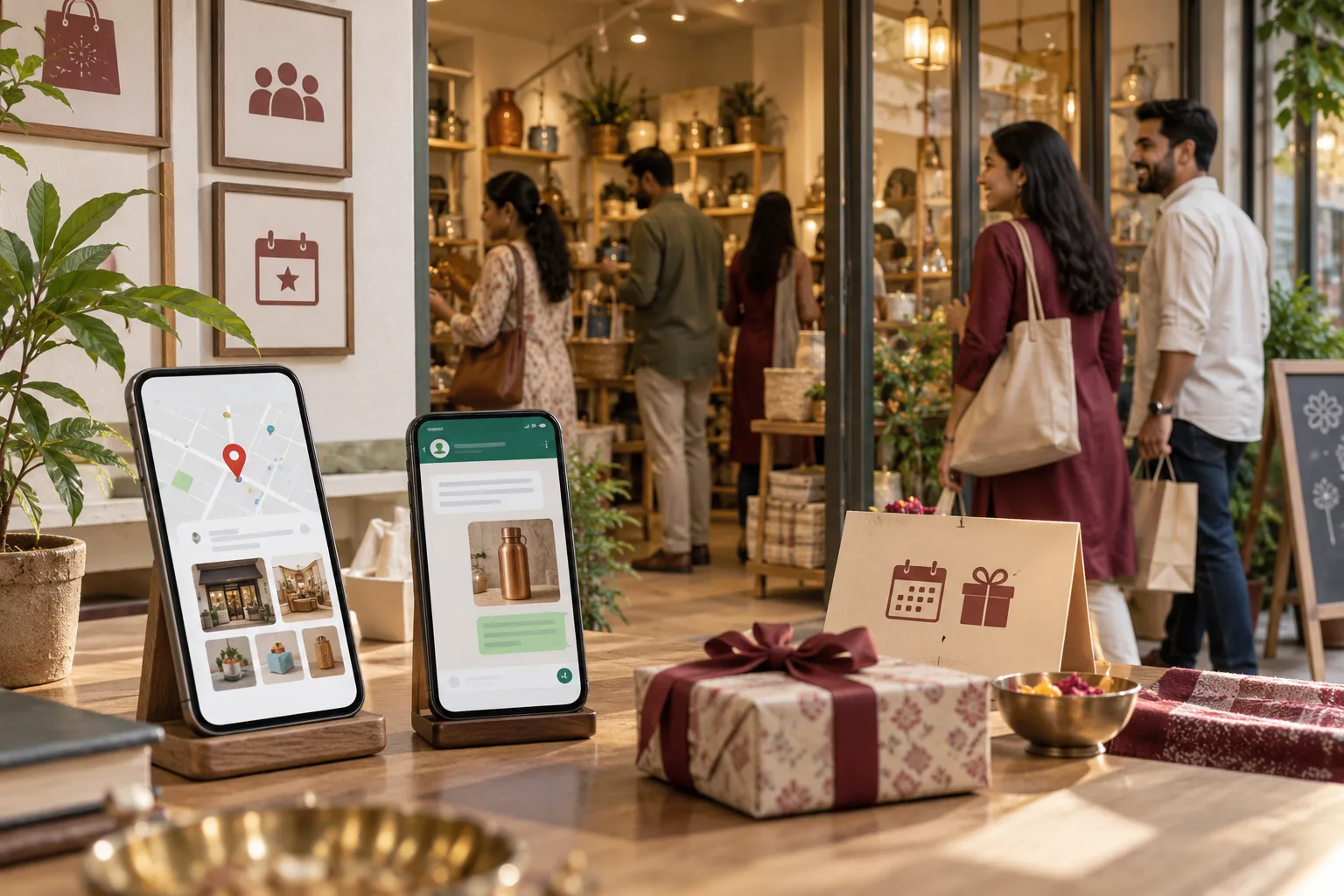 6 min read · 22 May 2026How to increase footfall in a retail storeBe found on Maps for what you stock, give past customers a reason to come back on WhatsApp, and run promotions tied to dates people already shop for.
Questions
Questions retail owners ask.
Not answered here? Ask on WhatsApp or call, and you will speak to someone who does the work.
How do I get walk-in customers to come back if I do not have their number?
Should I put my prices on WhatsApp or keep them for the counter?
How do I deal with customers who check prices on Amazon or Flipkart in my shop?
Is it worth building a catalogue if I have thousands of items?
How do I get trade buyers like carpenters, tailors or electricians to send customers to me?
Do I need a website, or are Google Maps and WhatsApp enough?
Not sure which page fits? See every industry or tell us what you need, and we will start from what you sell.
Your brief
Tell us what you need, and we will read it before we call.
Eight short steps about your business, what you want and who decides. Most questions are a tap, and you can skip any you would rather answer on the call.
Your next practical step
Tell us what you are trying to grow, and we will read it before we call.
Eight short steps, mostly taps. Skip anything you would rather answer on the call.